# Пов'язані статті щодо Remittances

Центр новин HTX надає останні статті та поглиблений аналіз на тему "Remittances", що охоплює ринкові тренди, оновлення проєктів, технологічні розробки та регуляторну політику в криптоіндустрії.

The Rise of Stablecoins in Latin America Is Not, in Essence, a 'Victory for Crypto Technology'

The Rise of Stablecoins in Latin America: Not a Victory for Crypto, But for Remittance Infrastructure Stablecoin adoption in Latin America isn't primarily driven by belief in crypto technology. It's a pragmatic solution to a centuries-old problem: getting money home. The article draws parallels to the traditional "silver letters" (银信) system used by Chinese diaspora, where trust and execution relied on tight-knit community networks. The core pain point is remittances—the lifeblood for millions of families. Existing systems are often slow, expensive, and opaque. Stablecoins like USDT and USDC are not seen as speculative crypto assets but as "digital dollars in your phone." They address critical local needs: Argentinians use them as a hedge against hyperinflation, Venezuelans as a lifeline for essential goods, while in Brazil and Mexico, they facilitate cross-border payments and freelance payouts. The real challenge isn't the blockchain transfer itself, but the "on-ramps" and "off-ramps"—how to convert local currency into stablecoins and, crucially, how recipients can access the funds as spendable local currency via systems like Pix (Brazil) or SPEI (Mexico). The battlefield is building the infrastructure that seamlessly connects these ends. Regulators are less focused on "crypto adoption" and more on controlling what becomes a parallel foreign exchange system, concerned with AML, consumer protection, and capital flows. The future lies in stablecoins becoming an invisible, efficient middle layer in a new remittance stack, where the user only cares about one thing: the money arrived.

marsbit06/26 11:56

The Rise of Stablecoins in Latin America Is Not, in Essence, a 'Victory for Crypto Technology'

marsbit06/26 11:56

The Reality of Payments in Latin America Is Not What You Think

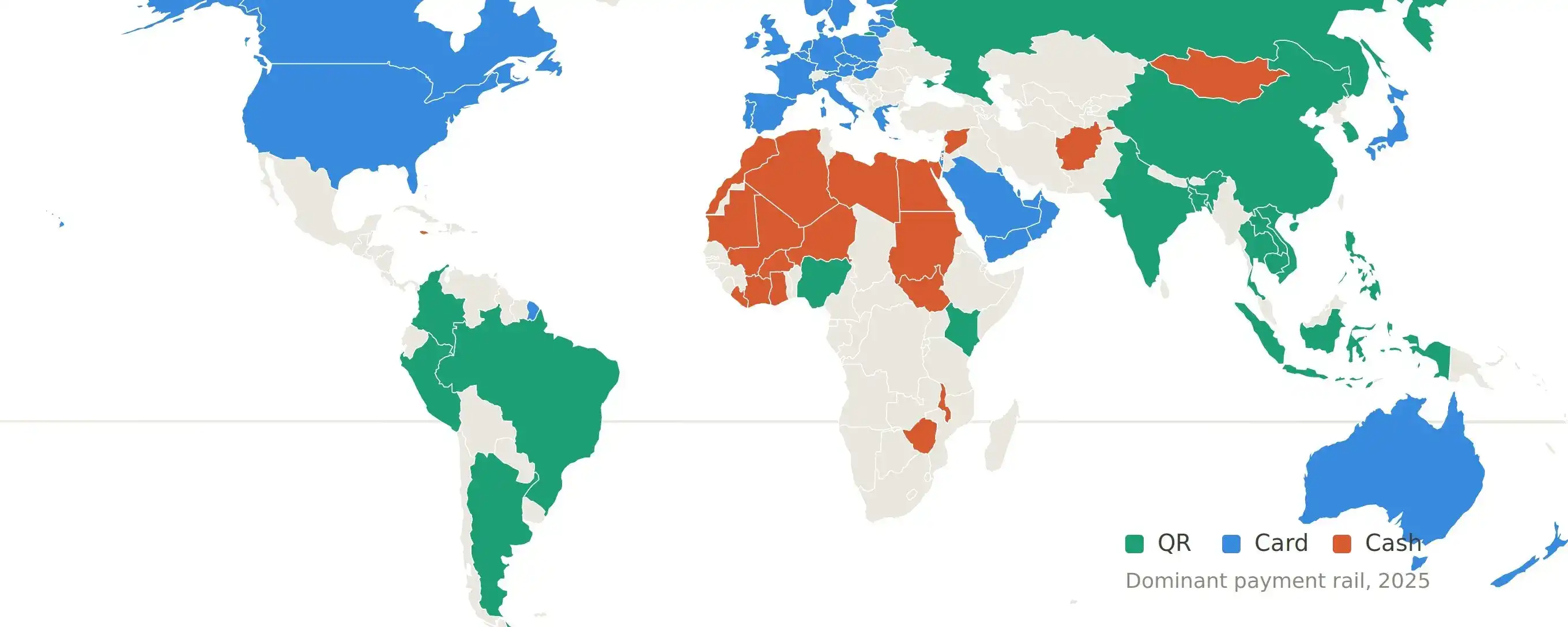
The payment landscape in Latin America is undergoing a fundamental shift, driven by on-the-ground realities that challenge common perceptions. Based on over 500 hours of field research across the region, key insights emerge. Firstly, QR code payments, like Brazil's Pix, are becoming the dominant payment method in most emerging markets, overtaking cards. However, these domestic instant payment systems lack international interoperability, creating a significant gap for cross-border users. Secondly, the narrative around crypto cards is often misunderstood; their primary volume comes from high-net-worth professionals using them for salary conversions (e.g., USDT to local currency via Pix), not retail micro-payments. Competition in payments is shifting from customer acquisition to controlling the settlement layer, leading fintechs to acquire banking licenses for efficiency. Thirdly, treating "Latin America" as a single market is a mistake. Countries like Argentina, Brazil, and Mexico have distinct economic realities, user segments, and regulatory approaches. Brazil alone has at least five distinct user segments with different financial flows. Overlooked markets like Guatemala, Honduras, and El Salvador (the "forgotten five") offer high remittance volumes with lower competitive density. Finally, regulation in Latin America is often ahead of the US, with clearer frameworks for digital assets and a pragmatic approach from regulators focused on safety rather than obstruction. The margin on stablecoin forex is rapidly compressing toward zero, meaning future winners will be those building value-added services on top of the infrastructure, not just the cheapest exchange.

marsbit06/21 09:07

The Reality of Payments in Latin America Is Not What You Think

marsbit06/21 09:07

Latin America's Payments Landscape Is Not What You Think It Is

This report challenges common misconceptions about Latin America's payment landscape, based on over 500 hours of firsthand research. Key findings include: 1) Crypto card transaction volume primarily comes from high-net-worth individuals receiving USDT salaries, not retail spending. 2) QR code payments (e.g., Brazil's Pix, Argentina's Mercado Pago) are the dominant payment method across most emerging markets, not cards. 3) A major untapped opportunity lies in enabling cross-border interoperability between domestic instant payment systems. 4) Payment competition is shifting from customer acquisition to owning the settlement layer (e.g., acquiring banks). 5) Latin America is not a single market; Brazil, Mexico, Argentina, and smaller "forgotten five" countries (e.g., Guatemala, Honduras) have vastly different dynamics. 6) Stablecoin-to-fiat conversion margins are collapsing toward zero, pushing companies to build value-added services on top. 7) Future payment winners will be multi-country brands, not single-corridor specialists. 8) Marketing must target specific user segments (e.g., digital nomads, unbanked immigrants) with tailored messaging, not a generic "Brazilian" audience. 9) Contrary to perception, Latin American regulators are often ahead of the US in creating frameworks for digital assets and instant payments, with clear licensing deadlines. The core takeaway is that the region's payment rules are being rewritten, moving beyond cards and stablecoin arbitrage towards integrated, cross-border QR-based solutions.

链捕手06/21 08:50

Latin America's Payments Landscape Is Not What You Think It Is

链捕手06/21 08:50

Macroeconomic Origins of the African Payments Market Structure

Africa’s payment landscape exhibits the world’s highest mobile money penetration and fastest cryptocurrency adoption. This is not a market anomaly but a macroeconomic inevitability driven by deep structural factors: a vast, young population, heavy reliance on commodity exports and remittances generating massive cross‑border payment needs, and a chronically underdeveloped formal banking system plagued by de‑risking, high inflation, and currency instability. This vacuum has allowed mobile money (e.g., M‑Pesa) to become the primary payment channel domestically, while cryptocurrencies—particularly stablecoins—serve as a store of value against local‑currency depreciation and a lower‑cost cross‑border medium. The key divide is the Sahara: North Africa integrates with the MENA oil‑centric financial system, while Sub‑Saharan Africa, facing acute dollar shortages and fragmented currencies, is the epicenter of this fintech surge. Structural reliance on dollars, driven by trade deficits and weak local currency credibility, creates persistent dollar scarcity, which crypto and mobile payments effectively address. Efforts like the Pan‑African Payment and Settlement System (PAPSS) aim at de‑dollarization, but these alternatives will remain essential as long as underlying economic constraints—commodity dependence, limited industrialization, and financial exclusion—persist.

marsbit06/05 06:31

Macroeconomic Origins of the African Payments Market Structure

marsbit06/05 06:31

The Macroeconomic Underpinnings of Africa's Payment Market Landscape

The African payments market, characterized by the world's highest mobile money penetration and fastest-growing cryptocurrency adoption, is not a coincidence but a macroeconomic necessity driven by deep structural factors. Two key drivers create this landscape: (1) Africa's heavy reliance on commodity exports, trade, and remittances, generating massive cross-border settlement and remittance demand; and (2) chronically underdeveloped financial infrastructure, exacerbated by international bank de-risking, foreign exchange mismanagement, and persistent inflation. This vacuum has allowed mobile money and crypto to thrive. Mobile money platforms replace banks for domestic payments, while cryptocurrencies serve as a store of value against local currency depreciation and a low-cost medium for cross-border exchange. A crucial division lies along the Sahara Desert. North Africa is integrated into the oil-anchored MENA framework, while Sub-Saharan Africa (SSA), plagued by dollar shortages and fragmented currencies, has become a natural, massive market for mobile money and crypto. Nigeria, Kenya, and South Africa are global leaders in adoption. The SSA economy is deeply dollarized due to currency instability, yet suffers from a severe "dollar shortage" caused by trade deficits and limited export capacity. This creates parallel forex markets and high remittance costs. Cryptocurrencies, particularly stablecoins, fill this gap by providing access to dollar liquidity, cheaper cross-border transfers, and an inflation-resistant store of value, primarily driven by retail users for small-value transactions. While regional initiatives like PAPSS aim to reduce dollar dependence, the fundamental constraints of commodity reliance, trade imbalances, and shallow financial markets persist. Therefore, mobile money and cryptocurrencies are not niche trends but essential financial infrastructure filling a structural void, and they are likely to remain central to Africa's economic landscape for the foreseeable future.

链捕手06/05 06:12

The Macroeconomic Underpinnings of Africa's Payment Market Landscape

链捕手06/05 06:12

The Economist: In Asia, Stablecoins Are Becoming the New Financial Infrastructure

Stablecoins are rapidly emerging as a new financial infrastructure across Asia, driven by real-world needs for efficient and low-cost transactions. Despite cautious or strict regulatory stances in countries like India, cryptocurrency adoption continues to thrive. India, which imposes heavy taxes and transaction fees, still leads the global crypto adoption index, with inflows reaching approximately $338 billion from mid-2024 to 2025. A key application is cross-border remittances. With 24 million migrant workers in Southeast Asia, traditional remittance fees averaging 6.5% per $200 transfer pose a significant burden. Stablecoins, unlike volatile cryptocurrencies like Bitcoin, offer a stable, fast, and accessible alternative. From January to July last year, global stablecoin transfers exceeded $4 trillion. Businesses are also adopting stablecoins to streamline payments, reducing intermediaries, delays, and costs. Monthly stablecoin transactions between enterprises surged from under $100 million in early 2023 to over $6 billion by mid-2025. Additionally, Asia’s vast gig economy—over 210 million workers—benefits from instant salary settlements via stablecoins, bypassing traditional banking delays. However, the same features that benefit legitimate transactions—speed, low cost, and accessibility—also risk being exploited for illicit activities. The future of stablecoins in Asia will depend on how effectively regulators balance innovation with oversight. Success could reshape global finance; failure may leave crypto with a practical—but illegal—use case.

marsbit02/22 04:12

The Economist: In Asia, Stablecoins Are Becoming the New Financial Infrastructure

marsbit02/22 04:12

活动图片