Pakistan launches crypto sandbox to advance regulation plans: Details

ambcryptoОпубліковано о 2026-02-21Востаннє оновлено о 2026-02-21

Анотація

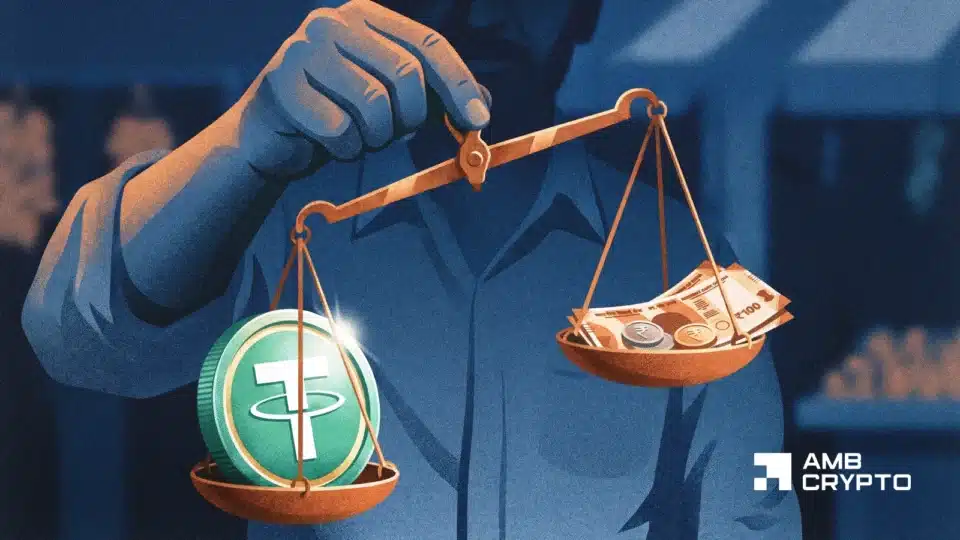
Pakistan has officially launched a crypto regulatory sandbox to advance its digital asset regulation plans. The Pakistan Virtual Assets Regulatory Authority (PVARA) will soon issue full guidelines for participants. The sandbox allows live testing of use cases like tokenization, stablecoins, and remittances under regulatory oversight. This initiative is part of Pakistan’s broader strategy to provide regulatory clarity, leveraging advice from Binance founder Changpeng Zhao. The country ranks high in global crypto adoption, and recent partnerships, including with World Liberty Financial, aim to explore stablecoins for cross-border transactions. PVARA has begun issuing No Objection Certificates as a step toward full licensing, with the sandbox helping identify compliance and anti-money laundering risks before the full framework rollout.

Pakistan has officially launched a crypto testing framework for regulated digital assets.

In a statement on the 20th of February, the Pakistan Virtual Assets Regulatory Authority (PVARA) said it will soon announce full guidelines for potential issuers who wish to participate in the ‘sandbox.’

Part of the statement read,

“The Sandbox creates a live, supervised environment for testing real-world use cases, including tokenization, stablecoins, remittances, and on- and off-ramp infrastructure under regulatory oversight.”

Pakistan’s crypto plan

Stablecoins have gone mainstream, while tokenized markets are picking up steam, now worth $25 billion.

The U.S, U.K., EU, UAE, Hong Kong, and others have rolled out crypto regulatory frameworks or are working towards one.

With crypto’s mainstream momentum becoming inevitable, Pakistan unveiled plans to gradually join major jurisdictions in offering regulatory clarity for the sector. In this ambitious goal, the country tapped Binance founder Changpeng Zhao (CZ) as a strategic advisor to the Pakistan Crypto Council (PCC).

The regulatory sandbox was first announced in mid-2025 to test the budding sector before finally approving it. Fast forward to 2026, and the framework is now live, bringing the country closer to regulatory clarity.

That said, the progress could help unlock the sector that has seen tremendous growth and adoption among Pakistani people. According to Chainalysis, Pakistan ranked second, after India, in crypto adoption across the APAC region in 2025. Globally, it was the third after India and the U.S.

In January, Pakistan announced a partnership with Donald Trump family-backed World Liberty Financial (WLFI), adding that,

“It will explore innovation in digital finance, particularly the use of stablecoins for cross-border transactions, signalling growing global interest in Pakistan as a key market for digital assets.”

For CZ, however, Pakistan’s bold strategy for the digital assets could pay off quickly in the next few years.

“If we keep moving at this speed in five years, Pakistan will be one of the crypto leaders in the world.”

Already, PVARA had begun issuing No Objection Certificates (NOCs), which the regulator said is the first step towards full licensing.

Overall, the sandbox will evaluate compliance weaknesses and various risks like anti-money laundering (AML) gaps. This would help fine-tune rules before full rollout of the framework.


Final Summary

  • Pakistan announced that its long-awaited crypto sandbox was live, and more details on licensing would be shared soon.
  • The report findings on the sandbox would help tighten its broader rules for the sector before unveiling the full crypto framework.


Пов'язані питання

QWhat is the name of the regulatory authority that launched Pakistan's crypto sandbox?

APakistan Virtual Assets Regulatory Authority (PVARA).

QWhat are some of the real-world use cases that the crypto sandbox will test?

ATokenization, stablecoins, remittances, and on- and off-ramp infrastructure.

QWho was tapped as a strategic advisor to the Pakistan Crypto Council (PCC)?

ABinance founder Changpeng Zhao (CZ).

QAccording to Chainalysis, how did Pakistan rank in global crypto adoption in 2025?

AThird, after India and the U.S.

QWhat is the purpose of issuing No Objection Certificates (NOCs) according to PVARA?

AIt is the first step towards full licensing.

Пов'язані матеріали

AGI Countdown: OpenAI's Chief Research Officer Makes Major Statement — The Window for Humanity is 'Very Small'

The countdown to AGI has begun, according to OpenAI's Chief Scientist Mark Chen, who states the window for human-centric progress is "very small." Chen argues that AI is reaching a point where models can perform "self-sustaining research," autonomously driving innovation in fields from mathematics to programming. He points to the proliferation of AI's "superhuman" insights—akin to AlphaGo's legendary "Move 37"—across disciplines as evidence of this shift. Chen firmly dismisses claims that scaling laws are plateauing or that pre-training is dead, asserting the field remains on an exponential curve. He cites OpenAI's successful bet on reasoning models like o1 as proof that fundamental breakthroughs are still possible. The future of research, he suggests, lies with "Vibe Researchers"—humans who provide high-level direction and "taste" while AI handles execution and orchestration of complex, long-horizon tasks. However, significant hurdles remain. Chen highlights a "benchmarking crisis," where models can overfit to existing tests without gaining true generalization. He also notes the "jagged frontier" of AI capabilities, where systems excel at advanced reasoning but struggle with contextual, continual learning from everyday experiences. Despite these challenges, he expresses confidence that these gaps will be closed. In a personal reflection, Chen shares that post-AGI, his wish is to open a noodle shop—a metaphor emphasizing that when AI masters knowledge and innovation, uniquely human experiences, warmth, and storytelling will become the ultimate form of value.

marsbit6 хв тому

AGI Countdown: OpenAI's Chief Research Officer Makes Major Statement — The Window for Humanity is 'Very Small'

marsbit6 хв тому

China's No.1, Closing in on OpenAI, Mysterious "Sweeping Monk" Rises to Top Seven Globally

A mysterious Chinese AI project named "MopMonk" (meaning "Sweeping Monk") has achieved a top-ranking result on the globally recognized CyberGym cybersecurity benchmark. With a 73.1% success rate, it ranks seventh worldwide and first among Chinese entries, performing closely behind OpenAI. The significance lies in the benchmark itself. CyberGym, created by UC Berkeley, is considered a premier "Olympics" for AI security. It tests models on over 1500 real-world software vulnerabilities, requiring them to not just identify but actually generate working exploits (PoCs) in a complex, offline environment. This moves beyond simple knowledge to testing an AI's practical "execution" capabilities. MopMonk's approach is notable. It uses the open-source MiniMax M3 model from Shanghai as its powerful reasoning "brain," leveraging its strong coding skills and long context window. However, the key to its performance is a custom-built, multi-agent security framework—its "Harness." This system uses structured "vulnerability memory" to efficiently guide the search for exploits, allowing multiple agents to explore in parallel while sharing lessons learned from failures. This engineering layer effectively translates the model's intelligence into actionable, iterative testing steps. The project remains highly secretive, with no official website or team information, embodying the "dark horse" spirit of its literary namesake. Its success highlights a potential industry shift: beyond simply scaling model size, the engineering of specialized agent systems (the Harness) is becoming a critical differentiator for real-world AI application performance, especially in complex domains like cybersecurity.

marsbit34 хв тому

China's No.1, Closing in on OpenAI, Mysterious "Sweeping Monk" Rises to Top Seven Globally

marsbit34 хв тому

Will History Repeat Itself? Fidelity Lists Five Catalysts to End the Crypto Winter

Fidelity's new report suggests that the current crypto winter for Bitcoin may be nearing its end, identifying five potential catalysts that could drive a market turnaround based on historical patterns. First, Bitcoin's approximately four-year cycle, driven by its halving mechanism, historically marks peaks and troughs. The last bottom was in November 2022, potentially pointing to the next around November 2026, though cycle length can vary. Second, clearer regulation has often preceded past bull markets. The focus is now on the CLARITY Act, which aims to clarify US digital asset oversight between the SEC and CFTC. Its passage could unlock domestic activity currently held back by legal uncertainty. Third, Federal Reserve monetary policy plays a role. A shift to lower interest rates tends to correlate with rising crypto prices by reducing borrowing costs and boosting risk appetite, though markets may price this in well ahead of any official change. Fourth, the emergence of breakthrough applications can fuel investor interest. Current trends like real-world asset tokenization, AI-related crypto infrastructure, and stablecoins are being watched, but history shows the biggest catalysts are often unexpected. Fifth, a new wave of institutional adoption could be a trigger. While ongoing adoption in 2026 hasn't sparked a new bull run, a major unexpected move—like a significant purchase by a tech giant or adoption as a hedge in a global crisis—could create a powerful new narrative. Fidelity concludes that while the market is in a downturn, historical turning points have often resulted from a combination of such factors, and the next phase for Bitcoin may depend on which of these catalysts materializes first.

Foresight News42 хв тому

Will History Repeat Itself? Fidelity Lists Five Catalysts to End the Crypto Winter

Foresight News42 хв тому

US CFTC Launches Broad Investigation into Polymarket, Is the Prediction Market Party Coming to an End?

The U.S. Commodity Futures Trading Commission (CFTC) is conducting a broad investigation into the prediction market platform Polymarket, focusing on its business practices including social media promotions. This follows a bipartisan letter from U.S. senators urging the CFTC to probe alleged fraudulent marketing tactics used to promote gambling-like products. The action coincides with a period of explosive growth for the prediction market sector, driven by events like the World Cup, with platforms like Kalshi and Robinhood reporting record trading volumes and revenue. The investigation signals a potential end to the sector's unregulated expansion and may lead to clearer federal oversight, particularly regarding investor protection and distinguishing prediction markets from traditional sports betting. The CFTC's move has also intensified a jurisdictional conflict with multiple U.S. states (including Kentucky and New York), which have sued platforms like Polymarket and Kalshi, accusing them of operating illegal sports betting and threatening state gambling tax revenues. Furthermore, the CME Group has sued the CFTC, challenging its approval of certain prediction market products. The report also highlights the political and capital interests intertwined with the industry. Donald Trump Jr. holds advisory and investment roles in both Kalshi and Polymarket, and the Trump administration has previously emphasized federal regulatory authority over these markets. The CFTC's investigation into Polymarket is framed as a step towards formalizing the industry's regulatory landscape, moving it from a phase of "wild growth" towards a more structured future.

marsbit2 год тому

US CFTC Launches Broad Investigation into Polymarket, Is the Prediction Market Party Coming to an End?

marsbit2 год тому

Торгівля

Спот
活动图片