# Пов'язані статті щодо Market Expectations

Центр новин HTX надає останні статті та поглиблений аналіз на тему "Market Expectations", що охоплює ринкові тренди, оновлення проєктів, технологічні розробки та регуляторну політику в криптоіндустрії.

Will the Fed Raise Interest Rates in September? Latest Probability Indicators Here!

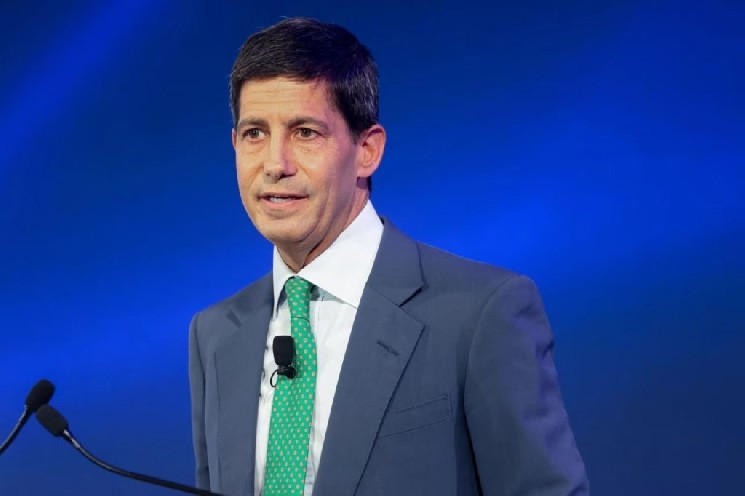
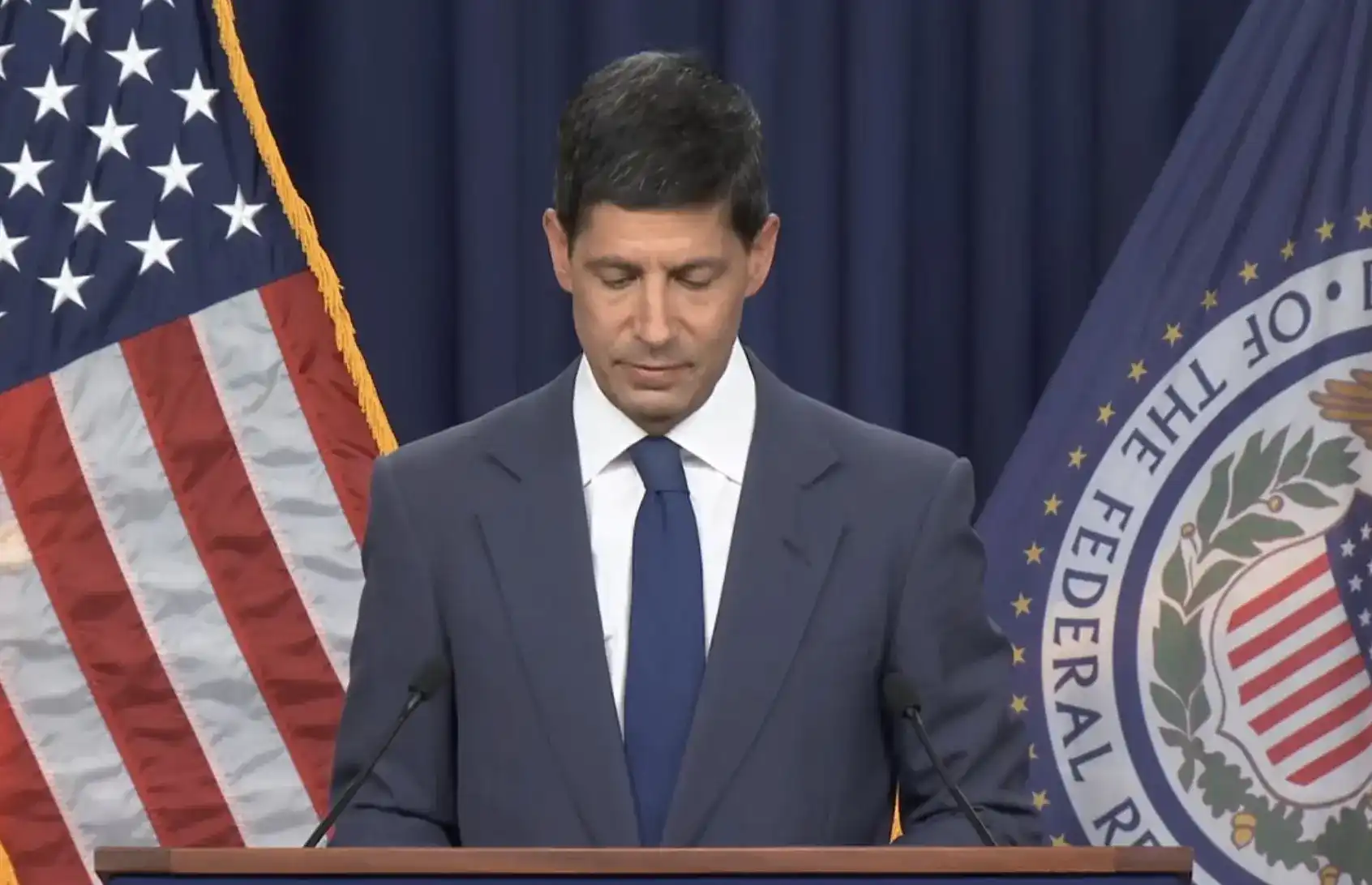
Will the Fed raise interest rates in September? Market expectations have shifted significantly following cautious inflation remarks from Fed Chairman Kevin Warsh. The probability of a September rate hike has surged, with market-implied odds now around 55-56% for an increase, a sharp rise of about 20 basis points in a single day. The likelihood of rates remaining unchanged is approximately 55%, while a 25-basis-point hike is priced at about 46%. Chairman Warsh, speaking at the Jackson Hole symposium, acknowledged some positive summer inflation data but stated it does not indicate a substantial improvement in underlying inflation trends. He emphasized the need for clear and timely progress toward the Fed's inflation target, warning that further policy tightening may be necessary. Following his comments, U.S. Treasury yields rose sharply. The yield on the two-year note, highly sensitive to Fed policy expectations, increased about 8 basis points to 4.31%, reaching its highest level since late July. This surge reflects investor expectations of potential near-term monetary tightening. Key inflation and employment data due in the weeks leading up to the September 16th meeting are seen as crucial for final rate decision expectations. Persistently high inflation could increase the odds of a hike, while a significant slowdown in price pressures might bolster the case for holding rates steady.

cryptonews.ru5 год тому

Will the Fed Raise Interest Rates in September? Latest Probability Indicators Here!

cryptonews.ru5 год тому

Walsh May "Beat Around the Bush" at Global Central Bankers' Conference, but Internal Fed Division Is the Real Focus?

With the annual Jackson Hole symposium approaching, market expectations are rising for clues from Federal Reserve Chair Kevin Wash's upcoming speech on September monetary policy. However, analysts caution that expectations for clear guidance may be overstated, while underestimating the Fed's growing internal divisions. Since taking office in May, Wash has adopted a notably less communicative style than his predecessor, downplaying forward guidance and emphasizing policy independence from market pricing. His scheduled speech on "Financial Innovation in Payments" is thus more likely to focus on broad narratives than near-term policy signals. The more significant focus lies within the Fed itself. At Wash's first meeting in June, nearly half the committee's dot plot projections hinted at a 2026 rate hike need. The July meeting saw three regional Fed presidents dissent in favor of an immediate rate increase—an unusually high level of early-term dissent. This internal rift presents a clearer signal of policy uncertainty than any public speech. Market pricing currently shows high conviction for a September pause, with prediction markets assigning roughly a 74% probability to unchanged rates. Despite this consensus, traders remain wary of potential hawkish surprises amid mixed economic data. Analysts suggest that for investors, tracking the evolving voting patterns within the FOMC may offer more insight into future rate direction than parsing Wash's likely guarded Jackson Hole remarks.

marsbit08/18 10:56

Walsh May "Beat Around the Bush" at Global Central Bankers' Conference, but Internal Fed Division Is the Real Focus?

marsbit08/18 10:56

Polymarket and Kalshi Give Signals But Do Not Guarantee a Predicted Outcome

Prediction markets like Polymarket and Kalshi are becoming a significant source of information for investors. Their main advantage is that participants stake their own money on specific outcomes, allowing contract prices to be interpreted as market-assessed probabilities. For instance, a YES contract priced at $0.65 on Kalshi suggests an approximately 65% likelihood of an event occurring. However, this is not a pure probability, as it is influenced by liquidity, spreads, fees, capital constraints, and informational differences among participants. A key question arises: does a high probability for an event on these platforms imply that the bitcoin or broader crypto market will follow suit? The answer is no. Prediction markets and crypto markets serve different purposes: the former assesses the likelihood of specific events, while the latter allocates capital and determines asset prices. Betting on an event is not the same as betting on an asset. For example, a signal forecasting a Federal Reserve interest rate cut is relevant, but it may already be priced into crypto markets through futures, options, or spot positions. The crypto price is shaped by existing capital commitments, leverage, liquidity, and the need to close trades, not just expectations. While prediction markets are useful for aggregating information and have shown accuracy in events like political elections, they should not be viewed as direct trading signals for assets like bitcoin. Research involving millions of trades indicates that the calibration of probabilities varies by event category, time horizon, trade size, and platform. Therefore, these markets offer valuable supplementary data but do not guarantee corresponding asset price movements.

cryptonews.ru08/17 09:58

Polymarket and Kalshi Give Signals But Do Not Guarantee a Predicted Outcome

cryptonews.ru08/17 09:58

Report: Bank of Japan Could Raise Interest Rates as Early as September, with Subsequent Pace Possibly Accelerating

According to Reuters, the Bank of Japan (BOJ) faces mounting pressure to raise interest rates, with a potential hike as early as September. Sources familiar with the internal discussions indicate the central bank is considering accelerating its tightening pace beyond the current schedule of roughly two increases per year. The September 17-18 policy meeting is now viewed as a critical juncture, with market pricing suggesting an approximately 80% probability of a rate hike. This would mark a third increase for 2024, potentially shifting expectations toward a quarterly tightening cycle. Key drivers behind this hawkish shift are multifaceted inflation risks. A persistently weak yen, near a 40-year low, continues to push up import costs. High wholesale prices at a three-year peak signal pending cost pass-through to consumers. Furthermore, inflation expectations among households, businesses, and economists are nearing or exceeding the BOJ's 2% target, raising concerns about de-anchoring. External factors, including energy price volatility from Middle East conflicts and strong global AI-related demand, add further upward pressure. Internal BOJ communications reveal a growing urgency. The July policy meeting summary showed some board members advocating for faster action to avoid "falling behind the curve." Governor Kazuo Ueda acknowledged the need to consider these heightened inflation risks, suggesting the pace of hikes could be increased if financial conditions are deemed too loose. This sentiment underscores a decisive shift within the BOJ toward preemptive monetary tightening.

marsbit08/14 07:05

Report: Bank of Japan Could Raise Interest Rates as Early as September, with Subsequent Pace Possibly Accelerating

marsbit08/14 07:05

New Fed Correspondent: Inflation Data 'Neither Hot Nor Cold' Offers Fed Temporary Respite but Future Path Remains Uncertain

Inflation data for July came in as expected, providing the Federal Reserve with some breathing room ahead of its September meeting, though the longer-term policy path remains uncertain. The core CPI rose 0.2% month-over-month and 2.5% year-over-year, in line with forecasts, easing immediate pressure for a rate hike. Following the report, market expectations for a September rate increase fell below 50%. Despite the temporary respite, deep divisions persist within the Fed. At least six of the twelve voting members have recently signaled openness to further tightening, with three having voted for a hike in July. The debate centers on whether current rates are sufficiently restrictive to bring inflation back to the 2% target or if persistent factors like tariffs, energy prices, and surging demand from AI infrastructure necessitate more action. San Francisco Fed President Mary Daly highlighted the growing complexity, outlining two potential scenarios: a baseline where inflationary pressures fade, allowing for rates to hold steady, and an alternative where shocks persist and inflation gains self-reinforcing momentum. She suggested that if the latter materializes, the policy response might need to be more aggressive than the typical 25-basis-point increments. With Fed Chair Wash adopting a less forward-leaning public stance, markets are closely monitoring data and other officials' comments for clues. The upcoming August CPI report, due just days before the September FOMC meeting, is now seen as a critical determinant for the final decision.

marsbit08/13 02:11

New Fed Correspondent: Inflation Data 'Neither Hot Nor Cold' Offers Fed Temporary Respite but Future Path Remains Uncertain

marsbit08/13 02:11

US CPI Data Tonight May Significantly Weaken September Rate Hike Expectations?

The key to whether the Fed will raise rates in September may hinge on tonight's US CPI data for July, scheduled for release at 8:30 AM ET. Market consensus expects a 0.1% MoM increase in headline CPI and 0.2% for core CPI. Following a surprisingly weak non-farm payrolls report last week, this data is a crucial test for September rate hike expectations. A mild reading could further dampen hike probabilities, while a hotter-than-expected report would increase pressure on the already hawkish-leaning Fed. Current market pricing for a September hike is around 50%. Analysts from Goldman Sachs and others predict data will likely land within expectations. Headline inflation is expected to be subdued mainly due to falling energy prices, while core inflation remains above target. Despite the likely mild data, hawkish voices within the Fed are growing. Several officials have recently indicated a preference for further tightening. The Fed's policy stance remains highly sensitive to inflation data. Market analysis suggests equities and bonds will face pressure if data is hot. A Morgan Stanley scenario analysis shows S&P 500 reactions ranging from a 2.5% drop to a 2% gain based on the core CPI outcome. Longer-term concerns include potential "AI inflation" from rising memory prices and market signals suggesting strong earnings growth may necessitate higher rates. Ultimately, even with tonight's data, the September decision remains open. The Fed will see additional employment, CPI, and PPI reports before its September meeting, leaving room for policy expectations to shift further.

marsbit08/12 10:01

US CPI Data Tonight May Significantly Weaken September Rate Hike Expectations?

marsbit08/12 10:01

From Polymarket to U.S. Stock Trading: How Events Map to Asset Prices

From Polymarket to Stock Trading: How Events Map to Asset Prices Polymarket, a prediction market platform, lists numerous contracts tied to financial events like CPI reports, nonfarm payrolls, FOMC decisions, regulatory policies, and major corporate earnings—all of which influence US stock prices. Instead of relying solely on static analyst forecasts, Polymarket converts expectations of different event outcomes into real-time prices, allowing traders to observe what the market is currently pricing in. The core mechanism can be summarized as: Event Probability → Market Expectations → Changes in Interest Rates, Earnings, or Risk Appetite → Repricing of US Stocks. The primary use of Polymarket is to identify the market's current "anchor" of expectations and the direction in which those expectations are shifting. For traders, the key isn't trading the event itself, but the deviation of the actual outcome from these pre-event expectations. Polymarket helps pinpoint which outcomes are already heavily priced in and which low-probability results could cause significant market shocks if they occur. Furthermore, traders can use Polymarket for cross-market validation. A divergence—for instance, rising inflation probabilities on Polymarket without a corresponding move in Treasury yields or the US dollar—may signal a mispricing or that other markets are discounting the risk. Conversely, if asset prices move sharply while Polymarket probabilities remain stable, it suggests the market is trading on risks not yet reflected in the prediction markets. To utilize this tool, traders should: 1) Understand the event and its settlement rules, 2) Monitor Polymarket's probability levels, momentum, and market depth, 3) Determine if the event primarily impacts interest rates, corporate earnings, or risk sentiment, 4) Identify the most sensitive assets (e.g., indices, sectors, stocks), 5) Validate signals with moves in Treasury yields, the dollar, the VIX, and options markets, and 6) Act on any identified pricing discrepancies. In conclusion, Polymarket serves best as an event expectation monitor, a cross-market verification tool, and a reference for tail risks. Its value lies not in triggering trades based on probability shifts alone, but in integrating those shifts into the broader asset pricing framework—considering interest rates, earnings, and risk premiums—and then validating them against actual market prices. The key lesson is to watch what the market does, not just what analysts say.

marsbit08/12 07:11
From Polymarket to U.S. Stock Trading: How Events Map to Asset Prices

marsbit08/12 07:11

Report: Warsh Prepared to Raise Interest Rates in September if Inflation Data Remains Strong in Coming Weeks

Report: Fed Chair Walsh Prepared to Hike Rates in September If Upcoming Inflation Data Stays Strong According to a Financial Times report, Federal Reserve Chair Walsh is prepared to raise interest rates at the September policy meeting if inflation data in the coming weeks remains hot and market expectations for a hike increase. Following this news, short-term US Treasury yields rose. Walsh has adhered to a pared-back communication strategy despite recent market volatility and criticism that his limited guidance has weakened the Fed's inflation-fighting credibility. Sources close to his thinking acknowledge some communication missteps since he took office but insist these won't derail his overall reform agenda. His most significant policy shift has been drastically reducing forward guidance, a practice he has long criticized for boxing in policymakers. Futures markets now price in roughly a 55% chance of a 25-basis-point rate increase in September. Sources indicate that while Walsh has raised the possibility of using balance sheet reduction to tighten policy, interest rates remain the primary tool for now. The Fed's preferred inflation gauge was at 3.7% in June. Walsh is expected to deliver his first major speech at the upcoming Jackson Hole symposium, seen as a key opportunity to clarify his policy framework and address perceived shortcomings in his messaging.

marsbit08/06 13:16

Report: Warsh Prepared to Raise Interest Rates in September if Inflation Data Remains Strong in Coming Weeks

marsbit08/06 13:16

SanDisk Reports Record Earnings, Why Did It Still Plunge 8% After Hours?

SanDisk Reports Record Earnings, Yet Stock Plunges 8% After-Hours Despite announcing record-breaking Q4 and full-year fiscal 2026 results, SanDisk's stock fell sharply. Key figures were stellar: Q4 revenue surged 372% YoY to $8.97B, beating estimates, with adjusted EPS skyrocketing to $39.25. Full-year revenue hit $20.25B, with a dramatic swing from a $1.64B loss in FY2025 to an $11.43B GAAP profit, highlighting a powerful recovery driven by the NAND cycle and AI demand. The market's negative reaction stemmed from future guidance failing to meet elevated expectations. SanDisk's Q1 FY2027 revenue guidance of $10.3B-$10.8B (midpoint $10.55B) fell short of the $11.16B consensus, creating a roughly 5.5% gap. Investors are concerned not with past performance but with whether growth can accelerate further. Business segment analysis revealed a strategic shift. Data Center revenue was the standout, soaring nearly 13x YoY to $2.98B and becoming a key growth pillar at 33% of revenue. The larger Edge Computing segment also grew robustly by 392%. However, Consumer revenue declined 5% YoY, reflecting weak traditional electronics demand. Management highlighted strategic moves, including securing five new or expanded long-term supply agreements under its "New Business Model," aiming to lock in over half of FY2027 supply to smooth cyclical volatility. A new $14B stock buyback authorization signaled confidence but couldn't offset short-term guidance disappointment. The core issue is that the market is trading on the "acceleration of growth." While SanDisk's fundamentals remain strong—with record revenue and an 84.6% adjusted gross margin—the stellar performance was already priced in. The guidance, while still indicating high growth (~359% YoY), did not show further acceleration, causing a "sell the news" reaction as expectations had outpaced reality.

Odaily星球日报08/06 07:07

SanDisk Reports Record Earnings, Why Did It Still Plunge 8% After Hours?

Odaily星球日报08/06 07:07

活动图片