# Пов'язані статті щодо HBM

Центр новин HTX надає останні статті та поглиблений аналіз на тему "HBM", що охоплює ринкові тренди, оновлення проєктів, технологічні розробки та регуляторну політику в криптоіндустрії.

The US Stock Market in 2026, It's Almost Too Easy, and That Makes Me Nervous

The U.S. stock market's performance in 2026, particularly in the semiconductor memory sector, has generated significant returns that make some investors uneasy. A popular sentiment contrasts the perceived skill required for success in China's A-shares with the apparent ease of profiting from simply holding U.S. stocks. The primary driver is a global memory chip boom. Stocks like Micron, Seagate, Western Digital, and especially SanDisk (spinning off from WDC in 2025) have skyrocketed, with some gains exceeding 500% or even 2200%. Korean giants Samsung and SK Hynix, dominating their domestic index, have also surged. This rally is fueled by an AI-driven demand surge for memory like HBM (High-Bandwidth Memory), critical for AI chips. Tech giants like Google and Microsoft are placing massive, "unpriced" orders, while analysts continuously upgrade forecasts. SK Hynix reported its 2026 HBM capacity is already sold out. Despite record profits and sky-high margins (e.g., SK Hynix's 72% operating margin), major memory manufacturers are deliberately restricting capital expenditure and capacity expansion, controlling over 90% of DRAM supply. This supply discipline sustains high prices but draws parallels to cartel behavior. The situation presents two narratives. The bullish case sees AI demand as a structural, long-term shift with a prolonged supply gap. The bearish case, exemplified by short-seller Citron's failed bet against SanDisk, warns of a classic commodity cycle where prices eventually crash rapidly, as seen historically. The irony is noted: while retail investors marvel at easy gains, insiders like Western Digital are selling SanDisk shares at a 25% discount. Ultimately, the high cost of memory in consumer devices feeds into the record profits of memory companies and the soaring stock prices, leading many to question the sustainability of a market where making money seems "as easy as breathing."

marsbit3 год тому

The US Stock Market in 2026, It's Almost Too Easy, and That Makes Me Nervous

marsbit3 год тому

Where Is the AI Infrastructure Industry Chain Stuck?

The AI infrastructure (AI Infra) industry chain is facing unprecedented systemic bottlenecks, despite the rapid emergence of applications like DeepSeek and Seedance 2.0. The surge in global computing demand has exposed critical constraints across multiple layers of the supply chain—from core manufacturing equipment and data center cabling to specialty materials and cleanroom facilities. Key challenges include four major "walls": - **Memory Wall**: High-bandwidth memory (HBM) and DRAM face structural shortages as AI inference demand outpaces training, with new capacity not expected until 2027. - **Bandwidth Wall**: Data transfer speeds lag behind computing power, causing multi-level bottlenecks in-chip, between chips, and across data centers. - **Compute Wall**: Advanced chip manufacturing, reliant on EUV lithography and monopolized by ASML, remains the fundamental constraint, with supply chain fragility affecting production. - **Power Wall**: While energy demand from data centers is rising, power supply is a solvable near-term challenge through diversified energy infrastructure. Expansion is further hindered by shortages in testing equipment, IC substrates (critical for GPUs and seeing price hikes over 30%), specialty materials like low-CTE glass fiber, and high-end cleanroom facilities. Connection technologies are evolving, with copper cables resurging for short-range links due to cost and latency advantages, while optical solutions dominate long-range scenarios. Innovations like hollow-core fiber and advanced PCB technologies (e.g., glass substrates, mSAP) are emerging to meet bandwidth needs. In summary, AI Infra bottlenecks are multidimensional, spanning compute, memory, bandwidth, power, and supply chain logistics. Advanced chip manufacturing remains the core constraint, while substrate, material, and equipment shortages present immediate challenges. The industry is moving toward hybrid copper-optical solutions and accelerated domestic supply chain development.

marsbit04/21 10:34

Where Is the AI Infrastructure Industry Chain Stuck?

marsbit04/21 10:34

Bank of Korea Interprets the AI Semiconductor Cycle: The Most Dangerous Signal Lies in Financing

The Bank of Korea (BoK) released a report examining the sustainability of the current AI-driven semiconductor supercycle, concluding that the expansion is likely to continue until at least the first half of 2026. The report highlights three key differences from past cycles: unprecedented demand growth (driven by HBM and AI accelerators), severely constrained supply (due to complex HBM production and conservative industry expansion), and a significantly larger and longer supply-demand gap. Five critical factors will determine the cycle's longevity: 1. The profitability of AI investments, as market focus shifts from market share capture to earnings. 2. The ability of major tech firms to secure financing, with internal cash flows already insufficient to cover massive CAPEX, leading to increased corporate debt issuance and risky vendor financing structures reminiscent of the telecom bubble. 3. Uncertain impact of AI model efficiency improvements, which could either reduce per-unit demand or increase total consumption. 4. Expansion speed of major memory manufacturers, with significant new capacity from SK Hynix, Micron, and Samsung only expected from late 2027. 5. Ramping production from Chinese manufacturers, whose DRAM market share is projected to grow rapidly, pressuring prices. The report warns that financing fragility—evidenced by rising CDS spreads, off-balance-sheet SPV financing, and redemption halts in private credit funds—is the most critical risk. While the cycle remains robust through 2026, pressures are expected to build in 2027, with a heightened risk of overcapacity by 2028.

marsbit04/13 08:51

Bank of Korea Interprets the AI Semiconductor Cycle: The Most Dangerous Signal Lies in Financing

marsbit04/13 08:51

From 6000 Points to Two Circuit Breakers: A Missile Exposes South Korea's Stock Market Weakness

The South Korean Stock Exchange (KOSPI) experienced two consecutive trading halts (circuit breakers) on March 3 and 4, 2026, plunging nearly 13% from a recent high of 6,244 points. This sharp decline, triggered by escalating U.S.-Iran tensions and the closure of the Strait of Hormuz, exposed the extreme vulnerability of South Korea's stock market, which is heavily reliant on semiconductor stocks, particularly Samsung Electronics and SK Hynix. These two companies, dominating the global HBM (high-bandwidth memory) market crucial for AI and GPUs, had driven KOSPI's 75.6% surge in 2025. However, the market's concentration on chip exports, which account for over a third of total exports, became its Achilles' heel. The closure of the Strait of Hormuz—a vital shipping route for liquefied natural gas (LNG), which fuels nearly a third of Korea's power generation—threatened energy supplies and semiconductor manufacturing costs. While defense stocks surged on geopolitical tensions, foreign investors sold a record $8.5 billion in Korean shares over two days, highlighting the market's liquidity and its status as a prime target for rapid capital flight during global panic. Retail investors attempted to buy the dip, but were overwhelmed by the sell-off. The crash underscored deeper structural risks beyond corporate governance reforms: South Korea's market is exceptionally exposed to a single industry dependent on imported energy and vulnerable to global shocks. The incident demonstrated that while fundamentals may drive long-term growth, sentiment and geopolitics can erase gains rapidly.

比推03/04 13:31

From 6000 Points to Two Circuit Breakers: A Missile Exposes South Korea's Stock Market Weakness

比推03/04 13:31

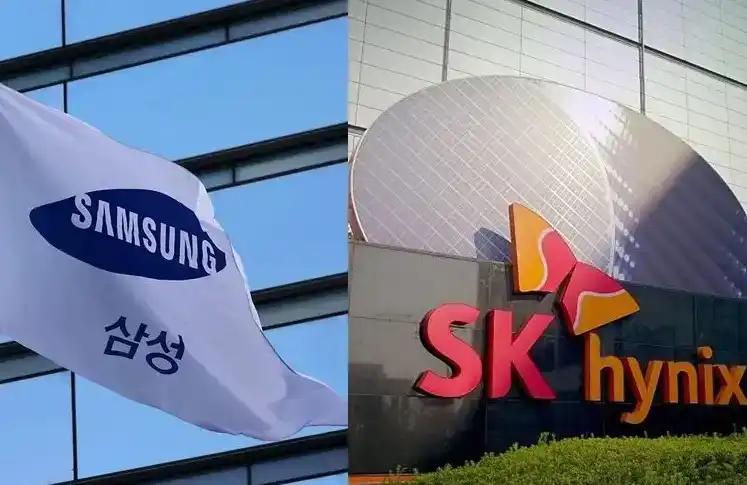
South Korean Youth Trading Stocks Overnight, Diving Headfirst into Samsung and SK Hynix

The article details a significant shift in South Korea's investment landscape, where young retail investors are moving from volatile cryptocurrencies to the booming semiconductor stocks, particularly Samsung Electronics and SK Hynix. This transition is driven by the explosive demand for AI-related chips, specifically High Bandwidth Memory (HBM), where these two Korean giants hold a near-oligopoly alongside Micron. Due to unprecedented demand from cloud providers, AI firms, and electronics manufacturers, HBM supply is critically low, with SK Hynix's inventory at a historic low of just four weeks. This scarcity has led to massive price increases for HBM and DRAM chips, fueling a dramatic surge in the companies' stock prices—SK Hynix's stock is up sixfold and Samsung's has quadrupled since early 2025. This rally has propelled the Korean KOSPI index past 6000 points, making it a top-performing global market. The piece explains that the AI era has inverted the traditional tech profit structure. HBM, now a critical and irreplaceable component for advanced GPUs, has given upstream memory suppliers unprecedented pricing power over downstream customers like NVIDIA. This has led to a fundamental "re-rating" of these semiconductor stocks. Consequently, online forums once dominated by crypto talk are now focused on "AI semiconductor concept stocks." Trading volume on crypto exchanges has plummeted, while stock market activity has soared. This shift is further encouraged by government policies aimed at strengthening the stock market and retaining domestic capital. The trend is so powerful that crypto exchanges have begun offering leveraged perpetual contracts on Korean stocks, symbolizing that in the AI age, semiconductors have become a more compelling investment than cryptocurrencies.

marsbit02/27 13:21

South Korean Youth Trading Stocks Overnight, Diving Headfirst into Samsung and SK Hynix

marsbit02/27 13:21

活动图片