From 6000 Points to Two Circuit Breakers: A Missile Exposes South Korea's Stock Market Weakness

比推Опубліковано о 2026-03-04Востаннє оновлено о 2026-03-04

Анотація

The South Korean Stock Exchange (KOSPI) experienced two consecutive trading halts (circuit breakers) on March 3 and 4, 2026, plunging nearly 13% from a recent high of 6,244 points. This sharp decline, triggered by escalating U.S.-Iran tensions and the closure of the Strait of Hormuz, exposed the extreme vulnerability of South Korea's stock market, which is heavily reliant on semiconductor stocks, particularly Samsung Electronics and SK Hynix. These two companies, dominating the global HBM (high-bandwidth memory) market crucial for AI and GPUs, had driven KOSPI's 75.6% surge in 2025. However, the market's concentration on chip exports, which account for over a third of total exports, became its Achilles' heel. The closure of the Strait of Hormuz—a vital shipping route for liquefied natural gas (LNG), which fuels nearly a third of Korea's power generation—threatened energy supplies and semiconductor manufacturing costs. While defense stocks surged on geopolitical tensions, foreign investors sold a record $8.5 billion in Korean shares over two days, highlighting the market's liquidity and its status as a prime target for rapid capital flight during global panic. Retail investors attempted to buy the dip, but were overwhelmed by the sell-off. The crash underscored deeper structural risks beyond corporate governance reforms: South Korea's market is exceptionally exposed to a single industry dependent on imported energy and vulnerable to global shocks. The incident demonstrated ...

Author: David, Shenchao TechFlow

Original Title: From 6000 Points to Two "Circuit Breakers": South Korea's Semiconductor Myth Paused by a Middle Eastern Missile


As the US-Iran conflict continues, global capital markets are panicking, with the South Korean stock market performing particularly badly.

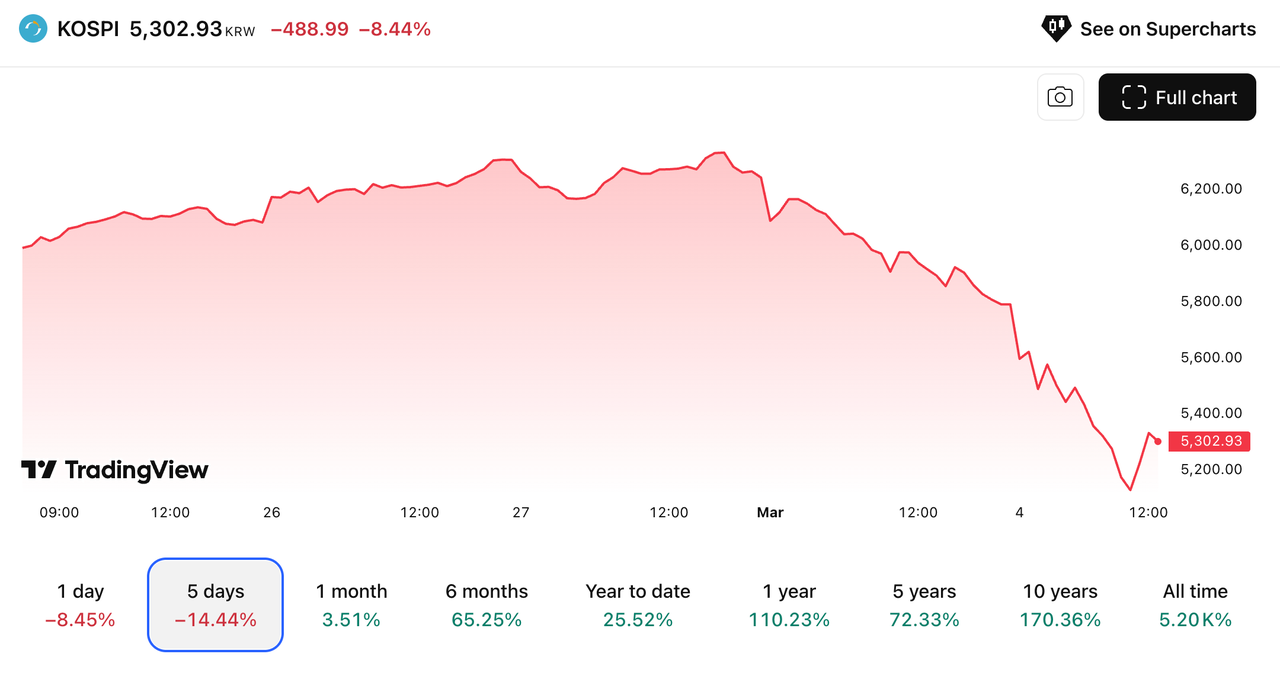
On March 3, the Korea Composite Stock Price Index (KOSPI) fell 7.24%, triggering trading limits. Samsung Electronics fell nearly 10%, and SK Hynix fell 11.5%;

On March 4, which is today, the KOSPI fell over 8% during the session, triggering another circuit breaker and halting trading for 20 minutes. It closed down about 6% at 5440 points. Samsung fell another 5.1%, and Hynix fell another 3.9%.

Two trading days, two circuit breakers. The South Korean stock market fell from 6244 to 5440, a drop of nearly 13%. This is the worst consecutive plunge since 2008.

Yet just a week earlier, on February 25, the KOSPI had just broken through 6000 points. The total market capitalization of the South Korean stock market rose to 3.76 trillion USD, surpassing France to rank ninth globally; Samsung and Hynix were still the most recommended stocks by investment bloggers.

The Middle East is at war, global markets are falling, but why is South Korea falling the hardest?
Buying Korean Stocks is Buying Memory

The bull market in the South Korean stock market over the past year is, simply put, the story of two companies.

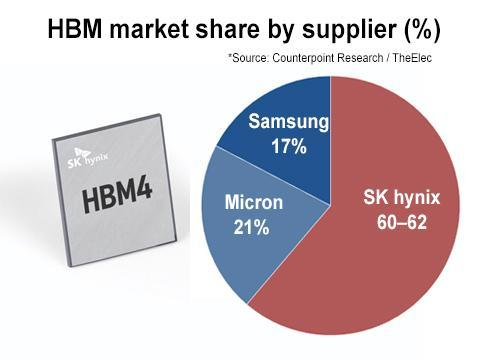
Global AI training requires GPUs, and GPUs require a type of high-bandwidth memory called HBM. The production barrier for this is extremely high, and there are essentially only three companies in the world that can mass-produce it: SK Hynix, Samsung, and Micron.

Among them, SK Hynix alone captures over half of the market share, Samsung about 30%. Combined, the two South Korean companies control over 80% of the global HBM market capacity.
Nvidia is their biggest customer. Every H100, every B200 shipped requires Korean memory. In 2025, Nvidia's quarterly revenue reached 68.1 billion USD, a significant portion of which ultimately flowed into the pockets of SK Hynix and Samsung.

Reflected in the stock prices: in 2025, SK Hynix rose 274%, Samsung rose 125%. The entire KOSPI index rose 75.6%, with nearly half of the gains contributed by these two stocks.

Buying the Korean大盘 (broad market) is essentially buying memory chips.

This year is even more intense. In the first 20 days of February, South Korea's chip export value surged 134% year-on-year to 15.1 billion USD, accounting for over one-third of total exports. Goldman Sachs said that in 2026, South Korean stock market profit growth is expected to be 120%, with 88 percentage points coming from tech hardware.

Translated: remove chips, and the growth of the South Korean stock market is just a fraction.

It took KOSPI 34 days to go from 5000 to 6000 points. During these 34 days, Nomura Securities called for a target price of 8000, J.P. Morgan said 7500, Goldman Sachs adjusted to 6400. Behind each number is the same assumption:

AI computing power demand has no ceiling, so Korean chips have no ceiling.

Close the Strait, Where Does the Power Come From

But making chips requires electricity.

Where does South Korea's electricity come from? Natural gas and coal each account for about 27%, nuclear power about 30%. South Korea produces neither natural gas nor coal itself; it relies entirely on imports. South Korea is the world's third-largest liquefied natural gas (LNG) importer, after China and Japan.

On February 28, the US and Israel jointly launched airstrikes on Iran. After Khamenei's death was confirmed, Iran announced the closure of the Strait of Hormuz.

This strait is 33 km wide at its narrowest point. About one-fifth of the world's oil and a large amount of LNG pass through it. Qatar is one of the world's largest LNG exporters and a major source for South Korea; its ships must pass through this strait to leave port.

Close the strait, oil prices soar first, natural gas follows; the global energy market has always been interconnected.

Public information shows European natural gas prices rose nearly 50%, Asian natural gas prices rose nearly 40%. Major supplier Qatar Energy suspended LNG production after its facilities were attacked.
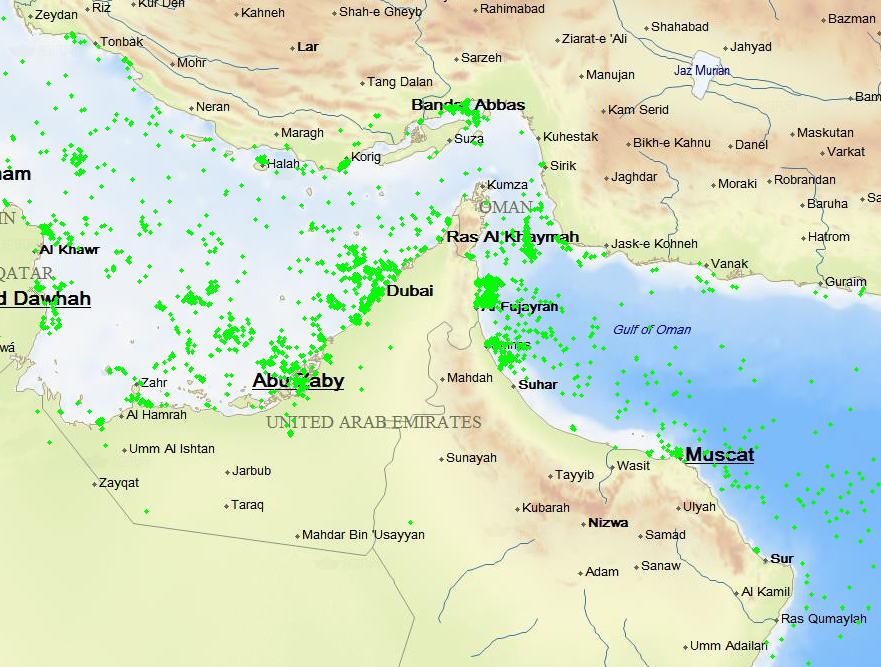
Fig: Ship tracking data shows the number of vessels transiting the Strait of Hormuz dropped significantly on March 1 local time | Source: Ship Search Network

Samsung and Hynix chips are not created out of thin air. One HBM goes through thousands of processes from wafer to packaging, each consuming electricity. Semiconductor manufacturing is one of the most energy-intensive industries in the world.

Theoretically, the chain is like this:

Nvidia places an order, SK Hynix starts work, the factory needs electricity, power generation needs natural gas, natural gas needs to pass through the Strait of Hormuz, the strait is now closed.

The Korean market was closed on March 1, coinciding with their Samiljeol holiday. Other markets panicked all weekend, Korean investors could only watch.

Tuesday opening, three days of panic compressed into one bearish candlestick. Samsung fell nearly 10%, Hynix fell 11.5%. Gas prices rise, electricity prices must rise, chip margins are eaten into, factory utilization rates are also in doubt.

Wednesday was worse. Iran moved from threat to action, actually interfering with strait shipping. Brent crude rose above 82 USD, natural gas also began to soar. Samsung fell nearly 15% over two days, Hynix fell 15%.

But in the same Korean exchange, Hanwha Aerospace rose nearly 20% on March 3, LIG Nex1 rose 30% hitting the upper limit.

These two companies, the former makes fighter jets and missile engines, the latter makes air defense systems and precision-guided weapons. The Middle East is at war, the whole world needs to replenish inventories.

On one side, chip makers are falling; on the other, missile makers are rising.

Has the Korea Discount Disappeared?

The South Korean stock market has a nickname: the "Korea Discount".

It means the same company, listed in South Korea, is cheaper than if listed in the US or Japan. Samsung Electronics and TSMC are both chip giants with similar profitability, but TSMC's price-to-book ratio has long been two to three times that of Samsung.

You can understand it as the same dish being cheaper in Seoul than in New York.

Why? Because South Korea's large companies are almost all controlled by chaebol families. Samsung, Hyundai, SK, LG—the founding families use pyramid-style cross-shareholdings to control the entire group with very few shares.

Earnings aren't paid as dividends, treasury shares aren't canceled, the board is filled with their own people, independent directors haven't cast a single dissenting vote in five years. Foreign investors look at this and think investing money is just working for someone else, forget it.

How long has this discount lasted? Over the past decade, the S&P 500 rose 179%, the Nikkei rose 155%, India rose 255%, even Brazil rose 167%.

KOSPI rose only 35%.

In 2025, the new president, Lee Jae-myung, took office, amended commercial law, forced dividends, mandated cancellation of treasury shares, and flew to the New York Stock Exchange to tell Wall Street: the Korea Discount will become the Korea Premium.
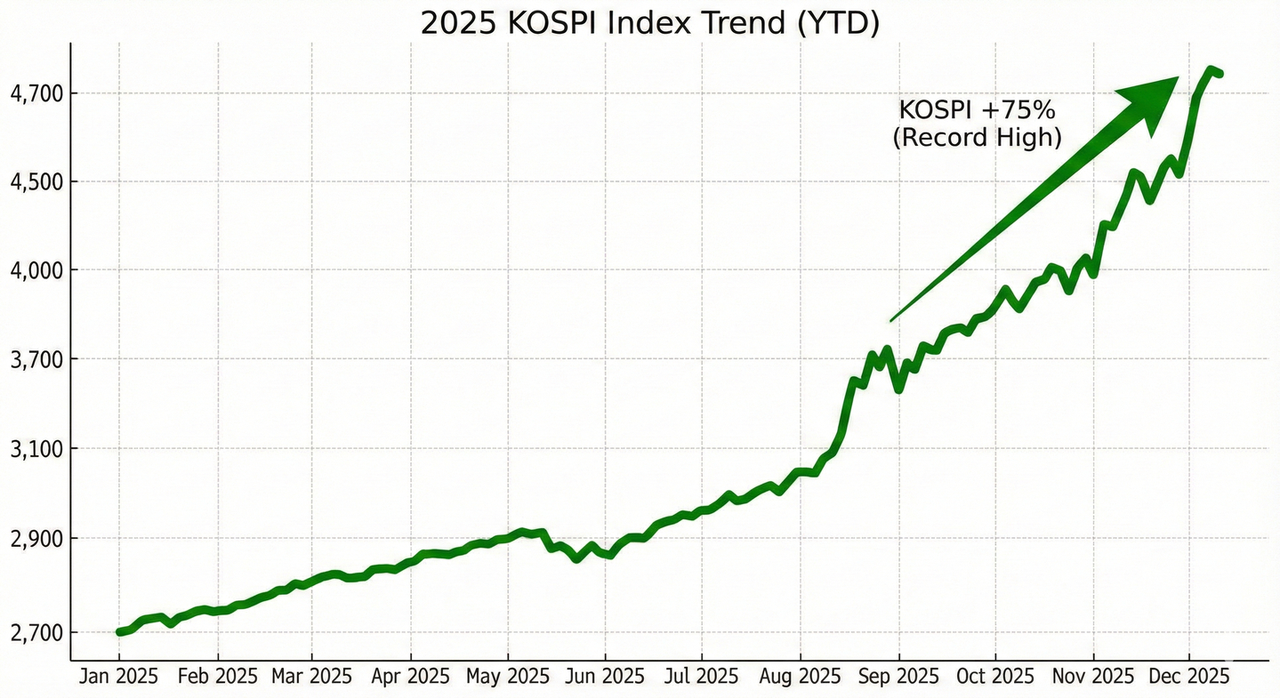
At the same time, AI completely rewrote the valuation logic for Samsung and Hynix. The two things collided, foreign capital poured in, KOSPI rose 75.6% in a year, number one globally.

A discount of over twenty years seemed to be erased in one year.

But two consecutive days of暴跌 (plunge) reveal another problem: the previous discount was due to poor corporate governance in Korean listed companies, and governance is indeed being reformed.

But there is another layer of discount, hidden deeper.

In South Korea, two stocks carry half the market's gains, power generation relies on imported natural gas and coal, the entire market is bet on one industry.

When the world outside this industry has an incident, it results in consecutive circuit breakers. The fragility written into South Korea's geography and industrial structure is difficult to change just by amending commercial law.

Foreign Capital Withdraws, Retail Investors Buy the Dip

On February 27, foreign capital net sold 6.8 trillion won in the Korean market,刷新 (refreshing/breaking) the single-day record. On March 3, they sold another 5.1 trillion won. Two days合计 (combined) nearly 12 trillion won, equivalent to 8.5 billion USD, half of the inflow over 6 weeks, gone in less than two days.
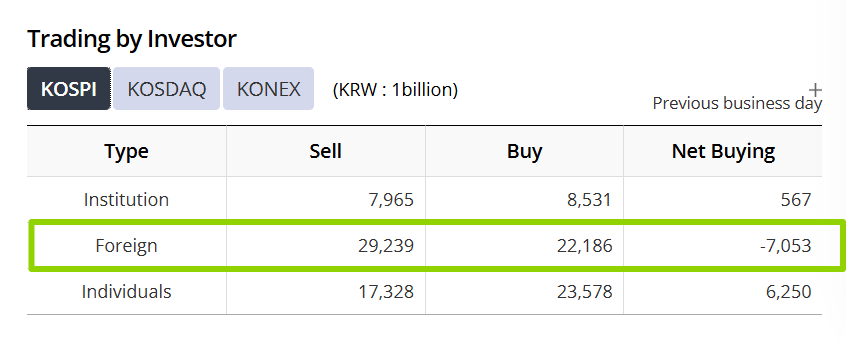
Foreign capital's affection for emerging markets has always been conditional. When conditions are good, they call you the core of the global AI supply chain; when conditions change, you are the most liquid, most convenient item to sell in the portfolio.

The Korean stock market is active and has high trading volume. Precisely because it's easy to sell, it's the first to be sold.

So who is buying?

On March 3, retail investors net bought 5.8 trillion won. Foreign capital fled, South Korean retail investors rushed in. Someone on a Seoul forum said Samsung at this price is a once-in-a-decade opportunity.

The next day it fell another 6%,一度 (at one point) falling 8% during the session triggering a circuit breaker. Those who rushed in on March 3 lost another chunk within 24 hours. On March 4, retail investors continued to bottom-fish, but could not stop the foreign selling pressure.

The last time Korean retail investors大规模 (large-scale) bottom-fishing was during the August 2024 Yen carry trade collapse. That time they were right, it came back in a month. Whether they are right this time may depend on a variable they完全控制不了 (have no control over whatsoever):

When the Strait of Hormuz will reopen.

Sentiment is More Important Than Facts

KOSPI took 34 days to go from 5,000 to 6,000, and 2 days to fall from 6,000 to 5,440.

Two days, two circuit breakers.

The energy chain is real: natural gas needs to pass through the Strait of Hormuz, chips rely on electricity from natural gas.

But a 13% drop in two days is no longer pricing in natural gas. A market where 75% of the gains are supported by two stocks, everyone crowded in the same direction, the exit is only so big.

It rose too much before. When panic strikes, whoever runs fast survives first.

SK Hynix will likely rise again. AI's computing power demand is real, the HBM shortage is real, Nvidia's orders next quarter won't disappear because of a Middle East war.

But these two days tell everyone one thing: the rise back depends on fundamentals, the fall depends on sentiment. Fundamentals move slowly, sentiment moves fast. Gains made over 34 days can be mostly lost in 2 days.

Everyone who buys Korean stocks thinks they are buying the红利 (dividend/benefit) of AI chips.

But for South Korea, the chips are grown on an economy that relies on imported natural gas for power, sold to a customer who might impose tariffs at any time, with a nuclear-armed neighbor next door.

All research reports will tell you what a stock is worth.

No research report will tell you what will happen in the world during the time you hold it.


Twitter:https://twitter.com/BitpushNewsCN

Bitpush TG Discussion Group:https://t.me/BitPushCommunity

Bitpush TG Subscription: https://t.me/bitpush

Original link:https://www.bitpush.news/articles/7616748

Трендові криптовалюти

Пов'язані матеріали

Two Legends Lost in Three Days: Is Google's AI Talent Dam Cracking?

In three days, Google lost two AI legends. On June 18, Noam Shazeer, co-author of the seminal "Attention is All You Need" paper and Gemini co-lead, left for OpenAI. Just 48 hours later, John Jumper, 2024 Nobel laureate and AlphaFold lead, departed DeepMind for Anthropic. This follows Andrej Karpathy joining Anthropic in May. These moves highlight a structural trend: top AI talent is concentrating at mission-driven, pre-IPO firms like OpenAI and Anthropic, while Google becomes a primary source. The exodus stems from a core mission mismatch. Google's ad-centric model often subordinates AI research to product and revenue goals, creating friction for pioneers like Shazeer, who returned in 2024 only to leave again. In contrast, OpenAI and Anthropic offer singular focus on pushing AI boundaries, whether towards AGI or safety-aligned models, which deeply appeals to top researchers like Jumper. Financial incentives amplify the pull. With both OpenAI and Anthropic nearing IPO, employees stand to gain immensely from equity, an upside Google's mature stock cannot match. Furthermore, the 2023 merger of Google Brain and DeepMind, intended to consolidate strength, has instead created cultural tension and slowed the path from research to product, as evidenced by Gemini's pace. This talent redistribution is reshaping the AI landscape. While Google retains vast data and compute resources, its true crisis is the quiet, continuous loss of the people who define the field's future. The real moat in AI is not infrastructure, but the concentration of brilliant minds—a battle Google is currently losing.

marsbit1 год тому

Two Legends Lost in Three Days: Is Google's AI Talent Dam Cracking?

marsbit1 год тому

Behind the AI Report Card, Lies a Chinese 'Exam Setter'

Beyond the familiar performance charts like MMLU-Pro and MMMU, which major AI models strive to ace, stands a key "examiner": Chinese-Canadian researcher Wenhu Chen. An assistant professor at the University of Waterloo and founder of TIGERLab, Chen addresses the crucial need for more rigorous AI evaluation. As models like GPT-4 began scoring near-perfect results on older benchmarks like MMLU, it became difficult to distinguish their true capabilities. In response, Chen introduced MMLU-Pro in 2024, featuring harder, more reasoning-focused questions with more answer choices, successfully reintroducing meaningful performance gaps. His work extends to multi-modal evaluation with MMMU and its enhanced version, MMMU-Pro. These benchmarks test a model's ability to understand and reason with complex information from images, charts, and text across diverse academic subjects, exposing the significant challenges even top models face in genuine comprehension. Chen's background in complex QA, table reasoning, and his experience at Google DeepMind on projects like Gemini inform his approach. He understands that effective benchmarks must anticipate how models might "cheat" by memorizing data or avoiding visual analysis. His lab also actively researches video understanding and generation models (e.g., UniVideo, Vamba), ensuring his evaluation work is grounded in practical model-building challenges. Now at Meta's Super Intelligence Lab, Chen continues his focus on multi-modal data and evaluation, representing the deep yet often unseen contributions of Chinese talent in shaping the fundamental tools of the AI industry.

marsbit2 год тому

Behind the AI Report Card, Lies a Chinese 'Exam Setter'

marsbit2 год тому

Alliance Co-founder's Letter to Entrepreneurs: Written at the Moment Cursor Sold for $600 Billion

Alliance Co-founder's Letter to Entrepreneurs: On Cursor's $60 Billion Sale Many aspiring founders see massive exits like Cursor's $60B sale and wonder why they can't achieve the same, often concluding opportunities are exhausted. But great companies aren't built in obvious, crowded spaces. Cursor, like Stripe, Figma, and Shopify before it, started with a non-consensus belief about the future. Before ChatGPT, they believed AI would transform knowledge work. They focused on a genuinely exciting domain, became their own customer, and obsessed over power users. Their journey involved years of "glass-chewing" effort before the market was ready. The pattern is consistent: identify a long-term technological shift, find a missed entry point, and execute for years before the trend becomes obvious. First-generation products (PayPal, Adobe, Amazon) prove a market exists. Second-generation winners (Stripe, Figma, Shopify) rebuild that market around new insights, technology, or changing customer behaviors. Founders must identify their phase in the cycle. Early entrants like Coinbase or Cursor focus on making new technology usable for power users. Later entrants find the "yin" to the established "yang"—the blind spots incumbents miss as they grow distant from individual users. The key is deep market immersion. Use every product in your space. Talk to users. Build an audience. Stop looking for ideas and start *seeing* them everywhere. Then, choose one. The idea must offer a 10x improvement or solve a "hair-on-fire" pain point—something severe enough that users are already crafting workarounds. When building, avoid feature bloat. Ask: why would someone switch? Great startups rarely force new behaviors; they improve familiar workflows with drastically lower friction (e.g., Cursor forked VS Code instead of creating a new editor). Distribution is the underestimated moat. Before product-market fit, achieve distribution-market fit. How do customers discover new tools? Founders like those at Airbnb, Stripe, and Cursor did unscalable, manual work to recruit early users. The final, unteachable ingredient is resilience. Cursor built for years pre-market, faced rejection, and persisted. So did Airbnb, Nvidia, and Rain (which launched post-FTX collapse). The lesson isn't that these founders were smarter, but that they stayed in the game long enough for their insights to compound. Framework: Spot technological cycles. Cultivate unique insight. Obsess over your market. Talk to customers. Find a hair-on-fire problem. Build the simplest wedge. Win your distribution channel. Above all, don't quit when it gets hard. Most people won't do these things consistently. The few who do build the next generation of great companies. Go build.

marsbit2 год тому

Alliance Co-founder's Letter to Entrepreneurs: Written at the Moment Cursor Sold for $600 Billion

marsbit2 год тому

Weekly Editor's Picks (0613-0619)

Weekly Editor's Picks (0613-0619): Market Insights & Analysis This weekly digest curates in-depth analysis often lost in the information flow, focusing on key insights across macro trends, investment, and technology. **Macro & Geopolitics:** With the Strait of Hormuz reopening and military conflict shifting to negotiation, markets are pivoting from "war shock" to "supply restoration." Trades include shorting crude risk premiums, longing airlines/tourism, Asian energy importers, and bond duration, while shorting inflation expectations. LNG, fertilizer, and chemical chains are also being repriced. **Investment & VC:** Ray Dalio advises against betting on concentrated AI giants dominating indices, advocating for diversified portfolios of high-quality, low-correlation assets instead. Analysis covers the 4-year crypto cycle, predicting the core surviving product by 2029 will be asset trading markets. Current BTC metrics suggest a potential bottoming zone, presenting a patient accumulation window. SpaceX's high-profile IPO at a $2.1T valuation faces scrutiny over fundamentals, with key watchpoints being its likely inclusion in the Nasdaq index and Q2 earnings. Concerns are raised about potential "gamma squeeze" and systemic risks if its narrative-driven valuation gets amplified by passive index funds. Robinhood (HOOD) is noted for breaking its high correlation with crypto, bolstered by its stock trading and new underwriting business. **Web3 & AI:** A warning highlights ~$1.8T in off-balance-sheet AI infrastructure commitments (purchase commitments, leases) as a potential systemic risk if AI monetization lags. AI models are being used for World Cup predictions, adding a new layer for betting markets. A cost breakdown of a $20 AI subscription reveals the supply chain from model companies to cloud, GPUs, and power. **Prediction Markets:** The emergence of prediction market "concept stocks" is noted, with Robinhood developing its own platform, Rothera, signaling a shift from market competition to a "channel war" for user access. **CeFi & DeFi:** The SpaceX IPO tested perpetual contract mechanisms for pre-IPO assets, highlighting challenges in handling corporate actions like stock splits on-chain. The de-pegging of STRC (Strategy's preferred share) to ~$89 reflects market concerns over MicroStrategy's capital structure and BTC-backed leverage model. BlackRock's covered-call Bitcoin ETF (BITA) offers yield but caps upside, appealing to yield-seeking institutions. **Ethereum:** An opinion piece argues Ethereum's core strength is its vast developer community and composability, solidifying its role as the default operating system for the financial internet. **Weekly Hot Topics:** Include the US-Iran deal reopening the Strait of Hormuz, Fed's hawkish hold, Anthropic restricting model access, SpaceX acquiring Cursor, and a humorous stock surge for "Liuliumei" due to its "LLM" ticker.

marsbit2 год тому

Weekly Editor's Picks (0613-0619)

marsbit2 год тому

Alliance's Co-Founder's Letter to Entrepreneurs: Written on the Occasion of Cursor's $60 Billion Sale

In this letter to entrepreneurs, Alliance reflects on the success of Cursor's $60 billion sale to Elon Musk, using it as a case study to counter the misconception that opportunities in crowded fields like AI or crypto are exhausted. The piece argues that great companies like Cursor, Stripe, Figma, and Shopify are not built by geniuses with perfect ideas, but by founders who start with a non-consensus belief about the future and build for years before that future becomes obvious to everyone. They identify long-term shifts, find overlooked entry points, and execute relentlessly. The framework for success involves: 1. **Identifying your place in the technology cycle**: Early-stage opportunities focus on making new tech usable for power users (e.g., Coinbase, Cursor). Later-stage opportunities involve finding the "yin" to an existing "yang"—the blind spots of first-generation players (e.g., Stripe vs. PayPal, Figma vs. Adobe). 2. **Cultivating unique insights**: Immerse yourself deeply in the market. Use every product, talk to users, and build an audience. Insights will emerge naturally from deep engagement. 3. **Finding a "hair-on-fire" problem**: Look for a 10x improvement or a severe, urgent pain point. The strongest signal is people already building clumsy workarounds. 4. **Building a focused MVP**: Don't just add features because you can. Ask why users would abandon their current tool for yours. The best startups rarely force new behaviors; they improve familiar workflows with drastically lower friction. 5. **Winning a distribution channel**: Distribution is often the moat. Before product-market fit, achieve channel-market fit. Find where your customers are and build an engine to reach them, even through unscalable, manual efforts initially. 6. **Persistence**: The final, unteachable ingredient is resilience. Success stories like Cursor, Airbnb, and Nvidia involved years of grinding, rejection, and perseverance when the path forward seemed unclear. The conclusion is that there is no secret. Most people fail to consistently execute these steps over the long term. The few who do build the companies that define the next era. The world is yours to create.

链捕手2 год тому

Alliance's Co-Founder's Letter to Entrepreneurs: Written on the Occasion of Cursor's $60 Billion Sale

链捕手2 год тому

Торгівля

Спот
Ф'ючерси

Популярні статті

Що таке $S$

Розуміння SPERO: Комплексний огляд Вступ до SPERO Оскільки ландшафт інновацій продовжує еволюціонувати, виникнення технологій web3 та криптовалютних проектів відіграє ключову роль у формуванні цифрового майбутнього. Один з проектів, який привернув увагу в цій динамічній сфері, — це SPERO, позначений як SPERO,$$s$. Ця стаття має на меті зібрати та представити детальну інформацію про SPERO, щоб допомогти ентузіастам та інвесторам зрозуміти його основи, цілі та інновації в рамках web3 та крипто-сектору. Що таке SPERO,$$s$? SPERO,$$s$ — це унікальний проект у криптопросторі, який прагне використати принципи децентралізації та технології блокчейн для створення екосистеми, що сприяє залученню, корисності та фінансовій інклюзії. Проект розроблений для полегшення взаємодії між користувачами новими способами, надаючи їм інноваційні фінансові рішення та послуги. У своїй основі SPERO,$$s$ прагне надати можливості індивідам, забезпечуючи інструменти та платформи, які покращують користувацький досвід у криптовалютному просторі. Це включає в себе можливість більш гнучких методів транзакцій, сприяння ініціативам, що підтримуються спільнотою, та створення шляхів для фінансових можливостей через децентралізовані додатки (dApps). Основна концепція SPERO,$$s$ обертається навколо інклюзивності, прагнучи зменшити розриви в традиційній фінансовій системі, використовуючи переваги технології блокчейн. Хто є творцем SPERO,$$s$? Особистість творця SPERO,$$s$ залишається дещо невідомою, оскільки є обмежені публічно доступні ресурси, що надають детальну інформацію про його засновників. Ця відсутність прозорості може бути наслідком зобов'язання проекту до децентралізації — етики, яку багато проектів web3 поділяють, ставлячи колективні внески вище за індивідуальне визнання. Зосереджуючи обговорення навколо спільноти та її колективних цілей, SPERO,$$s$ втілює суть наділення без виділення конкретних осіб. Таким чином, розуміння етики та місії SPERO є більш важливим, ніж ідентифікація єдиного творця. Хто є інвесторами SPERO,$$s$? SPERO,$$s$ підтримується різноманітними інвесторами, починаючи від венчурних капіталістів до ангельських інвесторів, які прагнуть сприяти інноваціям у крипто-секторі. Зосередження цих інвесторів зазвичай узгоджується з місією SPERO — пріоритет надається проектам, які обіцяють технологічний прогрес у суспільстві, фінансову інклюзію та децентралізоване управління. Ці інвесторські фонди зазвичай зацікавлені в проектах, які не лише пропонують інноваційні продукти, але й позитивно впливають на спільноту блокчейн та її екосистеми. Підтримка з боку цих інвесторів підкріплює SPERO,$$s$ як значного конкурента в швидко змінюваній сфері крипто-проектів. Як працює SPERO,$$s$? SPERO,$$s$ використовує багатогранну структуру, яка відрізняє його від традиційних криптовалютних проектів. Ось деякі ключові особливості, які підкреслюють його унікальність та інноваційність: Децентралізоване управління: SPERO,$$s$ інтегрує моделі децентралізованого управління, надаючи користувачам можливість активно брати участь у процесах прийняття рішень щодо майбутнього проекту. Цей підхід сприяє відчуттю власності та відповідальності серед членів спільноти. Корисність токена: SPERO,$$s$ використовує свій власний криптовалютний токен, розроблений для виконання різних функцій в екосистемі. Ці токени дозволяють здійснювати транзакції, отримувати винагороди та полегшувати послуги, що пропонуються на платформі, підвищуючи загальну залученість та корисність. Шарова архітектура: Технічна архітектура SPERO,$$s$ підтримує модульність та масштабованість, що дозволяє безперешкодно інтегрувати додаткові функції та додатки в міру розвитку проекту. Ця адаптивність є надзвичайно важливою для збереження актуальності в постійно змінюваному крипто-ландшафті. Залучення спільноти: Проект підкреслює ініціативи, що підтримуються спільнотою, використовуючи механізми, які стимулюють співпрацю та зворотний зв'язок. Підтримуючи сильну спільноту, SPERO,$$s$ може краще задовольняти потреби користувачів та адаптуватися до ринкових тенденцій. Фокус на інклюзію: Пропонуючи низькі комісії за транзакції та зручні інтерфейси, SPERO,$$s$ прагне залучити різноманітну базу користувачів, включаючи осіб, які раніше не брали участі в крипто-просторі. Це зобов'язання до інклюзії узгоджується з його загальною місією наділення через доступність. Хронологія SPERO,$$s$ Розуміння історії проекту надає важливі уявлення про його розвиток та етапи. Нижче наведено пропоновану хронологію, що відображає значні події в еволюції SPERO,$$s$: Етап концептуалізації та ідеації: Початкові ідеї, що стали основою SPERO,$$s$, були сформовані, тісно пов'язані з принципами децентралізації та фокусом на спільноті в індустрії блокчейн. Запуск білого паперу проекту: Після концептуального етапу був випущений комплексний білий папір, що детально описує бачення, цілі та технологічну інфраструктуру SPERO,$$s$, щоб залучити інтерес та зворотний зв'язок від спільноти. Створення спільноти та ранні залучення: Активні зусилля були спрямовані на створення спільноти ранніх прихильників та потенційних інвесторів, що полегшило обговорення цілей проекту та отримання підтримки. Подія генерації токенів: SPERO,$$s$ провів подію генерації токенів (TGE) для розподілу своїх рідних токенів серед ранніх прихильників та встановлення початкової ліквідності в екосистемі. Запуск початкового dApp: Перший децентралізований додаток (dApp), пов'язаний з SPERO,$$s$, став доступним, дозволяючи користувачам взаємодіяти з основними функціями платформи. Постійний розвиток та партнерства: Безперервні оновлення та вдосконалення пропозицій проекту, включаючи стратегічні партнерства з іншими учасниками блокчейн-простору, сформували SPERO,$$s$ у конкурентоспроможного та еволюціонуючого гравця на крипто-ринку. Висновок SPERO,$$s$ є свідченням потенціалу web3 та криптовалют для революціонізації фінансових систем та наділення індивідів. Завдяки зобов'язанню до децентралізованого управління, залучення спільноти та інноваційно спроектованих функцій, він прокладає шлях до більш інклюзивного фінансового ландшафту. Як і з будь-якими інвестиціями в швидко змінюваному крипто-просторі, потенційним інвесторам та користувачам рекомендується ретельно досліджувати та обдумано взаємодіяти з поточними подіями в SPERO,$$s$. Проект демонструє інноваційний дух крипто-індустрії, запрошуючи до подальшого дослідження його численних можливостей. Хоча подорож SPERO,$$s$ ще триває, його основні принципи можуть справді вплинути на майбутнє того, як ми взаємодіємо з технологією, фінансами та один з одним у взаємопов'язаних цифрових екосистемах.

78 переглядів усьогоОпубліковано 2024.12.17Оновлено 2024.12.17

Що таке $S$

Що таке AGENT S

Агент S: Майбутнє автономної взаємодії в Web3 Вступ У постійно змінюваному ландшафті Web3 та криптовалюти інновації постійно переосмислюють, як люди взаємодіють з цифровими платформами. Один з таких новаторських проектів, Агент S, обіцяє революціонізувати взаємодію людини з комп'ютером через свою відкриту агентну структуру. Прокладаючи шлях для автономних взаємодій, Агент S прагне спростити складні завдання, пропонуючи трансформаційні застосування в штучному інтелекті (ШІ). Це детальне дослідження заглиблюється в складності проекту, його унікальні особливості та наслідки для сфери криптовалюти. Що таке Агент S? Агент S є революційною відкритою агентною структурою, спеціально розробленою для вирішення трьох основних викликів в автоматизації комп'ютерних завдань: Набуття специфічних знань у галузі: Структура інтелектуально навчається з різних зовнішніх джерел знань та внутрішнього досвіду. Цей подвійний підхід дозволяє їй створити багатий репозиторій специфічних знань у галузі, покращуючи її продуктивність у виконанні завдань. Планування на довгих горизонтах завдань: Агент S використовує планування з підкріпленням досвіду, стратегічний підхід, який полегшує ефективний розподіл та виконання складних завдань. Ця функція значно підвищує її здатність ефективно та результативно управляти кількома підзавданнями. Обробка динамічних, неоднорідних інтерфейсів: Проект представляє Інтерфейс Агент-Комп'ютер (ACI), інноваційне рішення, яке покращує взаємодію між агентами та користувачами. Використовуючи багатомодальні великі мовні моделі (MLLMs), Агент S може безперешкодно орієнтуватися та маніпулювати різноманітними графічними інтерфейсами користувача. Завдяки цим новаторським функціям Агент S надає надійну структуру, яка вирішує складнощі, пов'язані з автоматизацією людської взаємодії з машинами, прокладаючи шлях для численних застосувань у ШІ та за його межами. Хто є творцем Агент S? Хоча концепція Агент S є фундаментально новаторською, конкретна інформація про його творця залишається невідомою. Творець наразі невідомий, що підкреслює або початкову стадію проекту, або стратегічний вибір зберегти засновників у таємниці. Незважаючи на анонімність, акцент залишається на можливостях та потенціалі структури. Хто є інвесторами Агент S? Оскільки Агент S є відносно новим у криптографічній екосистемі, детальна інформація про його інвесторів та фінансових спонсорів не задокументована. Відсутність публічно доступних відомостей про інвестиційні фонди або організації, що підтримують проект, викликає питання щодо його фінансової структури та дорожньої карти розвитку. Розуміння підтримки є критично важливим для оцінки стійкості проекту та потенційного впливу на ринок. Як працює Агент S? В основі Агент S лежить передова технологія, яка дозволяє йому ефективно функціонувати в різних умовах. Його операційна модель побудована навколо кількох ключових функцій: Взаємодія з комп'ютером, подібна до людської: Структура пропонує розширене планування ШІ, прагнучи зробити взаємодії з комп'ютерами більш інтуїтивними. Імітуючи людську поведінку при виконанні завдань, вона обіцяє підвищити досвід користувачів. Наративна пам'ять: Використовується для використання високорівневого досвіду, Агент S використовує наративну пам'ять для відстеження історій завдань, тим самим покращуючи свої процеси прийняття рішень. Епізодична пам'ять: Ця функція надає користувачам покрокові інструкції, дозволяючи структурі пропонувати контекстуальну підтримку в міру виконання завдань. Підтримка OpenACI: Завдяки можливості працювати локально, Агент S дозволяє користувачам зберігати контроль над своїми взаємодіями та робочими процесами, узгоджуючи з децентралізованою етикою Web3. Легка інтеграція з зовнішніми API: Його універсальність і сумісність з різними платформами ШІ забезпечують те, що Агент S може безперешкодно вписатися в існуючі технологічні екосистеми, роблячи його привабливим вибором для розробників та організацій. Ці функціональні можливості колективно сприяють унікальному положенню Агент S у крипто-просторі, оскільки він автоматизує складні, багатоступеневі завдання з мінімальним втручанням людини. У міру розвитку проекту його потенційні застосування в Web3 можуть переосмислити, як відбуваються цифрові взаємодії. Хронологія Агент S Розробка та етапи Агент S можуть бути узагальнені в хронології, яка підкреслює його значні події: 27 вересня 2024 року: Концепція Агент S була представлена в комплексній науковій статті під назвою “Відкрита агентна структура, яка використовує комп'ютери як людина”, що демонструє основи проекту. 10 жовтня 2024 року: Наукова стаття була опублікована на arXiv, пропонуючи детальне дослідження структури та її оцінки продуктивності на основі бенчмарку OSWorld. 12 жовтня 2024 року: Було випущено відеопрезентацію, що надає візуальне уявлення про можливості та особливості Агент S, ще більше залучаючи потенційних користувачів та інвесторів. Ці маркери в хронології не лише ілюструють прогрес Агент S, але й вказують на його прихильність до прозорості та залучення громади. Ключові моменти про Агент S У міру розвитку структури Агент S кілька ключових характеристик виділяються, підкреслюючи її новаторський характер та потенціал: Інноваційна структура: Розроблена для забезпечення інтуїтивного використання комп'ютерів, подібного до людської взаємодії, Агент S пропонує новий підхід до автоматизації завдань. Автономна взаємодія: Здатність автономно взаємодіяти з комп'ютерами через GUI означає стрибок до більш інтелектуальних та ефективних обчислювальних рішень. Автоматизація складних завдань: Завдяки своїй надійній методології він може автоматизувати складні, багатоступеневі завдання, роблячи процеси швидшими та менш схильними до помилок. Безперервне вдосконалення: Механізми навчання дозволяють Агенту S покращуватися на основі минулого досвіду, постійно підвищуючи свою продуктивність та ефективність. Універсальність: Його адаптивність до різних операційних середовищ, таких як OSWorld та WindowsAgentArena, забезпечує його здатність служити широкому спектру застосувань. Оскільки Агент S займає своє місце в ландшафті Web3 та криптовалюти, його потенціал покращити можливості взаємодії та автоматизувати процеси означає значний прогрес у технологіях ШІ. Завдяки своїй інноваційній структурі Агент S є прикладом майбутнього цифрових взаємодій, обіцяючи більш безперешкодний та ефективний досвід для користувачів у різних галузях. Висновок Агент S представляє собою сміливий крок вперед у поєднанні ШІ та Web3, з можливістю переосмислити, як ми взаємодіємо з технологією. Хоча проект все ще на ранніх стадіях, можливості для його застосування є величезними та переконливими. Завдяки своїй комплексній структурі, що вирішує критичні виклики, Агент S прагне вивести автономні взаємодії на передній план цифрового досвіду. У міру того, як ми заглиблюємося в сфери криптовалюти та децентралізації, проекти, подібні до Агент S, безсумнівно, відіграватимуть ключову роль у формуванні майбутнього технологій та співпраці людини з комп'ютером.

706 переглядів усьогоОпубліковано 2025.01.14Оновлено 2025.01.14

Що таке AGENT S

Як купити S

Ласкаво просимо до HTX.com! Ми зробили покупку Sonic (S) простою та зручною. Дотримуйтесь нашої покрокової інструкції, щоб розпочати свою криптовалютну подорож.Крок 1: Створіть обліковий запис на HTXВикористовуйте свою електронну пошту або номер телефону, щоб зареєструвати обліковий запис на HTX безплатно. Пройдіть безпроблемну реєстрацію й отримайте доступ до всіх функцій.ЗареєструватисьКрок 2: Перейдіть до розділу Купити крипту і виберіть спосіб оплатиКредитна/дебетова картка: використовуйте вашу картку Visa або Mastercard, щоб миттєво купити Sonic (S).Баланс: використовуйте кошти з балансу вашого рахунку HTX для безперешкодної торгівлі.Треті особи: ми додали популярні способи оплати, такі як Google Pay та Apple Pay, щоб підвищити зручність.P2P: Торгуйте безпосередньо з іншими користувачами на HTX.Позабіржова торгівля (OTC): ми пропонуємо індивідуальні послуги та конкурентні обмінні курси для трейдерів.Крок 3: Зберігайте свої Sonic (S)Після придбання Sonic (S) збережіть його у своєму обліковому записі на HTX. Крім того, ви можете відправити його в інше місце за допомогою блокчейн-переказу або використовувати його для торгівлі іншими криптовалютами.Крок 4: Торгівля Sonic (S)Легко торгуйте Sonic (S) на спотовому ринку HTX. Просто увійдіть до свого облікового запису, виберіть торгову пару, укладайте угоди та спостерігайте за ними в режимі реального часу. Ми пропонуємо зручний досвід як для початківців, так і для досвідчених трейдерів.

1.6k переглядів усьогоОпубліковано 2025.01.15Оновлено 2026.06.02

Як купити S

Обговорення

Ласкаво просимо до спільноти HTX. Тут ви можете бути в курсі останніх подій розвитку платформи та отримати доступ до професійної ринкової інформації. Нижче представлені думки користувачів щодо ціни S (S).

活动图片