# Пов'язані статті щодо Cash

Центр новин HTX надає останні статті та поглиблений аналіз на тему "Cash", що охоплює ринкові тренди, оновлення проєктів, технологічні розробки та регуляторну політику в криптоіндустрії.

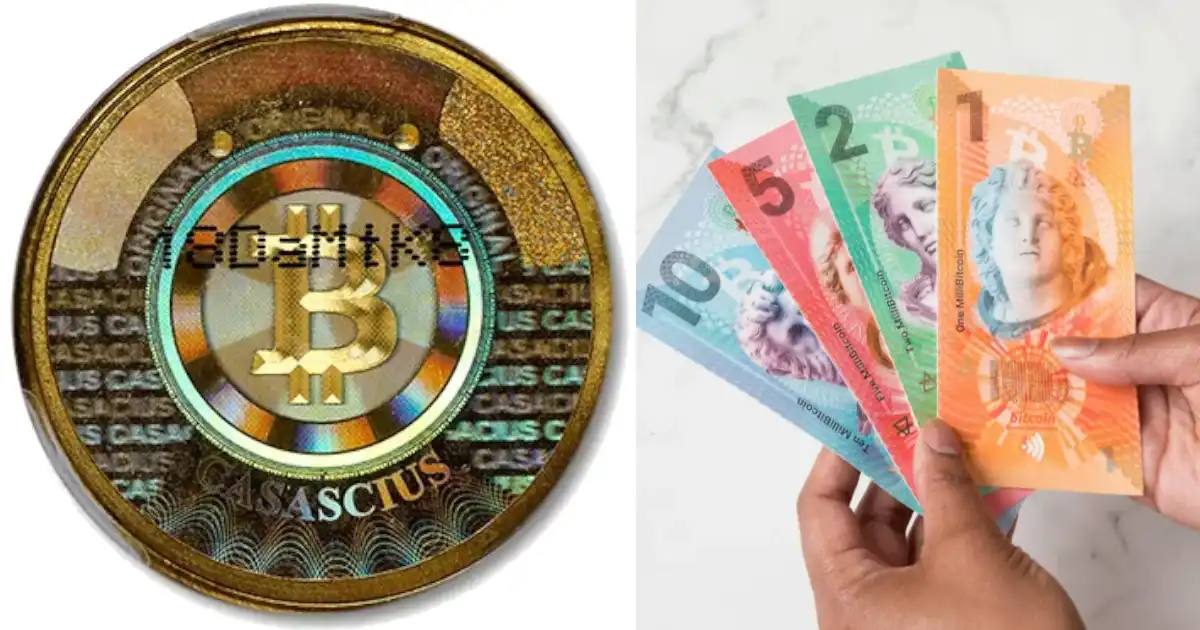
The Evolution Path of Physical Bitcoin

The Evolution of Physical Bitcoin Bitcoin's digital nature is its core strength, enabling self-custody and rapid global transfers. However, its intangibility also hinders mainstream adoption. For over a decade, creators have attempted to materialize Bitcoin while preserving its cash-like properties, yielding notable results. Casascius Coins, launched in 2011, were the first and most iconic physical Bitcoin. Creator Mike Caldwell generated private keys offline, printed them on coins, and sealed them with tamper-evident holograms. This model relied on user trust in the centralized issuer. Production ceased in 2013 due to regulatory pressure from FinCEN. RavenBit Coins emerged in 2014 aiming to decentralize minting by letting users generate and apply their own keys. However, this led to trust issues with numerous untrusted minters and insecure key generation methods. In 2016, Coinkite introduced Opendimes—a breakthrough in bearer asset technology. These USB-shaped devices generate and store keys internally. Funds can be received by checking the public key, but spending requires physically breaking the device to extract the private key. While innovative and open-source, its cost (~$20) and form factor limit its use for small, everyday transactions. Satochip's Satodime, a card-shaped device using similar secure chip technology, followed. It supports NFC interaction and comes in various forms. While potentially cheaper in bulk (~13€), it remains a high-security hardware wallet, not a low-cost cash substitute. A fundamental cost barrier exists. For physical Bitcoin to achieve widespread commercial use, hardware costs must drop below $1 to match the production cost of fiat banknotes. Current secure chips capable of running Bitcoin's cryptographic algorithms (like secp256k1) are too expensive. Chips like NXP's NTAG X DNA (~$3) show cost-reduction potential but lack native Bitcoin curve support. Projects like OfflineCash embed chips in banknote-like paper, but face challenges with durability, the need for custom Bitcoin-enabled chips, and the inherent requirement for users to verify balances online—which conflicts with Bitcoin's trustless ideal. Coinkite's Tapsigner, a ~$20 card with a proprietary Bitcoin NFC chip, is seen as a more practical step forward. It functions as a reloadable hardware wallet for contactless payments, solving the "change" problem and focusing on real-world retail integration, a direction also pursued by companies like Cash App and Square. In summary, the journey to physical Bitcoin has progressed from trusted centralized mints (Casascius) to user-generated keys (RavenBit) and finally to self-contained secure hardware (Opendimes, Satodime, Tapsigner). The core challenge remains developing a sufficiently low-cost, durable, and truly trustless physical bearer asset that can function like cash in daily transactions. Current solutions are either too expensive or introduce new trust assumptions, keeping the ideal of ubiquitous physical Bitcoin just out of reach for now.

marsbit05/27 07:12

The Evolution Path of Physical Bitcoin

marsbit05/27 07:12

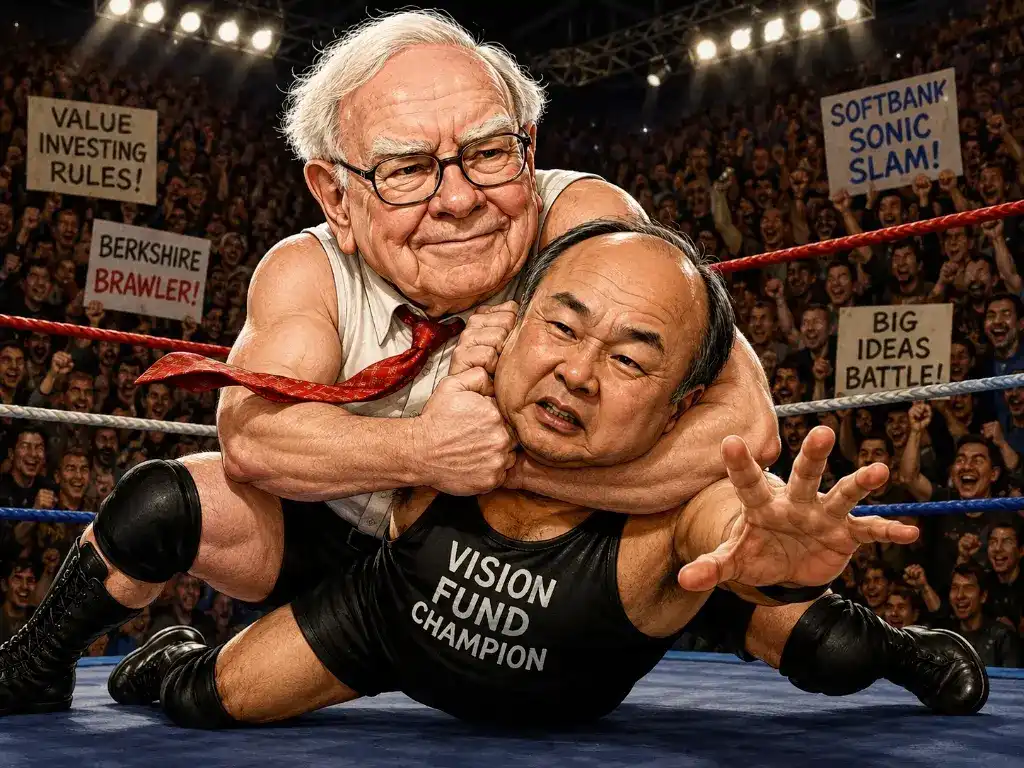
Berkshire Hathaway and SoftBank: One Must Die

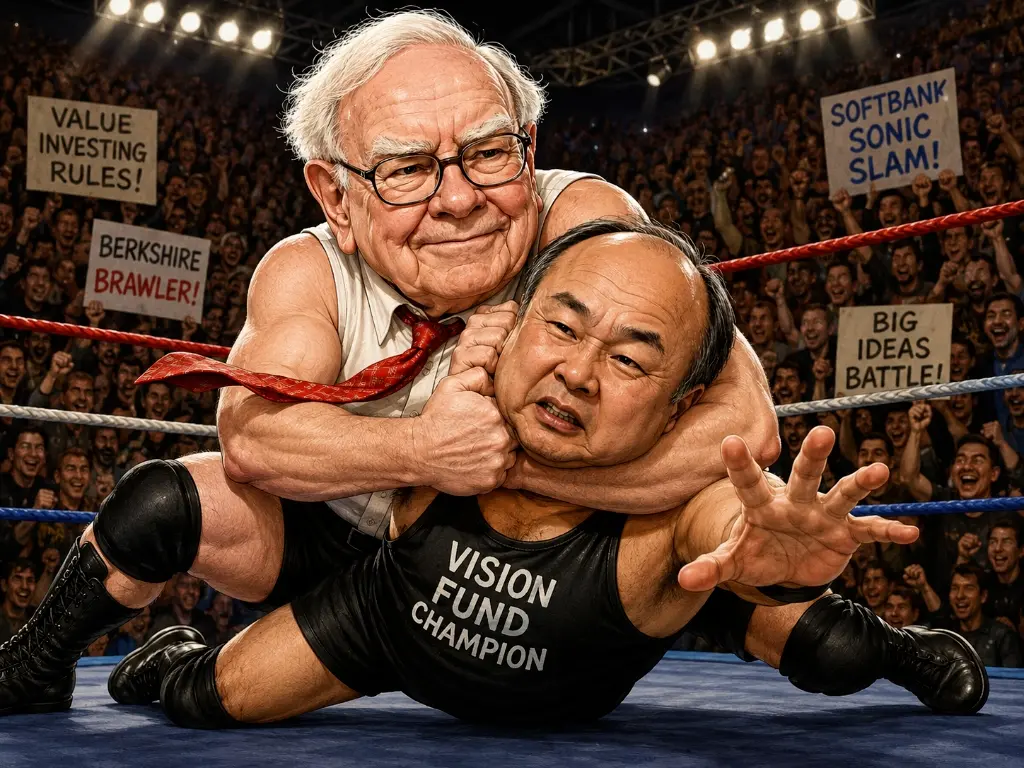
"Berkshire Hathaway vs. SoftBank: One Must 'Die'" In May 2026, with half-empty seats at its annual meeting, Berkshire Hathaway, under new CEO Greg Abel, faces investor pressure over its massive $397.4 billion cash pile—nearly 40% of its market cap. This hoard, largely in US Treasuries, resulted from 14 consecutive quarters of net equity sales, including massive Apple divestments. Abel inherits Buffett's "nothing looks attractive" stance in an expensive market likened to "a casino next to a church." However, Berkshire's significant underperformance versus the S&P 500 and a future of sustained high valuations could force a historic choice: returning capital via special dividends or breaking up the conglomerate. Berkshire's "death" would be a slow, existential one—the erosion of its value-investing identity post-Buffett. Conversely, SoftBank, led by Masayoshi Son, is in a frantic race against debt. It has pledged a staggering $64.6 billion for a 13% stake in OpenAI, financed by escalating parent-company debt (over ¥16.3 trillion), a historic $40 billion bridge loan, and the fire-sale of assets like Nvidia, T-Mobile, and Alibaba shares. The plan hinges on a successful OpenAI IPO and the $100 billion listing of its Roze AI unit to refinance. Son's high-wire act faces three correlated triggers for potential collapse: an OpenAI IPO delay or stumble, a sharp de-rating of its key liquid asset Arm (trading at 70x forward P/E), or a failure to refinance the massive 2027 bridge loan at increasingly costly rates. The conclusion: One philosophy must "die." In a prolonged bull market, SoftBank could triumph, realizing Son's AI vision, while Berkshire's conservative model fades into irrelevance. In a downturn, SoftBank's leveraged bet could unravel violently, while Berkshire's fortress balance sheet survives. Their fates are inversely tied to the market cycle's turn.

marsbit05/08 17:07

Berkshire Hathaway and SoftBank: One Must Die

marsbit05/08 17:07

Berkshire Hathaway and SoftBank: One Must Die

Berkshire and SoftBank: A Tale of Two Extremes The article presents a speculative future (set in 2026) contrasting the investment philosophies and potential fates of Berkshire Hathaway and SoftBank Group. Under new CEO Greg Abel, Berkshire sits on a massive cash pile of nearly $400 billion, built by selling assets like Apple stock over many quarters. Buffett and now Abel deem the market overvalued and refuse to invest, leading to significant underperformance. The "disease" of too much cash poses an existential threat to Berkshire's identity as a capital allocator, potentially forcing a future breakup or special dividend if the bull market persists. Its "death" would be a slow, dignified fading of its legendary investment narrative. In stark contrast, SoftBank's Masayoshi Son is all-in on a high-stakes gamble. To fund a colossal $64.6 billion (and growing) investment in OpenAI, SoftBank has aggressively leveraged itself. It has sold core holdings like Nvidia, T-Mobile, and Alibaba, taken on over $100 billion in parent-level debt, and secured a record $40 billion bridge loan. The survival strategy hinges on a successful OpenAI IPO and the high valuation of its Arm holdings. However, this creates multiple interconnected risks: an OpenAI IPO delay, a correction in Arm's lofty valuation, or a credit market freeze. Any of these could trigger a liquidity crisis. SoftBank's potential "death" would be swift and dramatic. The core thesis is that in this speculative market, one extreme strategy—Berkshire's paralyzing caution or SoftBank's all-or-nothing leverage—will likely prove unsustainable. One may lose its soul, the other may face financial rupture.

链捕手05/08 06:14

Berkshire Hathaway and SoftBank: One Must Die

链捕手05/08 06:14

活动图片