Reported by XinDongXi on August 11: Just now, Chengdu Ultra-Pure Applied Materials Co., Ltd. (referred to as "Ultra-Pure Materials"), a core semiconductor equipment components supplier from Sichuan, officially rang the bell for listing on the Shenzhen Stock Exchange.
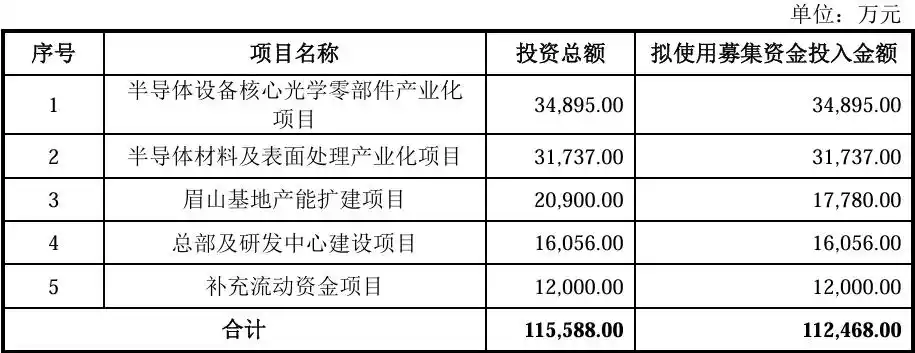
During the offering phase, the A-share offering price of Ultra-Pure Materials was 65.99 yuan; the number of shares issued in its initial public offering was 25,461,539 shares, all of which were new shares issued, with no shares sold by existing shareholders. The total funds raised from this A-share issuance by Ultra-Pure Materials were approximately 1.68 billion yuan, exceeding the previously stated intended fundraising amount of 1.125 billion yuan in the prospectus, representing an oversubscription ratio of 49.33%; the net proceeds from this issuance for the company were approximately 1.557 billion yuan.
Opening today, Ultra-Pure Materials' stock price was reported at 450 yuan per share, an increase of 581.92% compared to the offering price. As of 10:20:39 AM today, its stock price was 498 yuan per share, a growth of 654.66% from the offering price, with a total market capitalization of 50.719 billion yuan.
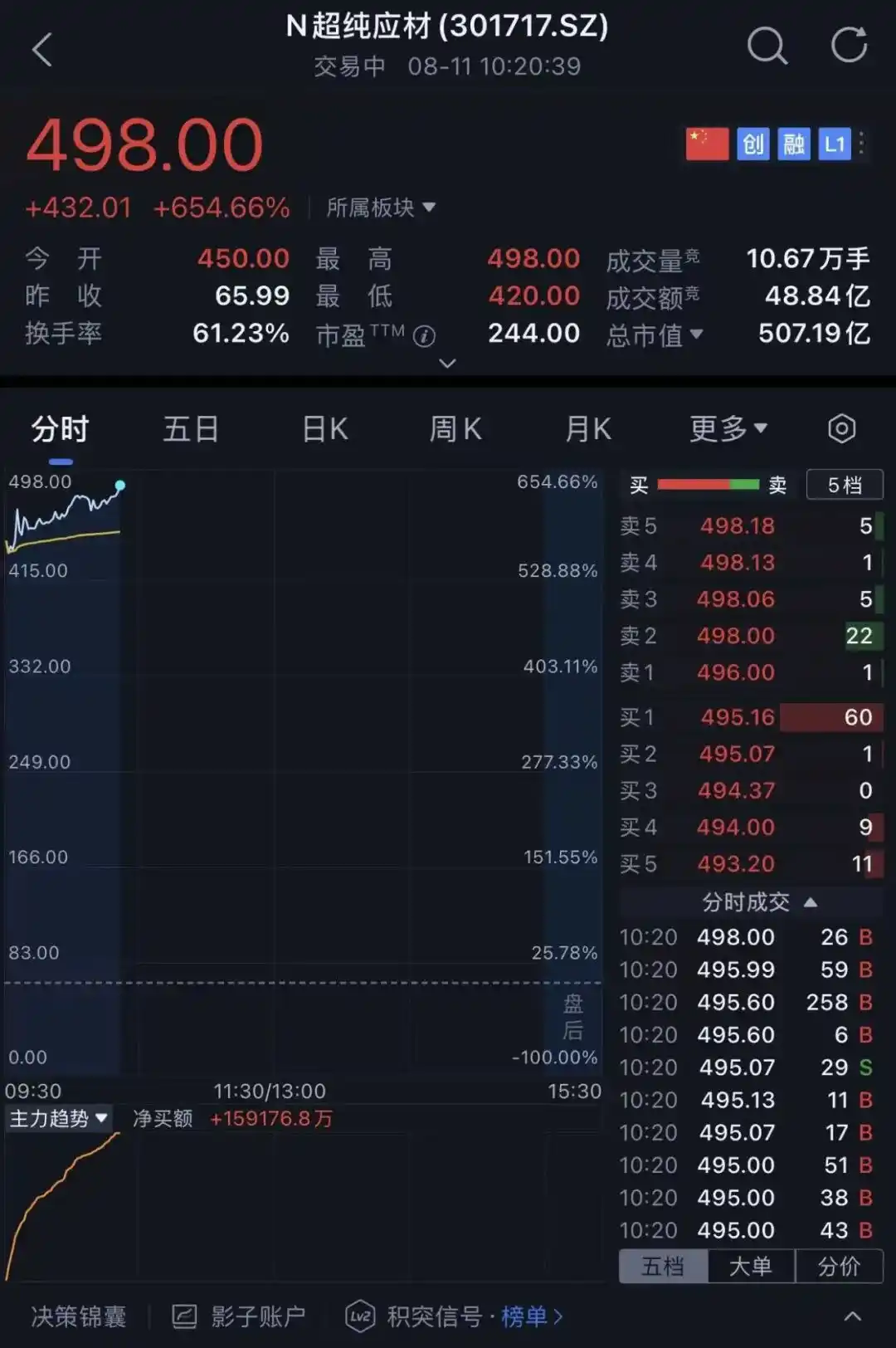
▲Ultra-Pure Materials Stock Price Chart (Source: Tencent Self-Select Stocks)
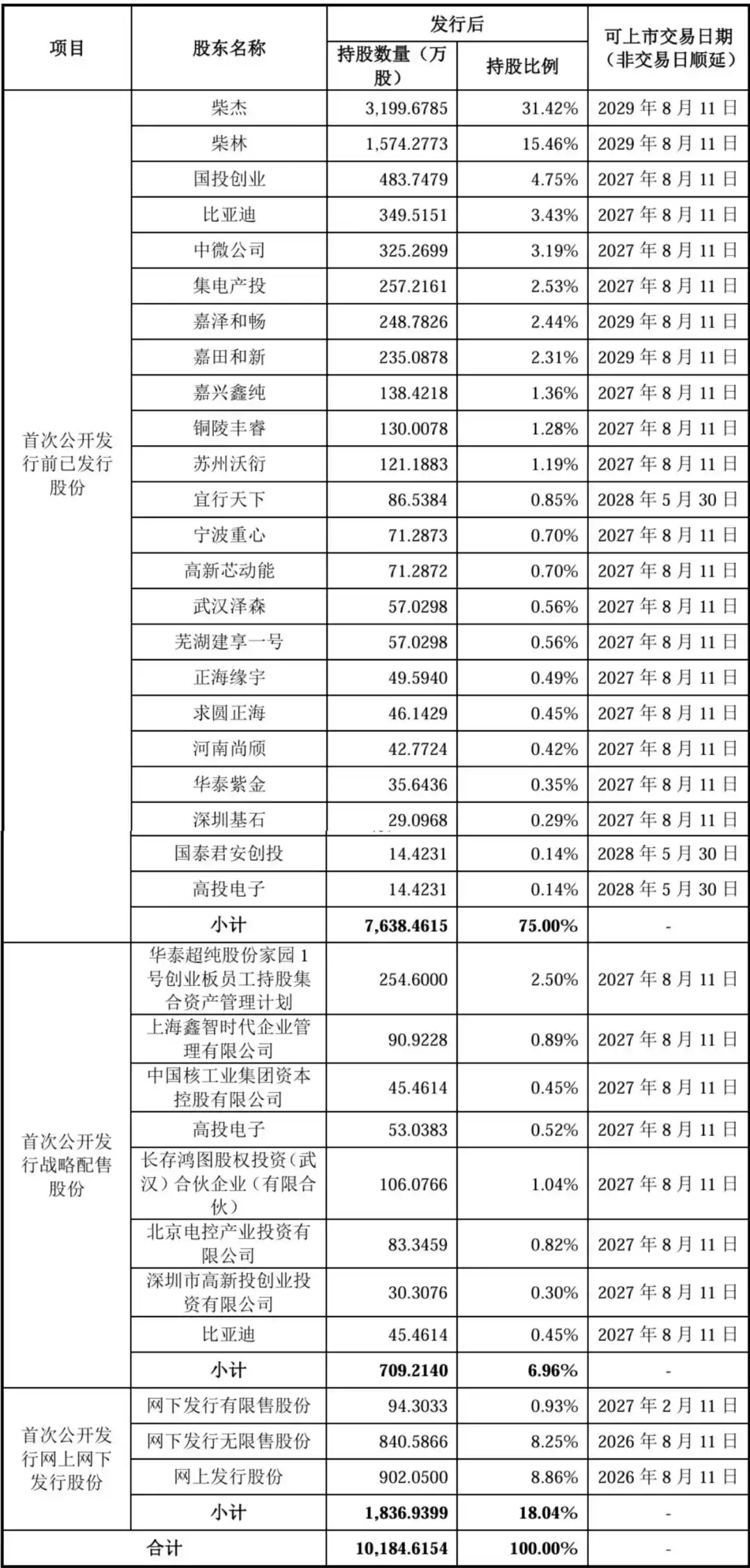
After the stock issuance, the company's actual controller, Chairman and General Manager Chai Jie holds 31.42% of the shares of Ultra-Pure Materials, while Chai Jie's brother, Director and Chief Engineer Chai Lin, holds 15.46% of the shares; simultaneously, SDIC Venture Capital holds 4.75%, BYD holds 3.43%, and AMEC holds 3.19%.
Among them, BYD also participated in the IPO strategic placement of Ultra-Pure Materials, receiving an allocation of 0.45% of the shares. Furthermore, industrial capital such as Shanghai Xinzhi Times Enterprise Management Co., Ltd. (wholly owned by Huahong Group) , Changcun Hongtu Equity Investment (Wuhan) Partnership (indirectly held by Yangtze Memory) , and Beijing Electronic Control Industry Investment Co., Ltd. (held by BOE, NAURA) hold 0.89%, 1.04%, and 0.82% of the shares of Ultra-Pure Materials, respectively.
According to the prospectus of Ultra-Pure Materials, the company intends to allocate the raised funds to the semiconductor equipment core optical components industrialization project, semiconductor materials and surface treatment industrialization project, Meishan base capacity expansion project, headquarters and R&D center construction project, and supplementary working capital project.
Ultra-Pure Materials was founded in August 2005, primarily engaged in the R&D, production, and sales of semiconductor equipment special coating components and precision optical devices. It is a national-level 'Little Giant' enterprise specializing in sophisticated technologies and producing novel and unique products. Simultaneously, the company is one of the very few domestic suppliers of core components for 5nm and below process semiconductor etching equipment.
According to a Frost & Sullivan report, in 2024, Ultra-Pure Materials ranked first in market share among domestic enterprises for semiconductor equipment special coating components, with an overall market share of 5.7% in the Chinese mainland market.
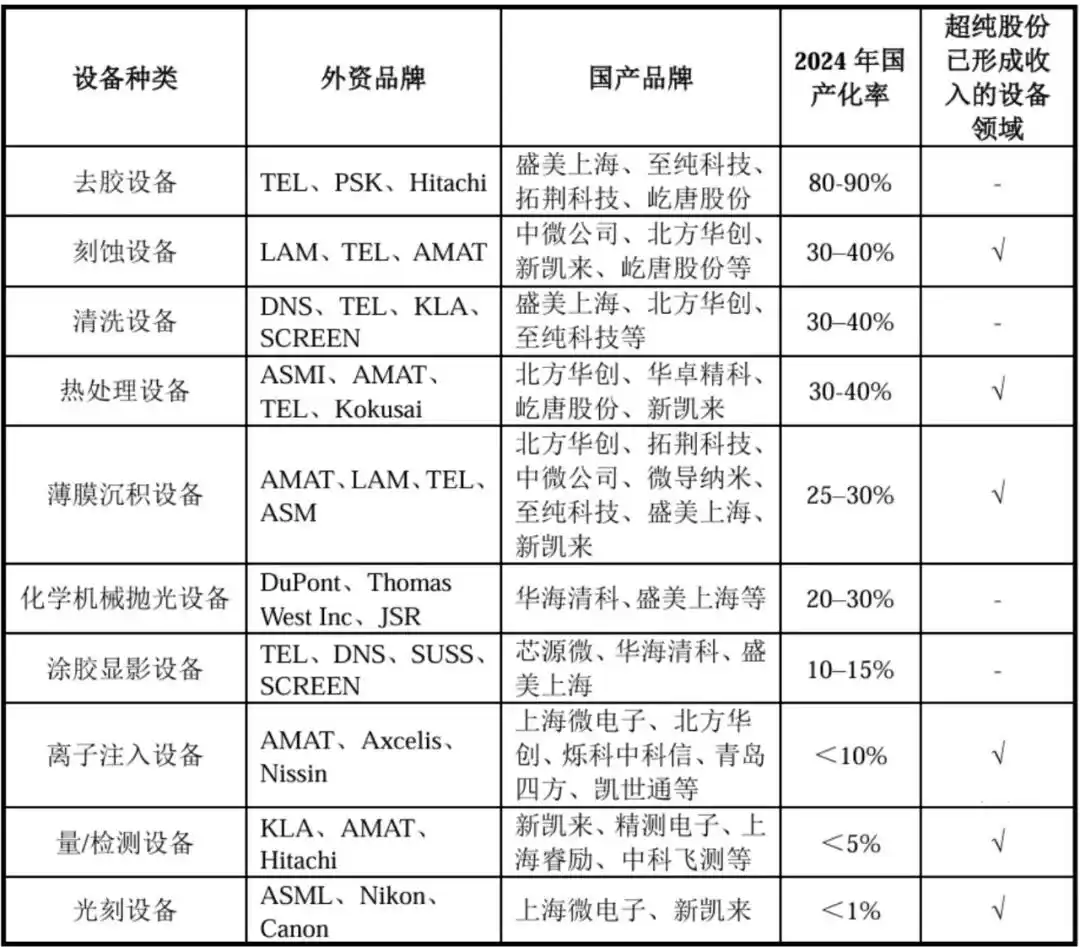
The Chinese mainland has the world's largest semiconductor consumption market and semiconductor equipment sales market, but the domestic rate of semiconductor equipment is relatively low. According to Frost & Sullivan data, Ultra-Pure Materials has already generated revenue from etching equipment, heat treatment equipment, thin-film deposition equipment, ion implantation equipment, measurement/inspection equipment, and lithography equipment.
01.
Revenue Exceeds 900 Million Over Three Years, Semiconductor Equipment Special Coating Components Account for Over 90% of Revenue Last Year
In 2023, 2024, and 2025, the revenue of Ultra-Pure Materials was 169 million yuan, 257 million yuan, and 496 million yuan respectively, with total revenue over three years exceeding 900 million yuan; net profits were 65 million yuan, 82 million yuan, and 185 million yuan respectively; R&D expenses were 10 million yuan, 14 million yuan, and 18 million yuan respectively.
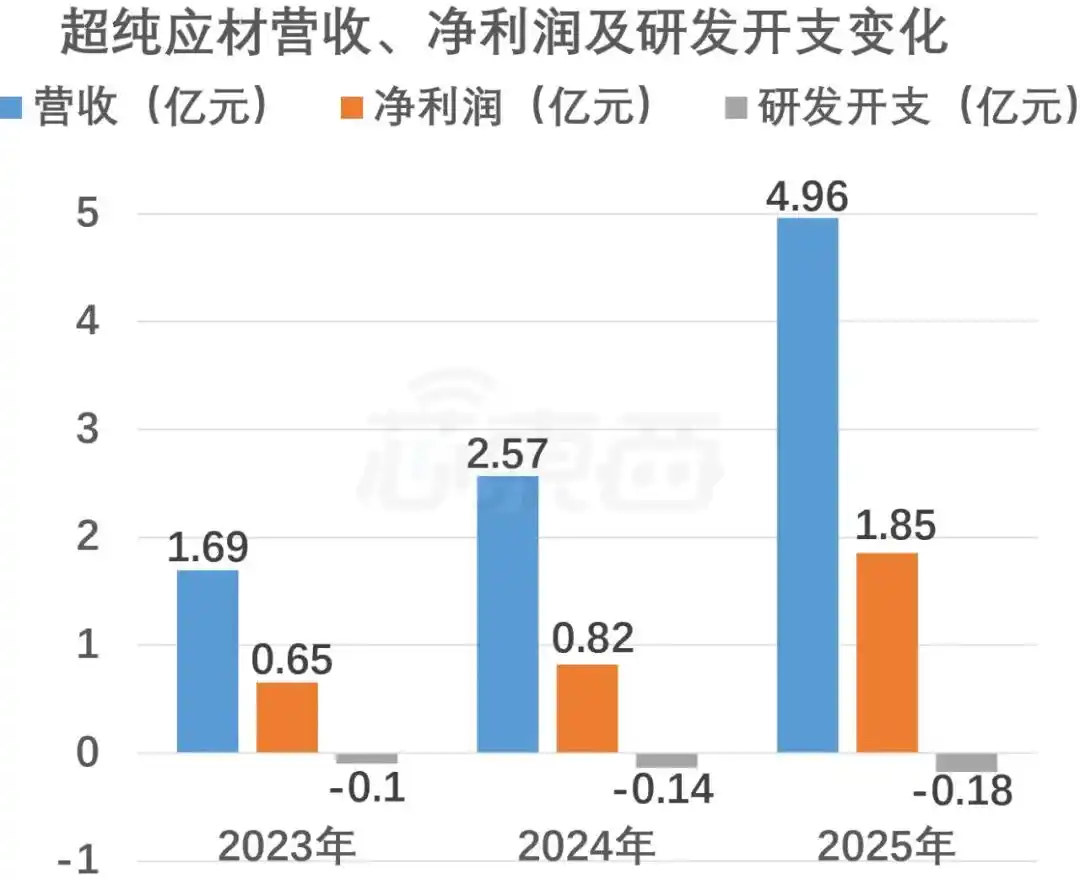
▲Changes in Ultra-Pure Materials' Revenue, Net Profit, and R&D Expenditure (Chart by XinDongXi)
By business type, in 2023, 2024, and 2025, the revenue from semiconductor equipment special coating components for Ultra-Pure Materials was 112 million yuan, 233 million yuan, and 473 million yuan respectively, accounting for 66.13%, 90.91%, and 95.53% of the main business revenue, serving as the primary source of the company's main business revenue.
Simultaneously, benefiting from the significant growth in revenue from semiconductor equipment special coating components, the company's main business revenue in 2025 increased by approximately 193% compared to 2023.
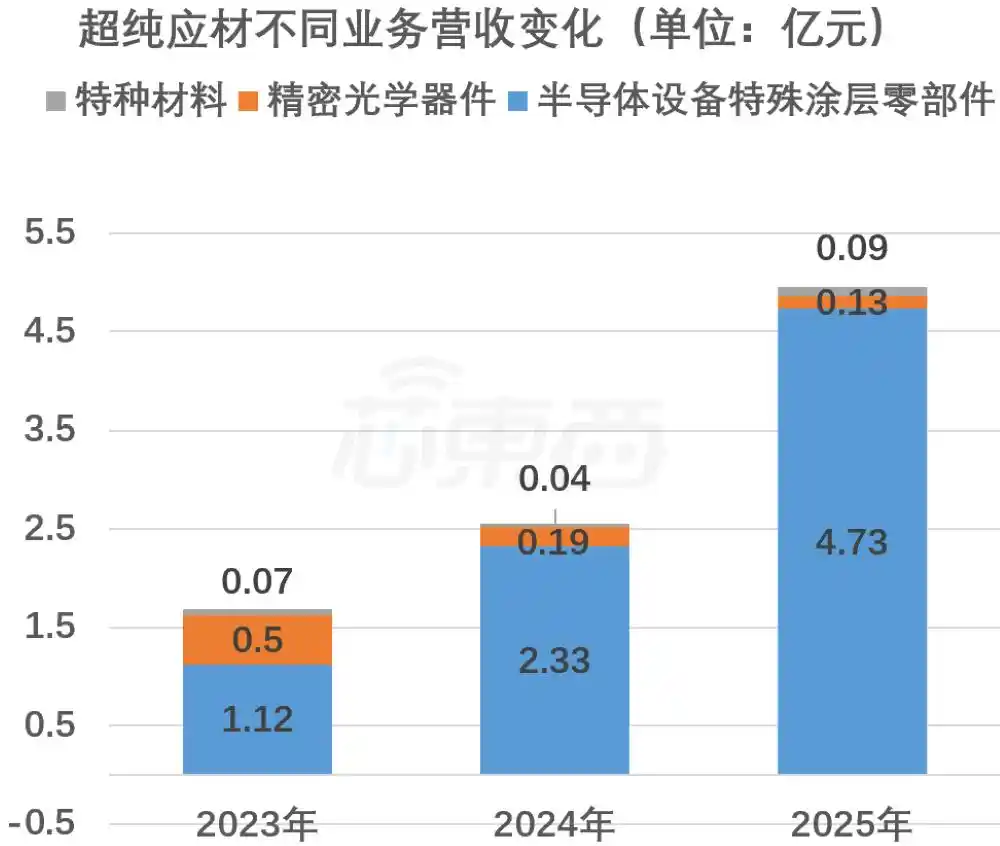
▲Chart of Ultra-Pure Materials' Revenue Changes by Different Businesses (Chart by XinDongXi)
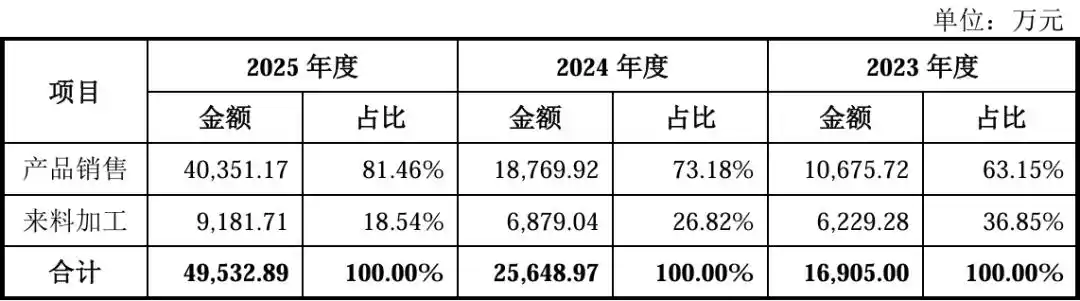
By business model, the main business revenue of Ultra-Pure Materials primarily comes from product sales, accounting for over 60% in the reporting period, specifically 63.15%, 73.18%, and 81.46%, contributing revenue of 107 million yuan, 188 million yuan, and 404 million yuan respectively.
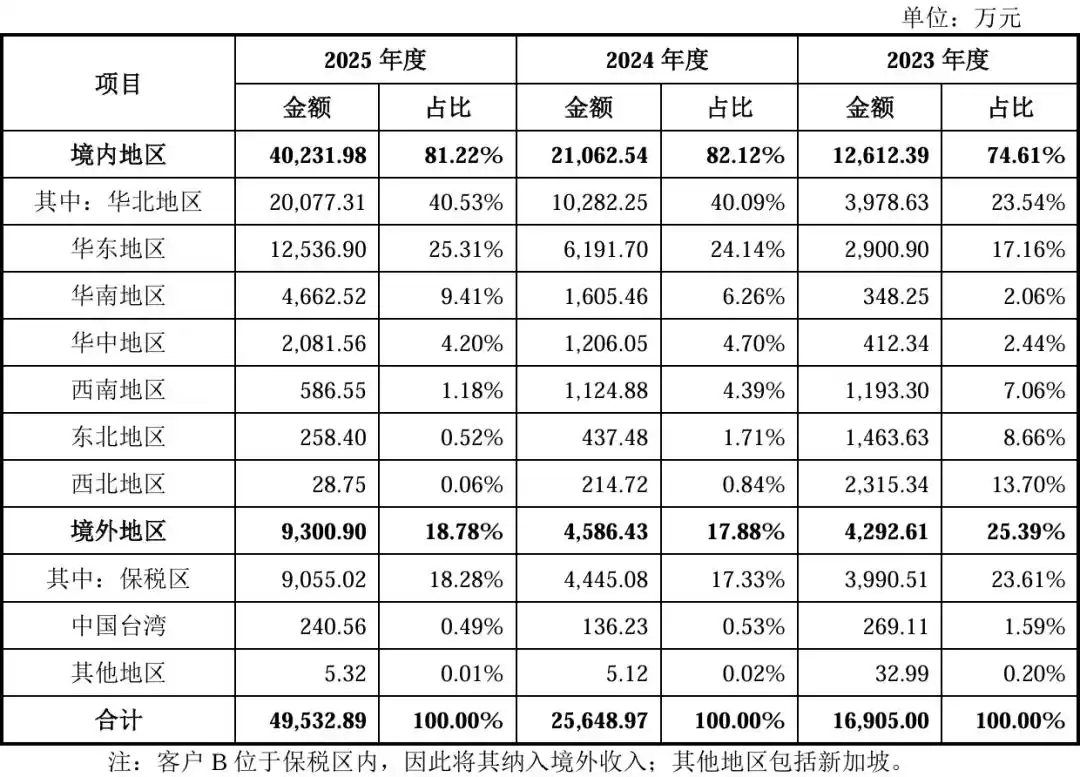
From 2023 to 2025, the main business revenue of Ultra-Pure Materials mainly came from within China, primarily from the North China and East China regions, with revenue from overseas regions accounting for less than 26%.
In 2023, 2024, and 2025, the gross profit margin for precision optical devices of Ultra-Pure Materials was the highest, stable above 60%, at 76.18%, 62.93%, and 66.31% respectively; the gross profit margin for semiconductor equipment special coating components followed, stable around 58%.
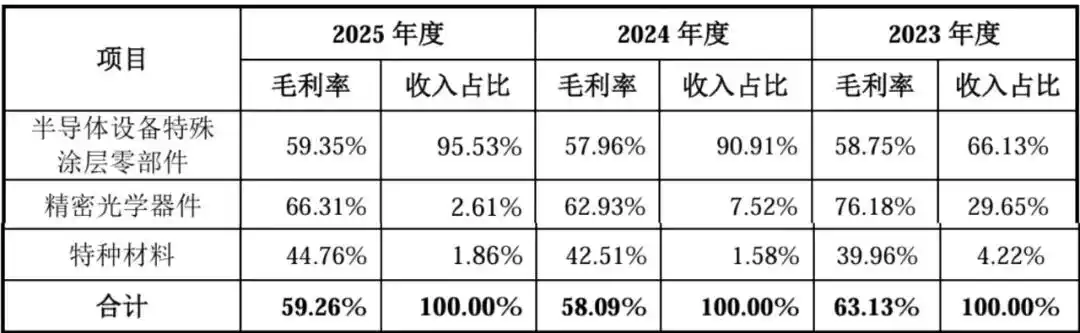
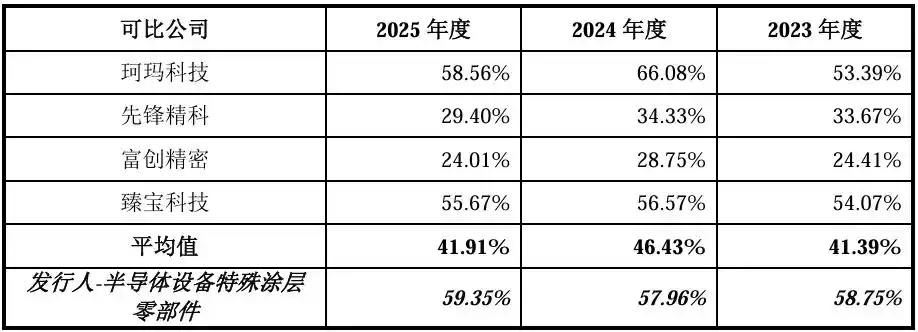
During the reporting period, the gross profit margin for semiconductor equipment special coating components of Ultra-Pure Materials was 58.75%, 57.96%, and 59.35% respectively, higher than the average gross profit margin of comparable listed companies, and comparable to that of Kema Technology, a developer of advanced ceramic material components for semiconductor equipment, and Zhenbao Technology, a provider of semiconductor equipment core components and surface treatment solutions.
02.
R&D Personnel Account for 12.08%, Products Cover Wafer Manufacturing, Packaging, and Silicon Wafer Manufacturing Fields
The products of Ultra-Pure Materials include semiconductor equipment special coating components, precision optical devices, and special materials, with special materials further including coating materials, sputtering targets, cathode materials, ceramic materials, etc.
It possesses dozens of semiconductor equipment special coating component products, covering equipment in the fields of wafer manufacturing, packaging, and silicon wafer manufacturing. It has achieved certain technological advantages in etching, lithography, measurement/inspection, annealing, and thin-film deposition equipment fields, and has carried out mass production or customer verification in diffusion, ion implantation, bonding, and advanced packaging equipment fields, providing key component products for silicon epitaxial wafer manufacturing equipment.
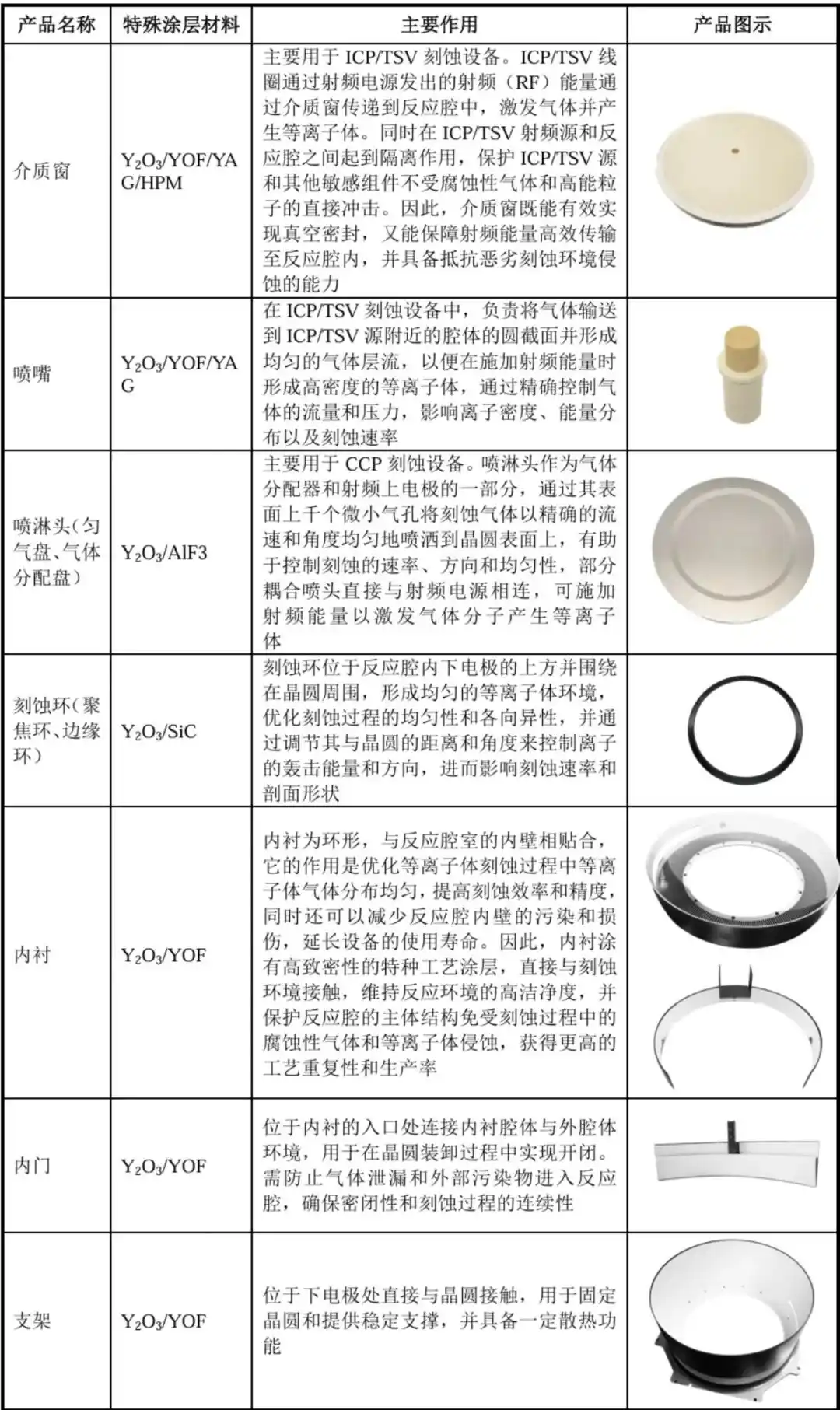
The company's etching equipment component products mainly include dielectric windows, showerheads, nozzles, etch rings, liners, inner doors, brackets, etc. Their functions include directly participating in the etching reaction process and maintaining the etching reaction environment. The main products are as follows:
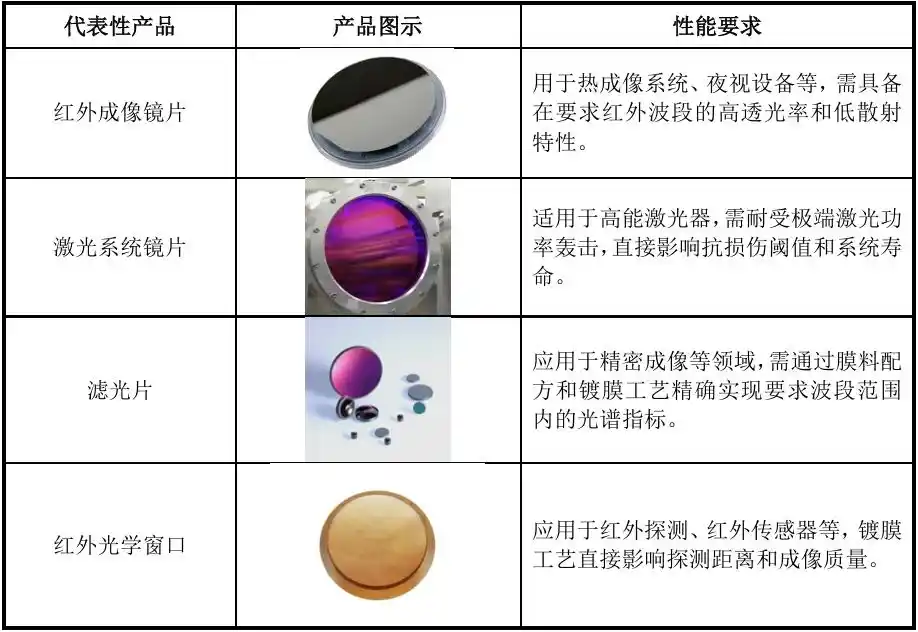
The precision optical devices of Ultra-Pure Materials are primarily lenses that have undergone precision molding, surface grinding, and coating processes, achieving extremely high standards in material purity, surface processing precision, light transmittance or reflectivity, and environmental tolerance. Simultaneously, the company provides high laser threshold laser optical products for key domestic scientific research units, applied in aerospace and other major national strategic development fields.
Some representative precision optical device products of Ultra-Pure Materials are shown in the figure:
As of December 31, 2025, the proportion of R&D personnel at Ultra-Pure Materials was 12.08%; as of the same date, the company and its subsidiaries possessed 26 authorized patents, including 12 invention patents and 14 utility model patents.
03.
High Concentration of Customers and Suppliers
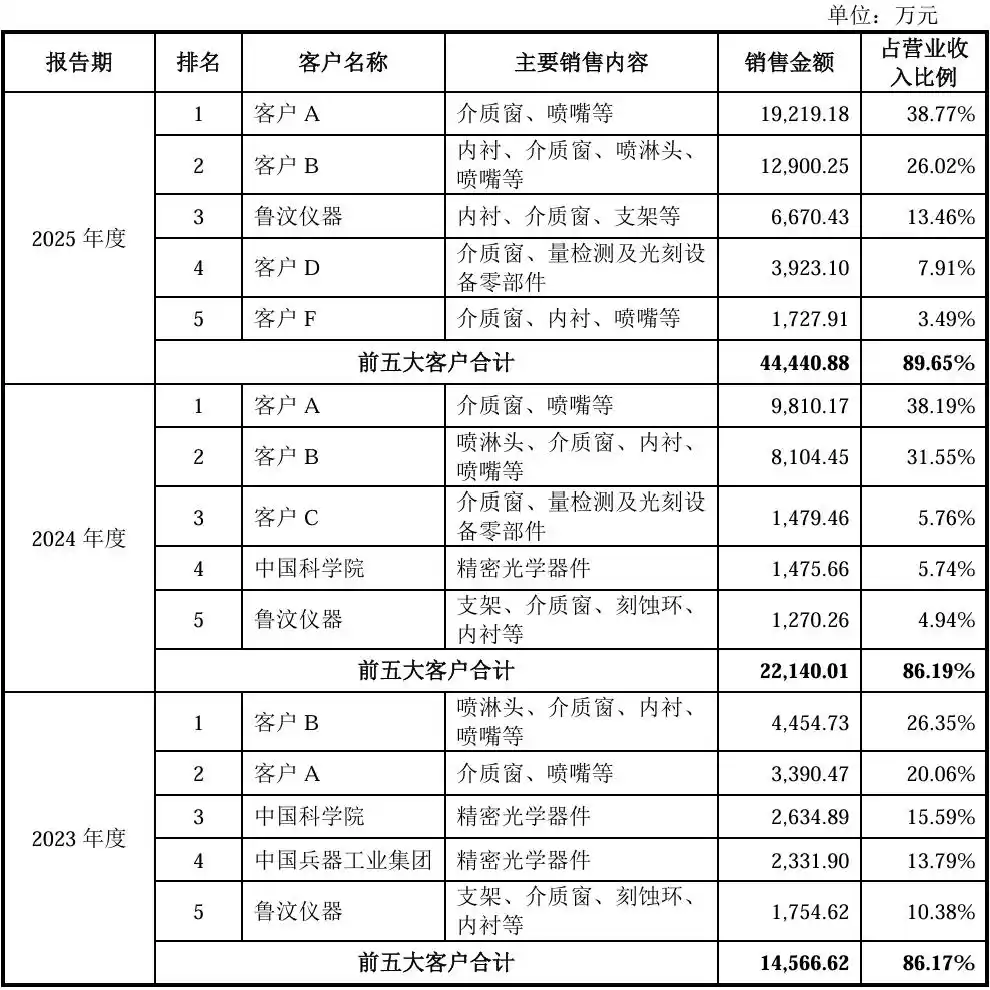
The top five customers of Ultra-Pure Materials include Leuven Instruments, the Chinese Academy of Sciences, and China North Industries Group Corporation. In 2023, 2024, and 2025, the total revenue from the top five customers of Ultra-Pure Materials was 146 million yuan, 221 million yuan, and 444 million yuan respectively, accounting for 86.17%, 86.19%, and 89.65% of the operating revenue for the same period.
During the reporting period, the combined sales proportion to Customer A and Customer B was 46.41%, 69.74%, and 64.79% respectively, indicating a high degree of customer concentration.
Simultaneously, Customer B and its affiliates once directly and indirectly held shares in Ultra-Pure Materials exceeding 5%. A subsidiary of Customer A invested in Beijing Nuohua Capital Investment Management Co., Ltd., which serves as the executive partner of Jidian Chantou, holding 3.37% of the shares in Ultra-Pure Materials. Apart from this, there is no relationship between the top five customers in each period and the company, its controlling shareholder, actual controller, directors, supervisors, senior management personnel, or their close family members.
Based on information disclosed in the prospectus of Ultra-Pure Materials, it is speculated that Customer A might be NAURA, and Customer B might be AMEC.
The top five customers of Ultra-Pure Materials are as follows:
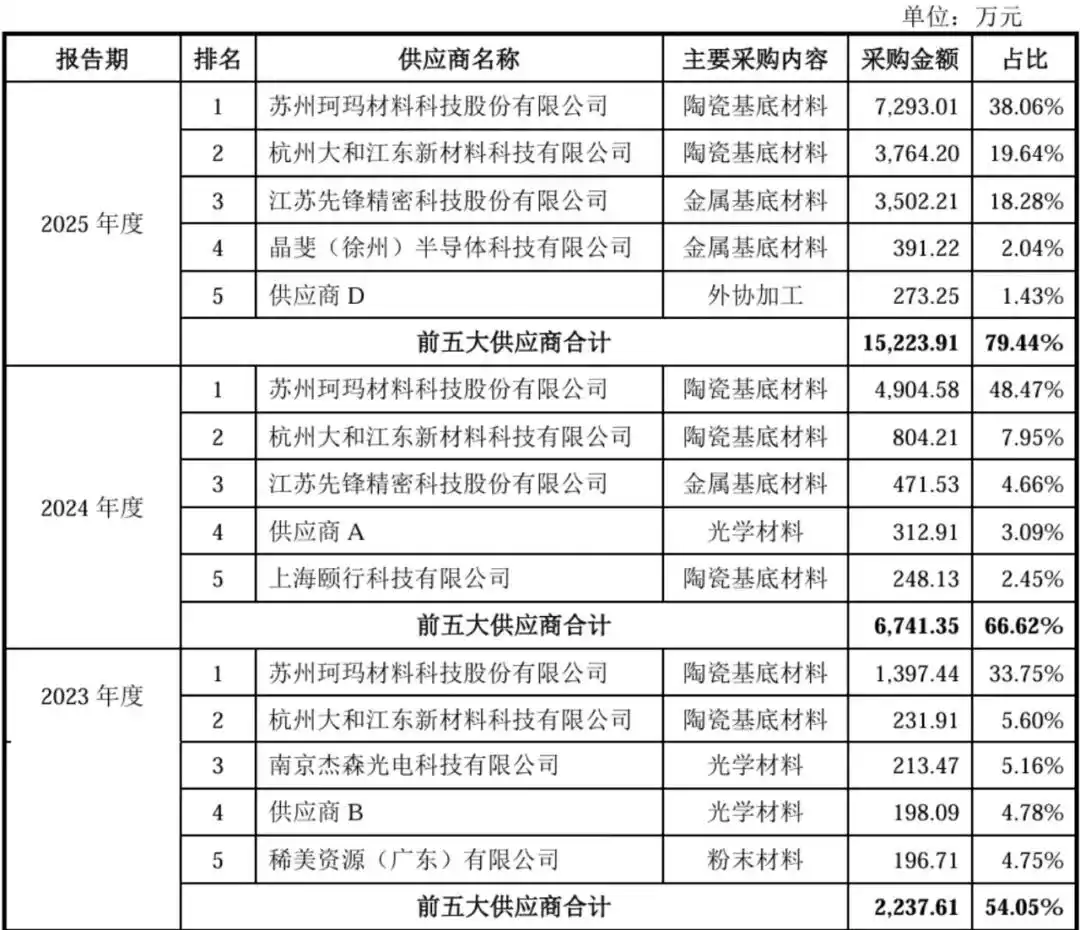
During the reporting period, Ultra-Pure Materials mainly purchased raw materials such as ceramic substrate materials, metal substrate materials, and optical materials from suppliers, while auxiliary materials purchased mainly included equipment accessories, tooling fixtures, etc. From 2023 to 2025, the total purchases from the top five suppliers in each period were 22 million yuan, 67 million yuan, and 152 million yuan respectively, accounting for 54.05%, 66.62%, and 79.44% of the total purchases in the respective periods.
Among these, the company's purchase proportion from Kema Technology was 33.75%, 48.47%, and 38.06% respectively, indicating a relatively high concentration of suppliers. This is primarily due to the high concentration of manufacturers in the upstream raw material industry for Ultra-Pure Materials. Relatively stable and concentrated purchasing helps the company achieve economies of scale, reduce raw material procurement costs, and ensure product quality stability.
The top five suppliers of Ultra-Pure Materials are as follows:
04.
Two Brothers Born in the 1970s Jointly at the Helm
As of July 23, 2026, the equity structure of Ultra-Pure Materials is as shown in the figure below:
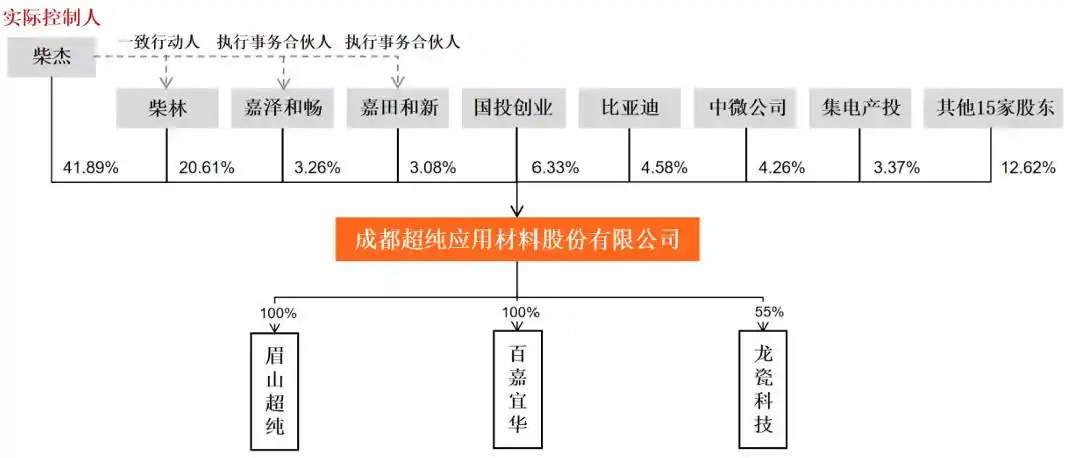
Prior to this stock issuance, the controlling shareholder, actual controller, chairman, and general manager of Ultra-Pure Materials is Chai Jie. He directly holds 41.89% of the company's shares and indirectly controls 3.26% of the voting rights of Ultra-Pure Materials through Jiaze Hechang and 3.08% through Jiatian Hexin, totaling control over 48.23% of the voting rights of Ultra-Pure Materials, making him the largest shareholder.
Chai Jie's brother, Chai Lin, is a director and chief engineer of Ultra-Pure Materials. He directly holds 20.61% of the shares of Ultra-Pure Materials and is a person acting in concert with Chai Jie; together, they control 68.84% of the voting rights of the company.
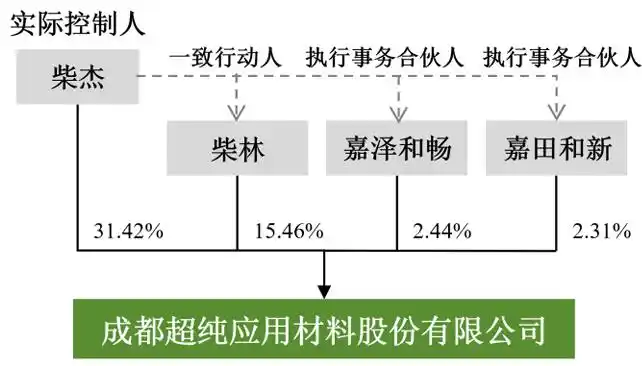
After this stock issuance and before listing, Chai Jie directly holds 31.42% of the shares of Ultra-Pure Materials, and Chai Lin directly holds 15.46%; the equity structure and control relationship between Ultra-Pure Materials and its controlling shareholder and actual controller are shown in the following diagram:
Chai Jie is 53 years old this year, from Chengdu, Sichuan, and holds a bachelor's degree from Nanjing University of Science and Technology. After graduating in July 1994, he was assigned to the Southwest Institute of Technical Physics; from August 1995 to June 1998, he worked at China National Electronics Import & Export Sichuan Company; from July 1998 to January 2002, he served as department manager at Sichuan Foreign Economic and Trade Corporation.
Chai Lin is 55 years old this year, from Chengdu, Sichuan, and holds a bachelor's degree from the University of Electronic Science and Technology of China. Before joining Ultra-Pure Materials, he successively served as an assistant engineer at the Electronic Experiment Center of the University of Electronic Science and Technology of China, an engineer at Chengdu Precision Optical Engineering Research Center, and a senior engineer at the Beijing Representative Office of Leybold Optics GmbH.
In 2023, 2024, and 2025, the total remuneration for the then directors, supervisors/audit committee members, senior management personnel, and other core personnel of Ultra-Pure Materials was 2.4558 million yuan, 2.6247 million yuan, and 3.2641 million yuan respectively; accounting for 3.26%, 2.73%, and 1.5% of the company's total profit respectively.
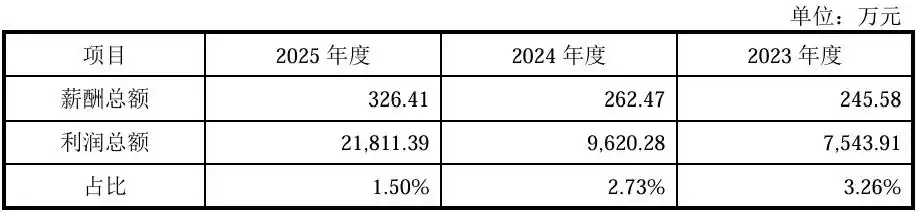
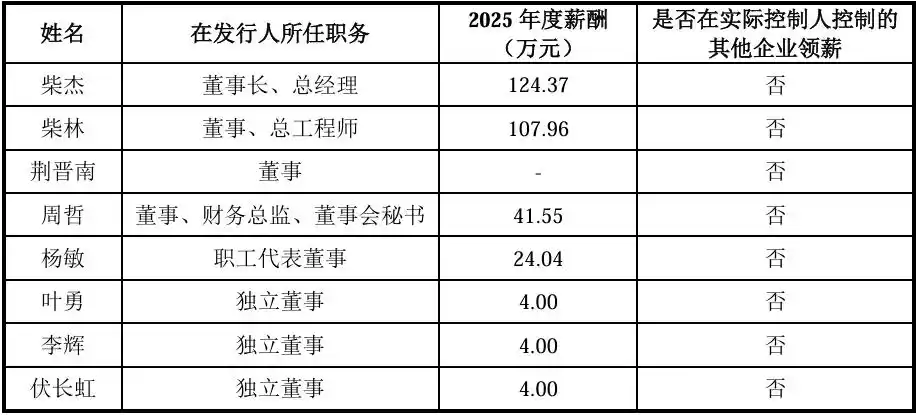
In 2025, the remuneration received by Chai Jie from Ultra-Pure Materials and its affiliated enterprises was 1.2437 million yuan, while Chai Lin's remuneration was 1.0796 million yuan.
05.
Conclusion: Oligopoly Structure Persists, Vast Space for Domestic Substitution
The global market for semiconductor equipment special coating components has long been dominated by European, American, and Japanese enterprises. Multinational companies such as KoMiCo, TOTO, and TOCALO, leveraging first-mover technological advantages and global layouts, hold an absolute dominant position in the advanced process field. They have formed deep strategic cooperative relationships with equipment giants like Lam Research, Applied Materials, KLA, Tokyo Electron, and ASML, building solid market barriers.
According to Frost & Sullivan, driven by multiple favorable factors such as the accelerated domestic semiconductor equipment process, the introduction of numerous supportive policies by the state to promote domestic substitution of semiconductor equipment components, and the continuous improvement of technical levels of local manufacturers, it is expected that the domestic substitution rate in this field will continue to increase, potentially reaching about 12.4% by 2029.
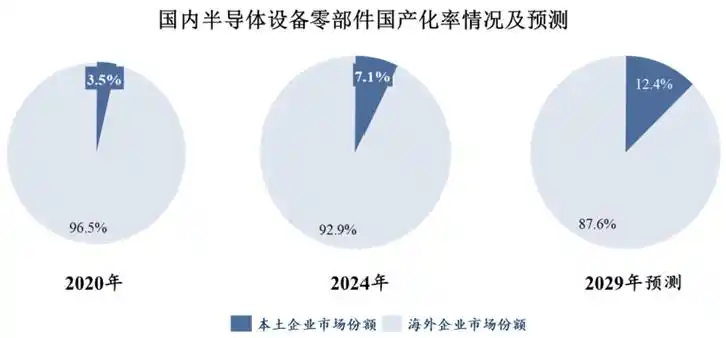
This listing of Ultra-Pure Materials on the A-share market will direct raised funds towards capacity expansion and R&D platform construction, continuously opening market space for the domestic substitution of products like semiconductor equipment components. Simultaneously, as represented by this company, local enterprises are accelerating technological iteration. Relying on customized, localized service capabilities, they are expected to establish differentiated domestic competitiveness in key special coating process areas such as high density, low porosity, and low trace element contamination.
This article is from the WeChat public account "XinDongXi", author: Liu Yu, editor: Chen Junda