South Korea Opens To Corporate Crypto Investment, But Sets 5% Cap

bitcoinistОпубліковано о 2026-01-12Востаннє оновлено о 2026-01-12

Анотація

South Korea's Financial Services Commission (FSC) is set to overturn a nine-year ban by allowing corporations and professional investors to invest in cryptocurrencies. The new guidelines, expected to be finalized by February, impose a 5% cap on corporate investments relative to equity capital and restrict investments to the top 20 cryptocurrencies by market cap. While stablecoins like USDT and USDC are currently in the top 20, their eligibility is still under discussion. The move follows the country's earlier announcement in February 2025 to permit institutional participation. Some industry insiders have raised concerns that the investment cap may hinder capital inflow and limit the growth of crypto-focused firms. Additionally, South Korea is planning to introduce spot crypto ETFs this year and is developing a regulatory framework for stablecoins, though disagreements between the FSC and the Bank of Korea over ownership requirements for issuers have caused delays.

South Korea is reportedly planning to allow corporations to invest in crypto, a move that would see the overturn of a nine-year-old ban.

South Korea Sets Crypto Corporate Investing Limit At 5%

South Korea’s Financial Services Commission (FSC) has drafted guidelines to allow listed companies and professional investors to trade crypto, according to a report from South Korean media outlet BusinessKorea. The FSC shared the draft with a public-private task force on January 6th, and according to a high-ranking financial industry official, authorities are expected to release the final guidelines between January and February.

Since 2017, corporate and institutional players in South Korea have been under an effective prohibition from trading and investing in digital assets like Bitcoin, with the government citing speculation and money-laundering risks. The country’s stance began to shift in February 2025, when the FSC announced a plan to gradually allow institutional participation in the space. The latest guidelines are a follow-up to this announcement.

South Korea easing up on corporate crypto investments hasn’t come without restrictions, however. Authorities have reportedly set an investment cap of 5% of equity capital, which companies can only deploy into coins inside the top 20 by market cap list. These assets will be determined based on the semi-annual market cap data sourced from the top five domestic digital asset exchanges.

Stablecoins tied to the US Dollar, like USDT and USDC, currently fall inside the top 20 list, but whether they will be included as permitted investment targets is still being discussed.

While South Korea is planning on a 5% investment cap, other countries like the US or Japan have no such limits on corporate investing. One financial industry insider has raised concerns about the restriction, saying that “investment limit restrictions not found overseas could weaken capital inflow factors and prevent the emergence of virtual currency investment specialist companies.”

South Korea has also made other developments related to the crypto industry recently. The East Asian nation is planning to introduce digital asset spot exchange-traded funds (ETFs) this year, looking to investment vehicles active in the US and Hong Kong as reference points.

The FSC is also working on the next phase of its digital asset legislation, which could see the establishment of a regulatory framework for stablecoins. As reported by Bitcoinist, the bill has so far been delayed due to a dispute between the FSC and the Bank of Korea (BoK).

The BoK, South Korea’s central bank, has been pushing for banks to own at least a 51% stake in any stablecoin issuer seeking approval in the country. While the FSC agrees that financial institutions should be involved in the issuance of won stablecoins, the regulator has raised concerns that a bank majority requirement could limit market participation and innovation.

Bitcoin Price

At the time of writing, Bitcoin is trading around $90,600, down 2.5% over the past week.

Looks like the price of the crypto has been moving sideways in recent days | Source: BTCUSDT on TradingView

Пов'язані питання

QWhat is the new investment cap set by South Korea for corporate crypto investments?

ASouth Korea has set an investment cap of 5% of equity capital for corporate crypto investments.

QWhich regulatory body in South Korea drafted the guidelines for corporate crypto investment?

ASouth Korea's Financial Services Commission (FSC) drafted the guidelines for corporate crypto investment.

QWhat type of cryptocurrencies are corporations allowed to invest in under the new guidelines?

ACorporations are only allowed to deploy investments into cryptocurrencies that are inside the top 20 by market cap list.

QWhat is one concern raised by a financial industry insider regarding the 5% investment cap?

AA financial industry insider raised concerns that the investment limit could weaken capital inflow factors and prevent the emergence of virtual currency investment specialist companies.

QWhat other crypto-related financial product is South Korea planning to introduce this year?

ASouth Korea is planning to introduce digital asset spot exchange-traded funds (ETFs) this year.

Пов'язані матеріали

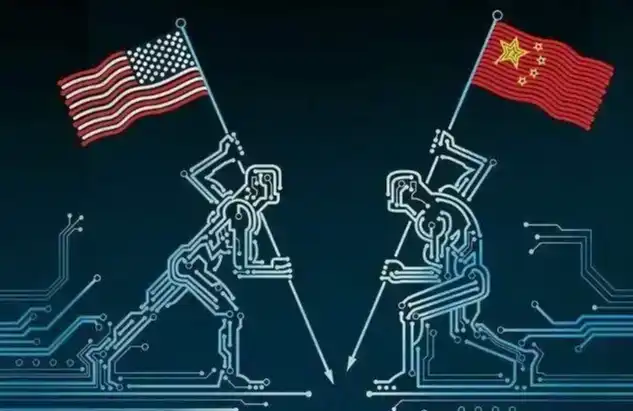
Who Will Define the Rules of the AI Era? Anthropic Discusses the 2028 US-China AI Landscape

This article, based on Anthropic's analysis, outlines the intensifying systemic competition between the U.S./allies and China for AI leadership by 2028. It argues that access to advanced computing power ("compute") is the critical bottleneck, where the U.S. currently holds a significant advantage through chip export controls and allied innovation. However, China's AI labs remain competitive by exploiting policy loopholes—via chip smuggling, overseas data center access, and "model distillation" attacks to copy U.S. model capabilities—keeping them close to the frontier. The piece presents two contrasting scenarios for 2028. In the first, decisive U.S. action to tighten compute controls and curb distillation locks in a 12-24 month AI capability lead, cementing democratic influence over global AI norms, security, and economic infrastructure. In the second, policy inaction allows China to achieve near-parity through continued access to U.S. technology, enabling Beijing to promote its AI stack globally and integrate advanced AI into its military and governance systems, altering the strategic balance. Anthropic contends that maintaining a decisive U.S. lead is essential for shaping safe AI development and governance. The core recommendation is for U.S. policymakers to urgently close compute and model access loopholes while promoting global adoption of the U.S. AI technology stack to secure a lasting strategic advantage.

marsbit1 год тому

Who Will Define the Rules of the AI Era? Anthropic Discusses the 2028 US-China AI Landscape

marsbit1 год тому

“Why Didn’t You Buy 2x Long SK Hynix?”

The article discusses the immense popularity of the "2x Long SK Hynix ETF" (07709.HK) in Hong Kong, which became the world's largest single-stock leveraged ETF by May 2026. Launched in October 2025, the ETF's net value soared over 1000% in seven months, significantly outperforming the 324% gain of SK Hynix's underlying stock, driven by the AI boom and a critical shift in industry demand from computing power to memory. It highlights the mechanics and risks of daily-rebalanced leveraged ETFs. In a smooth bullish market, they generate amplified returns, but during volatile periods—exemplified by market swings during geopolitical tensions in the Strait of Hormuz in March-April 2026—they suffer severe "volatility decay," where choppy price action can cause losses far exceeding twice the drop of the underlying asset. The piece frames SK Hynix, as NVIDIA's primary HBM supplier, within the classic cycle of the memory chip industry—a commoditized sector prone to boom-and-bust cycles of shortage, price hikes, overcapacity, and crashes. While current AI-driven demand and high margins (Q1 2026毛利率~79%) create a "super cycle," the article questions its sustainability. It warns that extreme profits will inevitably tempt competitors like Samsung and Micron to ramp up HBM production, potentially eroding scarcity. Furthermore, the entire narrative remains tethered to the massive AI capital expenditure of tech giants. In conclusion, the ETF's trajectory symbolizes the accelerated, all-in nature of the current AI revolution, where timeframes are compressed and market moves are extreme. However, it also underscores that while industry trends define ultimate returns, macro-geopolitical risks dictate the volatile and uncertain path to get there.

marsbit1 год тому

“Why Didn’t You Buy 2x Long SK Hynix?”

marsbit1 год тому

a16z Crypto: A Guide to the CLARITY Act for Crypto Entrepreneurs

The CLARITY Act, a bipartisan crypto market structure bill, has advanced through the Senate Banking Committee, marking a potential historic shift in U.S. digital asset regulation. For years, a lack of clear rules has stifled innovation, pushed development overseas, and exposed consumers to risk. This bill aims to establish a comprehensive framework, providing long-needed regulatory clarity for blockchain networks and digital assets. It builds upon previous legislative efforts like FIT21 and the House version of CLARITY, which gained strong bipartisan support. CLARITY is crucial because it recognizes that blockchain networks are fundamentally different from traditional companies. Networks operate through decentralized, shared rules rather than centralized control. Applying corporate legal frameworks to networks forces them into a centralized model, concentrating power and value. In contrast, decentralized blockchain networks can function as user-owned public infrastructure, distributing value more equitably among participants. The bill seeks to enable the safe launch of networks in the U.S., clarify regulatory jurisdiction between the SEC and CFTC, oversee crypto exchanges, and enhance consumer protections. Its passage would align U.S. law with the nature of decentralized technology, allowing builders to operate transparently and fund projects domestically without structural compromises due to regulatory uncertainty. Similar to the positive impact seen after the stablecoin-focused GENIUS Act, CLARITY could unlock a new wave of innovation, helping the U.S. reclaim leadership in the crypto space while combating fraud and abuse.

链捕手1 год тому

a16z Crypto: A Guide to the CLARITY Act for Crypto Entrepreneurs

链捕手1 год тому

Торгівля

Спот
Ф'ючерси
活动图片