Robinhood Plans $1 Billion IPO to Expand Retail Access to Private Markets

TheNewsCryptoОпубліковано о 2026-02-18Востаннє оновлено о 2026-02-18

Анотація

Robinhood has announced a $1 billion IPO to expand retail investor access to private market securities, which have traditionally been difficult for individual investors to enter. The funds will be used to develop technology infrastructure, enhance compliance, and provide educational resources for private equity and venture investments. The company aims to democratize investment opportunities in early-stage companies and plans to list on a major U.S. exchange after regulatory approval. This move may set a precedent for other fintech firms and accelerate competition in private market access, though challenges such as pricing uncertainty and investor protection remain.

Robinhood has announced an initial public offering to raise $1 billion to diversify its financial services. The firm stated that it would utilize the funds to develop infrastructure that enables retail investors to invest in private market securities. Retail investors have always encountered high barriers when investing in private placements or late-stage company stocks.

According to the IPO announcement made by Robinhood, the involvement of more investors could help democratize investment opportunities in early-stage companies. The company will start trading its stocks on a major stock exchange in the U.S. after obtaining regulatory approval. Lawyers and advisors are assisting Robinhood in preparing the documents needed for the IPO registration process. The underwriters of the IPO will begin marketing stocks to institutional and accredited investors.

Capital Deployment and Compliance Strategy

The company will use the capital to expand its technology infrastructure and hire additional compliance staff for private securities trading. Robinhood will also enhance educational resources for retail investors interested in private equity and venture investments. The management of the investment platform stated that regulatory compliance is core to the development of private market products. Innovation in retail investment access has been driven by competition from traditional brokerages and fintech companies.

The IPO by Robinhood may set a precedent for other fintech companies that want to blur the lines between private and public investment opportunities. The company’s trading platform currently supports stocks, options, cryptocurrencies, and ETFs for millions of retail customers. Robinhood’s underwriting division will partner with private companies that want to list their offerings to qualified retail customers.

Retail Expansion and Market Dynamics

The opening of access to private markets is in line with the overall trend of fintech innovation and the demand for retail investing. Retail investors are now looking for diversified investment opportunities that go beyond the traditional public markets. The stocks of private companies can offer high growth potential but may lack liquidity compared to public stocks. Robinhood is set to offer educational and risk disclosure frameworks for such stocks.

Regulatory bodies can provide guidance regarding retail access in private securities as a function of their regulatory bodies. The role of technology in limited retail access to private investment rounds has already been explored by platforms other than Robinhood. The IPO of Robinhood may bring faster competition in the area of private markets access. Innovation in trading infrastructure may lead to better settlement of transactions.

However, there are pricing uncertainties in private markets, which are not the same as in public markets. The retail investor protection measures are expected to influence the adoption and utilization of the new products. Future retail participation will be influenced by ongoing discussions between regulators, issuers, and fintech platforms.

Highlighted Crypto News:

Abu Dhabi Funds Expand Bitcoin ETF Holdings Through IBIT

Tags#RobinhoodBTCCryptocurrencyexchangeFinTechIPO

Пов'язані питання

QWhat is the primary purpose of Robinhood's $1 billion IPO according to the announcement?

AThe primary purpose is to raise funds to develop infrastructure that enables retail investors to invest in private market securities and to diversify its financial services.

QHow does Robinhood plan to use the capital raised from the IPO?

AThe capital will be used to expand its technology infrastructure, hire additional compliance staff for private securities trading, and enhance educational resources for retail investors.

QWhat potential impact could Robinhood's IPO have on the fintech industry?

AIt may set a precedent for other fintech companies that want to blur the lines between private and public investment opportunities and bring faster competition in the area of private markets access.

QWhat are some of the challenges or risks mentioned for retail investors investing in private markets?

APrivate markets have pricing uncertainties that are not the same as in public markets, and the stocks of private companies may lack liquidity compared to public stocks despite offering high growth potential.

QWhat role will Robinhood's underwriting division play according to the article?

ARobinhood's underwriting division will partner with private companies that want to list their offerings to qualified retail customers.

Пов'язані матеріали

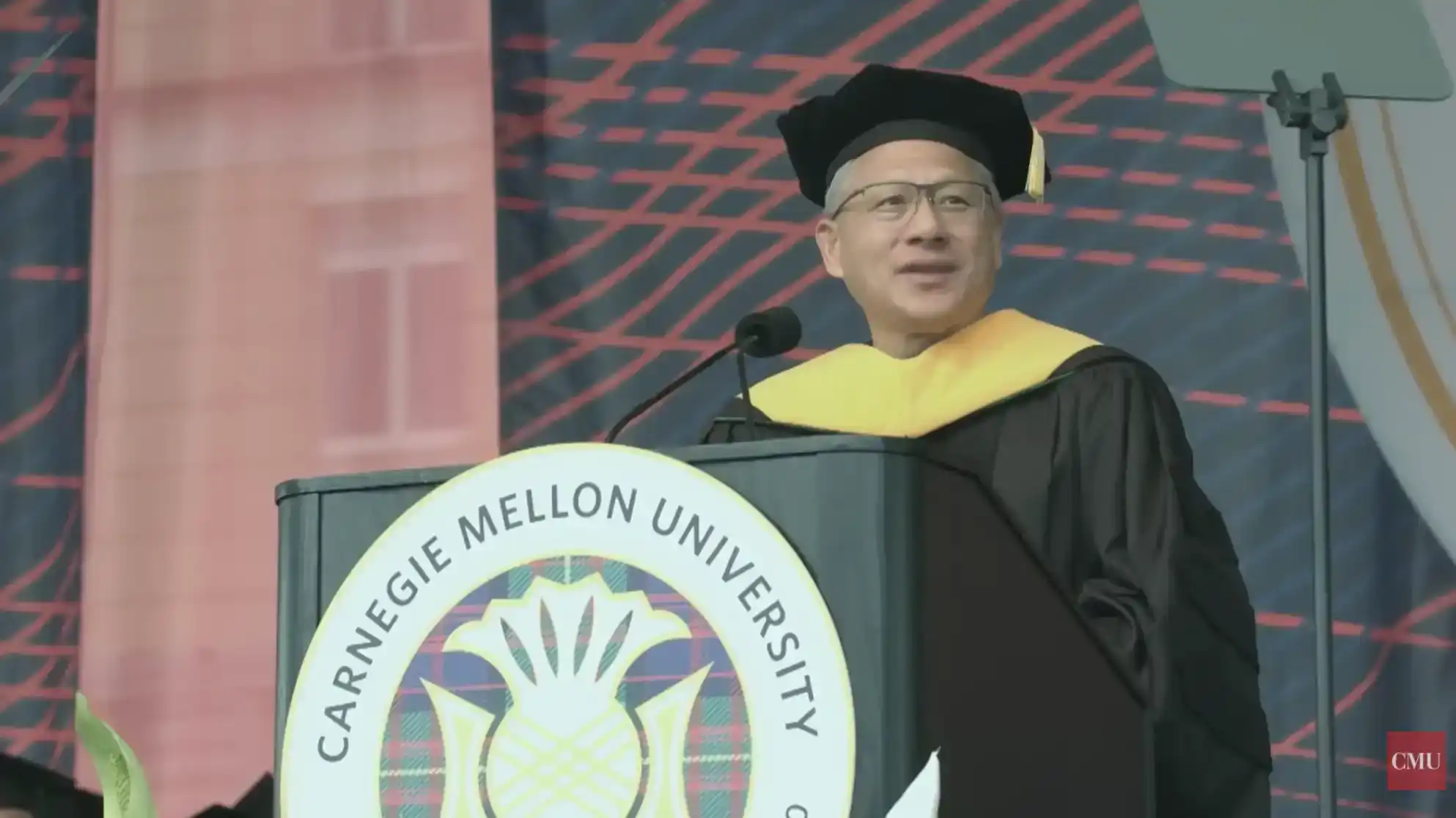
Jensen Huang's CMU Speech: In the AI Era, Don't Just Watch, Build

Jensen Huang, CEO of NVIDIA and a first-generation immigrant, delivered the commencement address to Carnegie Mellon University's class of 2026. He shared his personal journey from a humble background to founding NVIDIA, emphasizing resilience, learning from failure, and the responsibility that comes with leadership. Huang framed the present moment as the dawn of the AI revolution, a shift he believes is more profound than previous computing waves. He described AI as fundamentally resetting computing—moving from human-written software to machines that understand, reason, and use tools. This will create a new industry for generating intelligence and transform every sector. While acknowledging AI's potential to automate tasks and displace some jobs, Huang distinguished between the *tasks* of a job and its core *purpose*. He argued AI will augment human capability, not replace humans. The real risk, he stated, is not AI itself, but people being left behind by those who effectively use AI. He presented AI as a generational opportunity for massive infrastructure investment—in chip factories, data centers, energy grids, and advanced manufacturing—that could re-industrialize nations like the U.S. and bridge the digital divide by making computing and intelligent tools accessible to all. Huang called for a balanced approach: advancing AI safely and responsibly, establishing prudent policies, ensuring broad access, and encouraging universal participation. He urged the graduates not to fear the future but to engage with optimism and ambition, reminding them of CMU's motto, "My heart is in the work." His core message was clear: this is their moment to actively build and shape the AI-powered future, not merely observe it.

marsbit48 хв тому

Jensen Huang's CMU Speech: In the AI Era, Don't Just Watch, Build

marsbit48 хв тому

The Era Has Arrived Where Human Writers Must Prove They Are Not Machines

The article describes an era where AI-generated content is flooding the market, forcing human authors to prove they are not machines. It begins with the example of dozens of AI-written, error-ridden biographies of Henry Kissinger appearing on Amazon within hours of his death, a pattern repeated for other deceased celebrities and even living experts who find fraudulent books under their names. This spam content has exploded, with monthly new book releases on platforms like Amazon reaching 300,000 by late 2025. The issue spans genres, from suspiciously high proportions of AI-written teen romance and self-help books to dangerous, AI-generated foraging guides containing lethal advice. The platforms' automated review systems, designed to catch plagiarism and banned words, are ill-equipped to detect AI-generated text that avoids these pitfalls while being nonsensical or fraudulent. The problem has infiltrated traditional publishing. A major publisher, Hachette, had to recall a bestselling horror novel after AI detection tools suggested 78% of its content was machine-generated. An acclaimed European philosophy book was later revealed to be entirely written by AI under a fake author persona. In response, authors are fighting back. At the 2026 London Book Fair, 10,000 writers published a blank book titled "Don't Steal This Book" containing only their signatures—using emptiness as a protest weapon in an age of AI overproduction. Initiatives like the "Human Author Certification" program have emerged, ironically placing the burden on humans to prove their work is not machine-made. The article warns of a vicious cycle: AI-generated low-quality books pollute the data used to train future AI models, leading to "model collapse" and an ever-worsening flood of digital waste, eroding trust in publishing and devaluing human creativity.

marsbit1 год тому

The Era Has Arrived Where Human Writers Must Prove They Are Not Machines

marsbit1 год тому

Торгівля

Спот
Ф'ючерси
活动图片