On-Chain Metrics Practical Guide: Identifying Real Signals, Avoiding Data Traps

比推Опубліковано о 2025-12-25Востаннє оновлено о 2025-12-25

Анотація

A practical guide to on-chain metrics for traders, focusing on identifying genuine signals and avoiding data traps. Key concepts include distinguishing between transaction fees (user-paid costs), protocol revenue (actual earnings), and MEV (maximal extractable value), emphasizing that sustainable revenue matters more than high fees. Total Value Locked (TVL) is often misleading due to double-counting, incentive-driven "mercenary capital," and idle stablecoins. Traders should analyze TVL alongside transaction volume and incentives. Daily Active Addresses (DAA) can be inflated by bots and airdrop farmers; it’s only meaningful when correlated with fees and real activity. Cross-chain bridges enable asset transfers but carry risks like smart contract vulnerabilities and centralization. Monitor bridge volumes for liquidity flow insights. Stablecoin supply acts as crypto’s money supply (M2); increasing supply suggests market liquidity, while decreases may signal withdrawals. Token unlocks and emissions create sell pressure; avoid tokens nearing large unlocks unless trading short-term. The ratio of transaction volume to TVL indicates capital efficiency—high ratios reflect active usage, while low ratios suggest "ghost liquidity." In summary, on-chain metrics are analytical tools, not absolute truths. Cross-verify signals and interpret data contextually for informed decisions.

Written by: Dami-Defi

Compiled by: AididaoJP, Foresight News

Original title: A Practical Guide to On-Chain Metrics for Traders


On-chain metrics are something everyone talks about, but few truly understand. This guide will explain their true meaning in a simple and clear way, and how traders should use them.

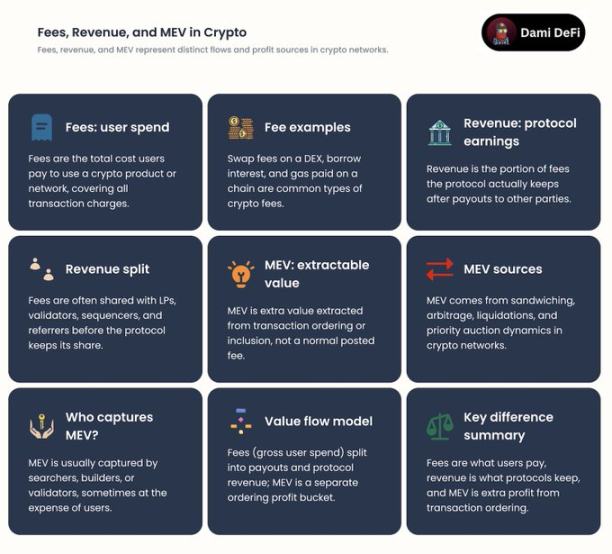
Fees vs. Revenue vs. MEV: The Real Earnings of a Chain

First, clarify a few concepts:

  • Fees: The cost users pay to conduct transactions.

  • Revenue: The portion ultimately kept by the protocol or validators.

MEV (Maximal Extractable Value): Additional profit validators gain by optimizing transaction ordering.

Key Point: High fees do not equal success. The real key is sustainable revenue. If users are driven away by $50 fees, this model is difficult to sustain.

Trader's Perspective:

Focus on public chains where real revenue is growing and the token model is reasonable. Models overly reliant on MEV are fragile; once trading volume declines or competition intensifies, prosperity can quickly fade.
TVL: The Three "Lies" of Total Value Locked

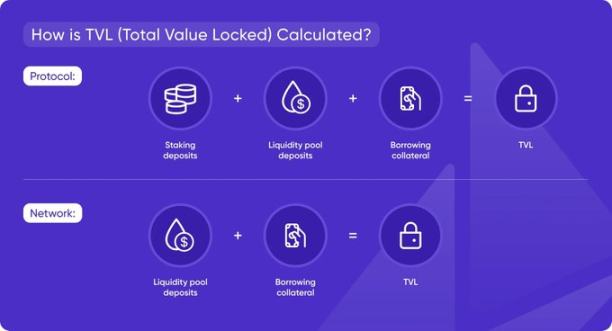
Total Value Locked represents the total capital locked in a protocol or chain. It shows market trust but can also be very misleading.

The Three "Lies" of TVL:

  • Double Counting: The same capital is collateralized across different protocols, inflating the total.

  • Incentive-Driven TVL: "Mercenary capital" arrives for short-term incentives and leaves quickly once rewards end.

  • Idle Stablecoins: Large amounts of funds sit in wallets, counted in TVL but never used.

Trader's Perspective:

Never look at TVL alone; it must be analyzed alongside trading volume and incentive programs. Real usage is far more important than vanity metrics.
DAA / Daily Active Addresses: Real Users or Market Noise?

Daily Active Addresses count the number of addresses that have performed operations on the chain. It is often used as a proxy for real users but is also easily manipulated.

Common Issues:

  • Bulk operations by bots.

  • Airdrop farmers creating massive numbers of addresses.

  • Protocol internal transfers inflating data.

Key Point: DAA is meaningful only when it grows in sync with fees, trading volume, and real activity. If the number of addresses surges while revenue stagnates, it's likely a manufactured metric.

Trader's Perspective:

Treat DAA as a secondary confirmation signal, not a primary buy indicator. It only serves to validate growth when supported by other fundamentals.
Cross-Chain Bridges: How Funds Move Across Chains and Where the Risks Lie

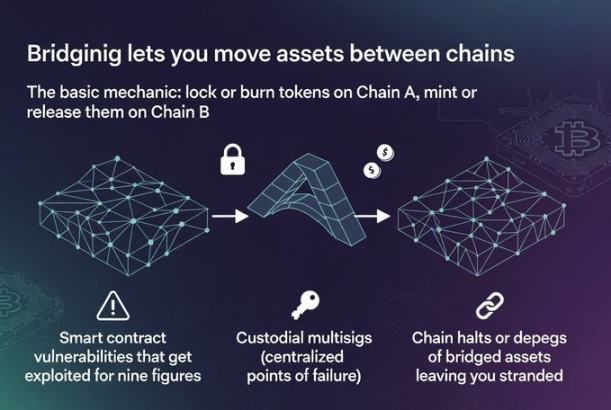
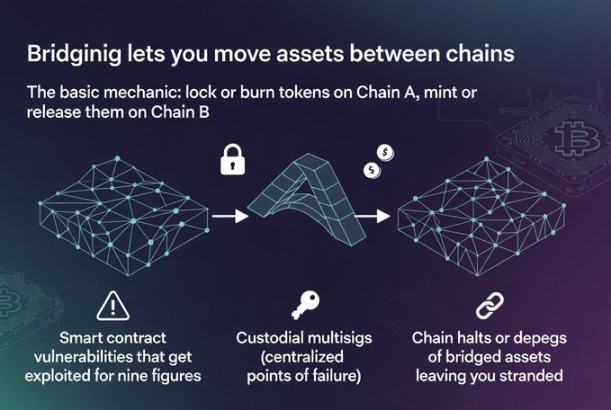
Cross-chain bridges enable the transfer of assets between different blockchains. The basic principle is: lock or burn tokens on Chain A, mint or release an equivalent amount on Chain B. The concept is simple, but the risks are complex.

Main Risks:

  • Smart Contract Vulnerabilities: Can lead to huge financial losses.

  • Custodial Multi-Sigs: Represent centralized points of failure.

  • Chain Outages or Asset De-pegging: Can result in assets being trapped.

Trader's Perspective:

Avoid storing large amounts of funds long-term on higher-risk cross-chain bridges. However, monitor the trading volume of bridges as a leading indicator of capital flow. For example, funds moving from Ethereum to an L2, or migrating between different ecosystems, signal changes that may present trading opportunities.
Stablecoins: The Money Supply of the Crypto World

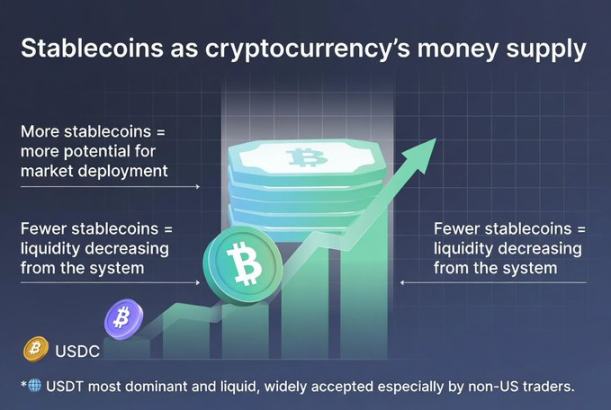
Stablecoin supply is equivalent to the broad money supply (M2) of the crypto world.

  • Supply Increase: Means more "ammunition" waiting to enter the market.

  • Supply Decrease: Indicates liquidity is withdrawing.

Market Status:

USDT dominates due to its high liquidity and wide acceptance (especially favored by non-US traders). USDC is more transparent and compliant but has a slightly narrower usage.

Trader's Perspective:

A rising total stablecoin supply generally supports larger market trends; a shrinking supply means tightening liquidity, which can curb rallies. This is a crucial reference indicator for macro positioning.
Token Unlocks & Emissions: Future Selling Pressure

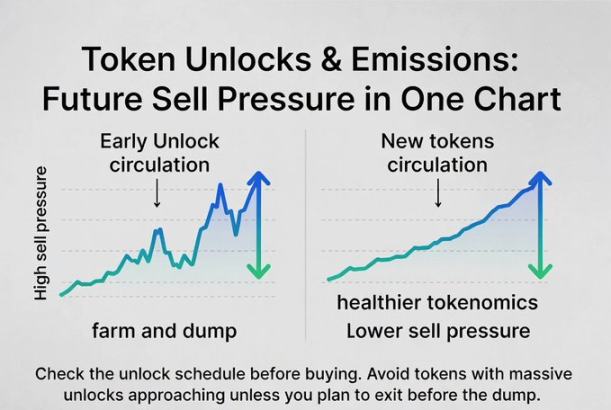
Unlocks and emissions mean new tokens entering the circulating market. Large-scale unlocks are often accompanied by automatic selling: teams cashing out, VCs reducing holdings, reward releases causing a supply surge.

Simple Judgment:

  • Early, High Unlocks: Often indicate a "farm-and-dump" model.

  • Long-term, Gradual Unlocks + Real Demand: Typically represent healthier tokenomics.

Trader's Perspective:

Always check the unlock schedule before buying. Avoid tokens nearing large unlocks, unless you are trading short-term and plan to exit before the selling pressure hits.
On-Chain Volume vs. TVL: Is the Capital Active or Dormant?

  • TVL: How much capital is deposited.

  • Volume: How frequently the capital moves.

A pool with a TVL of $100 million but a daily volume of only $5,000 is essentially "dead capital".

Key Ratio: Volume / TVL Ratio.

  • High Ratio: Capital is active, usage is high.

  • Low Ratio: Could be "ghost liquidity" or idle funds.

Trader's Perspective:

Look for protocols with solid TVL and strong trading volume. You need real usage, not fake prosperity.

Summary

On-chain metrics are not magic, but they are the closest thing to "financial statements" in the crypto world. Use them as analytical tools, not absolute truths. Always cross-verify multiple signals and constantly think about the real meaning behind the data.


Twitter:https://twitter.com/BitpushNewsCN

Bitpush TG Discussion Group:https://t.me/BitPushCommunity

Bitpush TG Subscription: https://t.me/bitpush

Original link:https://www.bitpush.news/articles/7598316

Пов'язані питання

QWhat is the key difference between 'fees' and 'revenue' in the context, and why is it important for traders?

AFees are what users pay to conduct transactions, while revenue is the portion that the protocol or validators ultimately keep. The key point is that high fees do not equal success; the true focus should be on sustainable revenue. This is crucial for traders because a model that drives users away with high fees (e.g., $50) is not sustainable in the long run.

QWhat are the three main 'lies' or misleading aspects of Total Value Locked (TVL) as discussed in the guide?

AThe three main misleading aspects of TVL are: 1. Double-counting, where the same capital is collateralized across different protocols, inflating the total. 2. Incentive-driven TVL, where 'mercenary capital' arrives for short-term rewards and leaves quickly afterward. 3. Idle stablecoins, where large amounts of capital are held in wallets, counted in TVL, but never actually used.

QWhy should traders be cautious about relying solely on Daily Active Addresses (DAA) as a metric?

ATraders should be cautious because DAA can be easily manipulated by bots performing bulk operations, airdrop farmers creating massive numbers of addresses, and internal protocol transfers inflating the data. DAA is only meaningful when it grows in sync with other fundamentals like fees, transaction volume, and real activity. It should be used as a secondary confirmation signal, not a primary buy indicator.

QAccording to the guide, what does the stablecoin supply represent in the crypto ecosystem, and how should traders interpret changes in it?

AThe stablecoin supply represents the broad money supply (M2) of the crypto world. An increase in supply means there is more 'ammunition' waiting to enter the market, typically supporting larger market trends. A decrease indicates that liquidity is being withdrawn, which can suppress price increases. This is an important macro indicator for traders to consider for overall market positioning.

QWhat is the significance of the 'Volume/TVL Ratio' for a protocol, and what does it indicate to a trader?

AThe Volume/TVL Ratio measures how actively the locked capital is being used. A high ratio indicates that the capital is active and being used efficiently. A low ratio suggests the presence of 'ghost liquidity' or idle funds, like a pool with high TVL but very low daily volume. Traders should look for protocols with solid TVL and strong transaction volume, as this indicates real usage rather than false prosperity.

Пов'язані матеріали

The Largest IPO in History Ignites Heated Debate: Is SpaceX Worth $1.77 Trillion?

SpaceX's potential IPO is priced at $135 per share, aiming to raise $75 billion and valuing the company at approximately $1.77 trillion, which would make it the largest IPO in history. This valuation has sparked intense debate among investors. Bullish analysts, including major underwriters Goldman Sachs and Morgan Stanley, argue the valuation is justified by SpaceX's long-term potential. They see it not just as a rocket company but as a future leader in space infrastructure, with key growth drivers being Starlink satellite internet, low-cost rocket launches, and future AI-related ventures. They project revenues reaching hundreds of billions to trillions of dollars by 2030-2040. ARK Invest's model suggests a 2030 enterprise value could reach $2.5 trillion. Bearish analysts from independent research firms like Morningstar, PitchBook, and New Constructs contend the IPO price is excessively high, already pricing in unrealistic future growth. Using DCF and sum-of-the-parts models, they estimate fair value between $780 billion and $1.7 trillion, significantly below the IPO target. They highlight risks such as the speculative nature of AI projections, over-dependence on Elon Musk, high growth expectations, and corporate governance concerns. Trefis set a target price of just $79 per share. While both sides acknowledge SpaceX's unique position in commercial space, the core disagreement centers on whether the $135 share price offers a reasonable margin of safety or is overly optimistic. Despite the valuation controversy, reported strong demand for the IPO indicates significant market interest.

marsbit49 хв тому

The Largest IPO in History Ignites Heated Debate: Is SpaceX Worth $1.77 Trillion?

marsbit49 хв тому

After the Passage of the GENIUS Act and the CLARITY Act, What Is the Correct Architecture for On-Chain Yield?

The article discusses the evolution of on-chain credit, distinguishing three markets: overcollateralized crypto lending, unsecured lending (largely unsuccessful), and asset-backed credit (ABC). ABC, backed by identifiable real-world collateral with legal recourse, is identified as the fastest-growing category and the only one credibly addressing adverse selection—the core problem in credit where the riskiest borrowers self-select. Current growth in on-chain Real World Assets (RWAs), particularly tokenized private credit funds (e.g., Maple Finance, Centrifuge), is substantial but often merely "wraps" existing fund structures, inheriting their risks rather than solving adverse selection at the protocol level. The regulatory landscape is a key driver, with the US GENIUS Act (prohibiting stablecoin issuers from paying yield) and the proposed CLARITY Act (closing loopholes on indirect yield) set to redefine permissible yield-bearing products. This makes vaults (like ERC-4626) the critical architecture—they become the primary compliant vehicle for delivering yield, functioning as issuance, disclosure, distribution, and recovery mechanisms. The author's thesis is that the correct post-GENIUS/CLARITY architecture involves building ABC solutions where credit assessment, structure, and recovery are encoded directly into the smart contract vault layer, moving beyond mere tokenized fund wrappers to solve adverse selection fundamentally and ensure regulatory compliance.

Foresight News1 год тому

After the Passage of the GENIUS Act and the CLARITY Act, What Is the Correct Architecture for On-Chain Yield?

Foresight News1 год тому

TechFlow Intelligence Bureau: Anthropic's New Model Fable Sparks Controversy by Restricting Biosafety Research, US CPI Soars to 4.2%, a Three-Year High

**Summary of TechFlow Intelligence Report:** The newsletter covers several key tech and finance developments. In AI, Anthropic's new Fable model faced backlash for secretly limiting biomedical research capabilities and enforcing a 30-day data retention policy, prompting the company to promise more transparent adjustments. In a related story, Anthropic's founder revealed his departure from OpenAI was due to dishonesty from Sam Altman, not safety concerns. Meanwhile, OpenAI is considering significant price cuts to compete with Anthropic, potentially sparking a price war. In crypto/Web3, BlackRock filed a new amendment for a yield-generating Bitcoin ETF, while Bank of America's CEO warned that stablecoin yields could drain trillions from traditional banks. U.S. Senator Cynthia Lummis advocated for the U.S. to officially accumulate Bitcoin reserves. In hardware, Nvidia released the DiffusionGemma-2-6B image model optimized for efficient inference, and AMD promoted its unified memory architecture to challenge Nvidia's dominance. TSMC's CFO hinted at possible price increases due to soaring AI chip demand. A major legal ruling in Germany held Google legally responsible for inaccurate information generated by its AI Overviews feature. Google Chrome also moved to fully block ad-blocker workarounds like uBlock Origin. Macroeconomic headlines included U.S. CPI rising to 4.2% (a 3-year high) and Iran's complete closure of the Strait of Hormuz, raising oil price and inflation fears. South Korean markets saw continued volatility with massive foreign capital outflow. Other notable stories: Microsoft expanded its Copilot AI assistant "Mico" globally; a study found r/wallstreetbets users' stock picks outperformed Wall Street; a fully autonomous drone killed a human soldier for the first time, raising AI ethics concerns; and a Chinese hospital used brain-computer interface technology to help a blind person "see." The overarching theme connects debates over AI boundaries and responsibility (Anthropic's restrictions, Google's liability, lethal autonomous drones) with real-world economic and geopolitical turmoil (inflation, Strait of Hormuz closure, market instability), highlighting the tense interplay between technological advancement and global chaos.

marsbit1 год тому

TechFlow Intelligence Bureau: Anthropic's New Model Fable Sparks Controversy by Restricting Biosafety Research, US CPI Soars to 4.2%, a Three-Year High

marsbit1 год тому

Alibaba's Yet Another New Business Division: What Signal Does It Send?

Alibaba has established a new "Token Foundry" business unit, merging its Tongyi large model division and Future Life Lab. Led directly by Group CEO Wu Yongming, this marks the company's third significant AI organizational reshuffle in 2026, following the creation of the Alibaba Token Hub (ATH) and a Group Technology Committee. The move signals a strategic shift from consolidating AI resources to accelerating productization and commercialization. The "Token Foundry" name reflects Alibaba's ambition to become a foundational supplier in the AI era, focusing on model development and commercial application. Key teams, including those behind the high-performing HappyHorse video generation model, have been integrated into the new unit. Concurrently, Zhou Jingren, architect of the Qwen model series, has been appointed Group Chief Scientist to lead a new AI Future Research Institute, focusing on long-term technological breakthroughs like Agent capabilities. This restructuring creates a clear four-layer AI architecture within Alibaba: the research institute for frontier exploration, Token Foundry for core models and commercialization, MaaS for platform services, and business units like Qianwen (C端) and Wukong (B端) for end-user applications. The adjustments align with a global trend among tech giants like Google and Microsoft to centralize AI leadership under the CEO and deeply integrate research with business units. The urgency is driven by a narrowing competitive window. Alibaba has announced its AI business is now entering a commercialization phase, with AI-related revenue seeing triple-digit growth for eleven consecutive quarters. The company faces intense competition in the MaaS (Model-as-a-Service) sector from rivals like ByteDance and Tencent. The Token Foundry initiative represents Alibaba's effort to streamline execution and enhance competitiveness in this critical, fast-evolving landscape.

marsbit2 год тому

Alibaba's Yet Another New Business Division: What Signal Does It Send?

marsbit2 год тому

Торгівля

Спот
Ф'ючерси

Популярні статті

Як купити BILL

Ласкаво просимо до HTX.com! Ми зробили покупку Billions Network (BILL) простою та зручною. Дотримуйтесь нашої покрокової інструкції, щоб розпочати свою криптовалютну подорож.Крок 1: Створіть обліковий запис на HTXВикористовуйте свою електронну пошту або номер телефону, щоб зареєструвати обліковий запис на HTX безплатно. Пройдіть безпроблемну реєстрацію й отримайте доступ до всіх функцій.ЗареєструватисьКрок 2: Перейдіть до розділу Купити крипту і виберіть спосіб оплатиКредитна/дебетова картка: використовуйте вашу картку Visa або Mastercard, щоб миттєво купити Billions Network (BILL).Баланс: використовуйте кошти з балансу вашого рахунку HTX для безперешкодної торгівлі.Треті особи: ми додали популярні способи оплати, такі як Google Pay та Apple Pay, щоб підвищити зручність.P2P: Торгуйте безпосередньо з іншими користувачами на HTX.Позабіржова торгівля (OTC): ми пропонуємо індивідуальні послуги та конкурентні обмінні курси для трейдерів.Крок 3: Зберігайте свої Billions Network (BILL)Після придбання Billions Network (BILL) збережіть його у своєму обліковому записі на HTX. Крім того, ви можете відправити його в інше місце за допомогою блокчейн-переказу або використовувати його для торгівлі іншими криптовалютами.Крок 4: Торгівля Billions Network (BILL)Легко торгуйте Billions Network (BILL) на спотовому ринку HTX. Просто увійдіть до свого облікового запису, виберіть торгову пару, укладайте угоди та спостерігайте за ними в режимі реального часу. Ми пропонуємо зручний досвід як для початківців, так і для досвідчених трейдерів.

360 переглядів усьогоОпубліковано 2026.05.07Оновлено 2026.06.02

Як купити BILL

Що таке ATWO

I. Вступ до проектуArena Two - це децентралізована інтерактивна платформа, яка дозволяє фанатам грати активну, токенізовану роль у результатах подій в реальному часі. На відміну від традиційних моделей трансляції, які зменшують фанатів до пасивних глядачів, Arena Two використовує технологію блокчейн, щоб дозволити фанатам безпосередньо голосувати в реальному часі та впливати на результати на полі.II. Інформація про токенНазва токена: ATWO(Arena Two)III. Пов'язані посиланняВебсайт:https://arenatwo.com/Експлорери:https://basescan.org/token/0x499D35eBE6cEe9B2Ac35Fd003fcBbeeB9CFc7B32Twitter:https://x.com/arenatwoXПримітка: Вступ до проекту взято з матеріалів, опублікованих або наданих офіційною командою проекту, які є лише для довідки і не є інвестиційною порадою. HTX не несе відповідальності за будь-які прямі або непрямі збитки, що виникають внаслідок цього.

311 переглядів усьогоОпубліковано 2026.05.18Оновлено 2026.06.02

Що таке ATWO

Як купити ATWO

Ласкаво просимо до HTX.com! Ми зробили покупку Arena Two (ATWO) простою та зручною. Дотримуйтесь нашої покрокової інструкції, щоб розпочати свою криптовалютну подорож.Крок 1: Створіть обліковий запис на HTXВикористовуйте свою електронну пошту або номер телефону, щоб зареєструвати обліковий запис на HTX безплатно. Пройдіть безпроблемну реєстрацію й отримайте доступ до всіх функцій.ЗареєструватисьКрок 2: Перейдіть до розділу Купити крипту і виберіть спосіб оплатиКредитна/дебетова картка: використовуйте вашу картку Visa або Mastercard, щоб миттєво купити Arena Two (ATWO).Баланс: використовуйте кошти з балансу вашого рахунку HTX для безперешкодної торгівлі.Треті особи: ми додали популярні способи оплати, такі як Google Pay та Apple Pay, щоб підвищити зручність.P2P: Торгуйте безпосередньо з іншими користувачами на HTX.Позабіржова торгівля (OTC): ми пропонуємо індивідуальні послуги та конкурентні обмінні курси для трейдерів.Крок 3: Зберігайте свої Arena Two (ATWO)Після придбання Arena Two (ATWO) збережіть його у своєму обліковому записі на HTX. Крім того, ви можете відправити його в інше місце за допомогою блокчейн-переказу або використовувати його для торгівлі іншими криптовалютами.Крок 4: Торгівля Arena Two (ATWO)Легко торгуйте Arena Two (ATWO) на спотовому ринку HTX. Просто увійдіть до свого облікового запису, виберіть торгову пару, укладайте угоди та спостерігайте за ними в режимі реального часу. Ми пропонуємо зручний досвід як для початківців, так і для досвідчених трейдерів.

232 переглядів усьогоОпубліковано 2026.05.18Оновлено 2026.06.02

Як купити ATWO

Обговорення

Ласкаво просимо до спільноти HTX. Тут ви можете бути в курсі останніх подій розвитку платформи та отримати доступ до професійної ринкової інформації. Нижче представлені думки користувачів щодо ціни A (A).

活动图片