Japan’s Largest Banks Eye FY2026 Stablecoin Rollout Amid Regulatory Push

bitcoinistОпубліковано о 2026-06-11Востаннє оновлено о 2026-06-11

Анотація

Japan's three largest banks—MUFG Bank, Sumitomo Mitsui Banking Corp., and Mizuho Bank—are advancing plans to launch a jointly-issued yen-pegged stablecoin by the end of fiscal year 2026 (March 31, 2027). They have established a voluntary council to develop the operational framework, governance, and issuance infrastructure for the token, which will be issued under a trust agreement. The move aligns with Japan's regulatory push to expand its yen-based digital asset market, following 2022 amendments to the Payment Services Act that restrict stablecoin issuance to licensed entities like banks and trust companies. The banks, which began exploring this initiative in late 2025, aim to support a wide range of use cases and are considering future collaborations with other financial institutions. This development occurs alongside other yen-stablecoin launches and recent political proposals to promote such tokens for settlement in Asia.

As Japanese financial authorities push to expand the yen-based digital asset market, three megabanks have advanced their joint stablecoin plans by establishing a council to develop the framework for issuing the token this fiscal year.

Megabanks Advance Joint Stablecoin Plans

The three largest Japanese banks, Mitsubishi UFJ Financial Group (MUFG) Bank, Sumitomo Mitsui Banking Corp., and Mizuho Bank, are preparing to launch their jointly issued stablecoin by the end of the 2026 fiscal year (FY2026).

In a Wednesday statement, the megabanks revealed their plan to conduct commercial transactions during FY2026 using a stablecoin issued under a trust agreement, where the three banks will serve as joint settlors and a trust bank or similar entity will act as trustee.

The banks announced they have signed a memorandum of understanding (MoU) to form a joint voluntary council to review operational frameworks, governance, and related issues to support the token’s practical implementation.

“The Council will serve as a framework for examining the potential development of an issuance infrastructure related to the Subject Stablecoin, as well as the design of systems, schemes, and governance structures,” the statement read.

The three banks will also accelerate their efforts to support the potential use of these tokens across a wide range of use cases, aiming to launch live transactions of the joint stablecoin before March 31, 2027, when the current fiscal year ends. In addition, the council will also consider collaborations with financial institutions and other relevant stakeholders that may join the project in the future.

Notably, the megabanks, which serve over 300,000 companies combined, began exploring the launch of a joint stablecoin in late 2025, with initial reports suggesting plans to debut the token within FY2025.

In November, the banks announced a pilot project under the Financial Services Agency’s (FSA) Payment Innovation Project. The pilot used the infrastructure of Tokyo-based fintech company Progmat and aimed to gather “practical knowledge” on the joint issuance of a stablecoin and advanced cross-border payments.

Japan’s Regulatory Push For Yen-Backed Tokens

In 2022, Japanese authorities amended the Payment Services Act to establish a legal framework for stablecoins. Under the new regime, only licensed money transfer companies, trust companies, and banks are allowed to issue yen-denominated tokens.

Tokyo fintech company JPYC launched the first yen-pegged token, JPYC, in October, backed by yen reserves, including bank deposits and government bonds. Earlier this year, SBI Holdings partnered with Startale Group for JPYSC, a trust bank-backed yen stablecoin for institutional and cross-border use cases.

Last week, Japan’s Liberal Democratic Party (LDP) called for the creation of rules for crypto exchange-traded funds (ETFs) and the promotion of yen-denominated stablecoins in the region in a new proposal to the government.

Junichi Kanda, a lawmaker on the ruling party’s panel, affirmed that the LDP pushed the government to boost the use of yen stablecoins in the region. “We urged the government to take steps to promote ​yen stablecoins for settlement in Asia in the future,” he stated.

The lawmaker also said that Japan could promote yen-based tokens and blockchain innovation next year, when the country hosts the Asian Development Bank’s annual meeting.

Meanwhile, the FSA recently expanded the Cabinet Office Ordinance to recognize certain trust-type stablecoins issued by foreign trust banks and similar entities as electronic payment instruments under the Payment Services Act.
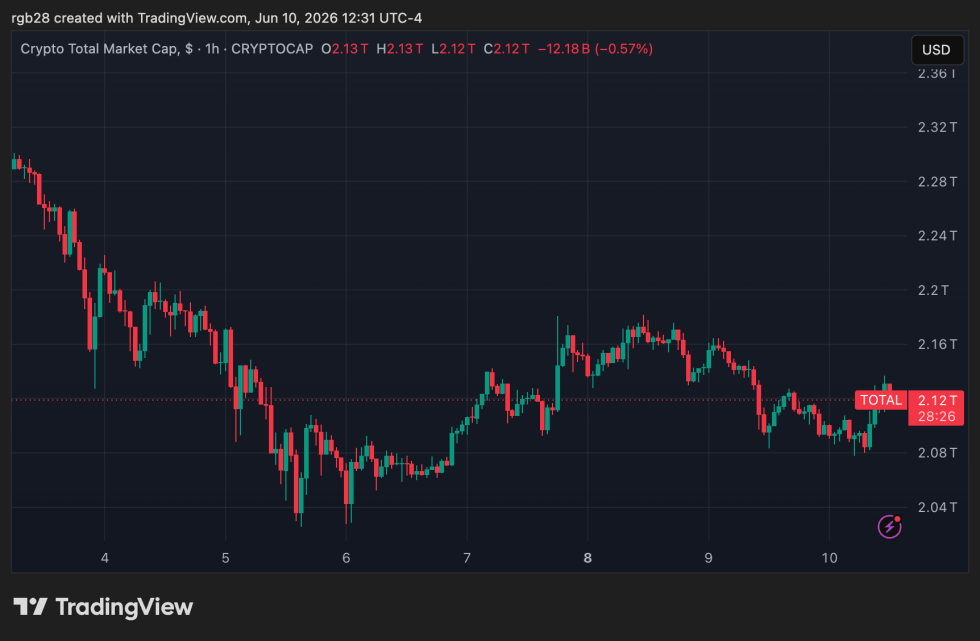
The total crypto market capitalization is at $2.12 trillion in the one-week chart. Source: TOTAL on TradingView


Трендові криптовалюти

Пов'язані питання

QWhat is the target fiscal year for Japan's three megabanks to roll out their jointly issued stablecoin?

AThe target fiscal year is FY2026, aiming for launch before March 31, 2027.

QWhich three Japanese megabanks are collaborating on the joint stablecoin project?

AThe three banks are Mitsubishi UFJ Financial Group (MUFG) Bank, Sumitomo Mitsui Banking Corp., and Mizuho Bank.

QWhat recent regulatory change in Japan created a legal framework for stablecoin issuance?

AIn 2022, Japanese authorities amended the Payment Services Act to establish a legal framework, allowing only licensed money transfer companies, trust companies, and banks to issue yen-denominated stablecoins.

QWhat is the purpose of the voluntary council formed by the three megabanks?

AThe council's purpose is to examine the development of an issuance infrastructure, as well as the design of systems, schemes, and governance structures to support the practical implementation of their joint stablecoin.

QHow does Japan's ruling Liberal Democratic Party (LDP) intend to promote yen stablecoins according to the article?

AThe LDP, through a lawmaker on its panel, urged the government to promote yen stablecoins for settlement in Asia, potentially leveraging events like next year's Asian Development Bank annual meeting which Japan will host.

Пов'язані матеріали

Must-Watch Events Next Week|CLARITY Act Could Face Senate Vote; SpaceX, Circle to Report Earnings (8.3-8.9)

**Summary: Key Events and Developments to Watch (August 3-9)** The upcoming week is marked by significant financial disclosures, key legislative deadlines, and notable product updates. **Major Financial Events:** Several companies are scheduled to release their Q2 2026 earnings. American Bitcoin (ABTC) will report on August 3, followed by SpaceX and Hut 8 Mining Corp. on August 4, and Circle on August 5. Notably, a significant portion of SpaceX shares (up to 12% of total shares) will be unlocked on August 6 following their earnings release. **Key Legislative Deadline:** The U.S. Senate faces an August 7 deadline to secure 60 votes for the CLARITY Act, a bipartisan bill aiming to establish a federal regulatory framework for cryptocurrencies. The Senate may hold a full vote on the bill during the week. **Economic Data:** The U.S. July Non-Farm Payrolls report will be released on August 7, providing crucial labor market data. **Technology & Product Updates:** * **Shutdowns:** DeFi portfolio tracker Zapper and wallet app Ctrl Wallet will cease operations on August 3. * **Upgrades:** LayerZero will deprecate its v1 relayers on August 3. XRP Ledger's new version 3.3.0, featuring five new functions, is expected next week. * **AI:** Elon Musk announced that the advanced Grok 4.6 AI model is set for release around August 7. * **Bitcoin:** The BIP-110 forced signaling for a potential Bitcoin network change is scheduled to begin around August 8. **Other Notable Events:** Chinese robotics firm Unitree Tech has set its preliminary price inquiry for its IPO for August 5. South Korean exchange Upbit will delist AQT and AERGO tokens on August 3.

marsbit2 год тому

Must-Watch Events Next Week|CLARITY Act Could Face Senate Vote; SpaceX, Circle to Report Earnings (8.3-8.9)

marsbit2 год тому

Stocks Are Plummeting More Sharply Than Cryptocurrencies. Where Has the Money Gone?

Stock Markets Plunge Deeper Than Cryptocurrencies: Where Did the Money Go? In late July, Seoul's Kospi index triggered circuit breakers for two consecutive days, plummeting over 40% from its June high. The collapse was led by heavyweight stocks like SK Hynix, whose record profits still disappointed investors, and devastating leveraged ETFs, with one major product losing over 83% of its value. This signaled a global, forced deleveraging targeting the most crowded trades. Interestingly, while stocks exhibited extreme volatility akin to crypto markets, Bitcoin rose nearly 15% in July after a prior steep drop. Analysis shows the money fleeing equities did not flow into Bitcoin. Instead, Bitcoin had already absorbed its sell-off in May-June, when U.S. spot Bitcoin ETFs saw historic outflows. The true safe-haven beneficiary was gold, whose price rose over 20% year-on-year, highlighting a decoupling between Bitcoin and gold as "digital gold." The sell-off was a targeted unwinding of leveraged positions in tech and semiconductors, accelerated by broker-dealer risk management and shifts in the AI narrative, including new competition from Chinese memory chipmakers. The retreat path was clear: from high-valuation tech stocks to cash and U.S. Treasuries, then to gold. For Bitcoin to attract sustained institutional inflows, conditions like eased global liquidity pressure, a "soft-landing" Fed rate cut, and U.S. regulatory clarity via legislation like the stalled CLARITY Act are needed. Currently, Bitcoin is not a safe haven but an already-cleared asset. Its low correlation with tech stocks, however, makes it a potential diversification play for institutional portfolios once the storm passes. The money isn't here yet, but the positioning is underway.

marsbit2 год тому

Stocks Are Plummeting More Sharply Than Cryptocurrencies. Where Has the Money Gone?

marsbit2 год тому

In Conversation with Ray Dalio: We Are Currently in an AI Bubble, with 1% of My Portfolio in Bitcoin

Ray Dalio, founder of Bridgewater Associates, warns in an interview that the current AI boom shows classic bubble characteristics, which could lead to significant economic downturns as seen in past cycles like 1929 or 2000. He explains that speculative enthusiasm, fueled by debt and overvaluation, often precedes a crash when rising rates or taxation force asset sales, causing widespread losses and recession. Dalio also outlines his "Big Cycle" theory, describing an approximate 80-year pattern where widening wealth gaps, massive government deficits, and shifting geopolitical power (like China's rise) create internal conflict and global instability. He emphasizes that we are in a late-cycle, transitional phase where traditional powers like the US and UK face decline. For personal wealth protection, Dalio advises diversification beyond cash into assets like stocks, bonds, real estate, and particularly gold, which he prefers over Bitcoin. While he holds about 1% of his portfolio in Bitcoin as a non-printable hard asset, he views gold as more secure from technological or governmental threats. Regarding AI's impact, Dalio believes it will disproportionately benefit capital owners, worsening inequality by replacing both physical and cognitive labor. He suggests that human intuition and emotional intelligence, combined with AI, will be key for future workers. On taxation, Dalio argues that wealth taxes are impractical and risk triggering asset sell-offs, reducing productive investment. He points to the UK as a cautionary example of debt, low productivity, and political strife. Geopolitically, Dalio foresees a more regionalized world, with the US showing weakness in prolonged conflicts like with Iran, akin to past imperial declines. The ideal outcome, he suggests, is coexisting powerful blocs (e.g., Americas, China-Asia Pacific) without major war.

marsbit5 год тому

In Conversation with Ray Dalio: We Are Currently in an AI Bubble, with 1% of My Portfolio in Bitcoin

marsbit5 год тому

Торгівля

Спот

Популярні статті

Як купити PUSH

Ласкаво просимо до HTX.com! Ми зробили покупку Push Protocol (PUSH) простою та зручною. Дотримуйтесь нашої покрокової інструкції, щоб розпочати свою криптовалютну подорож.Крок 1: Створіть обліковий запис на HTXВикористовуйте свою електронну пошту або номер телефону, щоб зареєструвати обліковий запис на HTX безплатно. Пройдіть безпроблемну реєстрацію й отримайте доступ до всіх функцій.ЗареєструватисьКрок 2: Перейдіть до розділу Купити крипту і виберіть спосіб оплатиКредитна/дебетова картка: використовуйте вашу картку Visa або Mastercard, щоб миттєво купити Push Protocol (PUSH).Баланс: використовуйте кошти з балансу вашого рахунку HTX для безперешкодної торгівлі.Треті особи: ми додали популярні способи оплати, такі як Google Pay та Apple Pay, щоб підвищити зручність.P2P: Торгуйте безпосередньо з іншими користувачами на HTX.Позабіржова торгівля (OTC): ми пропонуємо індивідуальні послуги та конкурентні обмінні курси для трейдерів.Крок 3: Зберігайте свої Push Protocol (PUSH)Після придбання Push Protocol (PUSH) збережіть його у своєму обліковому записі на HTX. Крім того, ви можете відправити його в інше місце за допомогою блокчейн-переказу або використовувати його для торгівлі іншими криптовалютами.Крок 4: Торгівля Push Protocol (PUSH)Легко торгуйте Push Protocol (PUSH) на спотовому ринку HTX. Просто увійдіть до свого облікового запису, виберіть торгову пару, укладайте угоди та спостерігайте за ними в режимі реального часу. Ми пропонуємо зручний досвід як для початківців, так і для досвідчених трейдерів.

627 переглядів усьогоОпубліковано 2024.12.13Оновлено 2026.06.02

Як купити PUSH

Обговорення

Ласкаво просимо до спільноти HTX. Тут ви можете бути в курсі останніх подій розвитку платформи та отримати доступ до професійної ринкової інформації. Нижче представлені думки користувачів щодо ціни PUSH (PUSH).

活动图片












