Keel Infrastructure Shuts US Bitcoin Mining Sites In Shift Toward AI Data Centers

bitcoinistОпубліковано о 2026-08-12Востаннє оновлено о 2026-08-12

Анотація

Keel Infrastructure has decommissioned all its US Bitcoin mining sites, repurposing them for AI and high-performance computing workloads. The company, formerly Bitfarms, reported a $65 million net loss in its August 2026 filing. It maintains Bitcoin mining operations in Canada and holds $121 million in Bitcoin reserves, indicating a strategic regional shift rather than a full exit from crypto. The pivot highlights a broader trend where Bitcoin miners leverage their power assets, grid connections, and data-center expertise for potentially more predictable AI revenue streams. US mining economics face pressure from costs, competition, and post-halving dynamics, making AI an attractive alternative where demand is strong. Keel's move reflects the industry's evolution, as mining companies transform into flexible power-and-compute infrastructure businesses. Success depends on executing the site conversions, securing AI customers, and managing the different technical requirements for AI workloads. This strategic reallocation signals that miners are increasingly looking to monetize their energy assets in multiple ways.

Keel Infrastructure has decommissioned all of its US Bitcoin mining sites as it repurposes those locations for AI and high-performance computing workloads.

The company, formerly Bitfarms, disclosed the shift in its August 2026 Form 10-Q. It reported a $65 million net loss and $819 million in total liquidity, while still holding $121 million in Bitcoin reserves.

That last point matters.

Keel is not exiting crypto entirely. It still operates mining sites in Canada and still holds Bitcoin. But in the United States, the company is moving away from mining and toward AI-focused infrastructure.

That makes Keel another example of a broader mining-sector pivot: power assets are becoming valuable beyond Bitcoin.

For more details, visit the official Sec platform.

TL;DR

  • Keel decommissioned all US Bitcoin mining sites.
  • The company is repurposing those sites for AI/HPC workloads.
  • Keel still operates mining sites in Canada and holds Bitcoin reserves.

Why Miners Are Looking At AI

Bitcoin miners have something AI companies desperately need: power.

They have sites, grid connections, power agreements, data-center experience, cooling systems, and operational knowledge. Those assets can sometimes be redirected toward high-performance computing.

AI demand has made that optionality more valuable.

Bitcoin mining revenue is cyclical. It depends on BTC price, mining difficulty, energy costs, block rewards, and transaction fees. AI data-center revenue can be more contract-based and potentially more predictable if customers sign long-term agreements.

That does not mean AI is easy money. It does mean miners are looking at their infrastructure differently.

US Mining Economics Are Under Pressure

Keel’s US exit suggests mining economics in certain regions may no longer justify continued operation.

Power costs, competition, facility upgrades, hardware efficiency, and post-halving economics all matter. If a site can generate more attractive returns as an AI/HPC facility than as a Bitcoin mine, management has a clear incentive to pivot.

That is especially true when AI demand is strong and customers are hunting for capacity.

The company’s $65 million net loss adds pressure to the decision. A firm with losses and valuable infrastructure has to ask where that infrastructure earns the best return.

In the US, Keel’s answer appears to be AI.

This Is Not A Full Crypto Exit

The framing needs care.

Keel still operates mining sites in Canada. It still holds $121 million in Bitcoin reserves. The company is not shutting down every mining operation or abandoning crypto completely.

The shift is regional and strategic.

That makes the story more interesting than a simple “miner quits Bitcoin” headline. Keel is reallocating US power assets while preserving other exposure.

The result is a hybrid model: some crypto, some AI, some infrastructure monetization.

Bitcoin Miners Are Becoming Data-Center Companies

The mining industry is changing because the assets behind mining are useful for more than hashing.

A miner with cheap power and a large site can mine Bitcoin, host machines, provide grid flexibility, or build AI compute capacity. The best option may change depending on market conditions.

That flexibility could reshape valuations.

Investors may start valuing miners less like pure Bitcoin proxies and more like power-and-compute infrastructure businesses. Companies that can secure high-value AI customers may receive a different market multiple from miners exposed only to BTC economics.

Keel’s pivot fits that trend.

What To Watch Next

The next question is execution.

Repurposing mining sites for AI/HPC is not automatic. AI workloads require different hardware, reliability standards, networking, cooling, and customer contracts. A former mining site may have power, but it still needs the right buildout.

Investors will watch how quickly Keel can convert sites, sign customers, and generate revenue from the new strategy.

For the Bitcoin mining sector, the signal is clear.

Power assets are being repriced. If AI can pay more for the same megawatts, miners will keep considering pivots.

Keel’s US mining exit is not the end of Bitcoin mining. It is another sign that mining companies are learning to monetize energy in more than one way.

This article is based on Keel Infrastructure’s August 2026 Form 10-Q filing.

This article was written by the News Desk and edited by Samuel Rae.

This report is based on information released by Sec. at Sec

Трендові криптовалюти

Пов'язані питання

QWhat is the main strategic shift Keel Infrastructure is making with its US operations?

AKeel Infrastructure is decommissioning all of its US Bitcoin mining sites and repurposing those locations for AI and high-performance computing (HPC) workloads.

QWhy are Bitcoin miners like Keel looking at AI as an alternative use for their infrastructure?

ABitcoin miners possess valuable assets that AI companies need, such as power, sites, grid connections, data-center experience, cooling systems, and operational knowledge. AI demand offers potentially more predictable, contract-based revenue compared to the cyclical nature of Bitcoin mining.

QWhat does Keel's $65 million net loss indicate about its decision to pivot in the US?

AThe $65 million net loss adds financial pressure, prompting the company to evaluate where its infrastructure can generate the best return. The decision suggests that in the US, AI/HPC operations are seen as more economically attractive than continuing Bitcoin mining.

QDoes Keel's move mean it is completely exiting the cryptocurrency sector?

ANo, it is not a full crypto exit. Keel still operates Bitcoin mining sites in Canada and holds $121 million in Bitcoin reserves. The shift is a regional and strategic reallocation of its US power assets.

QHow might Keel's pivot affect how investors value Bitcoin mining companies?

AThis trend could lead investors to value miners less as pure Bitcoin proxies and more as power-and-compute infrastructure businesses. Companies that secure high-value AI/HPC contracts may receive different market multiples than those exposed only to Bitcoin's economics.

Пов'язані матеріали

OpenClaw Founder Peter Steinberg's Latest Speech: The Life and Death Revelation of an Open Source Project, How OpenClaw Emerged from the Eye of the Storm

Peter Steinberg, founder of the wildly popular open-source AI agent project OpenClaw, reflects on its turbulent journey from creation to near-collapse and resurgence. It began in late 2024 from his personal frustration with sending prompts from phone to computer. He built a WhatsApp relay that felt "magical," but initial excitement was limited to friends. After adding Discord support and launching a public server, the project exploded virally overnight, attracting massive attention, rebranding requests (from "Claudis" to OpenClaw), and even praise from NVIDIA's CEO. The intense scrutiny and pressure nearly broke Steinberg. The biggest technical crisis came from over-optimizing for a specific AI model provider, which suddenly canceled subscriptions, forcing a rushed shift to open-weight models. OpenClaw's weekly downloads plummeted before surging to a record high after being "declared dead." Steinberg realized he had stopped enjoying the build process and using his own product, making it a duty rather than a passion. His key lesson: "Fun is speed." Recovery came by refocusing on building for himself, forming a non-profit, and receiving crucial support (e.g., from NVIDIA for security). The team is now using OpenClaw to build OpenClaw itself, emphasizing its core value: a private, open alternative where "your agent, your machine, your life." He shares insights: the first user should be yourself; balance bug fixes with new features to maintain interest; the current bottleneck is reliable toolchains, especially for Mac testing. His story underscores that creation thrives on personal need, endures through storms when the joy of building returns, and persists by "living in the future and building what's missing."

marsbit17 хв тому

OpenClaw Founder Peter Steinberg's Latest Speech: The Life and Death Revelation of an Open Source Project, How OpenClaw Emerged from the Eye of the Storm

marsbit17 хв тому

US Stocks and Gold Rise Together, Bitcoin Rebound Absent, Have Bottom Signals Appeared?

While traditional assets like U.S. stocks and gold have rebounded strongly, Bitcoin continues to consolidate without following the uptrend. Since hitting an all-time high near $126,000 in October last year, Bitcoin has remained in a corrective phase, trading between $62,000 and $66,000 over the past month. Although U.S. spot Bitcoin ETFs have seen renewed net inflows recently—with the past week marking the best performance since mid-April—this buying pressure has been insufficient to counter persistent selling from miners and crypto companies. For instance, miner-linked wallets have seen their BTC balance drop by about 72% since late 2021. Some long-term indicators are showing early signs of a potential bottom. Metrics such as Reserve Risk, BTC price relative to its 2-year moving average, and the AHR999 index have entered historically oversold territory, suggesting improved long-term value. However, key indicators like MVRV Ratio, NUPL, and the Fear & Greed Index have not yet reached the extreme levels typically seen at major cycle lows. Furthermore, over 53% of Bitcoin supply remains in profit, and stablecoin liquidity is still contracting, indicating the market may need more time for a full capitulation phase. In summary, while select bottom signals are emerging, Bitcoin lacks the broad-based confirmation needed to declare a definitive cycle low. A sustained recovery will likely depend on continued ETF inflows, a reduction in structural selling pressure, and further deterioration in key on-chain metrics toward historical extremes.

marsbit18 хв тому

US Stocks and Gold Rise Together, Bitcoin Rebound Absent, Have Bottom Signals Appeared?

marsbit18 хв тому

After Yushu Got Hot, a 68-Year-Old Auto Parts Boss Bet 1.85 Billion

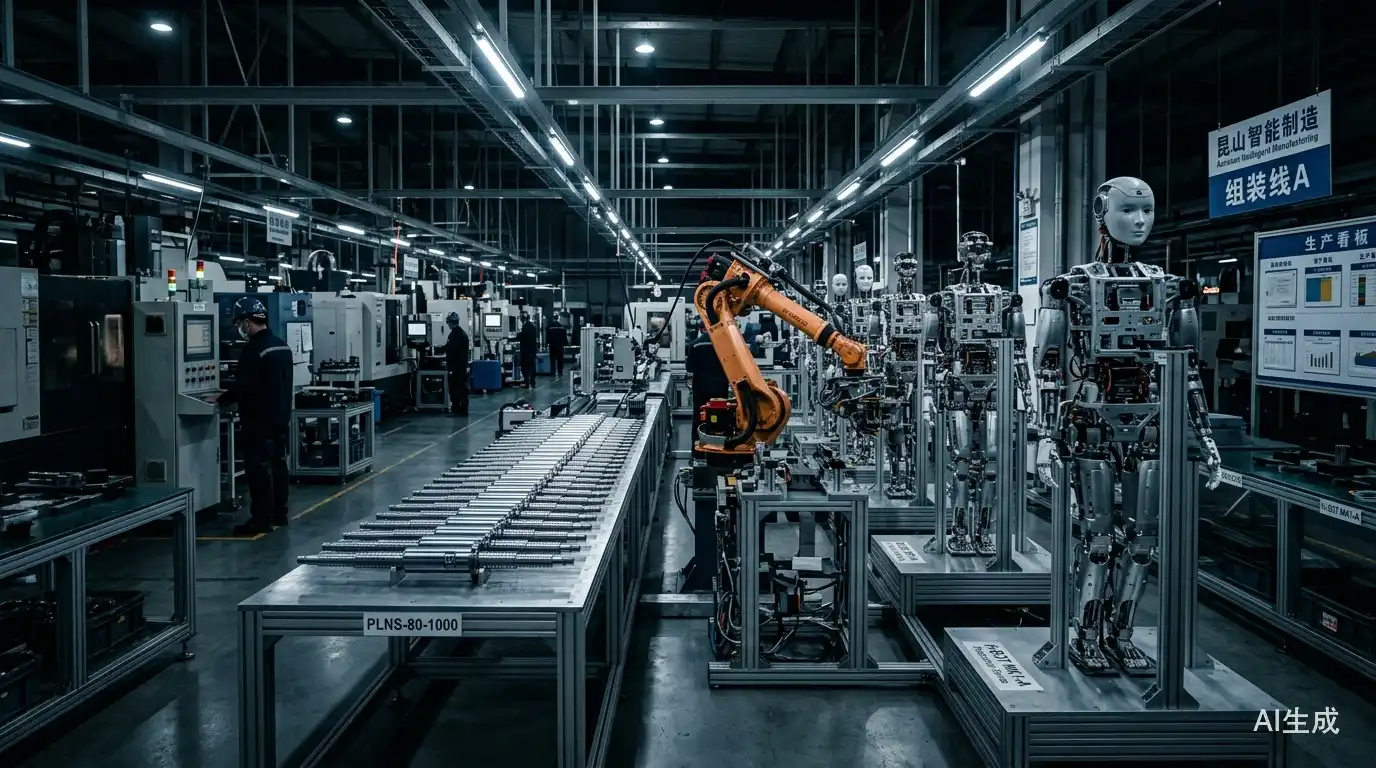
After staying relatively low-profile for years, Shanghai Bate Technology, a traditional auto parts supplier, has recently been thrust into the spotlight as a leading humanoid robotics concept stock. This shift is largely tied to the impending IPO of robotics company Unitree, with which Bate collaborates on prototype development. Bate's founder, 68-year-old Jin Kun, is making a bold bet on this new frontier. The company is investing 1.85 billion yuan to build a major R&D and production base in Kunshan for planetary roller screws—a key component in robot joints. With an annual capacity of 2.6 million sets planned, plus overseas expansion, this represents a massive, forward-looking commitment from a firm whose 2025 revenue of 2.3 billion yuan still relies almost entirely on its traditional automotive business (over 98%). The investment highlights a strategic pivot. Bate aims to leverage decades of expertise in metal processing, precision manufacturing, and heat treatment from the automotive sector and apply it to the burgeoning robotics industry. However, this move carries significant risk. The company has not yet secured formal supplier contracts or begun mass deliveries for its roller screws. It is essentially betting on future demand in a market that remains nascent. The broader industry context adds to the uncertainty. While multiple Chinese manufacturers are racing to invest in similar robotics component capacity (totaling over 6 billion yuan), the downstream humanoid robot market is still in its early stages. Estimates put 2025 global shipments at only around 18,000 units, primarily for entertainment, education, and data collection rather than large-scale industrial use. This creates a critical mismatch: the speed of upstream component factory construction and capital investment is far outpacing the commercialization and adoption of the robots themselves. Bate's story, driven by Jin Kun's decisive gamble, encapsulates the high-stakes transition facing traditional manufacturers seeking a "second growth curve" in robotics—a future full of potential but currently backed more by market anticipation than concrete financial results.

marsbit22 хв тому

After Yushu Got Hot, a 68-Year-Old Auto Parts Boss Bet 1.85 Billion

marsbit22 хв тому

Торгівля

Спот

Популярні статті

Як купити DATA

Ласкаво просимо до HTX.com! Ми зробили покупку DATA Network (DATA) простою та зручною. Дотримуйтесь нашої покрокової інструкції, щоб розпочати свою криптовалютну подорож.Крок 1: Створіть обліковий запис на HTXВикористовуйте свою електронну пошту або номер телефону, щоб зареєструвати обліковий запис на HTX безплатно. Пройдіть безпроблемну реєстрацію й отримайте доступ до всіх функцій.ЗареєструватисьКрок 2: Перейдіть до розділу Купити крипту і виберіть спосіб оплатиКредитна/дебетова картка: використовуйте вашу картку Visa або Mastercard, щоб миттєво купити DATA Network (DATA).Баланс: використовуйте кошти з балансу вашого рахунку HTX для безперешкодної торгівлі.Треті особи: ми додали популярні способи оплати, такі як Google Pay та Apple Pay, щоб підвищити зручність.P2P: Торгуйте безпосередньо з іншими користувачами на HTX.Позабіржова торгівля (OTC): ми пропонуємо індивідуальні послуги та конкурентні обмінні курси для трейдерів.Крок 3: Зберігайте свої DATA Network (DATA)Після придбання DATA Network (DATA) збережіть його у своєму обліковому записі на HTX. Крім того, ви можете відправити його в інше місце за допомогою блокчейн-переказу або використовувати його для торгівлі іншими криптовалютами.Крок 4: Торгівля DATA Network (DATA)Легко торгуйте DATA Network (DATA) на спотовому ринку HTX. Просто увійдіть до свого облікового запису, виберіть торгову пару, укладайте угоди та спостерігайте за ними в режимі реального часу. Ми пропонуємо зручний досвід як для початківців, так і для досвідчених трейдерів.

508 переглядів усьогоОпубліковано 2026.07.01Оновлено 2026.07.01

Як купити DATA

Обговорення

Ласкаво просимо до спільноти HTX. Тут ви можете бути в курсі останніх подій розвитку платформи та отримати доступ до професійної ринкової інформації. Нижче представлені думки користувачів щодо ціни DATA (DATA).

活动图片