Justin Sun Watches $60M Vanish From WLFI Holdings as His Access Remains Locked

ccn.comОпубліковано о 2025-12-23Востаннє оновлено о 2025-12-23

Анотація

Justin Sun, an early and prominent backer of the WLFI token, remains unable to access his holdings, which have lost an estimated $60 million in value over three months. His wallet, along with 272 others, was frozen by the WLFI team in September over concerns of market manipulation, though no specific evidence was provided. While some wallets have since been unfrozen or migrated, Sun’s remains blacklisted without explanation. His 545 million WLFI tokens, once valued at over $130 million, are now worth around $74 million. The situation highlights the tension between WLFI’s decentralized branding and its centralized control, raising questions about governance and investor risk in crypto projects.

Key Takeaways

  • Justin Sun remains unable to access millions of WLFI tokens frozen since September.
  • The value of his locked WLFI holdings has fallen by roughly $60 million over three months.
  • WLFI’s team has provided little explanation for why Sun’s wallet remains blacklisted.

Justin Sun backed WLFI early, publicly, and at scale.

Three months later, he is still locked out of his investment and watching its value steadily erode.

The Tron founder’s WLFI holdings, frozen shortly after the token’s public debut in September, have lost an estimated $60 million in value as prices slid and access remained restricted.

Despite partial reversals affecting other wallets tied to the same freeze, Sun’s account remains blacklisted, with no clear explanation from the project team.

Earn Crypto with These Top Mining Apps
Sponsored
Disclosure
We sometimes use affiliate links in our content, when clicking on those we might receive a commission at no extra cost to you. By using this website you agree to our terms and conditions and privacy policy.
"}' data-trk="67d19e1ff74d32de176c1b03" href="https://www.miningrigrentals.com?ref=2742248" rel="nofollow" target="_blank">
Mining Rig Rentals<\/h3>"}' data-trk="67d19e1ff74d32de176c1b03" href="https://www.miningrigrentals.com?ref=2742248" rel="nofollow" target="_blank">

Mining Rig Rentals

promotions
Earn a commission on your referral\u2019s transactions.<\/strong>"}' data-trk="67d19e1ff74d32de176c1b03" href="https://www.miningrigrentals.com?ref=2742248" rel="nofollow" target="_blank"> Earn a commission on your referral’s transactions.
Coins
6
Claim Offer
"}' data-trk="67d19ee2f74d32de176c1b5f" href="https://hashing24.com/?rid=53616c7465645f5fe8657fbf16217f483baff299e53f4db4" rel="nofollow" target="_blank">
Hashing24<\/h3>"}' data-trk="67d19ee2f74d32de176c1b5f" href="https://hashing24.com/?rid=53616c7465645f5fe8657fbf16217f483baff299e53f4db4" rel="nofollow" target="_blank">

Hashing24

promotions
Earn 3-10% on referral purchases<\/strong>"}' data-trk="67d19ee2f74d32de176c1b5f" href="https://hashing24.com/?rid=53616c7465645f5fe8657fbf16217f483baff299e53f4db4" rel="nofollow" target="_blank"> Earn 3-10% on referral purchases
Coins
Claim Offer
"}' data-trk="67d1a119f74d32de176c1be1" href="https://accounts.binance.com/en/register?ref=DTDJBNX1" rel="nofollow" target="_blank">
Binance Pool<\/h3>"}' data-trk="67d1a119f74d32de176c1be1" href="https://accounts.binance.com/en/register?ref=DTDJBNX1" rel="nofollow" target="_blank">

Binance Pool

promotions
Sign up, verify, deposit 100 USDT, get 100 USDT bonus<\/strong>"}' data-trk="67d1a119f74d32de176c1be1" href="https://accounts.binance.com/en/register?ref=DTDJBNX1" rel="nofollow" target="_blank"> Sign up, verify, deposit 100 USDT, get 100 USDT bonus
Coins
5
Claim Offer

A High-Profile Bet Goes Sideways

Sun was among WLFI’s most prominent early backers.

He began investing in the Donald Trump–linked DeFi project in late 2024, initially committing around $30 million during early sales.

Additional purchases later pushed his exposure to roughly $75 million by early 2025, according to on-chain data.

At the time, Sun was not just a passive investor. He was publicly aligned with the project, named as an adviser, and closely associated with WLFI’s early momentum.

That relationship soured quickly.

Just days after WLFI began trading publicly in September, the project froze and blacklisted 273 wallets, including Sun’s.

The team cited concerns over market manipulation and unusually large fund movements across exchanges, though it did not disclose specific evidence tied to individual wallets.

Frozen as the Price Fell

While some wallets affected by the September action were later addressed, either unfrozen or migrated to new addresses, Sun’s wallet remains locked.

Over the same period, WLFI’s price has fallen sharply.

Since its public debut, the token has declined by roughly 70%, turning Sun’s inability to move his holdings into a costly problem.

His locked balance of approximately 545 million WLFI tokens is now valued at around $74 million, down from more than $130 million in late summer.

On-chain data from Arkham Intelligence indicates Sun previously held close to 3 billion WLFI tokens, with the value of those holdings dropping sharply during August and September as restrictions took effect and prices declined.

A DeFi Irony

The situation underscores a familiar tension in crypto markets: projects branded as decentralized retaining significant centralized control.

WLFI is marketed as a DeFi protocol; however, its ability to freeze individual wallets—and selectively reverse those decisions—has raised questions about governance, transparency, and accountability.

For critics, Sun’s predicament highlights the risks investors face when token control ultimately rests with a small group of operators.

Last month, WLFI transferred funds from several wallets affected by the September freeze into new addresses, signaling that at least some cases were being resolved.

That move fueled speculation that Sun’s account might be next. So far, that has not happened.

The WLFI team has not publicly clarified why Sun remains blacklisted or whether his access will be restored.

Until then, one of the project’s most visible early supporters is stuck on the sidelines, unable to sell, hedge, or exit, watching the value of his investment shrink in real time.

For an industry that often champions decentralization as a safeguard against arbitrary control, the episode serves as a reminder that, in practice, power can still be highly concentrated—even for crypto’s biggest names.

Top Trending Crypto Articles
  • Best Exchanges Check Out Our Recommended Exchanges Here
  • Buy Crypto Fast How To Buy Crypto with a Credit Card Now
  • Safe Crypto Gambling See Our Picks for the Best Crypto Gambling Sites

Пов'язані питання

QWhat happened to Justin Sun's investment in WLFI tokens?

AJustin Sun's WLFI tokens, worth approximately $75 million, were frozen and blacklisted shortly after the token's public debut in September. He remains unable to access his holdings, which have lost an estimated $60 million in value as the price declined.

QWhy was Justin Sun's wallet blacklisted by the WLFI project?

AThe WLFI team cited concerns over market manipulation and unusually large fund movements across exchanges as the reason for freezing 273 wallets, including Sun's. However, they did not disclose specific evidence tied to individual wallets.

QHow much has the value of Justin Sun's WLFI holdings decreased?

AThe value of Sun's locked WLFI holdings has fallen by roughly $60 million over three months, from over $130 million in late summer to around $74 million at the time of reporting.

QHas the WLFI project taken any action to address the frozen wallets?

AYes, the WLFI team partially reversed the freeze for some wallets by transferring funds to new addresses last month. However, Justin Sun's wallet remains blacklisted with no clear explanation or resolution.

QWhat does this situation reveal about decentralization in DeFi projects like WLFI?

AThe situation highlights the tension between DeFi's decentralized branding and the reality of centralized control. WLFI's ability to freeze individual wallets and selectively reverse decisions raises questions about governance, transparency, and accountability in crypto projects.

Пов'язані матеріали

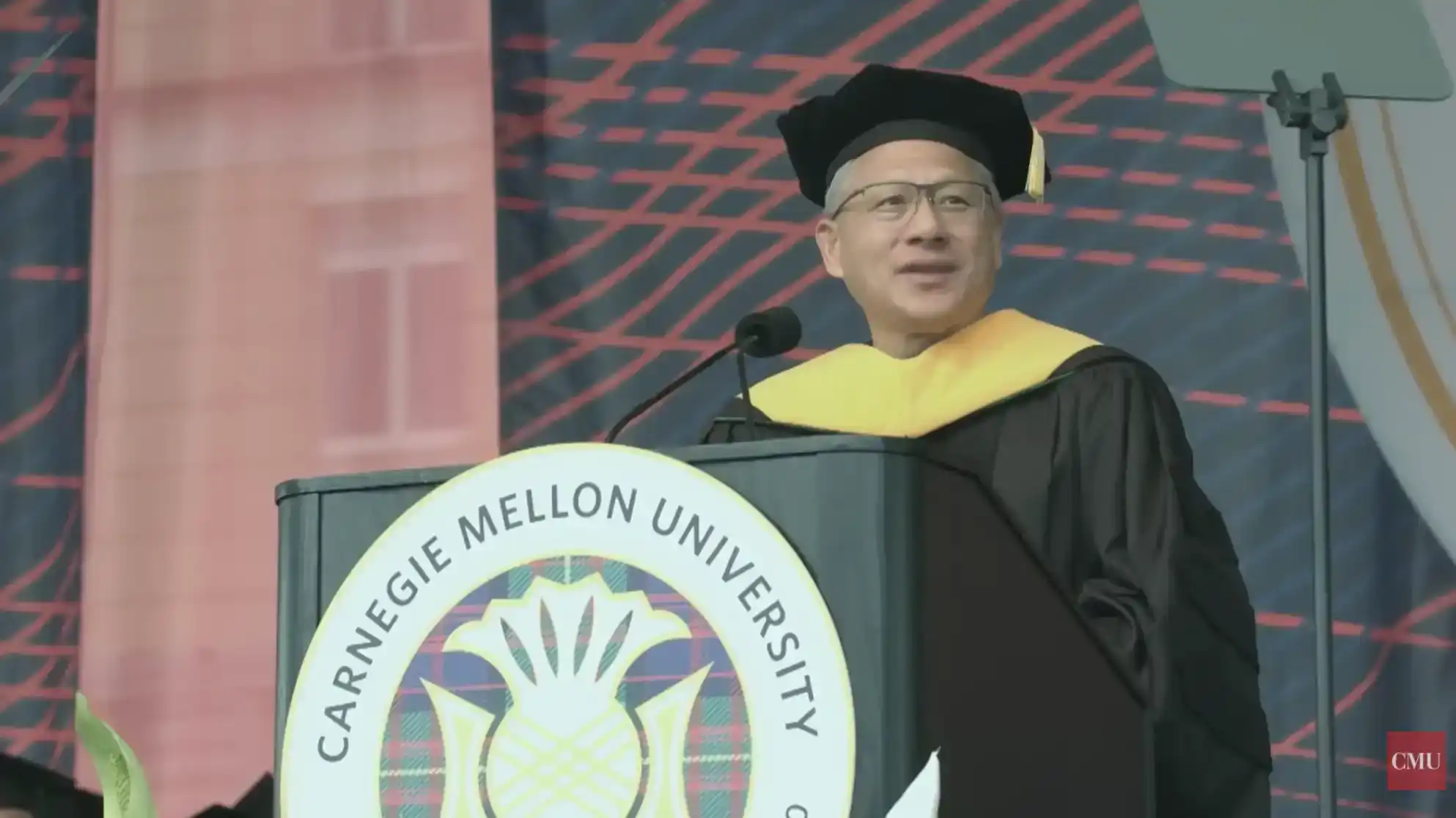
Jensen Huang's CMU Speech: In the AI Era, Don't Just Watch, Build

Jensen Huang, CEO of NVIDIA and a first-generation immigrant, delivered the commencement address to Carnegie Mellon University's class of 2026. He shared his personal journey from a humble background to founding NVIDIA, emphasizing resilience, learning from failure, and the responsibility that comes with leadership. Huang framed the present moment as the dawn of the AI revolution, a shift he believes is more profound than previous computing waves. He described AI as fundamentally resetting computing—moving from human-written software to machines that understand, reason, and use tools. This will create a new industry for generating intelligence and transform every sector. While acknowledging AI's potential to automate tasks and displace some jobs, Huang distinguished between the *tasks* of a job and its core *purpose*. He argued AI will augment human capability, not replace humans. The real risk, he stated, is not AI itself, but people being left behind by those who effectively use AI. He presented AI as a generational opportunity for massive infrastructure investment—in chip factories, data centers, energy grids, and advanced manufacturing—that could re-industrialize nations like the U.S. and bridge the digital divide by making computing and intelligent tools accessible to all. Huang called for a balanced approach: advancing AI safely and responsibly, establishing prudent policies, ensuring broad access, and encouraging universal participation. He urged the graduates not to fear the future but to engage with optimism and ambition, reminding them of CMU's motto, "My heart is in the work." His core message was clear: this is their moment to actively build and shape the AI-powered future, not merely observe it.

marsbit2 хв тому

Jensen Huang's CMU Speech: In the AI Era, Don't Just Watch, Build

marsbit2 хв тому

The Era Has Arrived Where Human Writers Must Prove They Are Not Machines

The article describes an era where AI-generated content is flooding the market, forcing human authors to prove they are not machines. It begins with the example of dozens of AI-written, error-ridden biographies of Henry Kissinger appearing on Amazon within hours of his death, a pattern repeated for other deceased celebrities and even living experts who find fraudulent books under their names. This spam content has exploded, with monthly new book releases on platforms like Amazon reaching 300,000 by late 2025. The issue spans genres, from suspiciously high proportions of AI-written teen romance and self-help books to dangerous, AI-generated foraging guides containing lethal advice. The platforms' automated review systems, designed to catch plagiarism and banned words, are ill-equipped to detect AI-generated text that avoids these pitfalls while being nonsensical or fraudulent. The problem has infiltrated traditional publishing. A major publisher, Hachette, had to recall a bestselling horror novel after AI detection tools suggested 78% of its content was machine-generated. An acclaimed European philosophy book was later revealed to be entirely written by AI under a fake author persona. In response, authors are fighting back. At the 2026 London Book Fair, 10,000 writers published a blank book titled "Don't Steal This Book" containing only their signatures—using emptiness as a protest weapon in an age of AI overproduction. Initiatives like the "Human Author Certification" program have emerged, ironically placing the burden on humans to prove their work is not machine-made. The article warns of a vicious cycle: AI-generated low-quality books pollute the data used to train future AI models, leading to "model collapse" and an ever-worsening flood of digital waste, eroding trust in publishing and devaluing human creativity.

marsbit28 хв тому

The Era Has Arrived Where Human Writers Must Prove They Are Not Machines

marsbit28 хв тому

Торгівля

Спот
Ф'ючерси

Популярні статті

Як купити SUN

Ласкаво просимо до HTX.com! Ми зробили покупку SUN (SUN) простою та зручною. Дотримуйтесь нашої покрокової інструкції, щоб розпочати свою криптовалютну подорож.Крок 1: Створіть обліковий запис на HTXВикористовуйте свою електронну пошту або номер телефону, щоб зареєструвати обліковий запис на HTX безплатно. Пройдіть безпроблемну реєстрацію й отримайте доступ до всіх функцій.ЗареєструватисьКрок 2: Перейдіть до розділу Купити крипту і виберіть спосіб оплатиКредитна/дебетова картка: використовуйте вашу картку Visa або Mastercard, щоб миттєво купити SUN (SUN).Баланс: використовуйте кошти з балансу вашого рахунку HTX для безперешкодної торгівлі.Треті особи: ми додали популярні способи оплати, такі як Google Pay та Apple Pay, щоб підвищити зручність.P2P: Торгуйте безпосередньо з іншими користувачами на HTX.Позабіржова торгівля (OTC): ми пропонуємо індивідуальні послуги та конкурентні обмінні курси для трейдерів.Крок 3: Зберігайте свої SUN (SUN)Після придбання SUN (SUN) збережіть його у своєму обліковому записі на HTX. Крім того, ви можете відправити його в інше місце за допомогою блокчейн-переказу або використовувати його для торгівлі іншими криптовалютами.Крок 4: Торгівля SUN (SUN)Легко торгуйте SUN (SUN) на спотовому ринку HTX. Просто увійдіть до свого облікового запису, виберіть торгову пару, укладайте угоди та спостерігайте за ними в режимі реального часу. Ми пропонуємо зручний досвід як для початківців, так і для досвідчених трейдерів.

510 переглядів усьогоОпубліковано 2024.12.12Оновлено 2025.03.21

Як купити SUN

Обговорення

Ласкаво просимо до спільноти HTX. Тут ви можете бути в курсі останніх подій розвитку платформи та отримати доступ до професійної ринкової інформації. Нижче представлені думки користувачів щодо ціни SUN (SUN).

活动图片