IOG Unveils Cardano 2030 Scaling Plan: 27 Million Monthly Transactions With Leios

bitcoinistОпубліковано о 2026-04-23Востаннє оновлено о 2026-04-23

Анотація

Input Output Global (IOG) has unveiled a scaling plan aimed at increasing Cardano’s transaction capacity from 800,000 to 27 million monthly transactions by 2030. A key part of this roadmap is the Leios upgrade, which is currently progressing through Software Readiness Levels 5 to 8 to prepare for mainnet deployment. The plan includes developing a release candidate, conducting rigorous validation through load and adversarial testing, and enabling a hard fork. IOG emphasizes that success is measured by completing preparatory work—such as technical documentation and ecosystem coordination—rather than by the timing of the mainnet launch. The upgrade is expected to support network growth, higher total value locked (TVL), and improved sustainability. ADA was trading at $0.25 at the time of writing.

Input Output Global (IOG), the company behind Cardano’s core blockchain development, shared new details on Wednesday about how it plans to steer the network through the rest of the year.

The update lays out key proposals and a broader 2030-focused roadmap aimed at scaling Cardano’s transaction capacity from roughly 800,000 transactions per month today to as many as 27 million per month.

Cardano Ecosystem Prep For Leios

IOG framed the next phase as part of the 2026/27 cycle, with a key priority on moving the Cardano Leios upgrade from an early-stage prototype into readiness for mainnet deployment.

The work is organized around progressing through what it calls Software Readiness Levels 5 to 8, a framework intended to ensure the upgrade is not only built, but tested and hardened step by step.

Rather than focusing on a single outcome, the firm’s statement describes three main objectives that shape the engineering and validation process. A large portion of the effort will go into what IOG calls a “Release Candidate.” In the company’s description, this is the critical path for Leios.

That work also involves major changes under the hood, including a substantial rewrite of consensus components and bringing the Leios block structure into what IOG refers to as the Dijkstra ledger era.

On the verification side, the Cardano developer points to completing the conformance test suite against an Agda formal specification and then integrating the update into the primary node implementation.

Beyond getting to a release candidate, IOG also highlights “High Confidence,” which focuses on validation rather than just completion. The company says the approach will combine parameter exploration with continuous load testing, along with adversarial testing on the public testnet.

In practical terms, that means studying timing parameters and size limits, then building a parameter graduation plan as the system matures.

Expecting Higher TVL And More Adoption

The third objective is “Hard-fork Enabling Leios,” which IOG describes as work within its own control to make the hard fork possible. Importantly, the firm behind Cardano’s growth stresses that this objective is not defined by the hard fork itself happening on mainnet, but by finishing the preparatory work required for it.

That includes stabilizing client interfaces, producing implementation-independent technical documentation, and coordinating developer workshops to ensure the wider ecosystem is ready.

Additional elements include a mainnet parameter graduation plan, contingency procedures, and preparation of updated guardrails script and rationale documents for governance. In IOG’s framing, the success criteria are centered on completing these enablement tasks, not on the timing of the mainnet activation.

The company also links the upgrade to broader Cardano network growth, pointing to downstream effects such as increased total value locked (TVL) and improvements in revenue and adoption.

The idea is that expanding throughput capacity for the whole Cardano network can support fee revenue growth as the Reserve diminishes, strengthening long-term sustainability. IOG’s Carlos Lopez de Lara noted:

We have been researching and prototyping Leios for years. The science is done. Now we deliver it. When this ships, Cardano’s throughput story changes permanently.

The daily chart shows ADA’s attempt to break toward $0.30 for the first time since February. Source: ADAUSDT on TradingView.com

At the time of writing, Cardano’s native token, ADA, was trading at $0.25, having recorded gains of 2% and 4% over the last 24 hours and seven days, respectively.

Featured image from OpenArt, chart from TradingView.com

Трендові криптовалюти

Пов'язані питання

QWhat is the main goal of IOG's Cardano 2030 scaling plan as mentioned in the article?

AThe main goal is to scale Cardano's transaction capacity from roughly 800,000 transactions per month to as many as 27 million per month by 2030.

QWhat is the name of the key upgrade that IOG is focusing on for Cardano's next phase?

AThe key upgrade is called Leios, which IOG plans to move from an early-stage prototype to readiness for mainnet deployment.

QWhat are the three main objectives outlined by IOG for the engineering and validation process of the Leios upgrade?

AThe three main objectives are: achieving a 'Release Candidate' for Leios, ensuring 'High Confidence' through validation and testing, and enabling the hard fork by completing preparatory work.

QHow does IOG link the Leios upgrade to broader Cardano network growth?

AIOG links the upgrade to increased total value locked (TVL), improvements in revenue and adoption, and long-term sustainability as the network's throughput capacity expands.

QWhat was the price of Cardano's native token ADA at the time of writing, and what were its recent performance figures?

AAt the time of writing, ADA was trading at $0.25, with gains of 2% over the last 24 hours and 4% over the last seven days.

Пов'язані матеріали

Conversation with Co-founder of Hyperdash: Why is Hyperliquid Still Severely Undervalued?

Interview Summary with Hanson Birringer, Co-founder of Hyperdash: Why Hyperliquid Remains Undervalued In an interview on *The Rollup*, Hanson Birringer, Co-founder and Chief Revenue Officer of Hyperdash—a trading data analytics platform for Hyperliquid—shared his investment thesis on the Hyperliquid ecosystem. He described Hyperliquid as a pure play on three key crypto super-trends: perpetual contracts, real-world assets (RWAs), and stablecoins. The platform is an open-source, decentralized, and high-performance financial system uniquely positioned to bridge traditional institutional capital with decentralized finance. Birringer highlighted Hyperliquid's leadership in perpetual DEX trading and its recent innovation of RWA perpetual contracts. He emphasized the significance of USDC becoming a core quoting asset, which, by allocating 90% of its backend yield from assets like US treasuries to a protocol buyback fund, creates substantial, programmatic buy pressure for the Hype token. He addressed regulatory challenges, noting that Hyperliquid's policy team is actively engaging with US regulators like the CFTC to establish clear rules for decentralized venues. Once achieved, regulated brokers could route orders directly to Hyperliquid's backend, tapping into its low-cost liquidity layer. Regarding revenue, Birringer was optimistic, citing the immense size of traditional financial markets. Even capturing a small fraction of global trading volume in products like RWA perpetuals could lead to exponential growth for the protocol. The recently launched Grayscale Hyperliquid ETF, seeded by their SPV (Hyper Holdings Global), provides a compliant on-ramp for institutional investors drawn to the clear "cash flow + token buyback" model. Finally, he discussed Hyperdash's acquisition of Imperator, enhancing its data and node infrastructure to serve both retail traders and traditional asset managers. His bullish case rests on Hyperliquid's potential to provide unprecedented global access to dollar-based capital markets. He struggled to articulate a bear case, seeing the long-term trends of internet adoption and financial inclusion as powerful tailwinds.

marsbit53 хв тому

Conversation with Co-founder of Hyperdash: Why is Hyperliquid Still Severely Undervalued?

marsbit53 хв тому

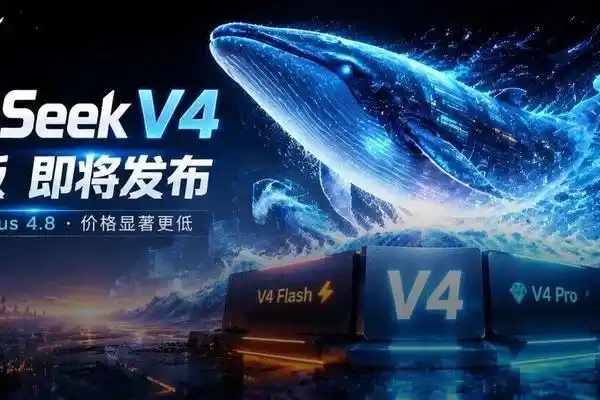
DeepSeek V4 'Full-Blooded Edition' Leaked, Could Be Released As Early As Tomorrow

The highly anticipated full release of DeepSeek V4 is imminent, expected to launch as early as tomorrow after nearly three months of waiting. A select group has already received access to the GA (General Availability) beta, which includes two versions: DeepSeek V4 Flash and DeepSeek V4 Pro. Early testers report that V4's overall performance is close to the level of Opus 4.8, with coding capabilities rivaling GPT-5.6 Sol. Its agent abilities are significantly enhanced, and 3D/SVG generation has improved notably. While it may not surpass the recently released Kimi K3 in performance, its expected price point is significantly lower. The official release will introduce a new "peak/off-peak" pricing model for its API. For example, deepseek-v4-pro will cost $0.87 per million output tokens during standard times and $1.74 during peak hours. The flash version is even more aggressive at $0.28/$0.56 per million tokens, with cached input tokens priced extremely low at $0.0028. This makes V4 a strong contender in terms of cost-effectiveness, potentially offering Opus-level capabilities at a fraction of the cost, continuing DeepSeek's reputation as a "price disruptor" in the AI market. Initial demos showcasing V4's capabilities have begun circulating, including generated 3D simulation games, HTML games blending elements of Minecraft and No Man's Sky, and classic games like a "Cut the Rope" clone. The final GA version is set to replace the older deepseek-chat and deepseek-reasoner models, which will be retired on July 24th.

marsbit1 год тому

DeepSeek V4 'Full-Blooded Edition' Leaked, Could Be Released As Early As Tomorrow

marsbit1 год тому

WEEX Labs Weekly Observation: The 'Power Restructuring' of AI Infrastructure and the 'Deep Dive Movement' into the Real Economy

WEEX Labs Weekly Review: AI Infrastructure's "Power Restructuring" and the "Deep Dive" into the Real Economy Mid-July 2026 marks a pivotal shift in the global AI industry. The allocation of computing power is transferring from cloud giants to compute resource owners, while the core value of AI is solidifying around its penetration into physical industry, moving beyond the race for model parameters. The era of fragmented model development is over, replaced by a capital-intensive, integrated chain driven by hard tech. Key developments this week include Meta's planned entry into the cloud computing market with "MetaCompute." This move by social media giants with massive GPU clusters challenges traditional cloud providers like AWS, integrating compute, models, and data into one-stop services, which will squeeze smaller rental providers and shift enterprise focus towards underlying model ecosystems. Chinese foundational models like DeepSeek-V4 and Tencent's Hy-3 are pushing towards "utility" status through open-source releases and extreme cost reductions via MoE architectures. This lowers entry barriers for enterprises, allowing them to focus resources on private deployment and deep business integration. Embodied intelligence, particularly humanoid robots, is transitioning from lab demos to real-world factory applications, driven by policies promoting large-scale, practical deployment in logistics and manufacturing. The value focus is shifting from spectacle to stable industrial data and real operational efficiency. Global governance, through forums like WAIC, is evolving from theoretical ethics to practical operational frameworks for "Sovereign AI," raising geopolitical compliance barriers and making auditability and data sovereignty core design requirements from the outset. WEEX Labs Insights: The current transformation shows AI's prosperity is deeply embedding into the fabric of global manufacturing. Strategic recommendations include: 1) leveraging open-source models for private, proprietary knowledge bases; 2) maintaining cloud provider diversity to avoid vendor lock-in from integrated model ecosystems; and 3) seeking opportunities in the "embodied infrastructure" supporting robots, such as data collection, industrial simulation, and factory AI adaptation services.

marsbit1 год тому

WEEX Labs Weekly Observation: The 'Power Restructuring' of AI Infrastructure and the 'Deep Dive Movement' into the Real Economy

marsbit1 год тому

Is WEEX TradFi Reliable? What You Should Know Before Your First Trade of U.S. Stock Tokens

In recent years, cryptocurrency users have expanded their focus beyond Bitcoin and Ethereum to include popular traditional financial (TradFi) assets like Nvidia, Apple, and Tesla stocks. This shift raises key questions: What do these TradFi assets represent on crypto trading platforms? How do they differ from traditional stock ownership? And how can users assess the reliability of platforms offering such products? TradFi products, such as those offered by WEEX TradFi (including NVDA, MSFT, AAPL, TSLA, and QQQ tokens), are blurring the lines between crypto and traditional markets. They allow users to trade based on the price movements of traditional assets within a familiar digital asset trading environment. However, it's crucial to understand that trading a "stock token" is not equivalent to owning the actual stock. Users are participating in price speculation, not gaining shareholder rights like dividends or voting. A key feature of these products is 7x24 trading, offering flexibility beyond traditional market hours. While convenient, this also introduces unique risks, such as potential liquidity gaps and volatility when underlying markets are closed. For users evaluating TradFi products, reliability hinges on transparency and risk management. Critical factors include understanding the product mechanism, how prices track the underlying assets, and the associated risks—especially when using leverage. Popular stocks and indices are still subject to company performance, macroeconomic shifts, and sector trends. Ultimately, TradFi represents a new gateway connecting crypto users to global markets. The future points toward integrated trading environments where the distinction between "crypto investor" and "traditional investor" fades. For newcomers, a platform's reliability stems not from promises, but from a clear understanding of the product, a comprehensive view of risks, and informed judgment of the platform's capabilities.

marsbit1 год тому

Is WEEX TradFi Reliable? What You Should Know Before Your First Trade of U.S. Stock Tokens

marsbit1 год тому

Торгівля

Спот

Популярні статті

Як купити ADA

Ласкаво просимо до HTX.com! Ми зробили покупку Cardano (ADA) простою та зручною. Дотримуйтесь нашої покрокової інструкції, щоб розпочати свою криптовалютну подорож.Крок 1: Створіть обліковий запис на HTXВикористовуйте свою електронну пошту або номер телефону, щоб зареєструвати обліковий запис на HTX безплатно. Пройдіть безпроблемну реєстрацію й отримайте доступ до всіх функцій.ЗареєструватисьКрок 2: Перейдіть до розділу Купити крипту і виберіть спосіб оплатиКредитна/дебетова картка: використовуйте вашу картку Visa або Mastercard, щоб миттєво купити Cardano (ADA).Баланс: використовуйте кошти з балансу вашого рахунку HTX для безперешкодної торгівлі.Треті особи: ми додали популярні способи оплати, такі як Google Pay та Apple Pay, щоб підвищити зручність.P2P: Торгуйте безпосередньо з іншими користувачами на HTX.Позабіржова торгівля (OTC): ми пропонуємо індивідуальні послуги та конкурентні обмінні курси для трейдерів.Крок 3: Зберігайте свої Cardano (ADA)Після придбання Cardano (ADA) збережіть його у своєму обліковому записі на HTX. Крім того, ви можете відправити його в інше місце за допомогою блокчейн-переказу або використовувати його для торгівлі іншими криптовалютами.Крок 4: Торгівля Cardano (ADA)Легко торгуйте Cardano (ADA) на спотовому ринку HTX. Просто увійдіть до свого облікового запису, виберіть торгову пару, укладайте угоди та спостерігайте за ними в режимі реального часу. Ми пропонуємо зручний досвід як для початківців, так і для досвідчених трейдерів.

1.0k переглядів усьогоОпубліковано 2024.12.10Оновлено 2026.06.02

Як купити ADA

Обговорення

Ласкаво просимо до спільноти HTX. Тут ви можете бути в курсі останніх подій розвитку платформи та отримати доступ до професійної ринкової інформації. Нижче представлені думки користувачів щодо ціни ADA (ADA).

活动图片