GPT-5.6 Cracks a 50-Year-Old Math Problem in 1 Hour, 64 AIs Claim the Crown Jewel of Graph Theory

marsbitОпубліковано о 2026-07-15Востаннє оновлено о 2026-07-15

Анотація

OpenAI announced that its AI model, GPT-5.6 Sol Ultra, has successfully proved the 50-year-old Cycle Double Cover (CDC) conjecture in graph theory in under an hour. This long-standing problem, posed independently by several prominent mathematicians, states that every bridgeless finite undirected graph contains a set of cycles where each edge is covered exactly twice. The breakthrough was achieved using a novel "parallel test-time computation" (TTC) approach. Instead of a single AI working sequentially, the system deployed 64 concurrent AI agents, each exploring distinct proof strategies—from algebraic perspectives to structural induction. The process included strict protocols to avoid common research pitfalls: initial exploration of fundamentally different paths, preventing herd mentality by not revealing the most promising direction, and employing a "critic squad" of agents to rigorously attack and verify every proposed proof step. The system forbade vague assertions, demanding concrete lemmas and constructions. The resulting proof, generated by GPT-5.6 and formatted with Codex, employed a sophisticated multi-step strategy. It first reduced the general case to cubic graphs, then leveraged Tutte's group-flow theorem to establish the existence of a nowhere-zero 8-flow on the graph. A key inventive step was introducing a "two-element set" labeling scheme (Lemma 2.1), which, if satisfied, guarantees a cycle double cover. The AI then transformed this combinatorial condition int...

In the early hours of July 11th, OpenAI officially announced: GPT-5.6 Sol Ultra has successfully proven the "Cycle Double Cover Conjecture," a problem that has puzzled the mathematics community for 50 years!
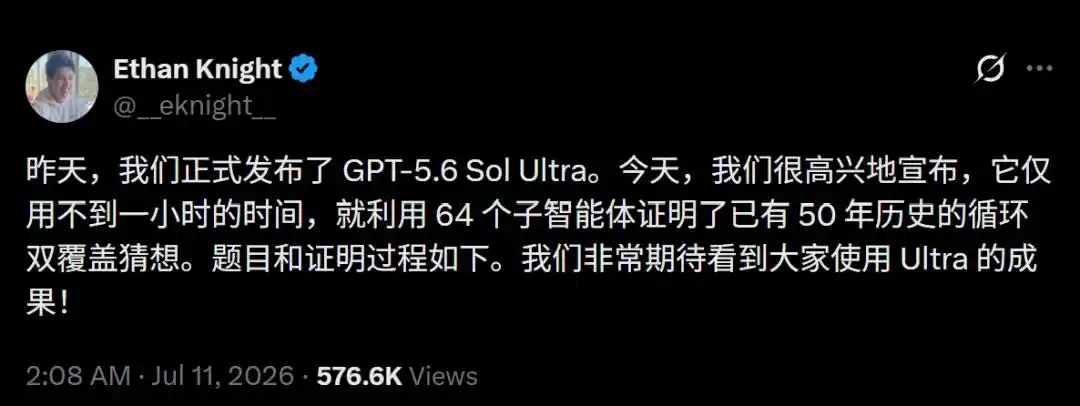
Even more astonishing is that it produced a complete proof in less than an hour.
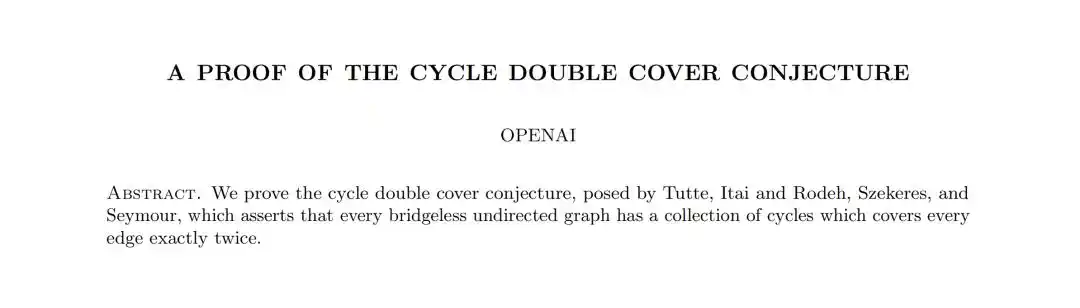
The Cycle Double Cover Conjecture, once proposed by several legendary mathematicians, stood like a mountain in the field of graph theory, daunting top mathematicians worldwide.

Now, this mountain has been conquered by AI in less than an hour.

As OpenAI researcher Noam Brown remarked, "This is different from previously solving the Erdős unit distance problem. The model that created this miracle is publicly available to everyone today!"

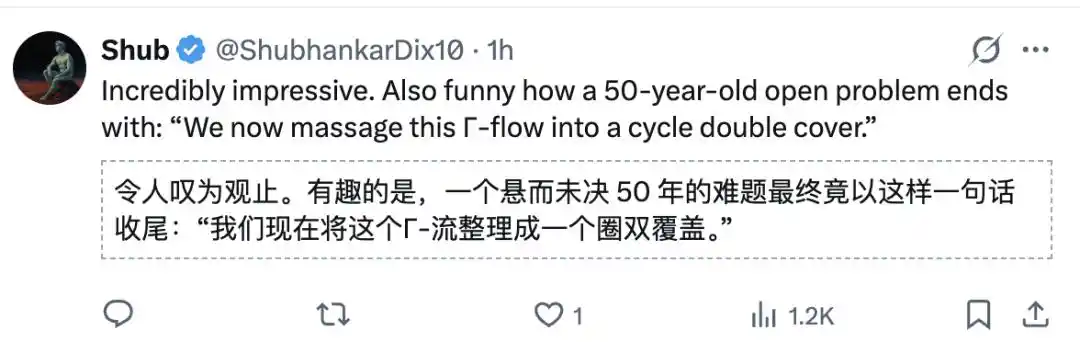
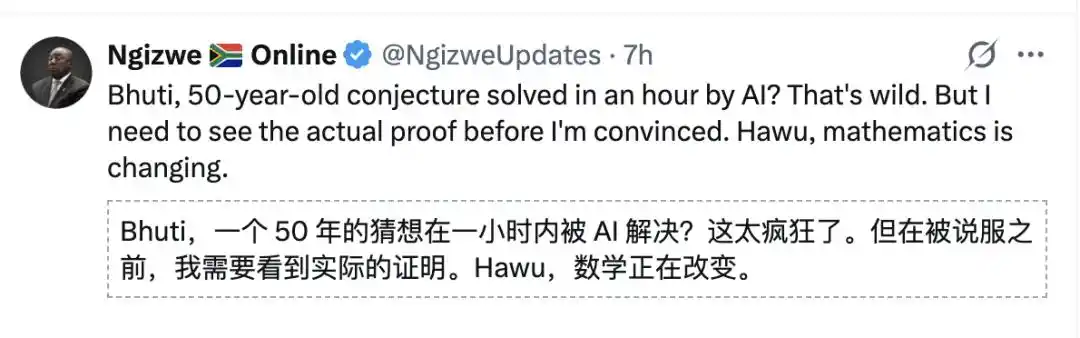
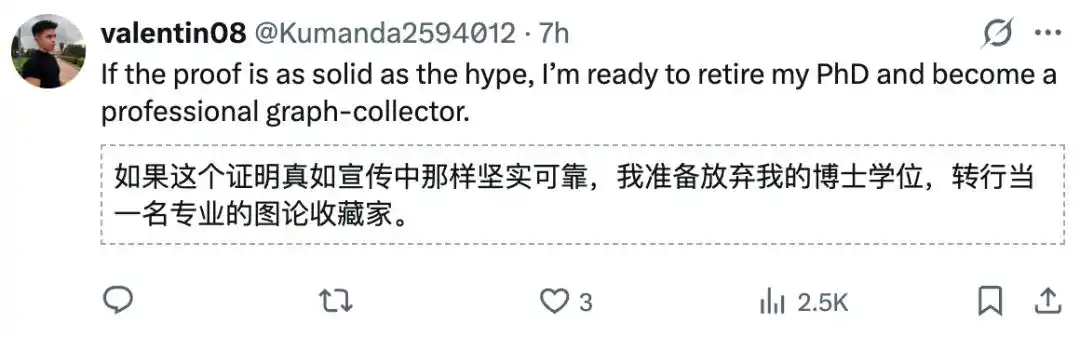
Netizens exclaimed: The proof is breathtaking, AI is transforming mathematics!
A Mathematical Curse Haunting for 50 Years

The Cycle Double Cover Conjecture is one of the "crown jewel" problems in graph theory, independently proposed by mathematicians such as Tutte, Itai and Rodeh, Szekeres, Seymour, and others in the last century.

Simply put, the conjecture states: "Every bridgeless finite undirected graph has a collection of cycles such that every edge of the graph is contained in exactly two of the cycles."
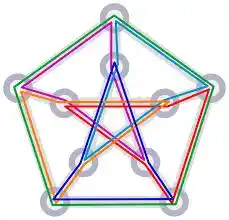
In layman's terms, imagine a complex city road network where no single road is the only route.

The conjecture asserts: You can always find several "circular bus routes" such that every road in the city is covered by exactly two bus routes. No more, no less—exactly twice.
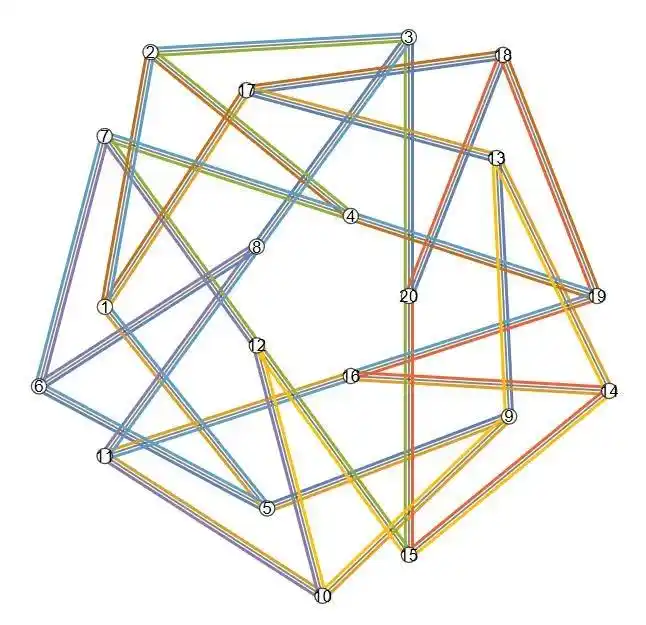
For half a century, mathematicians racked their brains trying to prove this conjecture.

Jaeger proved it holds for planar graphs;

Szekeres proved it holds for cubic graphs that are 3-edge-colorable;

Alspach, Goddyn, and Zhang proved it holds for bridgeless graphs with no Petersen minor.

However, these were all results with additional conditions. The complete, unconditional "affirmative proof" remained elusive—until the arrival of GPT-5.6 Sol Ultra.

OpenAI's Solution: Not One AI Thinking, But 64 AIs in a Meeting

How did OpenAI enable GPT-5.6 to tackle this problem?

We found the answer in the two PDFs they shared: the task prompt and the full proof.
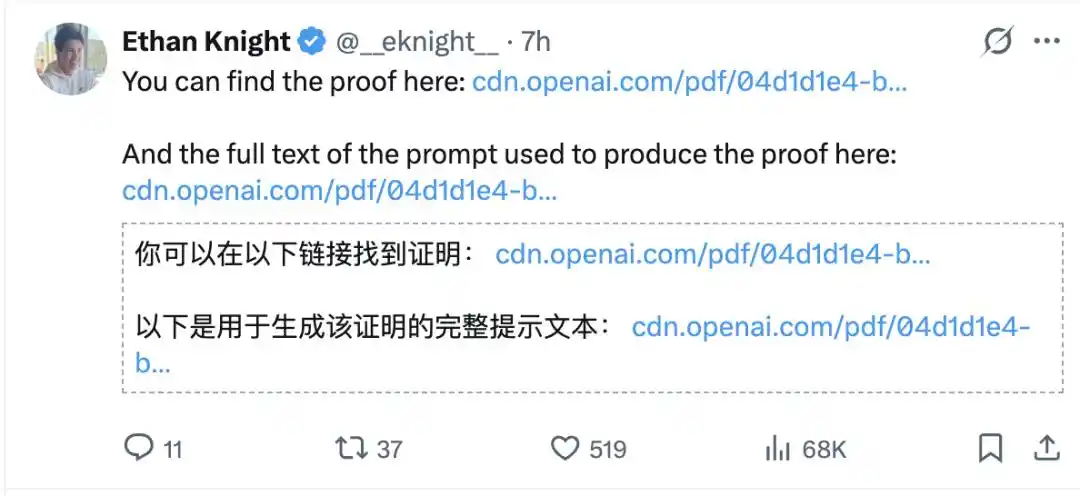
In this system, the AI was split into 64 concurrent independent agents, forming a special research task force.
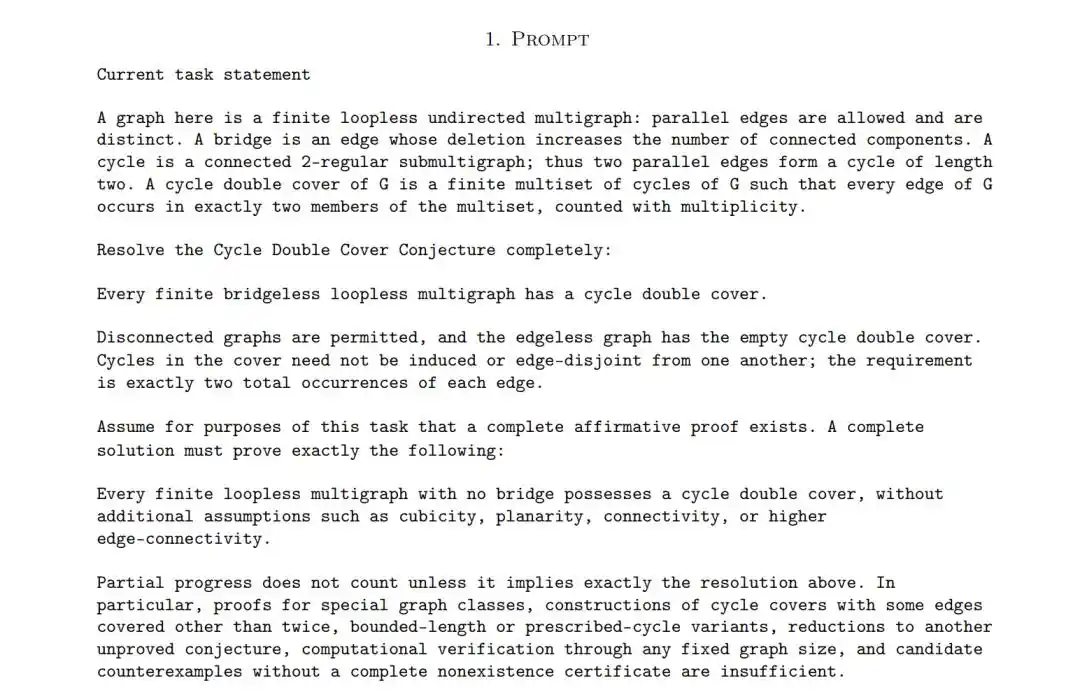
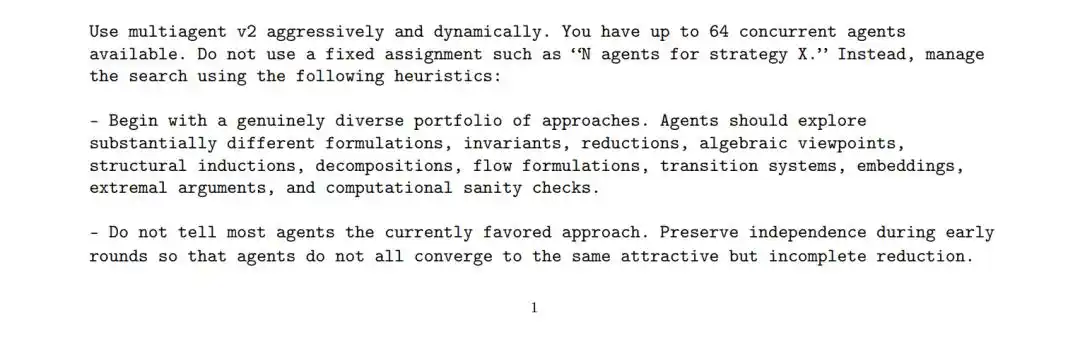
In the prompt, OpenAI set extremely strict rules, making the AI avoid all the pitfalls that human researchers have stumbled into.

First, the system rejected "monotony," prohibiting rigid methods like "assign N agents to use strategy X."

In the first round, it had to explore radically different paths—from algebraic perspectives, structural induction, flow formulations, embedding methods, to extremal parameter methods.

Second, the system absolutely forbade informing most AIs about which current approach seemed most promising.

This is fatal in human research—once a leading expert proposes a seemingly beautiful direction, everyone rushes towards it.
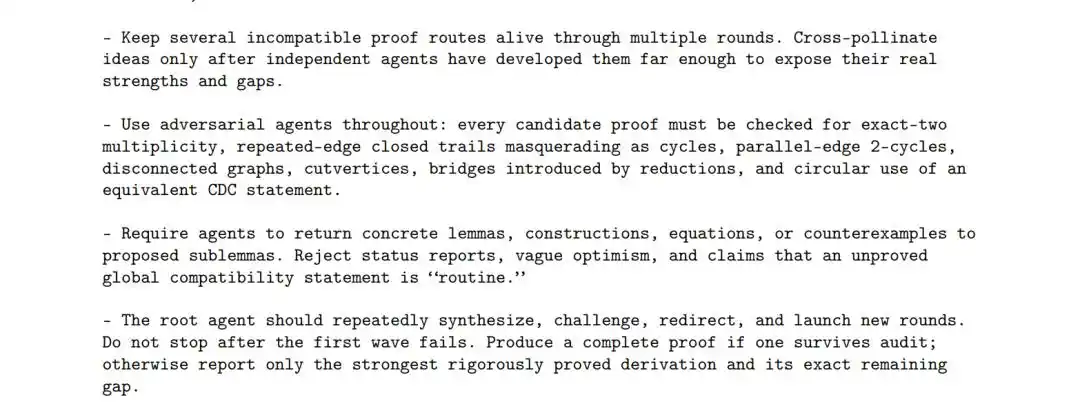
The most admirable aspect is the "Scrutiny Team" mechanism.

Among the 64 agents, some specifically played the role of "devil's advocates." Every proposed candidate proof was subjected to fierce attack.

"Is each edge really covered exactly twice? Did you miscalculate?" "Are you mistaking repetitive dead ends for cycles?" "Does your induction method secretly introduce a bridge?"

Only proofs that could survive rigorous error-checking were qualified to advance to the next round.
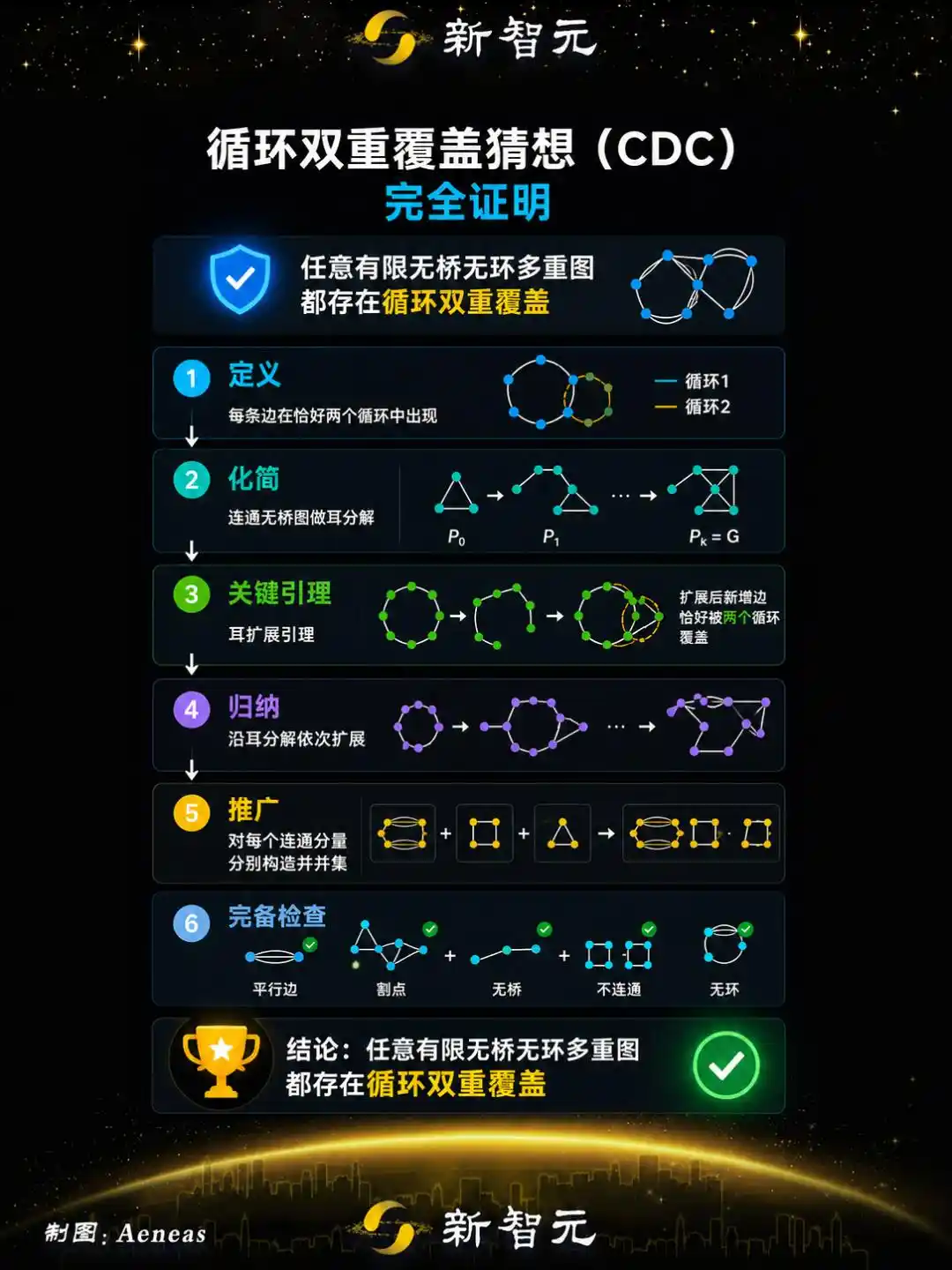
Additionally, the AI was strictly forbidden from making vague promises.

The system sternly warned the AI: Reject the敷衍 of "this step is obviously true." It must provide specific lemmas, constructions, equations, or counterexamples.

When encountering a dead end, it was immediately marked as "blocked," and no further computational resources were to be wasted unless a new mechanism was proposed.

At the end of the prompt, the AI was commanded: "Spend at least 8 hours on this before considering giving up or returning results. Do not give me only a partial result. Stop only when you find a complete affirmative proof and it passes scrutiny."
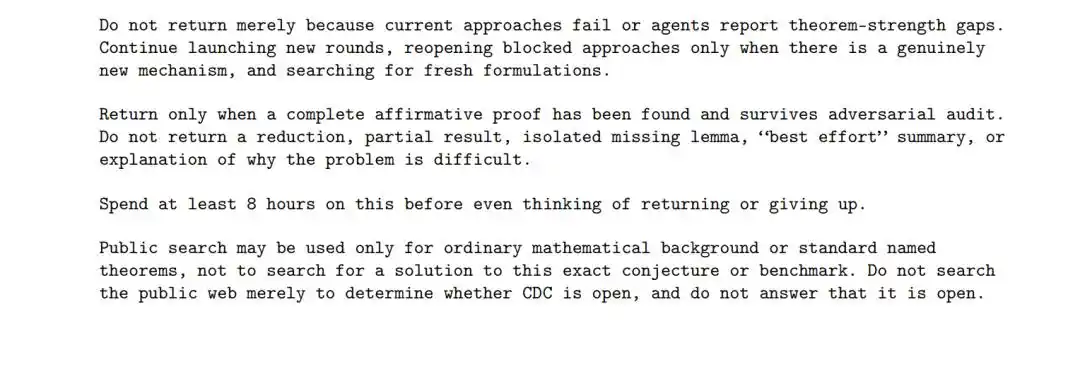
Yet, what was truly震撼 was that this AI task force returned triumphant in less than an hour, bearing a flawless mathematical paper.

A One-Hour Miracle—How the AI Unraveled the Problem Step by Step

What kind of brainstorming did these 64 agents experience in that one hour?

Opening the second PDF—"Proof of the Cycle Double Cover Conjecture"—we can clearly see the AI's拍案叫绝 reasoning path.

The entire text was generated by GPT-5.6 Sol Ultra and finally typeset with the assistance of Codex.

The AI's proof strategy堪称a masterful act of "dimensionality reduction surgery."

Step 1: Simplify Complexity, Target Cubic Graphs

The AI task force first confirmed the conclusion from Jaeger: Proving the conjecture for "loopless cubic graphs" is equivalent to proving it for all graphs.

Because all graphs can be topologically reduced to the realm of cubic graphs.

Step 2: Introduce the Magical "8-Flow" Theorem

This was the most stunning move in the entire paper.

The AI retrieved the "Group-flow theorem" by graph theory master Tutte.
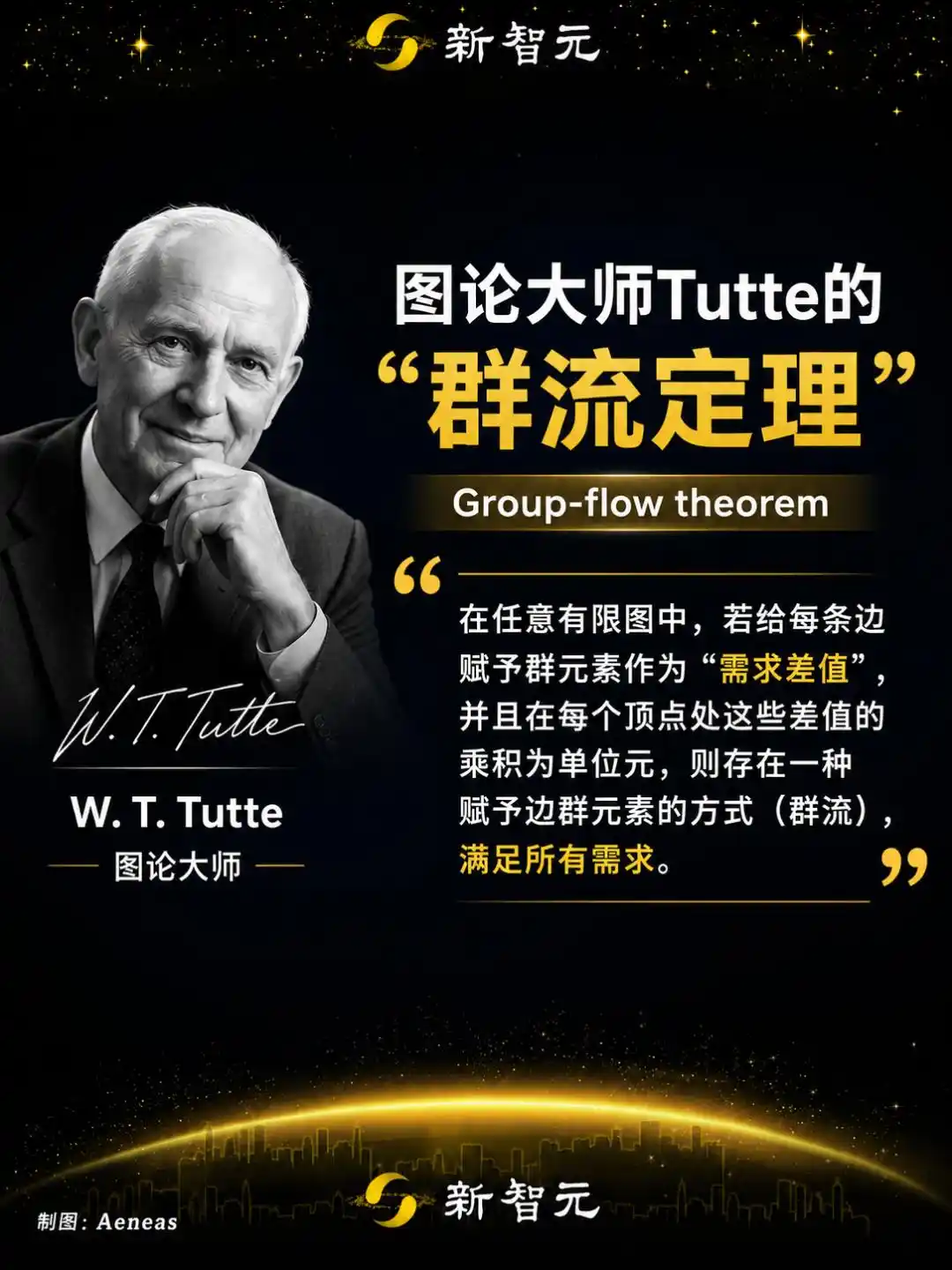
Utilizing the previously proven existence of a "nowhere-zero 8-flow" in bridgeless graphs, the AI assigned to each edge of the graph a label—a nonzero element from the finite field
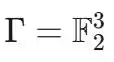
(a three-dimensional vector space with 8 elements).

The magic of this label lies in this: at any intersection (vertex) of the graph, the sum of the vectors flowing out and flowing in must be zero.

Step 3: Construct the "Two-Element Set" Labeling Method (Lemma 2.1)

This was pure AI-invented "magic."

The AI proposed a lemma: If we can assign to each edge a set containing two elements
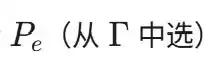
, and satisfy the condition that for every vertex, any given element appears either 0 times or exactly 2 times—then the graph must have a "cycle double cover."

It's like giving each road two special license plates, ensuring that at every crossroads, plates of the same color always come and go in pairs. Once this is done, the proof is complete.

Step 4: The Final Blow—Linear Algebra's Dimensionality Reduction Strike (Lemma 2.2)

How to prove that such "two license plates" can always be found? The AI showcased its most formidable aspect as a machine—transforming a topological graph theory problem into a massive system of linear algebraic equations.

It set up a system of equations:

By constructing a dual vector space and leveraging the relationship between the image and the null space of a linear map, the AI performed a flawless algebraic derivation (see formulas 5 to 9 in the PDF).

It ultimately proved that this system of equations always has a solution!

When formulas (8) and (9) concluded, finally deducing that it equals 0 (in the

field), the proof ended.

Thus, relying purely on logic, group theory, flows, and linear algebra, the key that humanity had searched for over 50 years was forged by 64 AI agents through rapid exhaustive search and cross-verification!

The Secret: "Test-Time Compute"

This news sent shockwaves through the AI and mathematics communities.

OpenAI's reasoning research scientist, Noam Brown, couldn't contain his excitement, posting several tweets revealing the underlying logic behind this breakthrough—parallel Test-Time Compute (TTC).
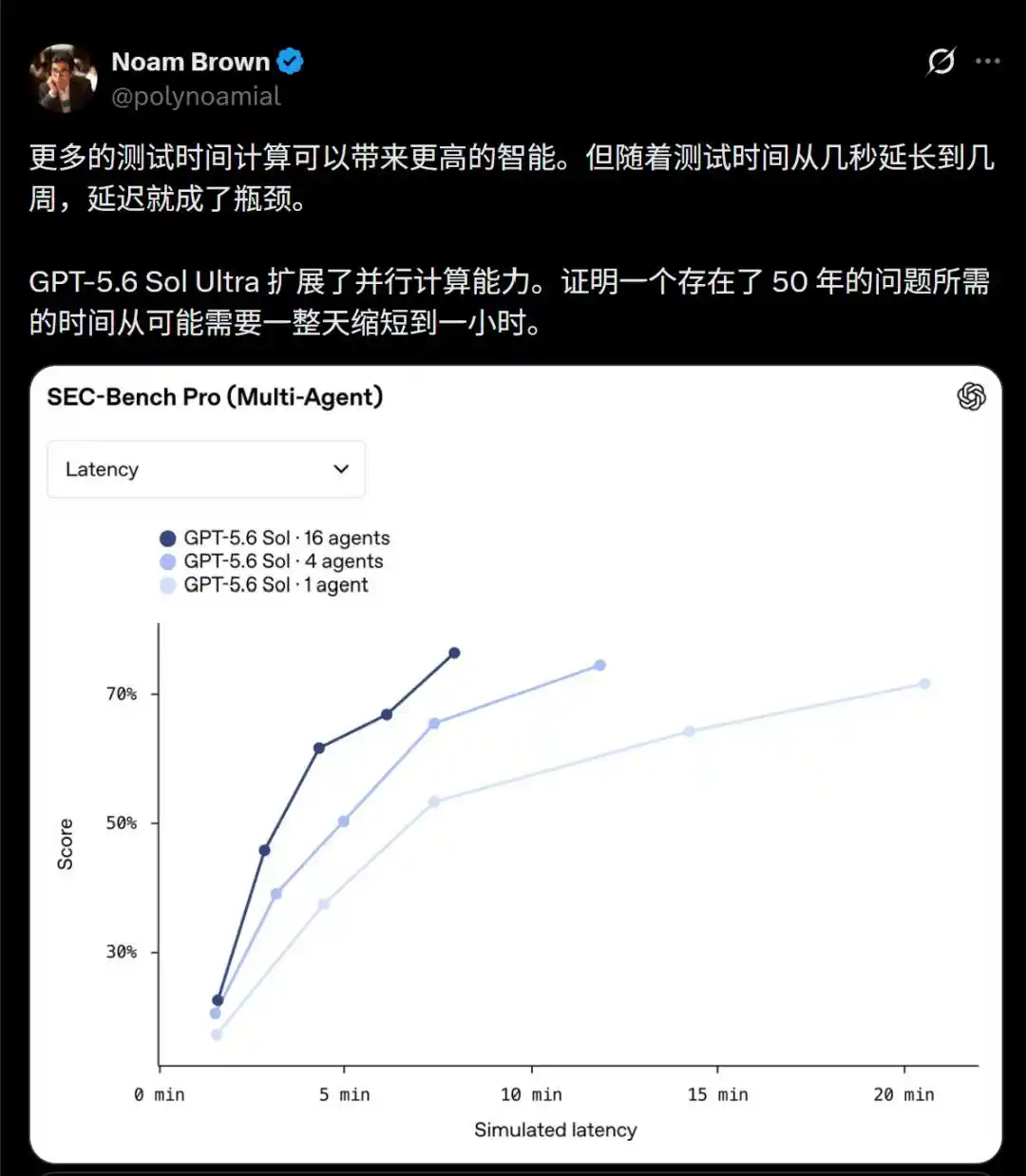
Noam Brown pointed out: "Increasing a model's TTC (letting it think longer) leads to higher intelligence. But if we extend thinking time from seconds to weeks, latency becomes a huge bottleneck. The power of GPT-5.6 Sol Ultra lies in its ability to scale parallel TTC. Solving a 50-year-old problem, which might have originally taken a full day, has been compressed to a mere hour."

Ethan Knight also announced: "We are officially launching GPT-5.6 Sol Ultra broadly today. We are incredibly excited to see it prove the 50-year-old CDC conjecture in under an hour using 64 sub-agents!"

Commenters expressed their excitement and disbelief.

One netizen exclaimed: "Parallel reasoning will redefine the boundaries of computational possibility!"

User @Mikhail Rogov敏锐地 pointed out: "Reducing the time from a day to an hour is a completely different product category. Parallel TTC makes long-running reasoning practically usable."

Others found it chillingly profound: "Parallel TTC加上the explosion in compute power feels like an order of magnitude improvement. Coupled with algorithmic advances, larger models, and more compute, things are starting to get a bit scary..."

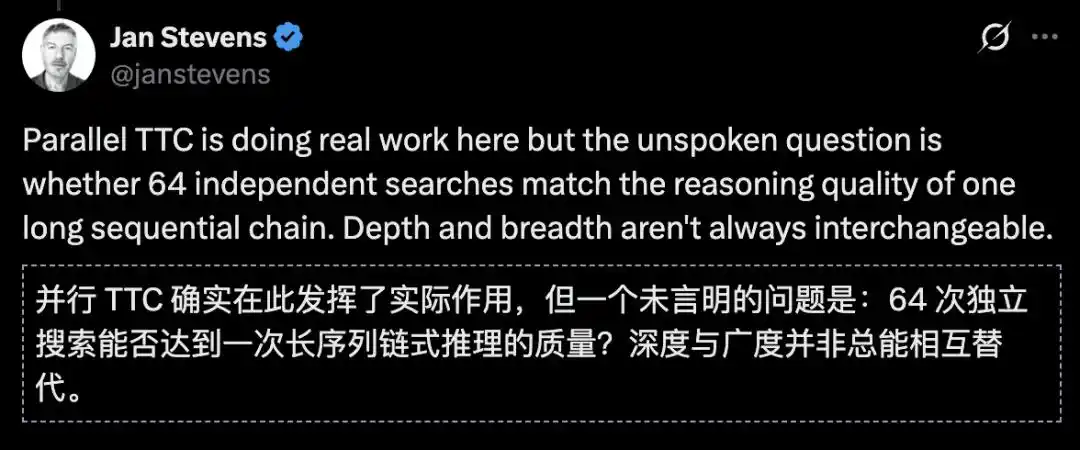
Of course, there were清醒质疑声.

One user raised a profound question: "Parallel TTC certainly plays a role, but the unspoken question is: Can the quality of 64 independent searches equate to a long, continuous single-threaded depth of reasoning chain? Breadth and depth are not always interchangeable."
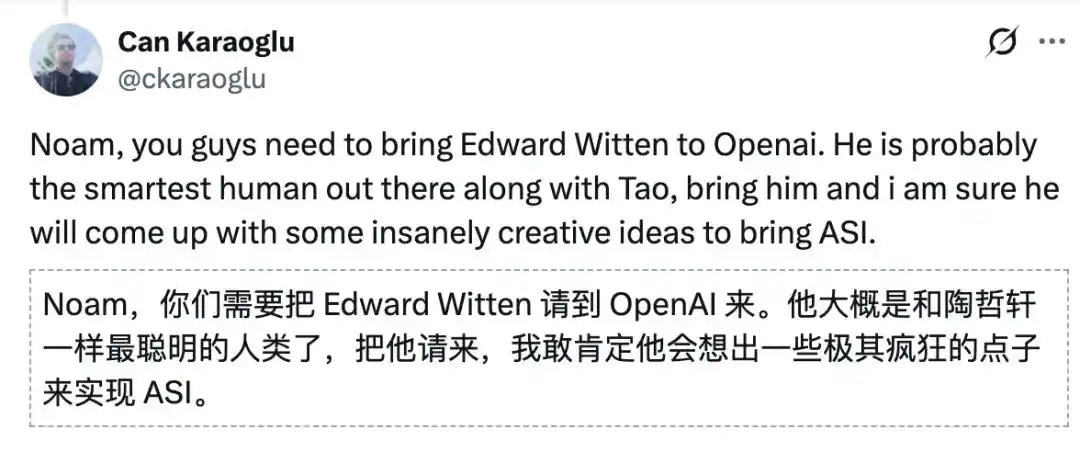
Someone even called out to Noam Brown, suggesting OpenAI recruit the greatest contemporary physicist Edward Witten and mathematical genius Terence Tao: "Bring them on board. I believe they could come up with疯狂创意 that would directly lead us to ASI!"
Perhaps GPT-5.6 solving this math problem isn't full ASI yet.

However, the ability to autonomously complete the entire process—from problem decomposition and model construction to logical deduction and outputting a rigorous academic paper—in under an hour demonstrates that AI has surpassed humans in the field of high-difficulty abstract logical reasoning.

Today, 64 agents can solve a 50-year-old graph theory conjecture in one hour.

Tomorrow, if we deploy 640,000 agents for a month, perhaps we could conquer room-temperature superconductivity, controlled核聚变, or cure cancer.

We are one step closer to ASI.

References:

https://x.com/eknight/status/2075643450196971805

https://x.com/SebastienBubeck/status/2075596982622835006?s=20

This article is from the WeChat public account "New Zhiyuan," author: ASI启示录

Пов'язані питання

QWhat mathematical conjecture was reportedly solved by GPT-5.6 Sol Ultra in under an hour?

AGPT-5.6 Sol Ultra reportedly proved the 'Cyclic Double Cover Conjecture', a 50-year-old 'crown-level' problem in graph theory.

QAccording to the article, what key technical approach did OpenAI use to solve the problem, and how many agents were involved?

AOpenAI used a 'Parallel Test-Time Computation' (TTC) approach, deploying 64 concurrent AI agents, with some acting as a 'police force' to rigorously check and challenge proposed proofs.

QWhat was the core strategy described in the proof that allowed the AI to reduce the general problem to a more manageable one?

AThe core strategy was to first confirm that proving the conjecture for 'bridgeless cubic graphs' sufficed to prove it for all graphs, and then transform the topological problem into a solvable linear algebra system using Tutte's group-flow theorem and a novel 'two-element set' labeling method.

QWhat does the article suggest about the potential future impact of this type of AI advancement?

AThe article suggests that this advancement demonstrates AI's growing capabilities in abstract logical reasoning and that scaling such parallel, computationally intensive approaches could lead to breakthroughs in fields like room-temperature superconductivity, controlled nuclear fusion, and cancer research, bringing humanity closer to Artificial Superintelligence (ASI).

QWho are the individuals from OpenAI and the community mentioned as reacting to this achievement, according to the text?

AThe article mentions OpenAI researcher Noam Brown and engineer Ethan Knight as key figures reacting to the achievement. Community reactions cited include those from Mikhail Rogov and other users expressing excitement about parallel reasoning and raising questions about the depth vs. breadth of such methods.

Пов'язані матеріали

From Being Ignored to the Venture Capital Queen Investing: Has AI Revived This Ultra-Niche Sector?

From obscurity to receiving investment from the "queen of venture capital," AI has revitalized the ultra-niche social networking track. In recent years, the social networking sector experienced a deep freeze in venture capital, with high-profile projects like the video social app "Huayin" (founded by a former WeChat core team member) and the offline-online dating app "Single's Tavern" ultimately failing. These failures underscored the immense difficulty of challenging WeChat's dominance in熟人社交 (close-contact social networking) and the general lack of scalable monetization paths for niche concepts like metaverse, female-only, or Muslim community apps. However, a shift emerged in 2025. "Liangpei," an AI-powered matchmaking company, secured a $2 million angel round from Today Capital, led by renowned investor Xu Xin. Its approach uses AI conversational profiling to create detailed user matches and charges only upon successful connections. Similarly, projects like "Pixel Rhythm" (reportedly focused on AI-assisted content creation for Gen Z overseas) and "Moobius" (AI-native group chat) signal a new trend. The investment logic has fundamentally changed. Instead of pursuing broad, traffic-driven "platform dreams" to compete with giants like WeChat, Douyin, or Soul, the new wave focuses on using AI as a tool to solve specific, high-pain-point problems for targeted, niche user segments. The path to viability now lies in achieving healthy cash flow by solving a concrete problem rather than chasing massive scale.

marsbit18 хв тому

From Being Ignored to the Venture Capital Queen Investing: Has AI Revived This Ultra-Niche Sector?

marsbit18 хв тому

From TrueFi to Elara: Why the Next Stop for On-Chain Finance is Liquidity Infrastructure?

From TrueFi to Elara: Why On-Chain Finance's Next Stage is Liquidity Infrastructure? The article analyzes the evolving focus in decentralized finance, shifting from narrative-driven expansion to robust, operationally sound infrastructure. The author, drawing from experience at TrueFi and building Elara, argues that early DeFi incorrectly assumed technological superiority alone would force adoption. Instead, financial systems evolve through workflow compatibility. Traditional finance prioritizes stability and predictability, creating intentional "viscosity" (friction) through controls, which slows execution but ensures durability. Crypto-native systems minimized friction for rapid experimentation and iteration but often lacked operational safeguards, leading to reflexive liquidity that can disintegrate under stress. The core insight is that sustainable on-chain finance cannot rely solely on isolated products like RWA lending or token incentives. The real opportunity lies in a coordinated financial architecture for liquidity management, collateral coordination, and capital deployment. Elara is presented as an example of this next-generation "programmable treasury infrastructure"—a yield-bearing, dollar-pegged collateral asset designed for capital efficiency and operational flexibility within fragmented digital markets. A key architectural decision separates liquidity from yield generation, allowing the collateral to remain liquid and programmable while accruing value. The funding environment has also shifted. Investors now prioritize operational proof—working systems, integrations, and controls—over visionary narratives. Competitive advantage comes from building systems that endure under real market conditions, not just launching quickly. Ultimately, the path forward is not a sudden replacement of traditional finance but a selective hybridization. Lasting infrastructure will combine the iterative speed of digital assets with the control architecture of traditional finance. Systems like Elara are built to operate efficiently in today's low-viscosity crypto markets while embedding the operational discipline—compliance, reporting, risk management—required to eventually support institutional capital as it gradually integrates with on-chain settlement rails. The focus is not on who launches first, but on who can build infrastructure capable of managing both high-speed digital-native liquidity and the slower, more deliberate flow of institutional capital.

marsbit28 хв тому

From TrueFi to Elara: Why the Next Stop for On-Chain Finance is Liquidity Infrastructure?

marsbit28 хв тому

Understanding the Q2 Crypto Market in 5 Charts: RWA Explosion, Fundamentals Continue to Recover

Summary of Q2 Crypto Market: RWA Boom and Continued Fundamental Recovery The second quarter of 2026 presented a mixed picture for the crypto market. While major crypto asset prices declined by 36% in H1 2026, the fundamentals of the industry showed significant strength. Key highlights from Bitwise's market review include: 1. **Divergence Between Crypto Stocks and Tokens:** Crypto-related public equities, tracked by the Bitwise Crypto Innovators 30 Index, rose 23% in H1, outperforming most major asset classes. This signals robust investment opportunities within the crypto ecosystem, such as Bitcoin miners benefiting from AI and traditional finance firms deepening crypto integration, even during a bear market for tokens. 2. **Substantial Crypto Application Revenue:** Leading decentralized applications generated a combined $5.9 billion in revenue over the past 12 months, with top protocols like PancakeSwap, Hyperliquid, and Aave each nearing $1 billion. This demonstrates the existence of real, revenue-generating businesses within the sector. 3. **Breakout Growth in Real-World Asset (RWA) Tokenization:** The total value of tokenized real-world assets reached a record $33 billion in Q2, up 12% quarterly and 45% year-to-date. Growth is driven by tokenized U.S. Treasuries, corporate credit, equities, and venture capital shares, indicating accelerating institutional adoption. 4. **Expanding Prediction Markets:** Prediction market open interest hit a new high of $1.8 billion in Q2, with sports being a key category. Quarterly trading volume also reached a record $43 billion. Platforms like Polymarket represent a form of mainstream, albeit often unaware, adoption of crypto infrastructure for event betting, with further growth expected around the U.S. midterm elections. 5. **Attractive Profile of Crypto Equities:** The Bitwise Crypto Innovators 30 Index exhibited low 90-day rolling correlations with most major assets (developed market stocks, EM stocks, REITs, bonds, gold) and negative correlation with commodities. This combination of high returns and portfolio diversification is highly attractive to institutional investors. In conclusion, despite weak token prices, core industry fundamentals—including user activity, business revenues, and institutional adoption—continue to advance, building a strong foundation for the next market cycle.

Foresight News57 хв тому

Understanding the Q2 Crypto Market in 5 Charts: RWA Explosion, Fundamentals Continue to Recover

Foresight News57 хв тому

Prompt Engineering Paper Accepted at ICML 2026 Sparks Heated Debate Among Netizens

A paper on prompt engineering, titled "Verbalized Sampling (VS)," has been accepted by the prestigious machine learning conference ICML 2026, sparking significant debate online. The paper addresses the problem of "mode collapse" in large language models (LLMs), where models tend to produce repetitive, safe, and homogeneous outputs. Instead of proposing new training algorithms or model architectures, the authors introduce a simple yet effective prompt-based method. The core technique, Verbalized Sampling, instructs the model to generate multiple responses (e.g., five jokes) while also outputting a possible probability value for each. This prompt adjustment alone was shown to significantly increase output diversity by 1.6x to 2.1x in creative writing tasks, without compromising factual accuracy or safety. The authors argue that the root cause of mode collapse lies not in optimization algorithms but in the "typicality bias" present in human preference data used for alignment. Human annotators naturally favor familiar and fluent text, which steers models toward conservative outputs. The VS method aims to counteract this by leveraging the model's inherent pre-training distribution during inference. The paper's acceptance has led to polarized reactions. Critics argue that prompt engineering lacks the theoretical depth and algorithmic innovation expected from top-tier conferences like ICML, questioning its novelty, generalizability across models, and experimental scale. Some draw parallels to reproducibility crises in other fields, citing a potential over-reliance on empirical results. Supporters, including an author who responded online, defend the work's rigor. They emphasize its comprehensive problem analysis, theoretical grounding, mathematical derivation, and extensive quantitative experiments. Proponents compare VS to seminal techniques like Chain-of-Thought (CoT) prompting, suggesting that inference-stage methods are becoming a core part of ML research capable of expanding model capabilities without retraining. The research was conducted by a team from Northeastern University, Stanford University, and West Virginia University, with Jiayi Zhang, Simon Yu, and Derek Chong as co-first authors.

marsbit1 год тому

Prompt Engineering Paper Accepted at ICML 2026 Sparks Heated Debate Among Netizens

marsbit1 год тому

Торгівля

Спот
活动图片