Crypto Market Structure Talks In Washington: Key Events To Follow This Week

bitcoinistОпубліковано о 2026-03-17Востаннє оновлено о 2026-03-17

Анотація

The Senate Banking Committee is preparing for discussions on the crypto market structure bill, the CLARITY Act, though no major developments suggest imminent passage. April is critical for the bill's prospects, as failure to pass by the end of the month could significantly reduce its chances this year. Key issues include stablecoin yield, with negotiations focusing on banning rewards for idle balances while allowing them for transactions. Senators Thom Tillis and Angela Alsobrooks are influential in addressing banking sector concerns about deposit flight. Even if a stablecoin deal is reached, other hurdles remain, including DeFi regulation, investor protections, and SEC authority. The bill faces partisan challenges, with limited Democratic input in earlier drafts.

As the Senate Banking Committee prepares for a new round of discussions this Tuesday, anticipation builds around the long-awaited crypto market structure bill, known as the CLARITY Act. Yet despite ongoing negotiations, there have been no major developments indicating imminent passage of the bill.

With April fast approaching, the month is expected to be critical for the act’s prospects, as industry insiders warn that if it does not pass by the end of that month, the chances of it being approved this year will drop significantly.

Key Senators Work Towards Compromise

A Monday report from Crypto In America by journalist Eleanor Terret indicates that the committee chair, Senator Tim Scott, will kick off the event with a fireside chat. However, the schedule for this markup depends on finalizing the bill’s details, particularly around the contentious issue of stablecoin yield.

Negotiations have intensified around stablecoin rewards, a critical point in the ongoing discussions. Alex Thorn of Galaxy Digital’s Research team has emphasized that time is of the essence, suggesting that the odds of passing the bill this year will become “extremely low” if it fails to progress this month.

However, Cody Carbone, CEO of the Digital Chamber, expressed optimism about the negotiations, saying the parties are moving closer to a resolution.

The proposed settlement would ban yield on idle balances while allowing rewards for transactions. Carbone asserted, “They’re getting closer and closer to a deal, so I feel very confident we can reach a resolution in the next week.”

At the same time, Senators Thom Tillis and Angela Alsobrooks are emerging as influential figures. Both senators have shown sensitivity to concerns from the banking sector about the risk of deposit flight if crypto firms are permitted to offer high-yield options that could rival traditional savings accounts.

The report refers to Tillis and Alsobrooks as key gatekeepers. Once they are satisfied with the language of the legislation on both sides, the bill may proceed, clearing the way to address the remaining complexities around decentralized finance (DeFi) and token classifications.

A spokesperson for Tillis recently said he continues to engage with stakeholders in pursuit of a compromise, even though the senator will not attend the summit this week. Alsobrooks, however, is slated to discuss efforts related to the yield debate during her speech on Wednesday.

Multiple Obstacles In Crypto Bill

While the focus is currently on solving the stablecoin rewards issue, Thorn cautioned that even if a compromise is reached, other hurdles may emerge.

These could involve ongoing discussions about DeFi, investor protections, the authority of the Securities and Exchange Commission (SEC), and even broader ethical considerations.

It’s worth noting that the Senate Banking Committee’s draft from January aimed at bipartisanship, yet ultimately received little direct input from Democratic members, reflecting existing partisan divides.

As such, Thorn suggests that stablecoin rewards might not be the final obstacle, but rather a temporary flashpoint in what appears to be a more complex landscape of unresolved issues underlying the bill’s progression.

The daily chart shows the total crypto market cap’s rise to $2.5 trillion on Monday. Source: TOTAL on TradingView.com

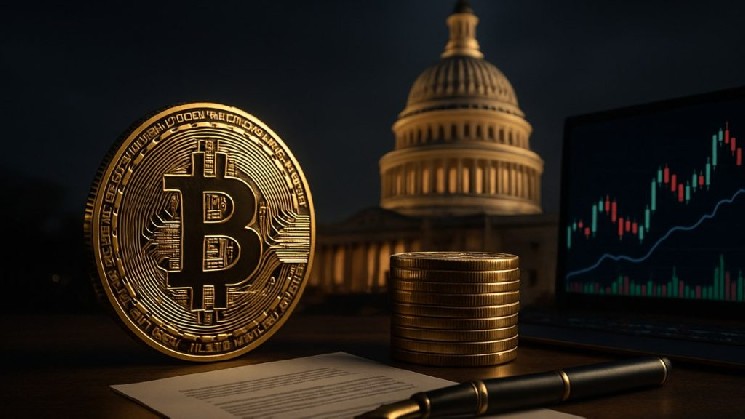
Featured image from OpenArt, chart from TradingView.com

Пов'язані питання

QWhat is the name of the crypto market structure bill being discussed by the Senate Banking Committee?

AThe CLARITY Act.

QAccording to Alex Thorn, why is April a critical month for the bill's prospects?

ABecause if the bill does not pass by the end of April, the chances of it being approved this year will drop significantly, becoming 'extremely low'.

QWhat is the contentious issue in the bill's negotiations that specifically involves stablecoins?

AThe issue of stablecoin yield, specifically whether to ban yield on idle balances while allowing rewards for transactions.

QWhich two senators are identified as key gatekeepers whose satisfaction with the bill's language is crucial for it to proceed?

ASenators Thom Tillis and Angela Alsobrooks.

QBeyond stablecoin yield, what are some of the other potential hurdles for the bill mentioned by Alex Thorn?

AOngoing discussions about DeFi, investor protections, the authority of the Securities and Exchange Commission (SEC), and broader ethical considerations.

Пов'язані матеріали

MoonPay Launches PayBox

MoonPay, a developer of payment solutions for crypto and traditional currencies, has launched PayBox, a new type of payment wallet that enables AI assistants in Claude and ChatGPT to conduct transactions. Users can manage digital assets and pay for online services directly within chat interfaces. Upon user request, the AI can perform actions such as purchasing PYUSD, swapping tokens, cross-chain transfers, depositing funds into DeFi protocols, and booking flights. All transactions require user confirmation via an access key before execution. PayBox supports Solana and EVM-based blockchains like Ethereum, Base, Arbitrum, Polygon, Hyperliquid, Tempo, and Robinhood Chain, with plans to add more networks. It can store both crypto wallets and payment cards. Security is provided via MPC (Multi-Party Computation) technology and secure execution environments, ensuring no single entity—including MoonPay or the AI assistant—has full access to user funds. The wallet offers two permission modes: "Always Ask," requiring manual approval for each transaction, and "Standalone," where the AI can operate autonomously within user-set limits. Permissions can be modified or revoked at any time. PayBox is built on technology from Sodot, a secure crypto wallet solutions provider acquired by MoonPay earlier this year. This infrastructure reportedly secures over $50 billion in digital assets across more than 10 million wallets.

cryptonews.ru12 хв тому

MoonPay Launches PayBox

cryptonews.ru12 хв тому

Now the Greatest Regret Is to My Family: Crypto Experts Took a Stumble in the Stock Market

Summary: This article examines the significant losses recently suffered by cryptocurrency traders and influencers who ventured into the stock market, specifically by heavily investing in AI-related and semiconductor storage stocks. The narrative centers on the dramatic reversal in the Korean and US equity markets in late July, with stocks like SK Hynix and related leveraged ETFs experiencing historic plunges, erasing massive gains. The analysis highlights several key factors behind the "flip." Traders, accustomed to crypto's high volatility and frustrated by a stagnant market, chased the apparent momentum in AI-themed equities. Many made fatal mistakes: applying high-leverage strategies common in crypto (e.g., 2x ETFs, on-chain perpetual contracts) to stocks, and failing to understand the distinct rules of different stock markets (like Korean pre-market trading). This led to widespread liquidations, especially when a thin Korean pre-market trade triggered a cascading flash crash on a decentralized exchange. Post-crash reflections from prominent figures reveal deep regret and self-criticism. They acknowledge misjudging their expertise, overestimating their edge against sophisticated institutional players, and the dangers of leverage. The article concludes that while such setbacks are part of trading, surviving long-term requires recognizing one's limitations and the inherent risks of cross-market strategies.

marsbit56 хв тому

Now the Greatest Regret Is to My Family: Crypto Experts Took a Stumble in the Stock Market

marsbit56 хв тому

US Senate Makes Important Amendments to "Conflict of Interest" Section of Cryptocurrency Bill

The U.S. Senate has taken a key step regarding the CLARITY Act, which could shape the future of the U.S. crypto market. On July 29, Senators Tom Tillis and Ruben Gallego finalized amendments to the bill's "conflict of interest" rules, one of its most contentious aspects. The bipartisan bill aims to tighten restrictions on high-level federal officials' ties to digital assets. The new text, crafted as an alternative to a White House-endorsed ethics code, is expected to impose stricter rules limiting officials' ability to issue or directly participate in digital asset projects. However, with Congress entering an August recess and the revised text not yet reviewed by much of the Senate, the bill's timeline is uncertain. Senate Majority Leader John Thune indicated a procedural vote could occur between July 29 and August 1 but expressed doubt the full bill could pass before the break. The House-approved CLARITY Act, passed in July 2025, has been under Senate negotiation for over a year. Key goals of the CLARITY Act include clarifying jurisdictional boundaries between the SEC and CFTC, setting rules for digital commodity spot markets, and addressing topics like stablecoin yields, DeFi, and illicit financing. The stablecoin yield provisions could significantly impact U.S.-based DeFi protocols, exchanges, and issuers, affecting their global competitiveness. The outcome is being closely watched by both the U.S. and global digital asset markets.

cryptonews.ru1 год тому

US Senate Makes Important Amendments to "Conflict of Interest" Section of Cryptocurrency Bill

cryptonews.ru1 год тому

Pavel Durov Designated as a Terrorist in Russia. What Does This Mean for Telegram Users?

Pavel Durov, the founder of Telegram, has been added to Russia's list of terrorists and extremists by Rosfinmonitoring, as published on July 30. The entry includes his name and date of birth. The designation follows an announcement by the Russian Federal Security Service (FSB) on July 29, which charged Durov with aiding terrorist activity. The FSB alleges that a Telegram dating bot named "DaiVinchik" was used to recruit 46 individuals for attacks on police and arson, orchestrated by Ukrainian special services. The FSB also accuses Telegram's administration of failing to remove channels and bots used by Ukrainian intelligence and extremist groups. Durov is reportedly subject to an international arrest warrant. Inclusion on the Rosfinmonitoring list leads to significant restrictions: the freezing of Durov's bank accounts and assets, severe limitations on financial transactions, and a ban on election participation, media interaction, and event organization. Transfers to his accounts may be considered terrorism financing. For ordinary Russian Telegram users, purchasing Telegram Premium is not classified as financing terrorism, according to an IT expert. General use of the messenger—messaging, managing channels—does not automatically make a user a participant in extremist activity. There has been no official decision to ban Telegram itself. It is noted that French authorities are also investigating Durov over allegations of inadequate measures against criminal activity on the platform and insufficient cooperation with law enforcement. Durov denies all charges.

cryptonews.ru2 год тому

Pavel Durov Designated as a Terrorist in Russia. What Does This Mean for Telegram Users?

cryptonews.ru2 год тому

Торгівля

Спот
活动图片