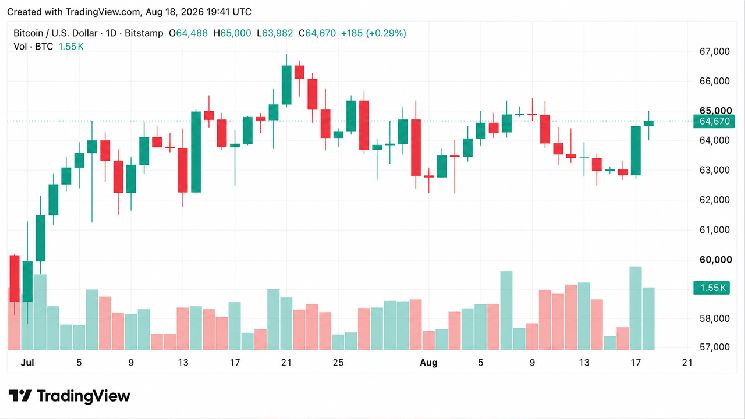
Bitcoin whales have returned to the buyer's side, providing a potential bottom signal for the cryptocurrency market that has been in a downturn for several months.
According to on-chain data firm CryptoQuant, large holders have accumulated a net total of approximately 43,000 Bitcoins over the past 60 days, equivalent to about $2.75 billion at current prices. This trend began when Bitcoin's price fell near $60,000, marking a shift from months of continuous selling to renewed accumulation by this group.
Meanwhile, data from Glassnode shows that mid-tier holders (with 100 to 1,000 Bitcoins) and ultra-large investors (holding over 10,000 Bitcoins) have also recently accelerated their buying.
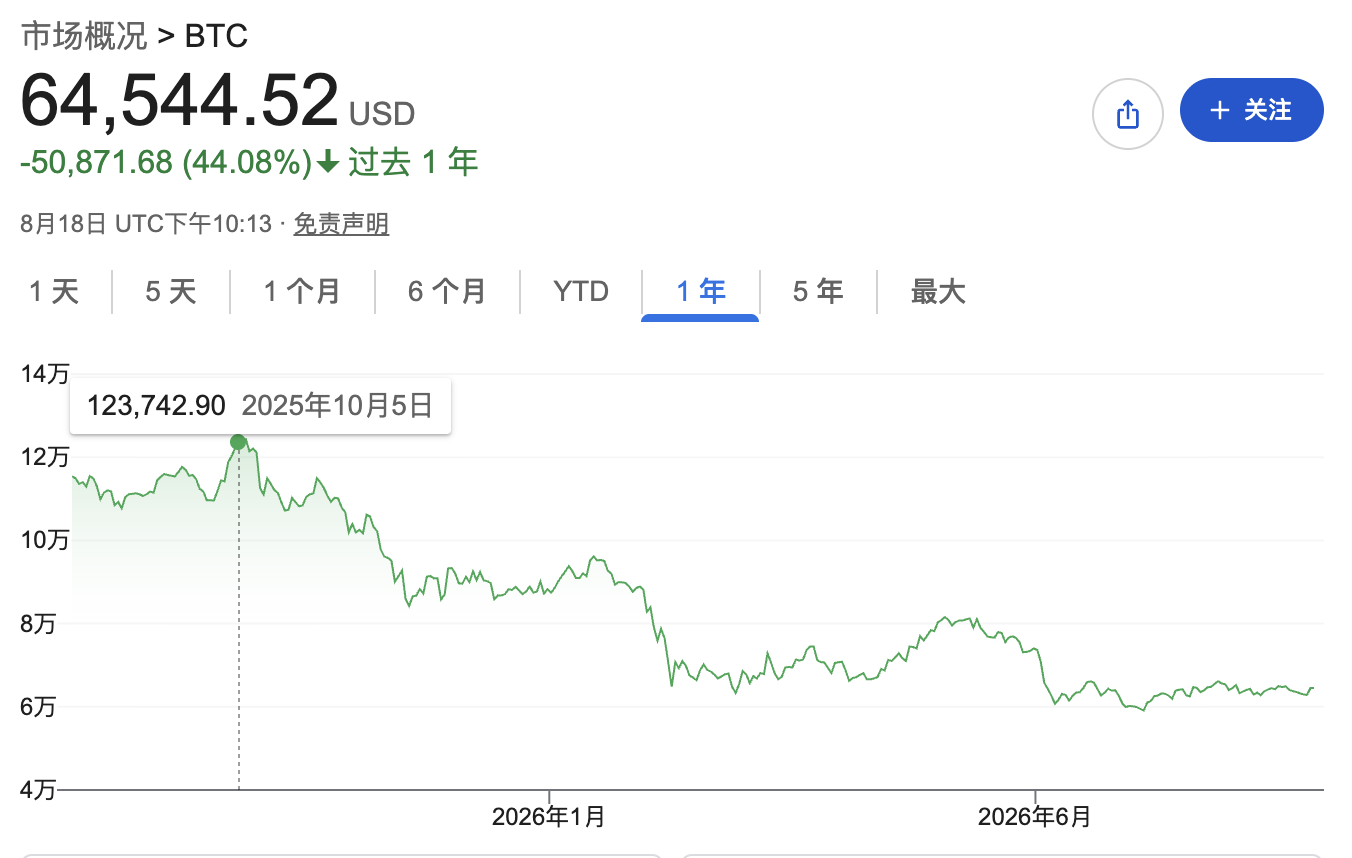
Bitcoin's current price has fallen about 50% from its peak in October last year, now trading around $64,000. Cryptocurrency-themed ETFs continue to see fund outflows, and even Strategy, a former stable buyer holding large amounts of Bitcoin, has recently turned into a net seller.
Against the backdrop of massive retail investor withdrawal and low market sentiment, the re-entry of large, institution-level capital is seen by some investors as a positive signal that the market may be entering a bottoming phase.
This round of whale buying is not an isolated phenomenon but shows a universal characteristic across holder tiers.
CryptoQuant's data (excluding exchange and mining pool accounts) shows that large holders began re-accumulating after Bitcoin's price stabilized around $60,000, with their balances continuously increasing. At the same time, the balances of small and medium-sized holder groups have also risen.
Glassnode's data provides a more detailed perspective. Mid-tier investors holding 100 to 1,000 Bitcoins have been steadily accumulating recently, while the group holding over 10,000 Bitcoins is also in active buying mode.
Glassnode analyst Sean Rose stated that the data "reflects the directional trend of accumulation behavior, not simply net balance changes, and since late July, this trend has clearly pointed to a resumption of buying across all holder tiers."
Bitcoin's inherent properties give this signal special reference value—the whale group has historically been seen as long-term believers in Bitcoin, with past behavior patterns focused on long-term holding. The timing of the buying is even more noteworthy: this is not chasing a rally, but proactive entry during a period of sustained market weakness and price pressure.
Despite the encouraging accumulation signal, the macro headwinds facing Bitcoin cannot be ignored.
Bitcoin's current decline of about 50% from its October peak is relatively moderate compared to other tokens, with altcoins suffering more severe losses. Outflows from cryptocurrency-themed ETFs continue, and retail investors have largely exited the market during the previous decline.
More noteworthy is the shift in Strategy's stance. The company was previously one of the most representative institutional buyers in the Bitcoin market for a long time but has now shifted from buying to selling, losing that traditional support. At the same time, market trading activity remains sluggish, with August spot trading volume dropping to its lowest level for the period since 2021.
Nexo research analyst Dessislava Ianeva pointed out that the current market exhibits characteristics of insufficient participation and lack of confidence, with overall trading sentiment weak.
Opinions are divided on whether whale accumulation can serve as a leading indicator for a new bull market.
Optimists believe that deep-pocketed investors actively building positions during a weak market phase holds strong contrarian indicator significance, historically often appearing in the early stages of trend reversals. The current synchronized accumulation behavior across holder tiers provides some basis for investors looking for market bottom signals.
However, Dessislava Ianeva remains cautious. She stated: "Whale buying in a low-volatility environment can confirm the existence of structural accumulation, but it does not guarantee that the market will immediately embark on a comprehensive, broad-based bull run. A true market-wide recovery first requires support from the macroeconomic environment."
This statement highlights the core contradiction of the current market: on-chain data shows funds are quietly flowing in, but macro-level uncertainties have not dissipated. Whether the market can transform local accumulation signals into a trend reversal remains to be seen.