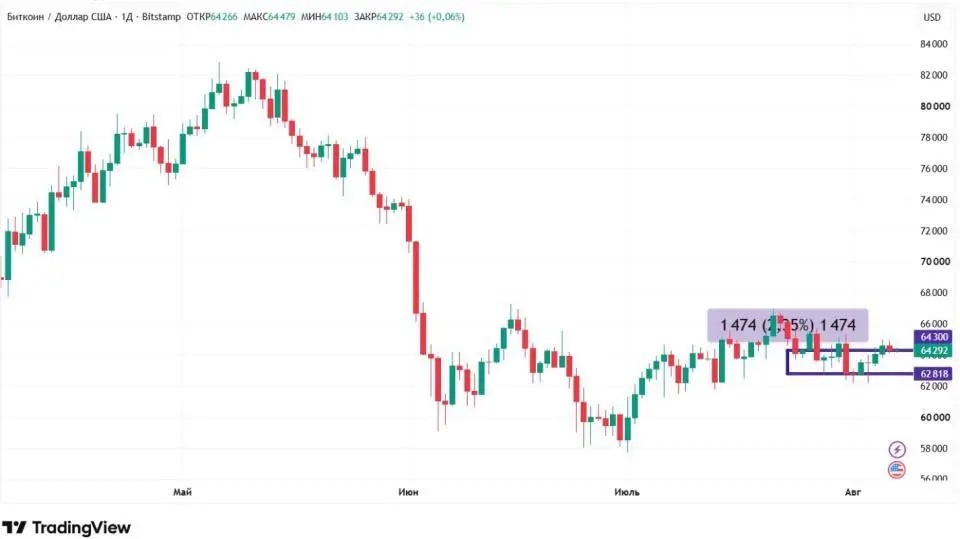
Bitcoin rose by 2.35% over the week from July 31 to August 7, 2026. The largest cryptocurrency by market capitalization continues to trade around $65,000. However, throughout the seven trading sessions, its price failed to break above this level. Volatility remains low: the maximum daily price change for Bitcoin was 1.18%.
Source: tradingview.com
One reason preventing $BTC from rising can be attributed to U.S. unemployment benefit statistics. The number of claims filed in the last week of July was 199,000, which is 1,000 more than the previous week. At the same time, the figure was 3,000 lower than the consensus forecast. These numbers indicate the resilience of the labor market in the world's largest economy, thereby giving the Federal Reserve leeway not to lower the key interest rate. This is negative for Bitcoin, as expensive loans do not encourage increased risk appetite among investors.
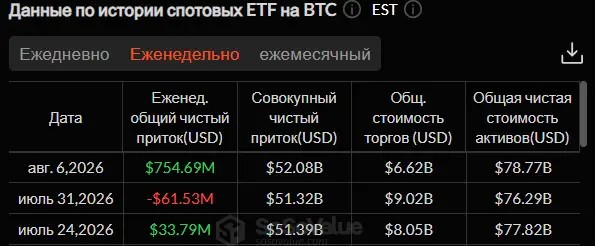
Spot Bitcoin ETFs recorded a weekly inflow of $754.69 million. This is the largest seven-day figure since late April. The largest amount, $606.93 million, was invested in BlackRock's iShares Bitcoin Trust (IBIT).
Source: sosovalue.com
Meanwhile, Brazilian crypto asset management company Hashdex announced the liquidation of its spot ETF (DEFI). According to company representatives, the fund's assets remained low relative to operating costs, leading to this radical decision. DEFI will sell all its held Bitcoins after August 17. Shareholders who do not sell their shares before the last trading day will receive the equivalent of the net cash asset value attributable to their holdings. This news is potentially negative for Bitcoin's price, as the supply of freely available $BTC will definitely increase in mid-August.
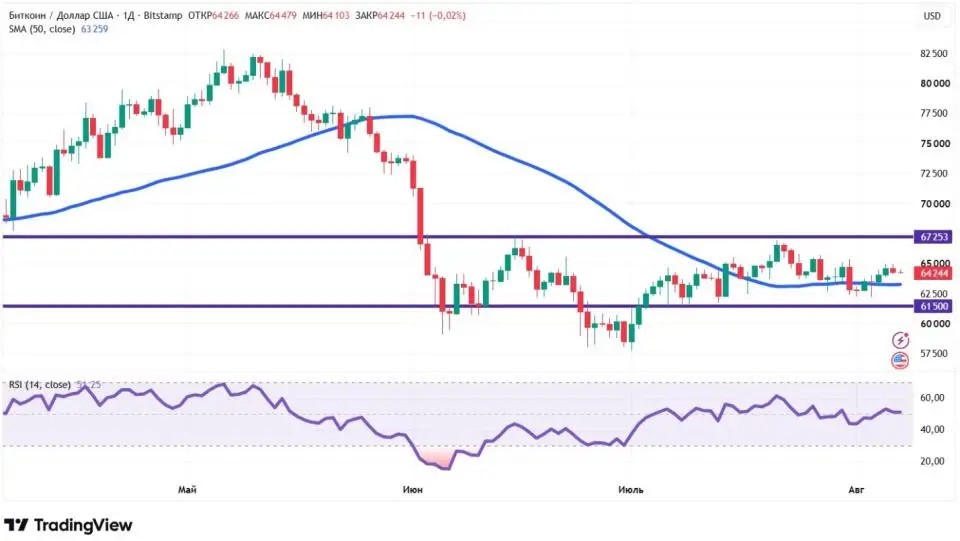
From a technical analysis perspective, $BTC has been trading in a channel between the support level of $61,500 and the resistance level of $67,253 for the past month and a half. Buyers (bulls) nominally hold the initiative, as indicated by technical indicators. The price is slightly above the 50-day moving average (marked in blue). The RSI is just above 50.
Source: tradingview.com
The Fear and Greed Index increased by four points compared to last week, reaching 29. This indicates that extreme fear still prevails in cryptocurrency investor sentiment.
Ethereum
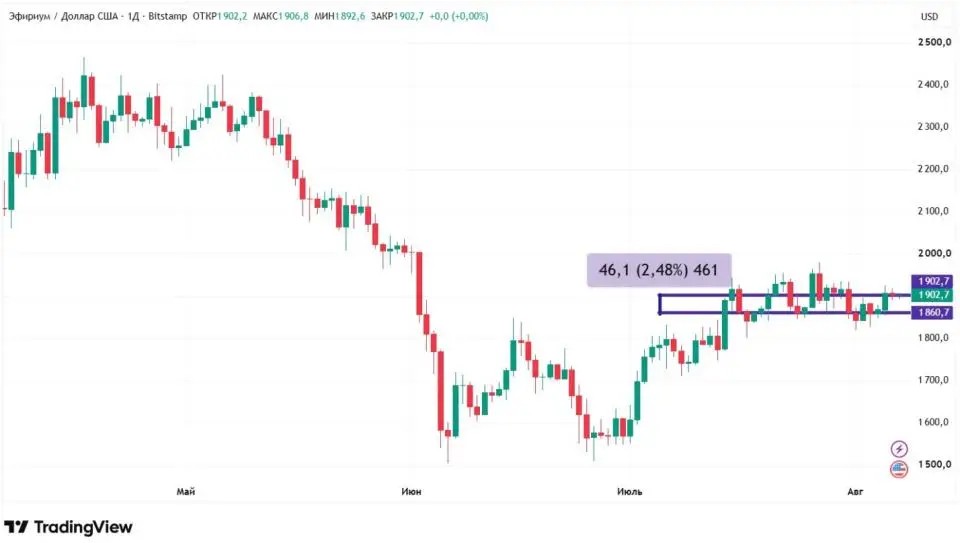
Ether gained 2.48% from July 31 to August 7. The price of the second-largest cryptocurrency continues to fluctuate around the $1,900 mark. Similar to Bitcoin, $ETH volatility remains low. Only twice in seven days did the daily price change exceed 2%.
Source: tradingview.com
The amount of Ether in staking has, for the first time, exceeded 34% of the asset's total supply. More than 41.5 million $ETH are locked. This is potentially positive news for the coin, as more coins in staking means less availability for free trading.
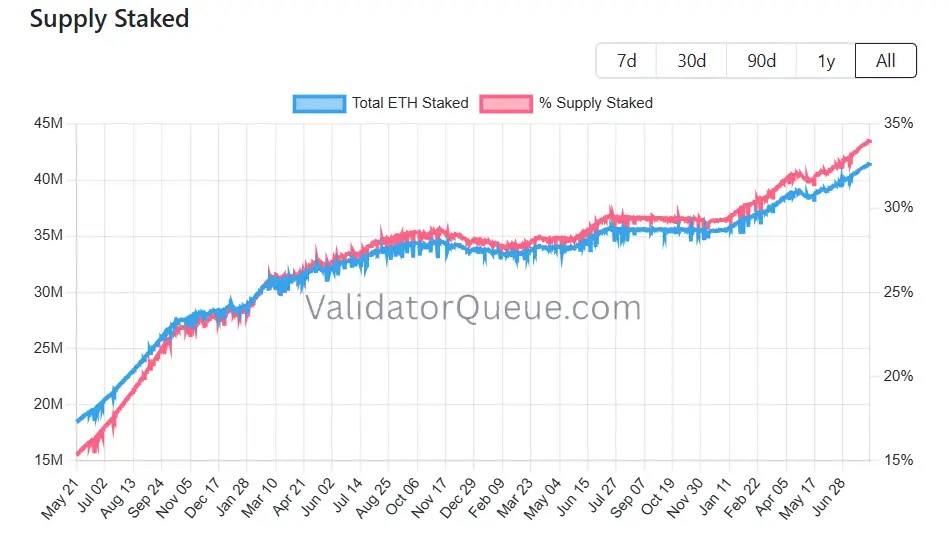
Source: validatorqueue.com
Ethereum developers have introduced a new proposal, EIP-8361, sparking vigorous debate within the cryptocurrency's enthusiast community. The main goal of the proposal is, upon reaching 50% of the total ETH supply being staked, to stop rewarding validators and instead burn the coins. Currently, the proposal is not accepted and remains under discussion.
Spot Ethereum ETFs have recorded capital inflows for the fifth consecutive week. This time, the inflow amounted to $195.34 million, the largest since mid-April. The largest sum, $164.91 million, was invested in BlackRock's iShares Ethereum Trust (ETHA).
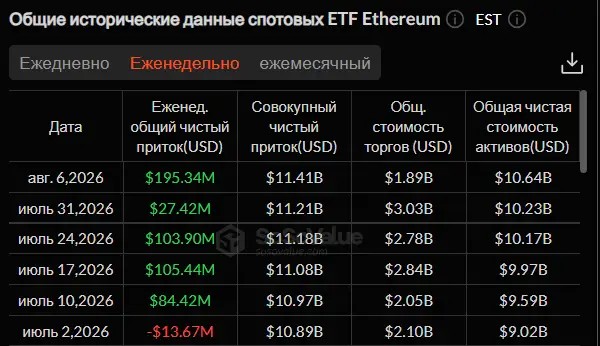
Source: sosovalue.com
From a technical analysis perspective, the asset has been consolidating since mid-July in a range between the support level of $1,800 and the resistance level of $1,980. Despite the lack of a rally, indicators favor the bulls. The price is above the 50-day moving average (marked in blue), and the stochastic is above 50.
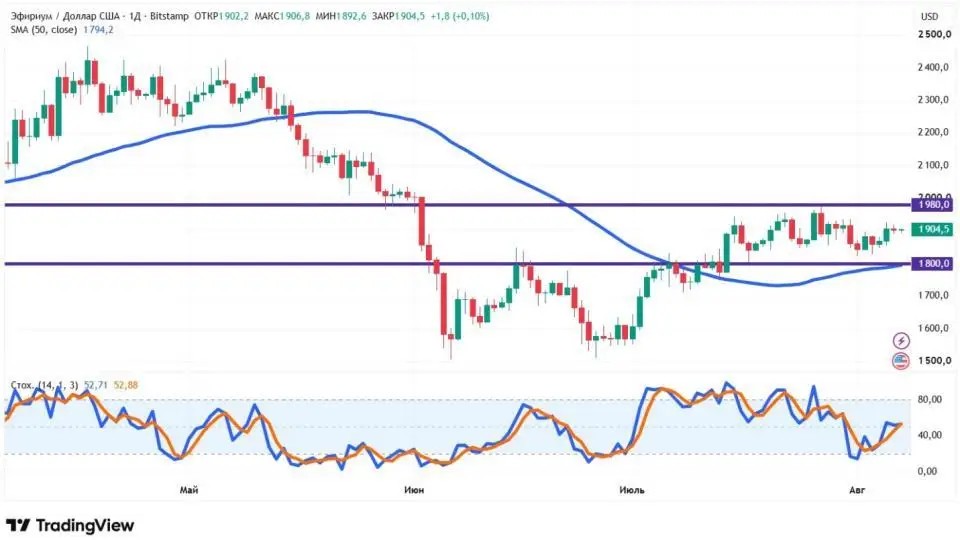
Source: tradingview.com
Cardano
The Cardano cryptocurrency has achieved record decentralization. This follows from data from the analytical platform Chainspect, which shows the Nakamoto Coefficient has reached 16. The higher this indicator, the more independent parties are needed to compromise the operation of a specific blockchain.
It's worth noting increased activity among large holders (whales) owning $ADA. Firstly, the number of non-empty wallets at the beginning of August is still 7,070 fewer than two months ago. Secondly, according to data from the analytical platform CryptoQuant, the average order size being placed is quite large. Both observations suggest that the main activity is not coming from private retail investors.
Furthermore, growth in the Cardano derivatives market should be noted. The open interest for this cryptocurrency over seven days increased from $422.5 million to $537.24 million, a 27% rise.
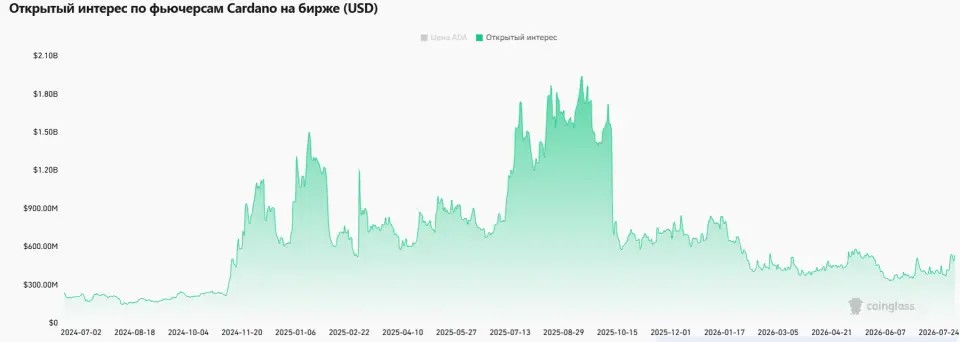
Source: coinglass.com
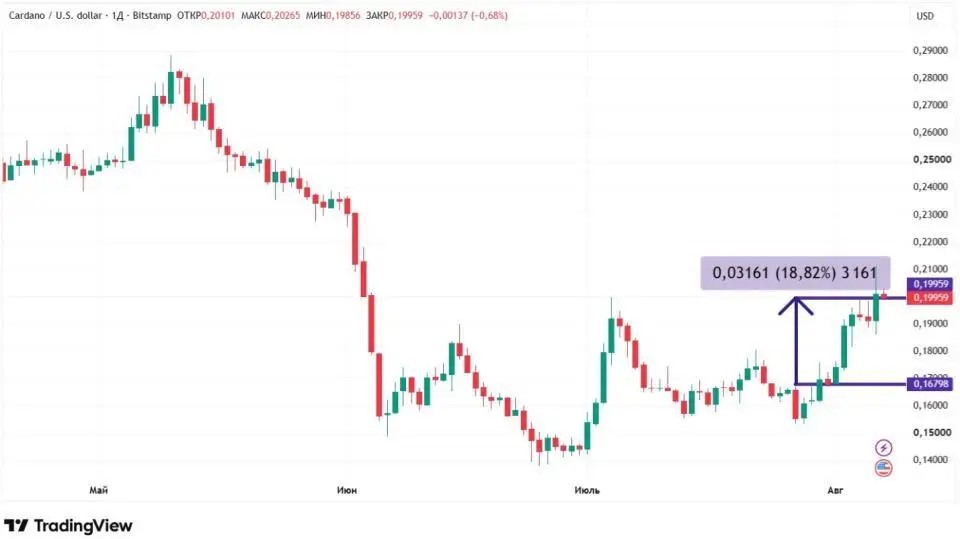
On the back of revived trading activity and record decentralization, $ADA became one of the week's leaders in the cryptocurrency market, gaining almost 19%.
Source: tradingview.com
Avalanche
The Kenya National Examinations Council (KNEC) unveiled an academic certificate verification platform on the Avalanche blockchain. Approximately 30–35 million records have already been created. The blockchain platform is intended to replace the paper-based system. This is one of the most high-profile cases of such technology use by government structures to date.
The real-world asset (RWA) tokenization platform Dinari announced that 724 tokenized stocks and ETFs, including the full S&P 500 index, will become available to U.S. investors on Avalanche C-Chain. Thus, the Avalanche network continues to strengthen its position in the financial market.
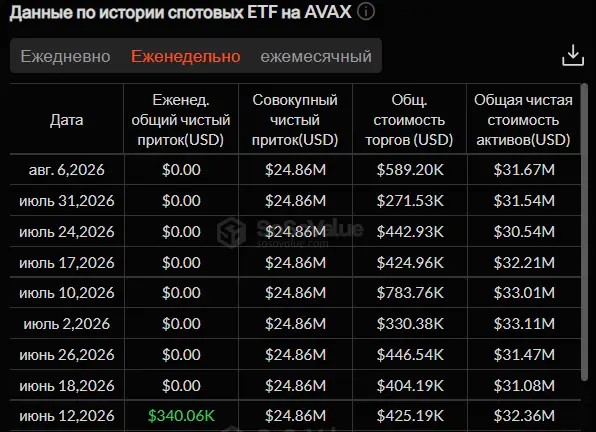
However, spot ETFs on AVAX have shown zero net flow for the eighth consecutive week.
Source: sosovalue.com
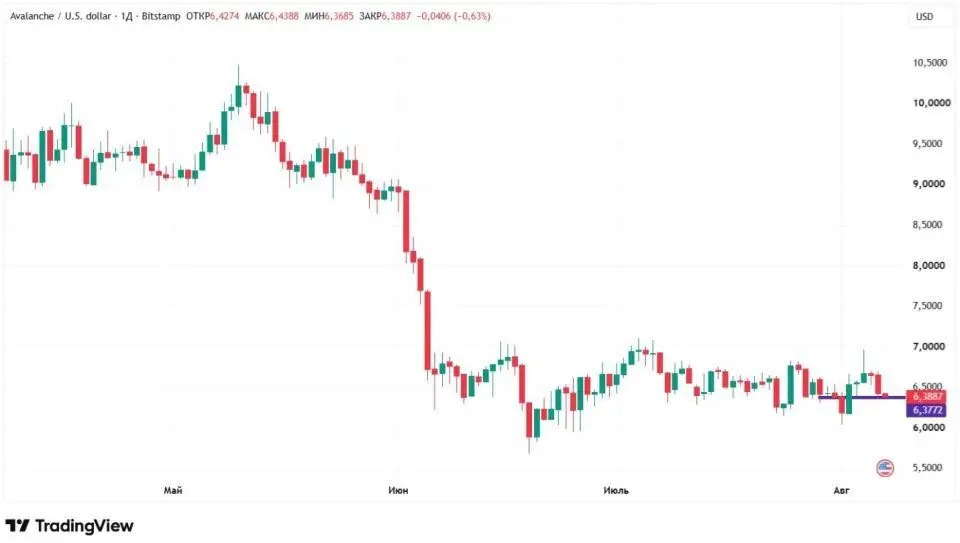
Despite the demand for the Avalanche blockchain in the real economy and the cryptocurrency's strengthening position in the RWA market, this had almost no impact on its price for the week from July 31 to August 7. The dynamics were nearly flat.
Source: tradingview.com
Aptos
The Aptos blockchain team announced the implementation of a new technical solution, Confidential $APT, on the mainnet. It will provide a subset of users with the choice of what information in a transaction remains public and what becomes private. The introduction of Confidential $APT is related to the fact that data on the blockchain is transparent, which is not always convenient for all users. As stated by the Aptos team, the implementation of this new feature is driven by the needs of corporate clients and the desire to comply with existing legislative norms.
The project leadership announced that Confidential $APT will be used for employee payouts, corporate financial transfers, and inter-organizational payments. Aptos expects the new functionality will provide a competitive advantage in the data privacy market, which has been growing over the past year.
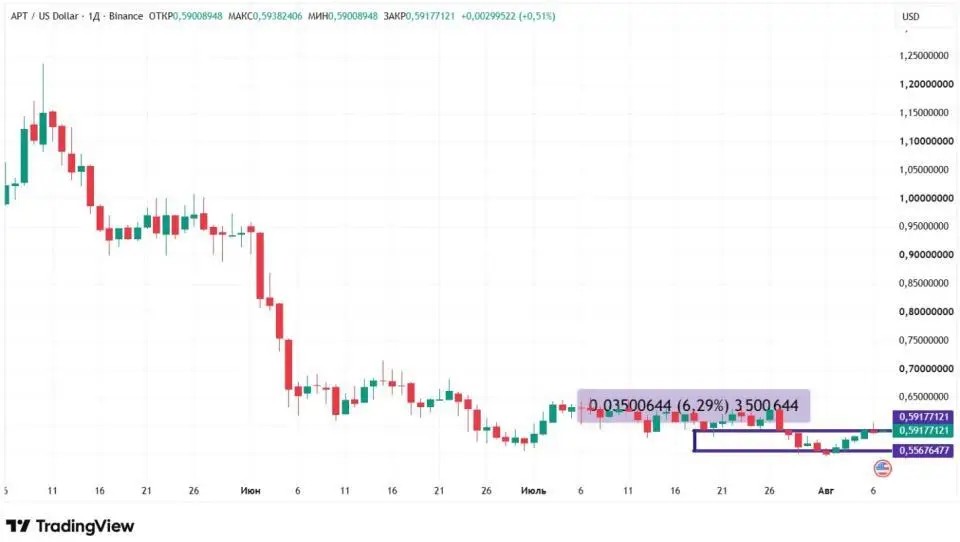
Against the backdrop of this important technical update, the price of $APT gained over 6% for the week. This allowed Aptos to slightly rebound from its historical low of $0.546, recorded on August 1.
Source: tradingview.com
Conclusion
The first week of August 2026 unfolded relatively calmly for major cryptocurrencies. A significant exception was Cardano's performance—the coin grew by almost 20% due to whale activity and its record decentralization.
This material and the information within it do not constitute individual or any other form of recommendation. The opinion of the editorial staff may not coincide with the opinions of analytical portals and experts.