Bitcoin Quantum-Proofing Push Could Open New Attack Risks, Mow Warns

bitcoinistОпубліковано о 2026-04-07Востаннє оновлено о 2026-04-07

Анотація

Samson Mow, founder of Bitcoin firm Jan3, warns that a rushed transition to post-quantum cryptography could introduce new risks to Bitcoin rather than securing it. This comes in response to calls from Coinbase executives to act immediately against quantum computing threats. Mow argues that larger post-quantum signatures could increase transaction sizes by up to 125 times, leading to network congestion, compatibility issues, and reduced transaction capacity—potentially reigniting past conflicts similar to the "Blocksize Wars." While not dismissing quantum risks, Mow believes capable quantum computers are still over a decade away, and implementing a premature fix could create more vulnerabilities than it solves.

Post-quantum cryptography could make Bitcoin’s signature sizes balloon by as much as 125 times — a technical reality now fueling a sharp debate over how fast the network should act.

Mow Calls Out The Rush

Samson Mow, founder of Bitcoin firm Jan3, went public over the weekend with a pointed warning: moving too fast on quantum security could leave Bitcoin more exposed, not less.

His comments came after Coinbase CEO Brian Armstrong and the company’s chief security officer, Philip Martin, called on the industry to start acting now against quantum computing threats.

Mow pushed back hard. A rushed transition to post-quantum cryptography, he said, risks opening up fresh vulnerabilities — including compatibility breakdowns and a sharp drop in how many transactions the network can handle at once.

“Simply put: make Bitcoin safe against quantum computers just to get pwned by normal computers,” Mow wrote on X.

A Ghost From Bitcoin’s Past

At the center of his concern is block size — the cap on how much transaction data fits inside a single Bitcoin block. Larger post-quantum signatures mean more data per transaction, which means fewer transactions per block, which means a slower and more congested network.

Former Bitcoin developer Jonas Schnelli put numbers to it, and Mow cited them directly. The implications go beyond speed. Block size has been a flashpoint before.

BTCUSD trading at $68,731 on the 24-hour chart: TradingView

Between 2015 and 2017, a bitter community dispute over whether to expand Bitcoin’s block size tore the ecosystem apart and ultimately led to a chain split.

That fight raised deep questions about decentralization, network security, and who really gets to decide Bitcoin’s direction. Mow is warning the same battle could be coming back — what he’s calling “Blocksize Wars 2.0.”
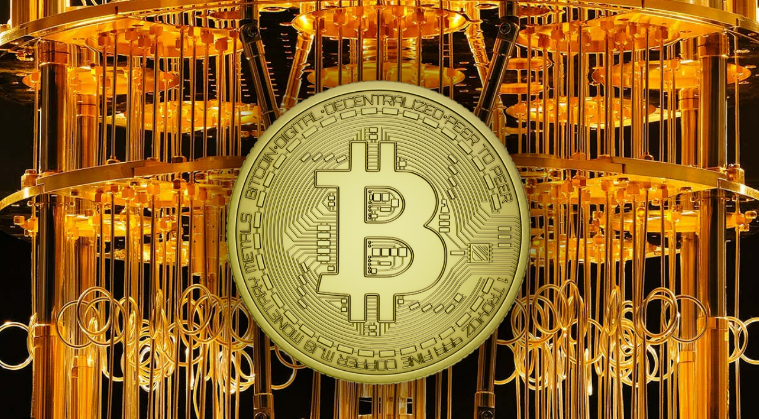
Image: Wccftech

Where Mow Draws The Line

Mow isn’t saying quantum threats should be ignored. His argument is about timing, not priority. Research on potential solutions is already underway, he said, and that work should continue.

But quantum computers capable of cracking Bitcoin’s encryption, he argued, are still a decade or two away at minimum. Rushing a fix for a threat that doesn’t yet exist, he said, creates real risks today in exchange for protection against something hypothetical tomorrow.

The debate is gaining urgency as new research from Google and the California Institute of Technology has stoked fresh concern about how quickly quantum computing may develop.

Armstrong and Martin flagged those findings as reason enough to move the timeline up. Mow’s position: the cure could be worse than the disease, at least for now.

Featured image from Trade Brains, chart from TradingView

Пов'язані питання

QWhat is the main concern raised by Samson Mow regarding the push for post-quantum cryptography in Bitcoin?

ASamson Mow's main concern is that a rushed transition to post-quantum cryptography could create new vulnerabilities, including compatibility breakdowns and a significant reduction in the network's transaction capacity, rather than making it more secure.

QHow much could post-quantum cryptography increase Bitcoin's signature sizes, according to the article?

APost-quantum cryptography could make Bitcoin's signature sizes balloon by as much as 125 times.

QWhat historical Bitcoin event does Mow reference as a warning for the current debate?

AMow references the 'Blocksize Wars' that occurred between 2015 and 2017, a bitter community dispute over expanding Bitcoin's block size that led to a chain split, and warns that a similar conflict, 'Blocksize Wars 2.0,' could be coming.

QWhat is the core technical issue that larger post-quantum signatures would create for the Bitcoin network?

ALarger post-quantum signatures mean more data per transaction, which would result in fewer transactions fitting into each block, leading to a slower and more congested network.

QWhat is the key difference in perspective between Mow and Coinbase's executives on the timeline for addressing quantum threats?

ACoinbase's executives believe the industry should start acting now against quantum computing threats, while Mow argues that capable quantum computers are still a decade or two away, and rushing a fix for a non-existent threat creates real risks today.

Пов'язані матеріали

From 'Old Dogs' to 'New Darlings': How AI is Revaluing Old Infrastructure, from Dell to Nokia

"Old Dogs" Become AI's New Darlings: Revaluing Legacy Infrastructure The AI investment narrative is shifting. Beyond the spotlight on core chipmakers like Nvidia, a new wave of interest is rising for legacy tech companies—Dell, HPE, Nokia, Cisco, Corning, Western Digital—once labeled as slow-growth, outdated stories. This resurgence stems from AI's evolution from model development to real-world deployment, creating massive demand for physical infrastructure. As AI moves into data center construction and enterprise adoption, the focus turns to who can actually build and deliver complex systems. These established players hold decades of experience in supply chains, integration, networking, and enterprise delivery—assets now critical for scaling AI. The revaluation can be grouped into three key infrastructure areas: 1. **Servers & Integration (e.g., Dell, HPE):** They are becoming essential system integrators, transforming GPUs into full-scale AI servers with networking, power, and cooling, then delivering them to clients. Strong recent earnings and AI-specific revenue/order growth for Dell and HPE underscore this shift. 2. **Networking & Connectivity (e.g., Corning, Nokia, Cisco):** As AI clusters grow, high-speed data transfer becomes paramount. Corning benefits from fiber demand for data center links, Nokia is exploring AI-integrated wireless networks (AI-RAN), and Cisco sees surging orders for data center switches—all critical for efficient AI operations. 3. **Storage (e.g., Western Digital, Seagate):** The AI data explosion requires vast capacity. Beyond high-speed memory (HBM), there's growing need for high-capacity HDDs to store training data, logs, video, and cold/archival data cost-effectively. This revaluation, however, is not a blanket endorsement. True reassessment requires concrete proof: AI-driven orders and revenue growth, upward revisions to company guidance, and sustainable improvements in profit quality, not just top-line sales. In essence, AI is not turning all old tech firms into high-growth stocks; it is selectively re-pricing the "old assets" of companies that are mission-critical for building the new AI infrastructure, transforming their legacy capabilities into renewed growth engines.

marsbit5 хв тому

From 'Old Dogs' to 'New Darlings': How AI is Revaluing Old Infrastructure, from Dell to Nokia

marsbit5 хв тому

Probability in the Price: How World Cup Odds Are Calculated

**The Probability in the Price: How World Cup Odds Are Calculated** Two major systems released their "championship probabilities" before the 2026 World Cup, and they disagreed on the favorite. Prediction market aggregators listed France at around **17%**, while the Opta supercomputer gave European champion Spain **16.1%**. These numbers look similar, but their production methods are fundamentally different. The market's **17%** is the **price** that clears after hundreds of millions of dollars in trading across platforms like Polymarket and Kalshi, where contracts trade between 0 and 100 cents, directly representing implied probability. This liquidity is provided by crypto-native market makers like Wintermute, though the market still has "the liquidity profile of an early-stage" asset class. In contrast, Opta's **16.1%** is a **simulated frequency**. Its model uses team data (including betting market odds as an input) to estimate match probabilities, then runs **10,000 full tournament simulations**, counting how often each team wins. Which is more accurate? There is **no rigorous, cross-tournament academic study** directly comparing their track records. However, a persistent **longshot bias**—where low-probability outcomes are systematically overvalued—observed in traditional betting for nearly a century, has also been found in modern crypto prediction markets. Research shows low-price contracts on Kalshi/Polymer less likely to pay out than their implied odds suggest. Unlike traditional bookmakers, prediction markets operate on **public blockchain ledgers**, making every transaction auditable and enabling such research. However, price formation is also influenced by **regulatory uncertainty**, as seen in recent US state-level bans and legal battles over jurisdiction. In summary, the "probability" you see is either a **market-clearing price** subject to behavioral biases and liquidity constraints, or a **model-simulated frequency** that partially incorporates market data. The question of which method is more reliable remains open, highlighting the importance of asking: **How was this number produced?**

marsbit34 хв тому

Probability in the Price: How World Cup Odds Are Calculated

marsbit34 хв тому

Торгівля

Спот
Ф'ючерси

Популярні статті

Як купити PUSH

Ласкаво просимо до HTX.com! Ми зробили покупку Push Protocol (PUSH) простою та зручною. Дотримуйтесь нашої покрокової інструкції, щоб розпочати свою криптовалютну подорож.Крок 1: Створіть обліковий запис на HTXВикористовуйте свою електронну пошту або номер телефону, щоб зареєструвати обліковий запис на HTX безплатно. Пройдіть безпроблемну реєстрацію й отримайте доступ до всіх функцій.ЗареєструватисьКрок 2: Перейдіть до розділу Купити крипту і виберіть спосіб оплатиКредитна/дебетова картка: використовуйте вашу картку Visa або Mastercard, щоб миттєво купити Push Protocol (PUSH).Баланс: використовуйте кошти з балансу вашого рахунку HTX для безперешкодної торгівлі.Треті особи: ми додали популярні способи оплати, такі як Google Pay та Apple Pay, щоб підвищити зручність.P2P: Торгуйте безпосередньо з іншими користувачами на HTX.Позабіржова торгівля (OTC): ми пропонуємо індивідуальні послуги та конкурентні обмінні курси для трейдерів.Крок 3: Зберігайте свої Push Protocol (PUSH)Після придбання Push Protocol (PUSH) збережіть його у своєму обліковому записі на HTX. Крім того, ви можете відправити його в інше місце за допомогою блокчейн-переказу або використовувати його для торгівлі іншими криптовалютами.Крок 4: Торгівля Push Protocol (PUSH)Легко торгуйте Push Protocol (PUSH) на спотовому ринку HTX. Просто увійдіть до свого облікового запису, виберіть торгову пару, укладайте угоди та спостерігайте за ними в режимі реального часу. Ми пропонуємо зручний досвід як для початківців, так і для досвідчених трейдерів.

573 переглядів усьогоОпубліковано 2024.12.13Оновлено 2026.06.02

Як купити PUSH

Обговорення

Ласкаво просимо до спільноти HTX. Тут ви можете бути в курсі останніх подій розвитку платформи та отримати доступ до професійної ринкової інформації. Нижче представлені думки користувачів щодо ціни PUSH (PUSH).

活动图片













