By Zimubiao
In Silicon Valley, the "AI burning books" saga just keeps getting wilder.
In a recent report, a media outlet collaborated with second-hand book dealers, placing an AirTag in a batch of books purchased by a mysterious buyer. They tracked it all the way to an Amazon factory in Las Vegas.
Factory employees indicated this was part of an Amazon project called VGT3, specifically dedicated to cutting and scanning books.
A second-hand book ended up following the plotline of a crime drama.
At this point, the situation has become somewhat surreal.
Over the past month, reports about "AI burning books" have emerged one after another, yet they haven't revealed much new information—AI companies are indeed buying large quantities of old paper books, cutting off the spines, high-speed scanning them to digitize the content, and then disposing of the original books. When Anthropic's "Project Panama" was exposed earlier this year, the most sensational elements were already laid out on the table: millions of books, tens of millions of dollars in procurement, and destructive scanning.
Later, when second-hand booksellers worldwide noticed unusual orders, ISBNdb was exposed for sourcing paper books specifically for AI companies, and now AirTags have been tracked into an Amazon warehouse—these developments have merely been confirming the same fact repeatedly: yes, this is really happening, and more than one company is doing it.
Clearly, the facts remain the same, but the public sentiment around "AI burning books" is intensifying.
"AI companies are devouring books," "Human civilization is being fed to machines," "They won't even spare out-of-print books"—countless human fingers fly across social media leaving horrified comments, with videos and photos of books being cut being particularly provocative.
But to be fair, at this stage, there's a significant disconnect between the known facts and the meaning ascribed to them.
AI companies are indeed destroying books; let's not sugarcoat that.
But exactly how many are they destroying? Does destroying a physical book equate to destroying knowledge? When an out-of-print book is bought and then cut up, is the responsibility solely on the AI companies?
It's time to debunk some myths.
01
Let's start with the conclusion here. Much of the current anger towards "AI destroying books" is directed at the symbolic meaning of the act, rather than the actual harm that has occurred so far.
Of course, the two are easily conflated. After all, headlines like "AI companies are buying and destroying antique books" and "AI companies are shredding millions of books after scanning them" are genuinely frightening, and the visual impact of books being cut is powerful. It's hard to find a more fitting image to represent "AI devouring human civilization."
But if we zoom out a little, the situation isn't quite as apocalyptic as it appears in those images.
The largest known scale of this activity comes from Anthropic. After launching "Project Panama" in 2024, aiming to scan all the world's books, it spent tens of millions of dollars over roughly a year to purchase and destructively scan millions of physical books, sometimes buying tens of thousands at a time.
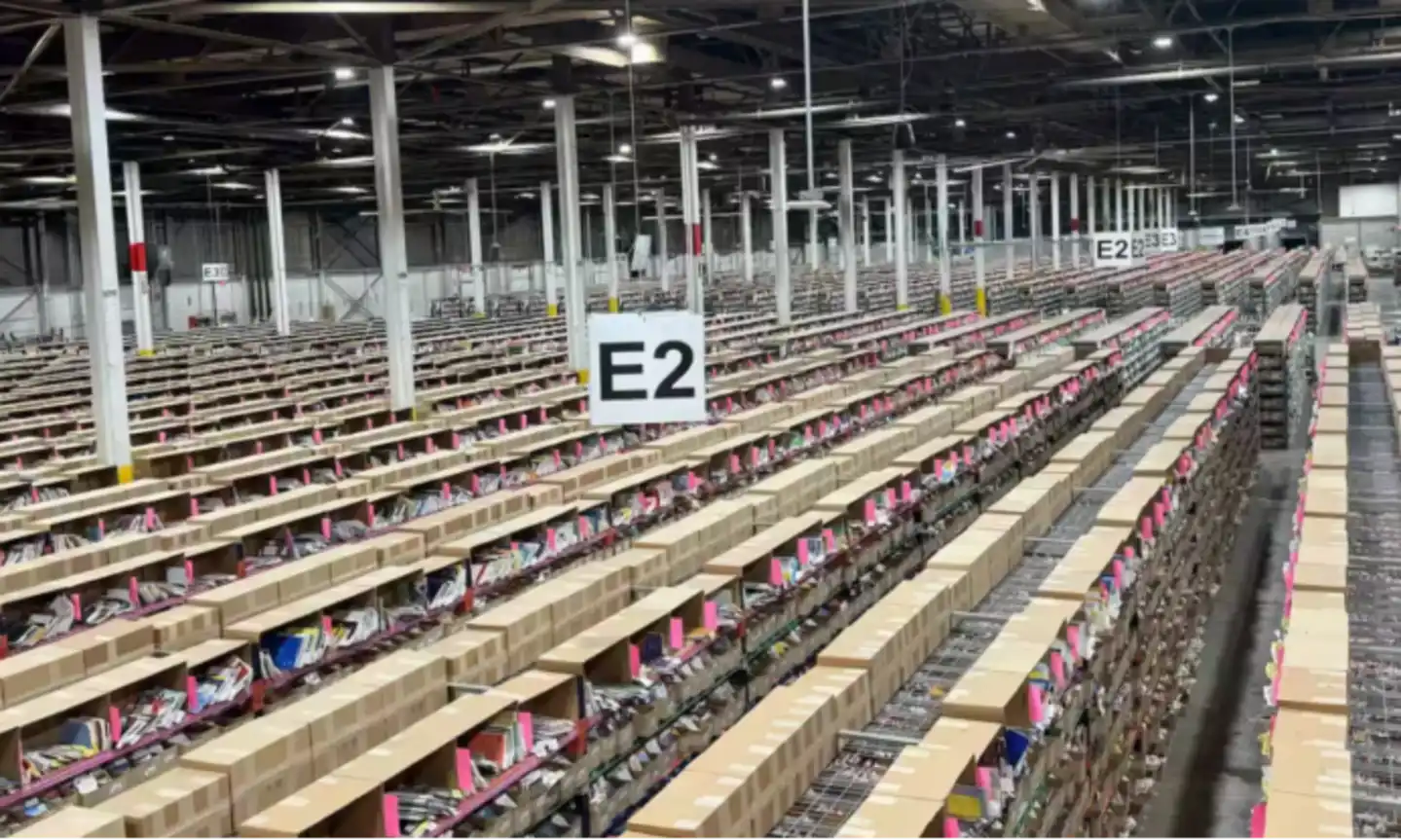
However, "millions of books" placed within the entire second-hand book market is not as staggering as one might imagine.
Take the large second-hand bookseller World of Books alone: in 2024, it sold 31 million books globally, maintained a long-term inventory of about 7 million books, and its website typically lists around 2 million different titles.
In other words, Anthropic's processing volume, compared to the normal circulation scale of a major second-hand bookseller, is just a few months' worth of their business.
So, "AI companies have scanned and destroyed millions of books" is true, but the leap from there to "AI is exhausting the supply of second-hand books" is a long one.
Furthermore, there's another issue easily loaded with emotional significance that needs clarification: the disappearance of a physical book does not equal the disappearance of the knowledge within it.
Anthropic bought these books precisely to preserve their content. In the copyright lawsuit against Anthropic by writer Andrea Bartz and others, court documents revealed that after each physical book is disassembled and scanned, it becomes a PDF containing full-page images and machine-readable text, entering Anthropic's own digital library.
If we only discuss the process of "buying a book, cutting it open, scanning it, and destroying the original," it is almost the opposite action of "burning books" in a historical sense.
Burning books aims to make content disappear. AI companies, by cutting books open, specifically aim to preserve the content. Moreover, once used for model training, it will become a living resource in new forms. Judges have expressed similar views: the content from books used to train models is transformed into new capabilities during the training process.
Those cut-up physical books are indeed painful to look at, but human knowledge hasn't been sold for scrap along with them.
02
There is a point worth noting, and it's one of the strongest arguments in the current wave of criticism. AI companies' procurement doesn't consist solely of common old books available everywhere; it does include some rare second-hand books, even out-of-print ones.
This issue cannot simply be glossed over with "the physical book is gone, but the knowledge remains." Because the value of some books isn't only in the text. Special editions, unique bindings, author inscriptions and annotations, even the provenance of a book—whose collection it passed through, what marks it left—can make the physical object itself irreplaceable.
But first, we need to distinguish one thing: scarcity does not equal preciousness, and being out-of-print does not equal being cultural heritage.
Your university professor self-published 300 copies of "Handbook of County Sewage Pipeline Construction" in 1994. Today, perhaps only a dozen copies remain worldwide—this is certainly scarce, even long out of print. But whether it is a treasure of human civilization that must be protected at all costs is probably self-evident.
The second-hand book market is full of such items. The reason they are hard to find might simply be that they were printed in small numbers or never reprinted. It doesn't mean that the loss of each copy represents a loss to public culture.
Secondly, even if we narrow our focus to those books whose physical forms are genuinely valuable, the problem is still not that simple.
As long as a book is still freely circulating as a commodity in the second-hand market, it can be legally bought by a "crazy person."
This buyer could buy it to enshrine in a climate-controlled glass cabinet, or use it as a table leg coaster. Even crazier, they could tear out two pages to soak in milk for breakfast. As long as the book isn't under special legal protection, others can only call them wasteful; they can't stop them.
So why does the situation suddenly change when the buyer is an AI company? It's as if after Anthropic or Amazon pays, even though the book nominally belongs to them, they are actually obligated to preserve it for all of humanity.
This kind of debate has happened before among humans themselves.
In 2010, Christie's auctioned a Book of Hours made in France in the 1460s. It had gold leaf decoration, exquisite calligraphy, and 17 full-page illustrations, and was largely intact at auction, finally selling for £25,000.
A few years later, Elaine Treharne, a Stanford University scholar of medieval literature, acquired the remnants of this book. Originally 254 pages, only 7 remained.
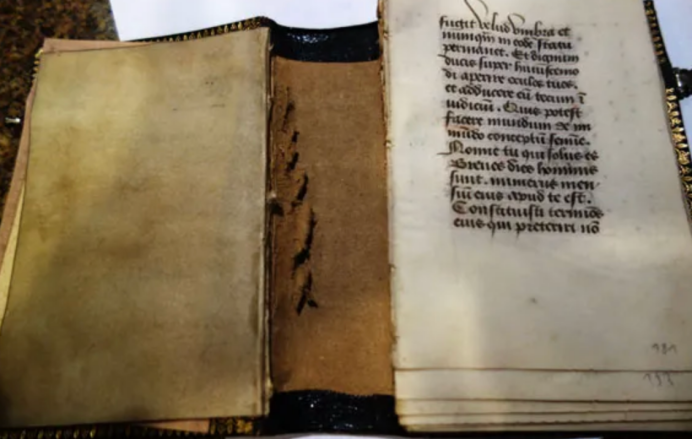
She later discovered that after the Christie's auction, the buyer—a German antiquarian bookseller—deliberately disassembled the book. The pages were sold off one by one, with ordinary pages fetching a few hundred dollars and beautiful illustrations selling for more.
But the antiquarian's subsequent defense was quite interesting:
When Christie's held the public auction, museums could have bought it, large collecting institutions could have bought it, wealthy collectors could have bought it. Everyone saw it. No one was willing to pay a higher price in the end; I paid for it and bought it. Why is it only after the transaction concludes that you suddenly tell me this thing actually belongs to all humanity and I must preserve it for you?
Well, the words might be crude, but the reasoning is sound—and the more you think about it, the more intriguing it becomes.
The same applies to AI companies today.
If a particular book is truly so precious that cutting a single page constitutes an irreparable cultural loss, then where were the museums? The libraries? The public collecting institutions? Those humans who supposedly care more about humanity's precious assets?
Why is it only after the AI company actually pays and buys it that everyone gathers around to say: You are not allowed to destroy this; it belongs to all of humanity.
You didn't buy it, yet you want to control what I do with it after I buy it. Isn't that a bit excessive?
Of course, this doesn't mean that AI companies destroying valuable old books is praiseworthy. "Having the legal right to do so" and our belief that "doing so is awful" can absolutely coexist.
But if a type of book is truly important enough that its owner shouldn't be allowed to dispose of it freely, then what really needs to change probably isn't the moral standards of AI companies.
03
To clarify the logic earlier, the language was a bit extreme.
From the perspective of humanity's common interest, AI companies' large-scale procurement of second-hand books, especially their focus on obscure, out-of-print, and small-language books, is indeed a cause for concern.
As mentioned, Anthropic buying a few million books a year isn't much in the context of the entire second-hand book market. However, a procurement volume that's a drop in the bucket for the overall market can still cause large-scale depletion if heavily concentrated on scarce titles within that niche.
So, "AI is buying up all the second-hand books" is an exaggeration, but "AI companies' procurement may be concentrated on consuming some already fragile book stocks" is not groundless.
The problem is, don't expect AI companies to be the saints in this scenario.
They certainly can be.
But "it would be nice if they did" and "society can only rely on them to do so" are two different things.
Companies are, after all, companies. Today, a certain company might think protecting rare books is important and be willing to spend more on non-destructive scanning. Tomorrow, with a different manager who finds this process 30% more expensive, they could very well cut it.
Relying on commercial companies to long-term safeguard cultural heritage for society based on conscience is a bit like expecting Sun Wukong to put the tightening band on his own head and recite the incantation himself—of course, it's great if he occasionally has an epiphany, but system design better not count on that kind of miracle.
If AI companies' procurement truly begins to threaten books with public value, then this is no longer a question of "whether a company has good ethics," but rather a question of public interest.
Since it involves public interest, the solution should also come from public rules.
For example, we could establish a more comprehensive registration system for rare book titles and editions. If a book is confirmed to have extremely few surviving copies and its physical form possesses clear historical, edition-specific, or artifact value, it enters a protected list. AI companies could buy it but not perform destructive scanning. Or, after purchase, they must prioritize non-destructive digitization.
We could also give libraries, museums, and public collecting institutions some form of right of first refusal. When commercial procurement systems detect suspected unique copies or editions with extremely few surviving copies, they first submit the information to public institutions, giving them a certain period to decide whether to collect them. If the institutions don't want it, then you can buy and process it.
Second-hand book platforms aren't entirely without responsibility either. If algorithms today can accurately detect "only three copies of this 1987 book remain online," platforms can certainly trigger alerts when the same book is suddenly subject to concentrated bulk purchasing by multiple large buyers.
We could even require large-scale procurers to bear some informational obligations. If you're destructively scanning millions of books a year, you should at least record what editions you processed, which books were exceptionally scarce, and contribute this data to public bibliographic systems.
Which of these solutions is best is debatable; perhaps none will be used in the end. But at the very least, there needs to be a rule.
04
Having said all this, there might be one final question left.
When people furiously accuse AI companies of "destroying humanity's books" and "swallowing human knowledge," what are they really accusing? When seeing books being cut open and fed into scanners, where does that intense discomfort and fear truly come from?
The increasingly ambivalent feelings humans now harbor towards AI itself cannot be ignored. People are becoming more reliant on AI, while simultaneously becoming more afraid of it, even growing to hate it.
A Pew survey this year shows the proportion of U.S. adults using ChatGPT has risen from 18% in 2023 to 44% in 2026, with 38% of the employed population already using AI for work tasks. Yet simultaneously, 63% of Americans believe AI is developing too quickly, and 40% expect it to have negative impacts on society in the future.
This contradiction is particularly evident among young people.
A Gallup survey this year of Americans aged 14 to 29 found that 51% use generative AI at least once a week, with 22% using it daily. But compared to a year ago, their excitement about AI dropped 14 percentage points, hope dropped 9 points, while anger rose 9 points.
Now, 31% explicitly state they feel angry about AI, and 42% feel anxious.
Even more interestingly, even among those who use AI daily, excitement and hope have significantly declined compared to last year.
In other words, using it more hasn't automatically led to liking it more.
What happened at American university graduation ceremonies this year is almost a live demonstration of this sentiment.
In May, when former Google CEO Eric Schmidt mentioned at Arizona State University's commencement that AI would enter all industries, the audience booed. Similar scenes subsequently occurred at multiple universities. One survey claimed about 70% of college students worry AI threatens their employment prospects.
This is likely the real situation many face with AI today. Not using it risks falling behind, but the more they use it, the clearer they become about the potential consequences.
The negative associations triggered by "book cutting" are almost inevitable—machines are growing by consuming everything humanity has created in the past.
And then they will come back to take your job.
Thus, copyright anxiety, employment anxiety, distrust of tech companies, and even that fear and dread of "is humanity in the process of creating its own replacement"—all are triggered by the visual symbol of "book cutting."
This also explains why the public sentiment surrounding this issue has far outpaced the actual losses.
That's not just a book being cut open; that is me being sliced by the knife, and then turning into useless garbage.