Abu Dhabi Steps Up Crypto Regulation: Tether, Circle Secure Major Approvals

bitcoinistОпубліковано о 2025-12-10Востаннє оновлено о 2025-12-10

Анотація

Tether and Circle, the issuers of the world's two largest stablecoins, have secured significant regulatory approvals in Abu Dhabi. Tether’s USDT has been recognized as an Accepted Fiat-Referenced Token (ARFT) by the Abu Dhabi Global Market (ADGM), expanding its presence to include several additional blockchains like Aptos, Celo, and TON. This allows authorized entities in ADGM to conduct regulated activities involving USDT. Separately, Circle received a Financial Services Permission (FSP) license, enabling it to operate as a Money Services Provider. These approvals reinforce Abu Dhabi’s ambition to become a global hub for compliant digital finance. The news comes amid a period of renewed growth in the stablecoin market cap after a brief decline in late 2025.

Tether and Circle, issuers of the two largest stablecoins in the world, have just received major regulatory greenlights in UAE’s Abu Dhabi.

Tether’s Stablecoin Recognized As ARFT, While Circle Obtains FSP License

Major developments related to the cryptocurrency sector have occurred in the United Arab Emirates (UAE) this week, with Tether and Circle both winning approvals in Abu Dhabi Global Market (ADGM), the international financial center and free economic zone of Abu Dhabi, UAE’s capital.

First, as Tether has announced in a press release, USDT issued on a number of blockchains has been recognized as an Accepted Fiat-Referenced Token (ARFT) in ADGM. USDT already received approval from ADGM last year, but the previous recognition only included the Ethereum, Solana, and Avalanche versions. With the new regulatory nod, USDT available on Aptos, Celo, Cosmos, Kaia, Near, Polkadot, Tezos, TON, and TRON has also entered the market.

“By extending recognition to USD₮ on several major blockchains, ADGM further strengthens Abu Dhabi’s position as a global hub for compliant digital finance,” said Tether CEO Paolo Ardoino.

USDT being considered as an ARFT means that authorized persons licensed by ADGM’s Financial Services Regulatory Authority (FSRA) can offer regulated activities involving the stablecoin on nearly all its native blockchains. “Introducing USD₮ within ADGM’s regulated digital asset framework reinforces the role of stablecoins as essential components of today’s financial landscape,” noted Ardoino.

Meanwhile, Circle, the issuer of USDC, has also advanced in the region with a new license from the FSRA, according to an announcement. The license, called the Financial Services Permission (FSP), allows the company to operate as a Money Services Provider in ADGM.

Arvind Ramamurthy, ADGM Chief Market Development Officer, said:

Circle’s regulated presence in ADGM reinforces our ambition to build a trusted, institutional-grade digital asset ecosystem in Abu Dhabi, one that enhances market confidence, supports real-world use cases, and cements the UAE’s role as a leading hub for regulated digital finance.

The greenlight from ADGM follows the recognition of Circle’s USD and EUR stablecoins by the Dubai Financial Services Authority (DFSA) in February of this year. The move made USDC and EURC the first stablecoins to be approved in the Dubai International Financial Centre (DIFC).

The new FSP license means “Circle is positioned to expand regulated payment and settlement use cases in the UAE for businesses, developers, and financial institutions,” the statement noted.

Stablecoins have witnessed rapid growth throughout 2025, setting multiple records. The near-constant growth in these tokens, however, saw a break in October, as the combined market cap of this side of the cryptocurrency sector reversed course.
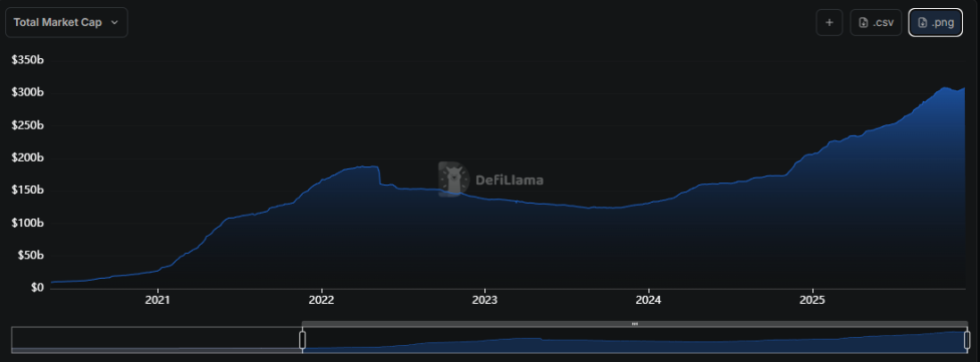
The trend in the market cap of the stablecoins | Source: DefiLlama

As the above chart from DefiLlama shows, the stablecoin market cap declined to a low in mid-November. Since this bottom, though, capital inflows have returned for these fiat-tied assets, with the market cap once again nearing in on a new record.

Bitcoin Price

At the time of writing, Bitcoin is floating around $90,100, up almost 4% in the last seven days.

Looks like the price of the coin has moved sideways over the last few days | Source: BTCUSDT on TradingView


Пов'язані матеріали

USDC Begins Nested Issuance, Coinbase Launches Custom Stablecoin Branding Service

Coinbase has launched its "Custom Stablecoins" platform, enabling businesses to offer branded stablecoins. The first client is Flipcash, a social payments app, which has introduced USDF. USDF is a Solana-based stablecoin, pegged 1:1 to USDC, and is designed to serve as a stable pricing and settlement unit for Flipcash's user-created community currencies. This move shifts the focus of stablecoins from being standalone assets or investment products to becoming embedded payment and settlement components within broader applications. For businesses like Flipcash, the core need is not to become a stablecoin issuer, but to integrate stable, reliable digital cash functionality—handling pricing, payments, and settlements—without managing the complex underlying infrastructure of issuance, reserves, on-chain contracts, fiat on-ramps, and compliance. Coinbase's platform provides this infrastructure as a service, positioning the exchange as a stablecoin infrastructure provider. While USDC remains the foundational reserve asset, the branded token (e.g., USDF) offers applications a tailored, user-facing financial tool. This development highlights a potential path for stablecoins to become ubiquitous backend utilities in social, gaming, and e-commerce applications, though it also brings significant regulatory and operational complexities associated with handling real user funds.

链捕手2 год тому

USDC Begins Nested Issuance, Coinbase Launches Custom Stablecoin Branding Service

链捕手2 год тому

Detained for 37 Days: The First Wave of People Who Got Rich from 'AI Gateways' Are Starting to Go to Jail

A prominent AI proxy service operator was reportedly detained for 37 days and is now on bail pending trial, highlighting the legal risks in China's booming but unregulated AI intermediary market. These services act as "AI scalpers," providing domestic users with access to restricted overseas models (like OpenAI, Claude) by bundling APIs, handling payments, and bypassing network blocks, all for a fee. Their controversial profitability stems from practices like bulk-registering accounts to resell free credits, exploiting refund policies, overcharging for tokens, substituting cheaper models, and illegally selling user conversation data. Major figures, including cryptocurrency entrepreneurs, are now entering this space. Legally, these operations face severe risks. Their core model often involves unauthorized API access and operating without required telecom licenses, potentially constituting illegal business operations. They fail to meet data security obligations for the vast amounts of user data they process, risking charges for failing to fulfill network security duties. Crucially, the unauthorized collection and sale of user data, which can include personal and commercial secrets, easily meets the threshold for the crime of infringing on personal information. The case underscores a critical juncture for the AI industry. While proxies lower access barriers, they expose user data to unsecured middlemen and undermine the business models of AI developers, forcing them to divert resources to security and distorting market value perceptions. The article argues that the industry's sustainable future depends on building trust, protecting data, and fostering compliant competition, moving away from its current "wild growth" phase.

marsbit2 год тому

Detained for 37 Days: The First Wave of People Who Got Rich from 'AI Gateways' Are Starting to Go to Jail

marsbit2 год тому

Торгівля

Спот
Ф'ючерси
活动图片