After the Death of 100 Projects: Some Have Died, Others Have Moved to AI

marsbitОпубліковано о 2026-08-10Востаннє оновлено о 2026-08-10

Анотація

On August 7th, around 4:30 AM, Harry Chun Tak Yeh (Ye Junde), a well-known Chinese-Canadian crypto investor and founder of projects like Tomb Finance, was found deceased after falling from a luxury residential building in Asunción, Paraguay. The scene showed an open door on the 30th floor and a disordered apartment, with police yet to release conclusions. Yeh entered crypto in 2013 and later gained prominence as a managing partner at Binary Financial and founder of Quantum Fintech Group. His algorithmic stablecoin project, Tomb, once held over $1.6 billion on the Fantom network but has since collapsed to near zero, alongside his other ventures like LIF3 and L3USD. This has left many retail investors with significant losses. His death occurs during an unprecedented crypto bear market in 2026, marked by over 100 project failures, substantial outflows of capital and developers, and rising hacking losses. The sector is witnessing a talent exodus to AI companies, while declining developer activity signals a deep downturn. As investigations continue in Asunción, the incident underscores the severe pressures and human toll within the beleaguered cryptocurrency industry.

At around 4:30 a.m. on August 7, the alarm phone rang at the Jade Park luxury residential building in Asunción.

Police arriving at the scene found a man at the base of the building who had fallen from a high floor. The body was naked and covered with a black plastic bag. Upon entering the 30th-floor apartment, police saw an open door and a messy interior; no other individuals were found at the scene. Two apartments related to the deceased on the 27th and 30th floors were subsequently examined for evidence. Police have not yet provided any conclusions.

Soon, the name of the man who fell was revealed: Harry Chun Tak Yeh, an investor and project founder in the crypto space, also of Chinese descent, with the Chinese name Ye Junde.

Luxury residence, crypto, founder, death—with these words strung together, a possible story quickly takes shape.
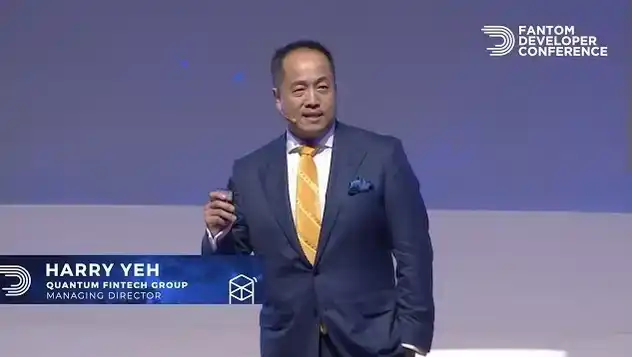
Harry Chun Tak Yeh Ye Junde

The Curve from 'Resurrection' to Zero

Harry Chun Tak Yeh had a personal homepage listing projects like Tomb, LIF3, L3 Reserve, and L3USD, as well as his Quantum Fintech Group. The numbers on the page exceeded $2 billion in scale.

His rise to fame began in an earlier crypto cycle than his projects.

Yeh once said he bought Bitcoin when it was around $60 in 2013. Later, he entered the Bitcoin over-the-counter (OTC) and block trading markets as the managing partner of Binary Financial. At least from 2015 onwards, he was frequently in front of cameras at industry events like Coin Congress and Money20/20, discussing Bitcoin prices, liquidity, and institutional capital. By 2022, he could already give a Bloomberg interview as the founder of Quantum Fintech Group, discussing whether the crypto market would enter a 'super cycle.'

He wasn't thrust into the spotlight only after Tomb gained popularity. Tomb gave him a bigger stage.

Tomb initially ran on Fantom, with its core narrative being an algorithmic token pegged to FTM: when the price was above the peg, the system expanded; when the price fell below the peg, contraction and waiting replaced yields.

At its peak, Tomb's protocol held over $1.6 billion.

By August 10, 2026, two days after news of Yeh's fall broke, that number was less than $30,000, virtually zero.

Other projects similarly left traces of decay. LIF3 and L3USD are also essentially at zero. After all, even the network they ran on, Fantom, is nearly gone, let alone the value of the protocols on it.

It's also easy to imagine what the retail investors who put money into these zeroed-out projects must be thinking.

A quick search on Reddit reveals posts like 'Is TOMB finance dead?' and 'Is the TOMB/FTM LP Dead now?' One person wrote about putting about $1,200 into the TOMB/FTM liquidity pool, seeing their position shrink drastically after the peg broke; another wrote that their roughly $2,000 investment was almost entirely gone.

The Death List in a Bear Market

Death always seems to appear alongside bear markets. The bear market following FTX's collapse in 2022 sent a very clear signal.

There is still no evidence to prove these events were homicides, but the inability to infer murder makes it all the more suspicious.

Bear markets make people lose a shared explanatory framework. When prices fall, an unreleased autopsy, a helicopter still under investigation, a fearful pre-death tweet—all are more easily amplified into parts of an unsolved mystery.

The same goes for Harry Chun Tak Yeh.

After the Death of 100 Projects

This is an unprecedented bear market, with capital and people flowing out entirely. No crypto industry bear market can compare to 2026. Some have counted that over 100 crypto projects have shut down, gone bankrupt, or permanently ceased operations so far, covering exchanges, wallets, lending protocols, NFT marketplaces, and blockchains. The real situation is certainly harsher than 100.

Money is flowing out. Data from PeckShield shows that hacks and scams resulted in losses of about $4.04 billion in 2025, while DeFi alone saw about $972 million stolen in the first half of 2026.

People are leaving too. Some didn't wait for their projects to be liquidated. Sam Blackshear, creator of the Move language and co-founder of Mysten Labs, recently announced he is joining Anthropic to work on defensive security research; OpenSea co-founder Alex Atallah left to found OpenRouter, and Oasis Labs founder Dawn Song also joined Meta's AI team. As of March 2026, weekly code commits in the crypto field have dropped by about 75% compared to early 2025, and active blockchain developers have decreased by 56%.

Others have passed away. If we were to choose a keyword for the cryptocurrency industry in 2026, 'death' would likely be the choice for most.

The door on the 30th floor in Asunción, Paraguay, is still open, with police going in and out, trying to find clues.

But those still in the crypto space are reopening the door to crypto.

Трендові криптовалюти

Пов'язані питання

QWhat was the initial value of Tomb's protocol at its peak, and what was its value in early August 2026?

AAt its peak, Tomb's protocol held over 1.6 billion USD. By August 10, 2026, its value had plummeted to less than 30,000 USD, essentially reaching zero.

QHow does the article describe the state of the cryptocurrency market in 2026?

AThe article describes the 2026 cryptocurrency market as an unprecedented and severe bear market, characterized by massive capital and talent outflow. Over 100 projects have shut down or gone bankrupt, and developer activity has drastically decreased.

QWho was Harry Chun Tak Yeh, and what was the narrative associated with his death in the article?

AHarry Chun Tak Yeh (Ye Junde) was a cryptocurrency investor and project founder. The article notes his death in a fall from a luxury residential building in Asunción, Paraguay, and connects it to the common narrative of 'death' in the crypto industry during the 2026 bear market, though no evidence of foul play was presented.

QAccording to the article, what are some examples of crypto industry professionals transitioning to AI?

AThe article cites several examples: Sam Blackshear, creator of the Move language, joined Anthropic for security research; OpenSea co-founder Alex Atallah started OpenRouter; and Oasis Labs founder Dawn Song joined Meta's AI team.

QWhat metrics does the article use to illustrate the decline in crypto developer activity?

AThe article states that as of March 2026, weekly code commits in the crypto sector had fallen by about 75% compared to early 2025, and the number of active blockchain developers had decreased by 56%.

Пов'язані матеріали

Does Every Great Financial Infrastructure Begin with a Speculative Frenzy?

The article "Does Every Great Financial Infrastructure Begin with a Speculative Frenzy?" explores the dual role of speculation in the development of financial markets, drawing parallels between historical examples and the current crypto industry. The author argues that while speculation is often dismissed as mere gambling, it frequently serves as a crucial precursor and foundation for building sustainable financial infrastructure. This is illustrated by historical cases like the 19th-century Chicago grain market, where speculators provided the necessary liquidity for the nascent futures market to function, eventually establishing a global price discovery system for wheat. Keynes's nuanced view is cited, highlighting that speculation becomes dangerous only when it detaches from underlying value; when anchored to real assets, it can play a constructive role. This pattern is now evident in crypto. Platforms like Hyperliquid, initially built for leveraged crypto speculation, have successfully expanded their model to perpetual contracts for real-world assets like equities and commodities. Similarly, Robinhood Chain, designed for tokenized stock trading, has leveraged a surge in Meme coin activity (exemplified by the FRONG token) to attract initial users and liquidity, which could later support its core securities trading vision. The piece contrasts this with purely speculative phenomena, like many short-lived Meme coins, which often fail to create lasting value. The central thesis is that speculation provides the initial capital, liquidity, and user attention. Whether this evolves into enduring infrastructure depends on the platform's ability to channel that energy towards valuable underlying assets. The trajectory of crypto platforms suggests that, much like in traditional finance, speculative frenzies can indeed lay the groundwork for significant financial innovation.

marsbit8 хв тому

Does Every Great Financial Infrastructure Begin with a Speculative Frenzy?

marsbit8 хв тому

Торгівля

Спот

Популярні статті

Як купити RE

Ласкаво просимо до HTX.com! Ми зробили покупку Re (RE) простою та зручною. Дотримуйтесь нашої покрокової інструкції, щоб розпочати свою криптовалютну подорож.Крок 1: Створіть обліковий запис на HTXВикористовуйте свою електронну пошту або номер телефону, щоб зареєструвати обліковий запис на HTX безплатно. Пройдіть безпроблемну реєстрацію й отримайте доступ до всіх функцій.ЗареєструватисьКрок 2: Перейдіть до розділу Купити крипту і виберіть спосіб оплатиКредитна/дебетова картка: використовуйте вашу картку Visa або Mastercard, щоб миттєво купити Re (RE).Баланс: використовуйте кошти з балансу вашого рахунку HTX для безперешкодної торгівлі.Треті особи: ми додали популярні способи оплати, такі як Google Pay та Apple Pay, щоб підвищити зручність.P2P: Торгуйте безпосередньо з іншими користувачами на HTX.Позабіржова торгівля (OTC): ми пропонуємо індивідуальні послуги та конкурентні обмінні курси для трейдерів.Крок 3: Зберігайте свої Re (RE)Після придбання Re (RE) збережіть його у своєму обліковому записі на HTX. Крім того, ви можете відправити його в інше місце за допомогою блокчейн-переказу або використовувати його для торгівлі іншими криптовалютами.Крок 4: Торгівля Re (RE)Легко торгуйте Re (RE) на спотовому ринку HTX. Просто увійдіть до свого облікового запису, виберіть торгову пару, укладайте угоди та спостерігайте за ними в режимі реального часу. Ми пропонуємо зручний досвід як для початківців, так і для досвідчених трейдерів.

581 переглядів усьогоОпубліковано 2026.06.18Оновлено 2026.06.18

Як купити RE

Обговорення

Ласкаво просимо до спільноти HTX. Тут ви можете бути в курсі останніх подій розвитку платформи та отримати доступ до професійної ринкової інформації. Нижче представлені думки користувачів щодо ціни RE (RE).

活动图片