Grayscale Withdraws Its Application to Create an ETF for Three Major Altcoins, While the SEC Approved It in 190 Seconds! Here are the Details

cryptonews.ruОпубліковано о 2026-08-10Востаннє оновлено о 2026-08-10

Анотація

Grayscale, a leading U.S. crypto asset manager, has withdrawn its applications to create spot ETFs for three major altcoins: Cardano (ADA), Hedera (HBAR), and Polkadot (DOT). The firm filed three Form RW withdrawal requests with the U.S. Securities and Exchange Commission (SEC) to pull the related S-1 registration statements. The SEC processed and accepted the withdrawal in a remarkably swift 190 seconds. The submitted documents cited standard justifications, stating Grayscale does not intend to proceed with the planned share distribution under these registrations, which had not yet become effective, and no shares had been issued or sold. Neither Grayscale nor the SEC provided a clear, specific reason for the withdrawal decision. Concurrently, Grayscale continues to pursue ETF applications for other digital assets, including Bittensor (TAO), Aave (AAVE), BNB, Near Protocol (NEAR), and Zcash (ZEC). Analysts interpret this as Grayscale becoming more selective in its ETF portfolio applications.

Grayscale, one of the largest crypto asset managers in the United States, has withdrawn its applications to create ETFs for three major altcoins.

At this stage, Grayscale has withdrawn its applications to create ETFs for Cardano, Hedera, and Polkadot — three altcoins that have recently caused significant disappointment with their price drops.

Grayscale filed three withdrawal of registration requests, Form RW, with the U.S. Securities and Exchange Commission (SEC), requesting the withdrawal of the registration statements on Form S-1 for the Grayscale Cardano Trust ETF, Grayscale Hedera Trust ETF, and Grayscale Polkadot Trust ETF.

The Securities and Exchange Commission (SEC) responded to this request in record time, providing data indicating that the ETF registration was accepted just 190 seconds after the application was submitted.

Why Did Grayscale Withdraw Its Applications for ADA, HBAR, and DOT Approvals?

The documents filed with the U.S. Securities and Exchange Commission (SEC) showed that all three applications contained standard and general justifications. Grayscale stated that it does not intend to proceed with the planned distribution of ETF shares under these registration statements. It was also noted that the registration has not yet become effective, and no shares have been issued or sold.

In this context, neither Grayscale nor the U.S. Securities and Exchange Commission explained the actual and clear reason for withdrawing the decision.

Finally, Grayscale is currently considering applications to include Bittensor (TAO), Aave (AAVE), BNB, Near Protocol (NEAR), and Zcash (ZEC) in its ETF portfolio. According to experts, this indicates that Grayscale is becoming more selective regarding applications to include assets in its ETF portfolio.

*This is not investment advice.

end-content
Трендові криптовалюти

Пов'язані питання

QWhy did Grayscale withdraw its ETF applications for Cardano, Hedera, and Polkadot?

AThe filings submitted to the SEC contained standard, generic justifications. Grayscale stated that it does not intend to proceed with the planned ETF share distributions under these registration statements. No clear, specific reason for the withdrawal was provided by either Grayscale or the SEC.

QWhat was notable about the SEC's response to Grayscale's withdrawal request for the altcoin ETFs?

AThe SEC responded in a remarkably short timeframe. Data indicates that the ETF registration withdrawals were accepted just 190 seconds after the applications were filed.

QWhat does Grayscale's withdrawal of these ETF applications suggest about its current strategy according to experts?

AExperts view this, along with Grayscale's consideration of other crypto ETF applications, as an indication that the company is becoming more selective about the ETF applications it pursues.

QWhich altcoins is Grayscale currently considering for potential ETF inclusion, as mentioned in the article?

AGrayscale is currently considering ETF applications for Bittensor (TAO), Aave (AAVE), BNB, Near Protocol (NEAR), and Zcash (ZEC).

QDid Grayscale sell any shares related to the withdrawn ETF applications for ADA, HBAR, and DOT?

ANo. According to the filings, the registration statements had not yet become effective, and no shares had been issued or sold for these specific ETFs.

Пов'язані матеріали

RIP: Atlas, Which Lived Only 292 Days

On August 9, 2026, OpenAI discontinued its standalone AI browser, Atlas, just 292 days after its launch on October 21, 2025. Initially positioned as a challenger to Chrome and the broader AI browser ecosystem, Atlas aimed to fundamentally redesign how users interact with browsers by deeply integrating ChatGPT. Its features included an AI-powered address bar, a sidebar for webpage analysis, Browser Memories for context retention, and an Agent Mode to automate multi-step tasks like shopping and research. Despite building on Chromium with a custom OWL (OpenAI Web Layer) framework, OpenAI struggled with the immense complexity of maintaining a full-fledged browser. The team spent significant time addressing basic functionalities—password managers, extensions, input methods—that mainstream browsers already handled seamlessly. Atlas's core AI agent capabilities also faced issues with reliability, speed, and security vulnerabilities like prompt injection. Furthermore, Atlas was limited to Apple Silicon Macs, failing to release promised Windows, iOS, and Android versions. This, coupled with the high switching cost for users entrenched in Chrome or Edge's ecosystems, hindered its adoption. By mid-2026, updates slowed, and OpenAI announced its shutdown, opting to integrate Atlas's AI explorations into the ChatGPT desktop app and browser extensions instead. The article contrasts two AI browser development paths: standalone products like Atlas, Perplexity's Comet, and Dia, which redesign the browser around AI but face user migration barriers; and the approach of incumbents like Chrome and Edge, which add AI features atop existing, widely-used platforms. The key question remains whether users need a completely new "AI browser" or simply AI capabilities within their current browser. While Atlas's experiment ended, the broader trend of AI integration into browsing continues.

marsbit19 хв тому

RIP: Atlas, Which Lived Only 292 Days

marsbit19 хв тому

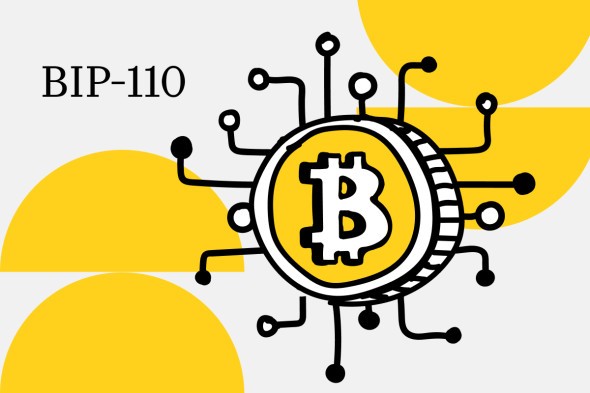
Bitcoin's "Anti-Spam" Update Failed, Lasting Less Than a Day

A Bitcoin update proposal aimed at curbing spam by temporarily banning non-financial data from being stored on the network, BIP-110, has failed decisively. After months of debate, developers attempted to launch a separate blockchain, which collapsed within a day. The failure stemmed from a critical lack of miner support, with less than 1% signaling approval for the update. The vast majority of miners chose to continue mining the main Bitcoin blockchain without providing explanations. Despite this, the initiative's developers proceeded to launch an alternative blockchain—a hard fork of Bitcoin—on August 8. This meant a small subset of miners stopped mining Bitcoin to support the new chain with BIP-110 changes. However, the new network inherited Bitcoin's mining difficulty. With only a tiny fraction of the total computational power, block times stretched to roughly 7 hours instead of the standard 10 minutes, rendering the network practically non-functional. Michael Saylor, founder of major corporate Bitcoin holder MicroStrategy and a vocal opponent of BIP-110, commented: "Bitcoin worked exactly as designed. The BIP-110 fork occurred, and network participants were free to choose which chain to follow. As a result, about 99.85% of the network's hash power remained with Bitcoin." The event had no significant impact on Bitcoin's price, which traded in a narrow range between approximately $64.5k and $65.5k from August 7 through August 10.

cryptonews.ru25 хв тому

Bitcoin's "Anti-Spam" Update Failed, Lasting Less Than a Day

cryptonews.ru25 хв тому

Торгівля

Спот

Популярні статті

Як купити ONE

Ласкаво просимо до HTX.com! Ми зробили покупку Harmony (ONE) простою та зручною. Дотримуйтесь нашої покрокової інструкції, щоб розпочати свою криптовалютну подорож.Крок 1: Створіть обліковий запис на HTXВикористовуйте свою електронну пошту або номер телефону, щоб зареєструвати обліковий запис на HTX безплатно. Пройдіть безпроблемну реєстрацію й отримайте доступ до всіх функцій.ЗареєструватисьКрок 2: Перейдіть до розділу Купити крипту і виберіть спосіб оплатиКредитна/дебетова картка: використовуйте вашу картку Visa або Mastercard, щоб миттєво купити Harmony (ONE).Баланс: використовуйте кошти з балансу вашого рахунку HTX для безперешкодної торгівлі.Треті особи: ми додали популярні способи оплати, такі як Google Pay та Apple Pay, щоб підвищити зручність.P2P: Торгуйте безпосередньо з іншими користувачами на HTX.Позабіржова торгівля (OTC): ми пропонуємо індивідуальні послуги та конкурентні обмінні курси для трейдерів.Крок 3: Зберігайте свої Harmony (ONE)Після придбання Harmony (ONE) збережіть його у своєму обліковому записі на HTX. Крім того, ви можете відправити його в інше місце за допомогою блокчейн-переказу або використовувати його для торгівлі іншими криптовалютами.Крок 4: Торгівля Harmony (ONE)Легко торгуйте Harmony (ONE) на спотовому ринку HTX. Просто увійдіть до свого облікового запису, виберіть торгову пару, укладайте угоди та спостерігайте за ними в режимі реального часу. Ми пропонуємо зручний досвід як для початківців, так і для досвідчених трейдерів.

524 переглядів усьогоОпубліковано 2024.12.12Оновлено 2026.06.02

Як купити ONE

Обговорення

Ласкаво просимо до спільноти HTX. Тут ви можете бути в курсі останніх подій розвитку платформи та отримати доступ до професійної ринкової інформації. Нижче представлені думки користувачів щодо ціни ONE (ONE).

活动图片