Anthropic Drops $19 Billion to 'Sponsor' a Bitcoin Miner

marsbitОпубліковано о 2026-07-08Востаннє оновлено о 2026-07-08

Анотація

On July 6, 2026, Bitcoin mining company TeraWulf (NASDAQ: WULF) saw its stock surge 15% pre-market following the announcement of a landmark 20-year agreement with AI giant Anthropic. The deal grants Anthropic 401 MW of IT load capacity at TeraWulf's "Justified Data" campus in Kentucky and is projected to generate approximately $19 billion in contracted revenue for the miner over its duration. On the same day, TeraWulf also sold its 50.1% stake in a Texas joint venture for about $530 million. This dual move signals a strategic pivot: divesting non-core assets to fund its fully-owned Kentucky project and shifting focus from cryptocurrency mining to becoming a specialized infrastructure provider for AI. The agreement highlights a key advantage for Bitcoin miners transitioning to AI: their pre-existing access to land and critical power grid capacity, which is becoming a major bottleneck for data center expansion. Unlike peers who operate AI clouds, TeraWulf is adopting a "landlord" model, leasing only the physical space and power for clients' own servers. However, a significant gap exists between the deal's announcement and revenue generation, with the first phase of the Kentucky site not operational until late 2027. The $19 billion figure represents a long-term bet on both TeraWulf's execution and Anthropic's financial durability in the capital-intensive AI race. The market's positive reaction reflects the growing value of fundamental infrastructure—secured land and reliable ...

Author: Suanli Zhixin

On Monday, July 6, 2026, the stock price of Bitcoin mining company TeraWulf (NASDAQ: WULF) gapped up sharply at the open, surging 15% in pre-market trading.

What ignited the market was a 20-year lease.

AI giant Anthropic, which is building large models and constantly competing with OpenAI, went and signed a lease agreement with TeraWulf.

This lease has two key numbers.

  • First is the duration: a full 20 years.
  • Second is the scale: 401 megawatts (MW) of IT load capacity.

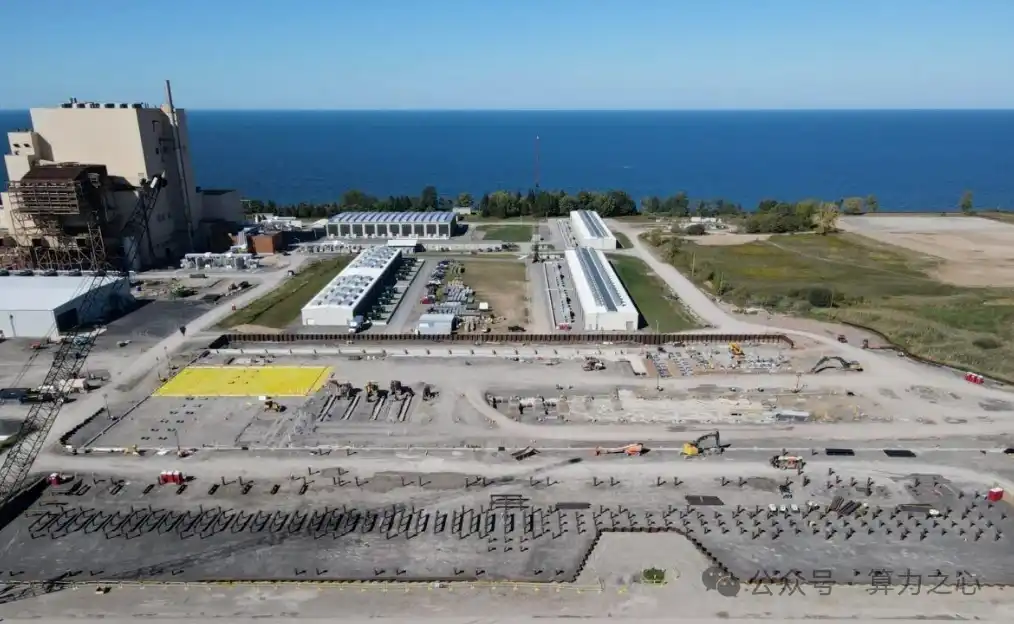
The location is set at a campus called "Justified Data" in Kentucky.

This 20-year contract is expected to bring TeraWulf $19 billion in contracted revenue, equivalent to roughly $1 billion in annual income for the next 20 years.

Locking in its cash flow expectations for the next two decades with a super-long-term contract from an AI giant is the direct reason for TeraWulf's stock price taking off.
I. Signing a Long-Term Deal While Selling Assets

On the same day it announced the $19 billion deal, TeraWulf also sold an asset.

They sold their 50.1% stake in the Abernathy joint venture project in Texas for approximately $530 million, at a premium, to an investment consortium led by Fluidstack.

This Texas project was just established in 2025, with a planned capacity of 168 megawatts, originally also intended for building AI data centers.

On one hand, they are locking down a top-tier client like Anthropic; on the other, they are cashing out of a joint venture project.

These two moves appear opposite but share the same logic:

The Texas project is a joint venture, requiring profit and decision-making power to be shared.

But the Kentucky project is wholly owned by TeraWulf, and it directly secures Anthropic as a client.

TeraWulf's CEO, Paul Prager, has publicly stated that the core strategy is to own and operate infrastructure, directly controlling the long-term development of the campus.

So their thinking is clear: sell the joint venture project at a premium, get cash back, then invest it all into their 100%-owned Kentucky territory, focusing on serving Anthropic, the client willing to pay $19 billion.

Combining these two operations, TeraWulf shifts its strategic focus from being a Bitcoin miner to specializing as a premier AI data center operator.

II. Not Selling Compute, Just Renting Land: The Miner's Ace in the Hole

Actually, TeraWulf isn't the first to pivot from Bitcoin mining to making money from AI.

Industry veterans like IREN, Core Scientific, Hut 8, etc., are all transitioning.

Miners transitioning mainly follow two models:

One is like IREN, which buys GPUs to build its own AI cloud and directly rents it to major clients like Microsoft.

The other is like TeraWulf, which only rents out space and power, with clients bringing their own servers.

TeraWulf chose to be the "big landlord," providing only the AI-standard physical space and power, not managing the servers.

Currently, the AI industry faces shortages on both ends: chips and power are tight.

But power is the harder long-term bottleneck, as large model training is extremely power-hungry. The U.S. grid cannot be expanded significantly in the short term, with transformer lead times of three to five years, and 30% to 50% of 2026 data center projects expected to be delayed until 2028.

Therefore, AI giants are signing long-term build-to-suit leases everywhere, essentially competing for the physical spots with power and land.

This is precisely the biggest ace up the sleeve of Bitcoin miners.

They secured ready access to power and land years ago for mining, having already navigated the cumbersome grid approval processes.

Anthropic signing this $19 billion, 20-year lease is fundamentally about locking down the ready-made land and power that TeraWulf holds in Kentucky.

Prime locations and good grid capacity, if not locked down now, will only become more expensive and scarcer later.

III. The $19 Billion Deal Has an 18-Month Gap in Between

While the $19 billion in long-term revenue is undoubtedly attractive, the contract hides a hard time gap.

The first delivery for this Kentucky campus isn't until the second half of 2027, with full operation expected by early 2028.

But it's July 2026 now.

This means that for at least the next year, TeraWulf cannot generate substantial operating revenue from this contract.

However, during the construction phase, every step—site preparation, data center design, grid connection negotiations, cooling installation—requires investment.

That's why they were in a hurry to sell the Texas joint venture. That transaction, with a total consideration of about $530 million, allows them to recoup approximately $450 million of investment.

After all, upfront infrastructure is a money-burning black hole.

On the other hand, the true value of this 20-year lease is tied to Anthropic's own financial health.

Anthropic is a top AI company, but large model development itself is a cash-burning elimination race.

A 20-year lease demands that the tenant possess extremely strong long-term viability.

Public information does not break down the profit margins and cost structure of this $19 billion deal.

And today's market euphoria is buying into an expectation of future realization.

The name TeraWulf was probably chosen with the idea of a "trillion-level wolf" in mind.

But now, it seems more like a real estate wolf.

No more mining. Now it collects rent.

In the wave of miners transitioning to AI, the most valuable asset has become very clear.

At the end of compute anxiety, the core competition has returned to the most traditional business: securing a piece of land and connecting it to power.


Трендові криптовалюти

Пов'язані питання

QWhat was the main reason behind the surge in TeraWulf's stock price on July 6, 2026?

ATeraWulf's stock price surged due to the announcement of a 20-year lease agreement with AI giant Anthropic for 401 MW of IT load capacity, which is projected to generate approximately $19 billion in contracted revenue for TeraWulf over the lease period.

QWhat are the two strategic business moves TeraWulf made on the same day, and how are they connected?

AOn the same day, TeraWulf signed the long-term lease with Anthropic and sold its 50.1% stake in the Texas Abernathy joint venture for approximately $530 million. These moves are connected as selling the joint venture provides cash to fund the development of the wholly-owned Kentucky facility for Anthropic, aligning with TeraWulf's strategy to own and operate core infrastructure.

QWhat are the two main business models for Bitcoin miners transitioning to serve the AI industry, and which one did TeraWulf choose?

AThe two main models are: 1) building AI clouds with their own GPUs and leasing compute directly to clients (like IREN), and 2) providing only the physical site and power infrastructure for clients who bring their own servers. TeraWulf chose the latter, acting as a 'landlord' by leasing land and power.

QWhat is the key strategic asset that Bitcoin miners like TeraWulf possess for competing in the AI infrastructure market?

ATheir key strategic asset is pre-existing access to land and, more importantly, significant power capacity with completed grid interconnection approvals. These are critical and increasingly scarce resources for power-hungry AI data centers, giving miners a significant head start over new entrants.

QWhat is a potential financial risk or challenge associated with TeraWulf's $19 billion deal with Anthropic?

AA key challenge is the 18-month timeline gap. The Kentucky facility's first delivery is scheduled for late 2027, meaning TeraWulf will not receive substantial operational revenue from this deal until then, while it must fund significant upfront construction costs. The deal's long-term value also depends on Anthropic's financial health over the 20-year period.

Пов'язані матеріали

Collateral Dollars: How Does a 'Second-Layer Dollar' Above Stablecoins Form?

Collateral Dollars: How Does a "Second Layer of Dollars" Form on Top of Stablecoins? Most assume stablecoins replicate Eurodollar functions, expanding the offshore dollar system. However, stablecoins primarily replace specific functions like operational dollar balances for settlement. They do not inherently create new dollar credit; they substitute existing claims. The key question is: what happens when financial intermediaries use stablecoins as collateral to create a new layer of dollar-denominated claims? This "collateral dollar" channel operates through secured lending, not direct money creation. A money-like event only occurs when a liability issued against the controlled stablecoin is funded, rolled over, or accepted at near-par value by another balance sheet. The discount (haircut) prices the gap between "effective control over the token" and "reliable convertibility to bank dollars." Elasticity stems not from the stablecoin itself but from the liability issued against it and the willingness of third-party balance sheets to treat that liability as a near-par asset. Compared to the traditional Eurodollar system—where elasticity originates from bank deposit creation—the stablecoin collateral chain is structurally different. Eurodollar deposits are credit-expansive from inception. Stablecoins are initially substitutive; elasticity emerges later if an intermediary's liability against them gains monetary acceptance. Stablecoins disrupt specific tiers of the offshore dollar system, mainly replacing operational settlement balances. They do not replace the need for full dollar balance-sheet capacity (credit lines, hedging, maturity transformation). For systemic impact, the second-layer liability must pass three tests: transferability, funding capacity, and monetary acceptance (being fundable or held at par by others). Pressure transmission also differs. In the Eurodollar system, stress moves up a hierarchy of claims. In a stablecoin collateral chain, the second-layer liability can lose its money-like status well before the underlying stablecoin faces a run, often triggered by haircut increases and margin calls that create a dynamic spiral of falling token prices and rising discounts. In conclusion, the "collateral dollar" is not the stablecoin itself. It is the second-layer liability issued against a controlled token balance that is willing to be funded and maintained at near-par value. Its existence depends on that liability surviving the leap from "token liquidity" to "bank dollar liquidity."

marsbit4 хв тому

Collateral Dollars: How Does a 'Second-Layer Dollar' Above Stablecoins Form?

marsbit4 хв тому

Collateral Dollars: How the 'Second-Layer Dollar' Above Stablecoins Takes Shape?

"Collateralized Dollars: How a 'Second Layer of Dollars' Forms on Top of Stablecoins" Most assume stablecoins replicate Eurodollars and expand the offshore dollar system, but this is not accurate. Stablecoins primarily replace certain functions within the existing system, especially operational dollar balances for daily settlement. The critical question is what happens when financial intermediaries create a new layer of dollar claims *on top of* stablecoins. This article explains how this new collateralized funding channel works. Stablecoins introduce tokenized private dollar claims. Even if issuers and reserves are within the US legal perimeter, their circulation and use as collateral can become economically "offshore." Enforceable control over collateral opens a secured credit channel but does not itself create a monetary claim. A true monetary event occurs only when another balance sheet funds, rolls over, or accepts a liability issued against the controlled token at near-par value. The discount prices the gap between "effective control over the token" and "reliable convertibility into bank dollars." Elasticity comes from the balance sheet issuing the liability against the token and from third-party willingness to treat that liability as a near-par asset. Collateralized Dollars are not the stablecoins themselves; they are the second-layer liability that another balance sheet is willing to issue, fund, and maintain at near-par against a controlled token balance. The Eurodollar system is a hierarchy of claims, with elasticity originating in expandable bank liabilities. In contrast, the stablecoin collateral chain starts with a tokenized asset. It gains systemic significance only when an intermediary's liability against that token is treated as money-like by other balance sheets. Key determining factors include: who has effective control, the legal/operational path to bank dollars, and whether the resulting claim can still be financed near-par under stress. Pressure in this new channel manifests differently. The upper-layer (intermediary) claim fails first, losing its money-like status, potentially while the underlying stablecoin remains solvent. Increased haircuts and forced sales can create a destructive feedback loop, widening the very gap the discount measures. In conclusion, the Eurodollar analogy has limits. Reserve quality supports the underlying token's solvency, but the leverage, credit, and liabilities built atop it face a separate test. Collateral eligibility is not monetary acceptance. Only when a claim built on stablecoins survives the leap from "token liquidity" to "bank dollar liquidity" do Collateralized Dollars truly exist.

链捕手10 хв тому

Collateral Dollars: How the 'Second-Layer Dollar' Above Stablecoins Takes Shape?

链捕手10 хв тому

Don't Be Misled by the $1.25 Billion Cap: MicroStrategy's Three-Pronged Bitcoin Sale Pools Hide Massive Selling Pressure

Don't Be Misled by the $1.25B Cap: Strategy's Three-Tier Bitcoin Sales Plan Hides Massive Potential Selling Pressure Strategy recently sold 3,588 BTC (~$216M) to fund a dividend and replenish its dollar reserve, while claiming its $1.25B "reserve build" capacity remains fully available. This highlights a key nuance: the widely cited $1.25B limit applies only to sales for "Building" the reserve. Strategy's broader capital framework, however, allows Bitcoin sales for three primary purposes, each with different scales: 1. **Building the Reserve:** Selling BTC to raise up to $1.25B for the reserve. 2. **Covering Priority Share Expenses:** Selling BTC to pay dividends/interest or to replenish the reserve after such payments are made from it (no specified limit). 3. **Share Repurchase Funding:** Selling BTC to fund up to $1B each in convertible note and common stock repurchases (totaling $2B potential). Combined, just the capped "Build" and "Repurchase" channels could facilitate over $3B in Bitcoin sales, excluding the uncapped "Cover Expenses" channel. The accounting distinction between "Building" (adding cash before a payout) and "Replenishing" (adding cash after a payout) is operationally blurry but allows sales like the recent $216M transaction without touching the $1.25B "Build" quota. This gives Strategy significant flexibility. The move signifies a strategic shift: Strategy is transforming from a simple Bitcoin accumulator into an active capital manager, akin to a hedge fund. Bitcoin is now a financial lever to balance pressures between common stock, convertible notes, dollar reserves, and Bitcoin holdings. This creates inherent tensions—actions benefiting one part of the capital structure may harm another. Investors must understand that the potential Bitcoin sales are far greater than the surface-level $1.25B figure. Strategy has become a complex financial entity where every term in its disclosures matters. Betting on it now is a wager on its active capital management skill to navigate these internal contradictions without a systemic failure.

Foresight News17 хв тому

Don't Be Misled by the $1.25 Billion Cap: MicroStrategy's Three-Pronged Bitcoin Sale Pools Hide Massive Selling Pressure

Foresight News17 хв тому

When the Largest BTC Buyer Becomes a Seller, Who's Buying After MicroStrategy Sells 3,588 Bitcoin?

MicroStrategy, once the largest corporate buyer of Bitcoin, sold 3,588 BTC for approximately $216 million to fund its preferred stock dividends, marking a significant shift from buyer to seller. This move occurred after its market-to-NAV premium vanished, breaking its "print stock to buy Bitcoin" financial model. A roundtable discussion featuring Austin Campbell, Ram Ahluwalia, and Chris Perkins analyzed the implications. They noted that MicroStrategy's dominance has become a narrative bottleneck for the broader crypto market, with some speculating that Bitcoin's price might only surge significantly after the company's influence wanes. The conversation expanded to examine the capital structure conflict between traditional equity and crypto tokens, arguing that most current tokens will fail as they don't fit neatly into existing debt/equity frameworks. A "stablecoin war" was identified as a major trend, with entities like Tether, Robinhood, and the OUSD alliance competing. Tether's decision to abandon the European MiCA market highlights strategic divergences. The panelists argued that bank-issued stablecoins could revolutionize global finance by allowing US banks to capture net interest margins from international transactions, potentially making JPMorgan the first trillion-dollar bank. They concluded that while capital is currently being siphoned by AI/semiconductors, markets will eventually refocus on fundamentals and cash flow, which could benefit cryptocurrencies with real utility.

marsbit23 хв тому

When the Largest BTC Buyer Becomes a Seller, Who's Buying After MicroStrategy Sells 3,588 Bitcoin?

marsbit23 хв тому

Bitcoin’s path to $80K may hinge on THIS hidden trend

Bitcoin's potential path toward $80,000 is influenced by conflicting market signals. Data shows the Coinbase Bitcoin Premium Index has recorded its longest-ever streak of consecutive negative premiums, indicating muted institutional demand or net selling from U.S. institutions. While such a trend often signals short-term weakness, it doesn't necessarily forecast a long-term bear market. Additionally, a bearish crossover occurred in Bitcoin's Net Unrealized Profit/Loss (NUPL), with its short-term average falling below the longer-term average, suggesting declining investor profitability and waning market momentum. Historically, major bear market bottoms saw the 100-day NUPL drop below zero, but this cycle it remains positive, implying either an unprecedented bottom or a further decline is needed. Currently trading around $63,148, Bitcoin has seen weekly gains but remains below its May peak. Technical indicators present a mixed picture: the MACD shows bullish momentum, while the RSI signals bearish pressure. A positive development is the return of inflows to Bitcoin ETFs after eight weeks of outflows. Analysts hold divergent views; some highlight a key liquidity zone between $48,000-$50,000 where a market bottom could form, while others maintain a more optimistic long-term outlook. Ultimately, while some bullish signs exist, a strong push from institutional investors appears crucial for Bitcoin to challenge the $80,000 level.

ambcrypto1 год тому

Bitcoin’s path to $80K may hinge on THIS hidden trend

ambcrypto1 год тому

Торгівля

Спот

Популярні статті

Що таке BITCOIN

Розуміння HarryPotterObamaSonic10Inu (ERC-20) та його позиції у крипто-просторі Останніми роками ринок криптовалют спостерігав за зростанням популярності мем-коінів, які привертають інтерес не тільки трейдерів, але й тих, хто шукає спілкування та розважальну цінність. Серед цих унікальних токенів є HarryPotterObamaSonic10Inu (ERC-20), інтригуючий проект, що поєднує культурні посилання з тканинами криптовалюти. Ця стаття досліджує ключові аспекти HarryPotterObamaSonic10Inu, вивчаючи його механізми, спільноту та його взаємодію з ширшим крипто-ландшафтом. Що таке HarryPotterObamaSonic10Inu (ERC-20)? Як випливає з його назви, HarryPotterObamaSonic10Inu є мем-коіном, побудованим на блокчейні Ethereum, класифікованим за стандартом ERC-20. На відміну від традиційних криптовалют, які можуть підкреслювати практичну корисність або інвестиційний потенціал, цей токен процвітає завдяки розважальній цінності та силі своєї спільноти. Проект спрямований на створення середовища, де зацікавлені користувачі можуть об'єднуватися, ділитися ідеями та брати участь у заходах, натхненних різноманітними культурними явищами. Однією з примітних особливостей HarryPotterObamaSonic10Inu є нульовий податок на транзакції. Цей привабливий елемент має на меті заохочувати торгівлю та участь у спільноті, позбавлену додаткових витрат, які можуть відлякувати дрібних трейдерів. Загальна пропозиція монет становить один мільярд токенів, що позначає намір підтримувати суттєву циркуляцію в межах спільноти. Творець HarryPotterObamaSonic10Inu (ERC-20) Походження HarryPotterObamaSonic10Inu дещо окутане таємницею; деталі про творця залишаються невідомими. Розвиток цього токена позбавлений впізнаваної команди або чіткої стратегії, що не є рідкістю в секторі мем-коінів. Натомість проект виник органічно, а його розвиток значною мірою залежить від ентузіазму та участі його спільноти. Інвестори HarryPotterObamaSonic10Inu (ERC-20) Щодо зовнішніх інвестицій та підтримки, HarryPotterObamaSonic10Inu також залишається невизначеним. Токен не зазначає жодних відомих інвестиційних фондів або значної організаційної підтримки. Натомість життєва сила проекту полягає в його базовій спільноті, яка інформує про його зростання та стійкість через колективні дії та залученість у крипто-просторі. Як працює HarryPotterObamaSonic10Inu (ERC-20)? Як мем-коін, HarryPotterObamaSonic10Inu функціонує передусім поза традиційними рамками, що часто регулюють вартість активів. Є кілька відмінних аспектів, що визначають, як працює проект: Транзакції без податку: Завдяки відсутності податкових зборів на транзакції, користувачі можуть вільно купувати та продавати токен, не турбуючись про приховані витрати. Залучення спільноти: Проект процвітає завдяки взаємодії спільноти, використовуючи соціальні медіа для створення шуму та сприяння залученню. Обговорення, обмін контентом та залученість є ключовими елементами, що допомагають розширити його охоплення та зміцнити лояльність серед прихильників. Відсутність практичної корисності: Слід зазначити, що HarryPotterObamaSonic10Inu не пропонує конкретної корисності в рамках фінансової екосистеми. Натомість він класифікується як токен, що призначений в основному для розваги та спільнотних активностей. Культурне посилання: Токен кмітливо вплітає елементи популярної культури, щоб привернути інтерес, зв'язуючи з ентузіастами мемів та крипто-стежками. HarryPotterObamaSonic10Inu ілюструє, як мем-коіни функціонують інакше, ніж традиційні криптовалютні проекти, увійшовши на ринок як інноваційні соціальні конструкти, а не утилітарні активи. Хронологія HarryPotterObamaSonic10Inu (ERC-20) Історія HarryPotterObamaSonic10Inu відзначена кількома значними етапами: Створення: Токен виник з вірусного мему, захопивши уяву багатьох крипто-ентузіастів. Конкретні дати створення недоступні, що підкреслює його органічний розвиток. Лістинг на біржах: HarryPotterObamaSonic10Inu з'явився на різних біржах, дозволяючи зручніший доступ і торгівлю спільноти. Ініціативи залучення спільноти: Ведення діяльності, спрямованої на покращення взаємодії спільноти, включаючи конкурси, кампанії в соціальних мережах та створення контенту від фанатів та прихильників. Плани на майбутнє: Дорожня карта проекту включає запуск колекції NFT, мерчандайзинг та електронну комерцію, пов'язану з його культурними темами, що далі залучає спільноту та намагається додати більше вимірів до його екосистеми. Ключові моменти про HarryPotterObamaSonic10Inu (ERC-20) Спільнотний підхід: Проект надає пріоритет колективному внеску та креативності, забезпечуючи, щоб участь користувачів була в центрі його розвитку. Класифікація як мем-коін: Це є його епігенез розважальної криптовалюти, що відрізняється від традиційних інвестиційних інструментів. Жодного прямого відношення до Bitcoin: Незважаючи на схожість у назві, HarryPotterObamaSonic10Inu є відмінним і не має жодного зв’язку з Bitcoin або іншими усталеними криптовалютами. Зосередженість на співпраці: HarryPotterObamaSonic10Inu створено для того, щоб надати простір для співпраці та обміну історіями серед його власників, забезпечуючи шлях для творчості та спільного зв'язку. Перспективи на майбутнє: Амбіція розширитися за межі початкової концепції в NFT та мерчандайз відкриває шлях для проекту потенційно потрапити в більш мейнстрімні сфери цифрової культури. Оскільки мем-коіни продовжують захоплювати уяву спільноти криптовалют, HarryPotterObamaSonic10Inu (ERC-20) вирізняється своїми культурними зв'язками та орієнтованим на спільноту підходом. Хоча він може не відповідати типовій моделі утилітарного токена, його суть полягає в радощах і товариськості, що підтримуються серед його прихильників, підкреслюючи еволюційну природу криптовалют в усе більш цифрову епоху. Оскільки проект продовжує розвиватися, важливо спостерігати за тим, як динаміка спільноти вплине на його траєкторію в постійно змінюваному ландшафті технології блокчейн.

2.2k переглядів усьогоОпубліковано 2024.04.01Оновлено 2024.12.03

Що таке BITCOIN

Як купити BTC

Ласкаво просимо до HTX.com! Ми зробили покупку Bitcoin (BTC) простою та зручною. Дотримуйтесь нашої покрокової інструкції, щоб розпочати свою криптовалютну подорож.Крок 1: Створіть обліковий запис на HTXВикористовуйте свою електронну пошту або номер телефону, щоб зареєструвати обліковий запис на HTX безплатно. Пройдіть безпроблемну реєстрацію й отримайте доступ до всіх функцій.ЗареєструватисьКрок 2: Перейдіть до розділу Купити крипту і виберіть спосіб оплатиКредитна/дебетова картка: використовуйте вашу картку Visa або Mastercard, щоб миттєво купити Bitcoin (BTC).Баланс: використовуйте кошти з балансу вашого рахунку HTX для безперешкодної торгівлі.Треті особи: ми додали популярні способи оплати, такі як Google Pay та Apple Pay, щоб підвищити зручність.P2P: Торгуйте безпосередньо з іншими користувачами на HTX.Позабіржова торгівля (OTC): ми пропонуємо індивідуальні послуги та конкурентні обмінні курси для трейдерів.Крок 3: Зберігайте свої Bitcoin (BTC)Після придбання Bitcoin (BTC) збережіть його у своєму обліковому записі на HTX. Крім того, ви можете відправити його в інше місце за допомогою блокчейн-переказу або використовувати його для торгівлі іншими криптовалютами.Крок 4: Торгівля Bitcoin (BTC)Легко торгуйте Bitcoin (BTC) на спотовому ринку HTX. Просто увійдіть до свого облікового запису, виберіть торгову пару, укладайте угоди та спостерігайте за ними в режимі реального часу. Ми пропонуємо зручний досвід як для початківців, так і для досвідчених трейдерів.

4.9k переглядів усьогоОпубліковано 2024.12.12Оновлено 2026.06.02

Як купити BTC

Що таке $BITCOIN

ЦИФРОВЕ ЗОЛОТО ($BITCOIN): Комплексний аналіз Вступ до ЦИФРОВОГО ЗОЛОТА ($BITCOIN) ЦИФРОВЕ ЗОЛОТО ($BITCOIN) — це проект на основі блокчейну, що працює в мережі Solana, який має на меті поєднати характеристики традиційних дорогоцінних металів з інноваціями децентралізованих технологій. Хоча він має таку ж назву, як і Bitcoin, який часто називають “цифровим золотом” через його сприйняття як засобу збереження вартості, ЦИФРОВЕ ЗОЛОТО є окремим токеном, розробленим для створення унікальної екосистеми в ландшафті Web3. Його мета — позиціонувати себе як життєздатний альтернативний цифровий актив, хоча деталі щодо його застосувань і функціональностей все ще розробляються. Що таке ЦИФРОВЕ ЗОЛОТО ($BITCOIN)? ЦИФРОВЕ ЗОЛОТО ($BITCOIN) — це токен криптовалюти, спеціально розроблений для використання в блокчейні Solana. На відміну від Bitcoin, який виконує широко визнану роль зберігання вартості, цей токен, здається, зосереджується на більш широких застосуваннях і характеристиках. Помітні аспекти включають: Інфраструктура блокчейну: Токен побудований на блокчейні Solana, відомому своєю здатністю обробляти швидкі та низьковартісні транзакції. Динаміка постачання: ЦИФРОВЕ ЗОЛОТО має максимальне постачання, обмежене 100 квадрильйонами токенів (100P $BITCOIN), хоча деталі щодо його обігового постачання наразі не розголошуються. Утиліта: Хоча точні функціональності не викладені, є вказівки на те, що токен може бути використаний для різних застосувань, потенційно пов'язаних з децентралізованими додатками (dApps) або стратегіями токенізації активів. Хто є творцем ЦИФРОВОГО ЗОЛОТА ($BITCOIN)? На даний момент особа творців і команди розробників, що стоять за ЦИФРОВИМ ЗОЛОТОМ ($BITCOIN), залишається невідомою. Ця ситуація є типовою для багатьох інноваційних проектів у сфері блокчейну, особливо тих, що пов'язані з децентралізованими фінансами та феноменом мем-коінів. Хоча така анонімність може сприяти культурі, орієнтованій на спільноту, вона посилює занепокоєння щодо управління та підзвітності. Хто є інвесторами ЦИФРОВОГО ЗОЛОТА ($BITCOIN)? Доступна інформація вказує на те, що ЦИФРОВЕ ЗОЛОТО ($BITCOIN) не має жодних відомих інституційних спонсорів або помітних венчурних капіталовкладень. Проект, здається, працює за моделлю “рівний до рівного”, зосереджуючись на підтримці та прийнятті спільноти, а не на традиційних шляхах фінансування. Його активність і ліквідність переважно розташовані на децентралізованих біржах (DEX), таких як PumpSwap, а не на встановлених централізованих торгових платформах, що ще більше підкреслює його підхід знизу вгору. Як працює ЦИФРОВЕ ЗОЛОТО ($BITCOIN) Операційні механізми ЦИФРОВОГО ЗОЛОТА ($BITCOIN) можна детальніше розглянути на основі його дизайну блокчейну та характеристик мережі: Механізм консенсусу: Використовуючи унікальний proof-of-history (PoH) Solana в поєднанні з моделлю proof-of-stake (PoS), проект забезпечує ефективну валідацію транзакцій, що сприяє високій продуктивності мережі. Токеноміка: Хоча конкретні дефляційні механізми не були детально описані, велике максимальне постачання токенів вказує на те, що воно може задовольняти мікротранзакції або нішеві випадки використання, які ще потрібно визначити. Інтероперабельність: Існує потенціал для інтеграції з більш широкою екосистемою Solana, включаючи різні платформи децентралізованих фінансів (DeFi). Однак деталі щодо конкретних інтеграцій залишаються невизначеними. Хронологія ключових подій Ось хронологія, яка підкреслює значні віхи, пов'язані з ЦИФРОВИМ ЗОЛОТОМ ($BITCOIN): 2023: Початкове розгортання токена відбувається на блокчейні Solana, позначене його адресою контракту. 2024: ЦИФРОВЕ ЗОЛОТО набуває видимості, оскільки стає доступним для торгівлі на децентралізованих біржах, таких як PumpSwap, що дозволяє користувачам торгувати ним проти SOL. 2025: Проект спостерігає спорадичну торгову активність і потенційний інтерес до ініціатив, очолюваних спільнотою, хоча на даний момент не зафіксовано жодних значних партнерств або технічних досягнень. Критичний аналіз Сильні сторони Масштабованість: Основна інфраструктура Solana підтримує високі обсяги транзакцій, що може підвищити утиліту $BITCOIN у різних сценаріях транзакцій. Доступність: Потенційно низька торгова ціна за токен може привабити роздрібних інвесторів, сприяючи більш широкій участі завдяки можливостям дробового володіння. Ризики Відсутність прозорості: Відсутність публічно відомих спонсорів, розробників або процесу аудиту може викликати скептицизм щодо стійкості та надійності проекту. Волатильність ринку: Торгова активність сильно залежить від спекулятивної поведінки, що може призвести до значної волатильності цін і невизначеності для інвесторів. Висновок ЦИФРОВЕ ЗОЛОТО ($BITCOIN) постає як цікавій, але неоднозначний проект у швидко розвиваючійся екосистемі Solana. Хоча він намагається використати наратив “цифрового золота”, його відхід від встановленої ролі Bitcoin як засобу збереження вартості підкреслює необхідність чіткішого розмежування його передбачуваної утиліти та структури управління. Майбутнє прийняття та адаптація, ймовірно, залежатиме від вирішення поточної непрозорості та більш чіткого визначення його операційних та економічних стратегій. Примітка: Цей звіт охоплює синтезовану інформацію, доступну станом на жовтень 2023 року, і можуть відбутися події, що виходять за межі дослідницького періоду.

150 переглядів усьогоОпубліковано 2025.05.13Оновлено 2025.05.13

Що таке $BITCOIN

Обговорення

Ласкаво просимо до спільноти HTX. Тут ви можете бути в курсі останніх подій розвитку платформи та отримати доступ до професійної ринкової інформації. Нижче представлені думки користувачів щодо ціни BTC (BTC).

活动图片