Pope Takes Stage with Anthropic: A Guide to the Vatican's First AI Encyclical

marsbitОпубліковано о 2026-05-26Востаннє оновлено о 2026-05-26

Анотація

On May 25, 2026, Pope Leo XIV released the Vatican's first AI-focused encyclical, "Magnifica Humanitas: Safeguarding Humanity in the Age of Artificial Intelligence." Choosing this name explicitly connects the document to Pope Leo XIII's response to the Industrial Revolution, framing AI as a similarly transformative shift. The Pope argued AI must be "disarmed," comparing its potential dangers to nuclear weapons, and called for governance beyond tech companies and market forces. Significantly, the launch featured Anthropic co-founder Christopher Olah, who described AI models as "grown" from human language and reflecting human emotions, yet not fully understood by their creators. He acknowledged commercial pressures on labs and stated fundamental questions—like ensuring AI benefits poor nations, defining human flourishing, and understanding what we are creating—require input from philosophy and religion. The encyclical warns that universal prosperity from AI is an "illusion" without deliberate design. Citing a century-old observation that humanity is ill-trained to wield great power, it argues we must learn to use AI before it controls us. The Church offers no technical solutions but claims its millennia of wisdom on human dignity is essential to ensure AI serves, rather than dominates, human conscience and prosperity.

Editor's Note: On May 25, 2026, the Vatican released Pope Leo XIV's first encyclical, 'Magnifica Humanitas: Guarding Humanity in the Age of Artificial Intelligence.' The timing of this document, coinciding with the 135th anniversary of Pope Leo XIII's 'Rerum Novarum,' is clearly not coincidental. If 'Rerum Novarum' was the Catholic Church's response to the Industrial Revolution, then 'Magnifica Humanitas' is seen as the Church's formal stance on the AI era.

What is most noteworthy about this release is not just the Pope comparing AI to nuclear weapons and calling for 'AI to be disarmed,' nor is it just the presence of Anthropic co-founder Christopher Olah on stage at the Vatican. It is the first time that religion, philosophy, and a cutting-edge AI lab have stood so directly before the same question: As AI transforms labor, warfare, wealth distribution, and human self-understanding, are technology companies and market competition alone sufficient to determine its future?

This article outlines the 11 most significant details from this event: from the historical metaphor behind the name 'Leo XIV' to how the Church once again responds to a major technological shift following the Industrial Revolution, nuclear weapons, and the climate crisis; from Olah's description of AI models as 'grown from human language' to his admission that AI labs cannot answer alone questions such as how poor countries can benefit, what human flourishing means, and what exactly we are creating.

Original text follows:
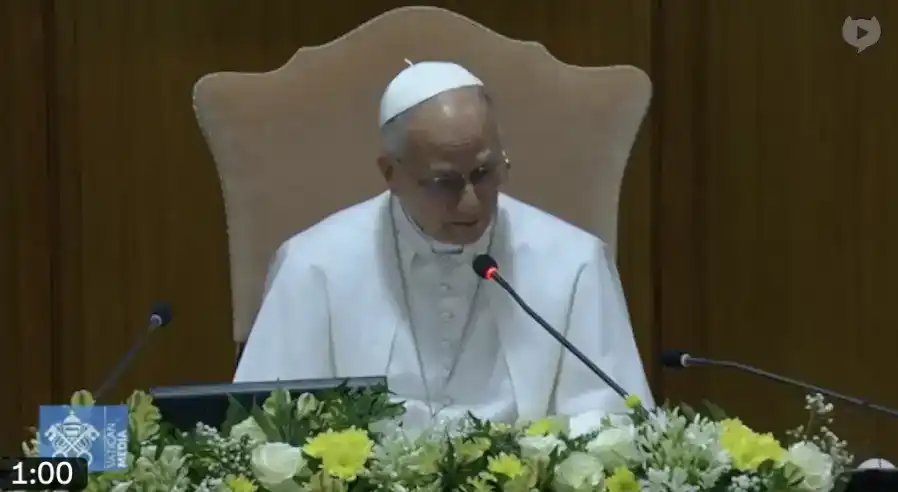
The Pope and the Anthropic co-founder just stood together at the Vatican to release 'Magnifica Humanitas'—the first official doctrinal document on artificial intelligence in Catholic history.

Yes, you read that correctly. The entire release ceremony lasted two hours.

Here are the key points of note:

1. This is the most significant response from the religious world to AI to date. A Pope typically issues only a handful of such weighty formal documents during his entire pontificate. That one of them is specifically about AI itself shows that the Church is viewing the coming changes with the utmost seriousness.

2. A small but significant detail is this Pope's deliberate choice of the name 'Leo XIV.' The last Pope named Leo was Leo XIII in 1891. His most famous act was writing the Catholic Church's response to the Industrial Revolution. Choosing the same name again today is a very clear signal: this Pope sees AI as a new Industrial Revolution.

3. Whenever a major technology reshapes human society, the Catholic Church responds. In 1891, they responded to the Industrial Revolution with 'Rerum Novarum'; in the 1960s, when nuclear weapons threatened the world, they wrote 'Pacem in Terris'; in 2015, climate change and runaway technology issues gave rise to 'Laudato Si'.' Now, it is AI's turn, with the document titled 'Magnifica Humanitas.' Such documents are not common.

4. The Pope's core statement is: 'AI needs to be disarmed.' He effectively places AI in the same category as nuclear weapons. He stated that the Church spent decades promoting nuclear disarmament because such technology is too dangerous to be held by only a few. Now, he believes AI has entered the same class of problem.

5. Anthropic co-founder Christopher Olah, on stage at the Vatican, told the Pope that Anthropic's own research teams constantly find things inside AI models that 'mirror joy, satisfaction, fear, sorrow, and unease.'

6. Olah reframed the nature of AI: these things are not simply manufactured; they are more like something that 'grows.' They are trained on systems roughly mimicking the human brain's structure and fed almost everything humans have ever written. In his own words: 'They are made of us, and of our language.' He also stated that even the people building these systems do not fully understand what is happening inside them.

7. Olah publicly admitted that all AI labs, including Anthropic, face pressures that may conflict with 'doing the right thing': the commercial pressure to keep releasing products, competitive pressure from other labs, and the older forces of arrogance and ambition. His proposed solution: we urgently need external critics with no vested interests to directly point out problems when labs go astray.

8. Olah believes there are three huge questions that AI labs cannot answer alone, and the world needs religion and philosophy to engage with:

How do we ensure poor countries genuinely benefit from AI?
In this new world, what does human flourishing actually mean?
And what exactly are these things we are creating?

9. One of the sharpest lines in the entire encyclical is: 'The promise of automatic and universal prosperity often proves in the end to be an illusion.' In other words, the belief that AI will automatically make everyone rich is itself an illusion. Someone must actually design a system to share the technological dividends.

10. The Pope also quoted a century-old statement: 'Modern man is not yet well-trained in the good use of power.' These words come from a theologian in the 1920s. Almost the entire encyclical revolves around a core argument: before this power begins to dominate us, we must first learn how to use it.

11. The Pope repeatedly emphasized that he does not hold the technical answers. But he stated that the Church possesses millennia of wisdom concerning 'what it means to be human,' and this wisdom is precisely what is most lacking in the current AI development process. He concludes by writing that this technology should serve 'human flourishing and human dignity, not the control of human conscience.'

Пов'язані питання

QWhat is the title of Pope Leo XIV's first AI-related encyclical and what is its significance?

AThe encyclical is titled 'Magnifica Humanitas: Safeguarding Humanity in the Age of Artificial Intelligence.' Its significance lies in it being the Catholic Church's first formal doctrinal document addressing AI, signaling the Church's high level of seriousness about the impending technological changes and positioning it as a response to the AI era, analogous to the Church's response to the Industrial Revolution.

QWhy did the Pope choose the name 'Leo XIV' and what historical parallel is it drawing?

AThe Pope chose the name 'Leo XIV' as a direct historical parallel to Pope Leo XIII, who authored the encyclical 'Rerum Novarum' in response to the Industrial Revolution in 1891. This choice signals that Pope Leo XIV views AI as a new industrial revolution, a transformative technological shift demanding a formal response from the Church.

QWhat core statement did Pope Leo XIV make regarding AI, and to what other technology did he compare it?

APope Leo XIV's core statement was that 'AI needs to be disarmed.' He explicitly compared AI to nuclear weapons, arguing that like nuclear technology, AI is too dangerous to be left solely in the hands of a few, and the world needs collective governance and restraint over its development and deployment.

QWhat did Anthropic co-founder Christopher Olah admit about the pressures facing AI labs, and what solution did he propose?

AChristopher Olah admitted that AI labs, including Anthropic, face significant pressures from commercial needs for continuous product releases, competition from other labs, and fundamental human arrogance and ambition, which may conflict with 'doing the right thing.' He proposed that the solution is the urgent need for external critics without vested interests who can point out problems when labs go astray.

QAccording to the article, what three major questions did Olah state that AI labs cannot answer alone, requiring input from religion and philosophy?

AChristopher Olah stated that AI labs cannot answer these three major questions alone: 1) How do we ensure poor countries truly benefit from AI? 2) What does human flourishing mean in this new world? 3) What exactly are we creating with these systems? He argued that addressing these profound questions requires the engagement of religion and philosophy.

Пов'язані матеріали

Metrics Ventures Market Watch: The Brewing Storm

In the past month, the market has been actively trading contrasting expectations, balancing global supply chain disruptions fueling re-inflation against both actual and anticipated (Walsh) interest rate hikes. This volatility has impacted commodities and most equities, though tech has temporarily benefited from concentrated short-term liquidity. Fundamentally, as previously analyzed regarding the Strait of Hormuz situation, the US faces deep-seated balance sheet issues beyond what any single Fed chair can resolve. Hypotheses around a figure like Walsh could only materialize if AI fundamentally reshapes production relations. Until then, most non-AI-leading nations (effectively all except the US and China) risk fiscal and monetary policy collapse, rendering the identity of the Fed chair ultimately irrelevant. For crypto assets, there is currently no clear role in these dominant narratives. The market remains strongly capped by the 200-day moving average. While trends may shift from "anything but AI" to "anything but mines," this phase is dominated by the silicon vs. carbon (AI vs. traditional) dichotomy, leaving little room for crypto—though its time will come. **Market Overview & Commentary** The crypto market lacks significant catalysts beyond hype, plagued by low volume and scarce innovation, with clear technical resistance. Currently, crypto struggles for attention as global focus lies elsewhere. Assets like gold, oil, and grains are more direct hedges against supply-chain-driven inflation/stagflation. Bitcoin needs more time for capitulation and consolidation; this reset is expected to last until at least Q4 2026. Looking ahead, three factors will likely drive future market volatility: 1. Whether Walsh repeats the patterns of predecessors like Bassant or Musk, shifting stance into a new policy cycle. 2. The market underestimates the severity of global supply chain damage and the prolonged time needed for repair, which will eventually lead to recognition of acute resource shortages and price swings. 3. AI non-beneficiary, high-inflation nations (e.g., UK, Japan) will face severe fiscal and monetary crises. Rapid AI-driven displacement could trigger a collapse of existing credit and welfare systems. Ultimately, the market may realize that an AI bubble burst could spark contagious sovereign credit crises. The monetary and fiscal responses to such a scenario could serve as the ultimate catalyst for Bitcoin's next major bull run.

marsbit59 хв тому

Metrics Ventures Market Watch: The Brewing Storm

marsbit59 хв тому

Insiders Betting on Musk Are Reaping 'Historic Returns'

The largest IPO in history is imminent as SpaceX, led by Elon Musk, is set to price its offering on June 12. At a targeted valuation near $2 trillion, this event will mint new billionaires from Musk's inner circle of long-time allies, rewarding their loyalty with unprecedented returns. Key beneficiaries include Antonio Gracias, Musk's close friend and confidant, who holds a 7.3% stake potentially worth over $140 billion, making him the second-largest individual shareholder. Gwynne Shotwell, President and COO since 2002, holds shares valued at roughly $2 billion. Bret Johnsen, the CFO, holds stock worth approximately $1.4 billion. Luke Nosek, a PayPal co-founder and early investor, stands to gain about $5.3 billion. The IPO filing also reveals complex and controversial financial arrangements. SpaceX has guaranteed nearly $20 billion in payments from xAI's subsidiary to Gracias's Valor Equity Partners for AI hardware leases—deals auditors flagged as "failed sale-leaseback" transactions, forcing SpaceX to record them as debt. Despite rapid revenue growth, SpaceX is not profitable, posting a $49 billion loss in 2025 and a $4.3 billion loss in Q1 2026. Capital expenditures are soaring, with over 60% directed toward AI. Public investors will inherit these losses, significant debts, and a governance structure heavily controlled by insiders, including a provision granting Musk up to a billion additional shares if one million people live on Mars.

链捕手1 год тому

Insiders Betting on Musk Are Reaping 'Historic Returns'

链捕手1 год тому

Ethereum Reduced to a Chinese Concept Stock

The article titled "Ethereum Becomes a Chinese Concept Stock" presents a critical analysis of Ethereum's perceived decline in market confidence and its structural parallels to Chinese companies listed on US stock exchanges. It begins by noting significant sell-offs by early investors like Wanxiang and key figures like Bankless's Hoffman in 2026, despite Ethereum's strong fundamental activity. The piece questions the erosion of trust in Vitalik Buterin and the Ethereum Foundation (EF), arguing that while other ecosystems have faced founder controversies, Ethereum's issues stem from its internal governance model. The author draws a direct comparison to "China concept stocks," which are Chinese businesses operating globally but reliant on foreign capital and listings. Similarly, Ethereum, funded early by Chinese capital like Wanxiang, developed a strong institutional framework from its IXO to its PoS transition. The core problem, according to the article, is a leadership vacuum regarding price and direction. Vitalik's move to make the EF smaller and less active is framed as a mistake. While he advocates for ETH as a "commodity," the ecosystem lacks a clear entity to steward its price stability, creating tension within the PoS system, as seen with Lido's challenges. The narrative suggests that excessive abstraction and a hands-off approach from the EF have left the community adrift, contrasting with more proactive foundations like Solana's. The article then examines emerging technical narratives for Ethereum: privacy (ZK-proofs), AI integration, and a refocus on Layer-1. However, it observes a shift from Ethereum leading as a "world computer" to merely adapting to trends like AI, where crypto-native projects are finding success independently of Ethereum. The piece posits that Ethereum's unique value in an increasingly fragmented world may be as a permissionless, global financial testing ground—a neutral platform amid geopolitical tensions. In conclusion, it asserts that Ethereum's fate mirrors that of China concept stocks: an asset born from one region (conceptually "A"), funded by another ("B"), and dependent on "B" for exit liquidity. While Ethereum's "golden age" may be over, and selling pressure from early backers will continue, it remains positioned as a critical linkage point in a divided global landscape, standing at a new, albeit uncertain, starting point.

marsbit1 год тому

Ethereum Reduced to a Chinese Concept Stock

marsbit1 год тому

AI Agents Fundamentally Transform Web3 Gaming: From the Rugpull Bakery Bot Controversy to the New Agent Paradigm in 2026

AI Agents Are Redefining Web3 Gaming: From the Rugpull Bakery Bot Controversy to the 2026 Agentic Paradigm The recent controversy in Rugpull Bakery, a competitive baking game on Abstract chain, highlighted a pivotal shift. Player complaints about unfair bot automation in Season 2 led developers to not ban them, but instead formally integrate AI agents as core gameplay in Season 3, providing official guides (skill.md, agent.json). This move signals Web3 gaming's transition into the "Agentic Gaming" era, where AI agents are sovereign entities with independent strategy and economic rights, moving beyond simple automation. By 2026, AI agent integration has evolved into three core models reshaping the ecosystem: 1. **Autonomous Competitors & Economic Entities:** Agents act as independent players. Examples include TEN Protocol's poker-playing agents, AI Arena's trainable NFT fighters, Satoshi Strike Force's "Digital Athletes" trained on player data, and Somnia's "Agentic L1" blockchain providing native infrastructure for millions of autonomous agents. 2. **Modular Infrastructure & Programmable Environments:** Games like EVE Frontier enable "server-side modding," allowing AI agents to program game world logic directly into structures like smart storage, turrets, and stargates via Smart Assemblies. Coupled with standards like ERC-8183, which enables autonomous job creation and payment between agents, in-game infrastructure gains a "commercial soul." 3. **Hybrid Companions & Dynamic Adaptive Worlds:** This model focuses on human-AI collaboration. In Parallel Colony, players guide highly autonomous AI Avatars with unique personalities and goals. Illuvium plans to use AI to transform NPCs into dynamic, context-aware entities that create personalized, emergent narratives. The conclusion is clear: blocking automation is futile. The future lies in leveraging blockchain's transparency and programmability to empower AI agents as first-class citizens. Web3 gaming is shifting from inefficient human labor to efficient algorithmic interplay and emergent intelligence, creating a "post-human" digital frontier where players become commanders and symbiotic partners in a new socioeconomic experiment.

marsbit1 год тому

AI Agents Fundamentally Transform Web3 Gaming: From the Rugpull Bakery Bot Controversy to the New Agent Paradigm in 2026

marsbit1 год тому

Торгівля

Спот
Ф'ючерси

Популярні статті

Що таке $S$

Розуміння SPERO: Комплексний огляд Вступ до SPERO Оскільки ландшафт інновацій продовжує еволюціонувати, виникнення технологій web3 та криптовалютних проектів відіграє ключову роль у формуванні цифрового майбутнього. Один з проектів, який привернув увагу в цій динамічній сфері, — це SPERO, позначений як SPERO,$$s$. Ця стаття має на меті зібрати та представити детальну інформацію про SPERO, щоб допомогти ентузіастам та інвесторам зрозуміти його основи, цілі та інновації в рамках web3 та крипто-сектору. Що таке SPERO,$$s$? SPERO,$$s$ — це унікальний проект у криптопросторі, який прагне використати принципи децентралізації та технології блокчейн для створення екосистеми, що сприяє залученню, корисності та фінансовій інклюзії. Проект розроблений для полегшення взаємодії між користувачами новими способами, надаючи їм інноваційні фінансові рішення та послуги. У своїй основі SPERO,$$s$ прагне надати можливості індивідам, забезпечуючи інструменти та платформи, які покращують користувацький досвід у криптовалютному просторі. Це включає в себе можливість більш гнучких методів транзакцій, сприяння ініціативам, що підтримуються спільнотою, та створення шляхів для фінансових можливостей через децентралізовані додатки (dApps). Основна концепція SPERO,$$s$ обертається навколо інклюзивності, прагнучи зменшити розриви в традиційній фінансовій системі, використовуючи переваги технології блокчейн. Хто є творцем SPERO,$$s$? Особистість творця SPERO,$$s$ залишається дещо невідомою, оскільки є обмежені публічно доступні ресурси, що надають детальну інформацію про його засновників. Ця відсутність прозорості може бути наслідком зобов'язання проекту до децентралізації — етики, яку багато проектів web3 поділяють, ставлячи колективні внески вище за індивідуальне визнання. Зосереджуючи обговорення навколо спільноти та її колективних цілей, SPERO,$$s$ втілює суть наділення без виділення конкретних осіб. Таким чином, розуміння етики та місії SPERO є більш важливим, ніж ідентифікація єдиного творця. Хто є інвесторами SPERO,$$s$? SPERO,$$s$ підтримується різноманітними інвесторами, починаючи від венчурних капіталістів до ангельських інвесторів, які прагнуть сприяти інноваціям у крипто-секторі. Зосередження цих інвесторів зазвичай узгоджується з місією SPERO — пріоритет надається проектам, які обіцяють технологічний прогрес у суспільстві, фінансову інклюзію та децентралізоване управління. Ці інвесторські фонди зазвичай зацікавлені в проектах, які не лише пропонують інноваційні продукти, але й позитивно впливають на спільноту блокчейн та її екосистеми. Підтримка з боку цих інвесторів підкріплює SPERO,$$s$ як значного конкурента в швидко змінюваній сфері крипто-проектів. Як працює SPERO,$$s$? SPERO,$$s$ використовує багатогранну структуру, яка відрізняє його від традиційних криптовалютних проектів. Ось деякі ключові особливості, які підкреслюють його унікальність та інноваційність: Децентралізоване управління: SPERO,$$s$ інтегрує моделі децентралізованого управління, надаючи користувачам можливість активно брати участь у процесах прийняття рішень щодо майбутнього проекту. Цей підхід сприяє відчуттю власності та відповідальності серед членів спільноти. Корисність токена: SPERO,$$s$ використовує свій власний криптовалютний токен, розроблений для виконання різних функцій в екосистемі. Ці токени дозволяють здійснювати транзакції, отримувати винагороди та полегшувати послуги, що пропонуються на платформі, підвищуючи загальну залученість та корисність. Шарова архітектура: Технічна архітектура SPERO,$$s$ підтримує модульність та масштабованість, що дозволяє безперешкодно інтегрувати додаткові функції та додатки в міру розвитку проекту. Ця адаптивність є надзвичайно важливою для збереження актуальності в постійно змінюваному крипто-ландшафті. Залучення спільноти: Проект підкреслює ініціативи, що підтримуються спільнотою, використовуючи механізми, які стимулюють співпрацю та зворотний зв'язок. Підтримуючи сильну спільноту, SPERO,$$s$ може краще задовольняти потреби користувачів та адаптуватися до ринкових тенденцій. Фокус на інклюзію: Пропонуючи низькі комісії за транзакції та зручні інтерфейси, SPERO,$$s$ прагне залучити різноманітну базу користувачів, включаючи осіб, які раніше не брали участі в крипто-просторі. Це зобов'язання до інклюзії узгоджується з його загальною місією наділення через доступність. Хронологія SPERO,$$s$ Розуміння історії проекту надає важливі уявлення про його розвиток та етапи. Нижче наведено пропоновану хронологію, що відображає значні події в еволюції SPERO,$$s$: Етап концептуалізації та ідеації: Початкові ідеї, що стали основою SPERO,$$s$, були сформовані, тісно пов'язані з принципами децентралізації та фокусом на спільноті в індустрії блокчейн. Запуск білого паперу проекту: Після концептуального етапу був випущений комплексний білий папір, що детально описує бачення, цілі та технологічну інфраструктуру SPERO,$$s$, щоб залучити інтерес та зворотний зв'язок від спільноти. Створення спільноти та ранні залучення: Активні зусилля були спрямовані на створення спільноти ранніх прихильників та потенційних інвесторів, що полегшило обговорення цілей проекту та отримання підтримки. Подія генерації токенів: SPERO,$$s$ провів подію генерації токенів (TGE) для розподілу своїх рідних токенів серед ранніх прихильників та встановлення початкової ліквідності в екосистемі. Запуск початкового dApp: Перший децентралізований додаток (dApp), пов'язаний з SPERO,$$s$, став доступним, дозволяючи користувачам взаємодіяти з основними функціями платформи. Постійний розвиток та партнерства: Безперервні оновлення та вдосконалення пропозицій проекту, включаючи стратегічні партнерства з іншими учасниками блокчейн-простору, сформували SPERO,$$s$ у конкурентоспроможного та еволюціонуючого гравця на крипто-ринку. Висновок SPERO,$$s$ є свідченням потенціалу web3 та криптовалют для революціонізації фінансових систем та наділення індивідів. Завдяки зобов'язанню до децентралізованого управління, залучення спільноти та інноваційно спроектованих функцій, він прокладає шлях до більш інклюзивного фінансового ландшафту. Як і з будь-якими інвестиціями в швидко змінюваному крипто-просторі, потенційним інвесторам та користувачам рекомендується ретельно досліджувати та обдумано взаємодіяти з поточними подіями в SPERO,$$s$. Проект демонструє інноваційний дух крипто-індустрії, запрошуючи до подальшого дослідження його численних можливостей. Хоча подорож SPERO,$$s$ ще триває, його основні принципи можуть справді вплинути на майбутнє того, як ми взаємодіємо з технологією, фінансами та один з одним у взаємопов'язаних цифрових екосистемах.

73 переглядів усьогоОпубліковано 2024.12.17Оновлено 2024.12.17

Що таке $S$

Що таке AGENT S

Агент S: Майбутнє автономної взаємодії в Web3 Вступ У постійно змінюваному ландшафті Web3 та криптовалюти інновації постійно переосмислюють, як люди взаємодіють з цифровими платформами. Один з таких новаторських проектів, Агент S, обіцяє революціонізувати взаємодію людини з комп'ютером через свою відкриту агентну структуру. Прокладаючи шлях для автономних взаємодій, Агент S прагне спростити складні завдання, пропонуючи трансформаційні застосування в штучному інтелекті (ШІ). Це детальне дослідження заглиблюється в складності проекту, його унікальні особливості та наслідки для сфери криптовалюти. Що таке Агент S? Агент S є революційною відкритою агентною структурою, спеціально розробленою для вирішення трьох основних викликів в автоматизації комп'ютерних завдань: Набуття специфічних знань у галузі: Структура інтелектуально навчається з різних зовнішніх джерел знань та внутрішнього досвіду. Цей подвійний підхід дозволяє їй створити багатий репозиторій специфічних знань у галузі, покращуючи її продуктивність у виконанні завдань. Планування на довгих горизонтах завдань: Агент S використовує планування з підкріпленням досвіду, стратегічний підхід, який полегшує ефективний розподіл та виконання складних завдань. Ця функція значно підвищує її здатність ефективно та результативно управляти кількома підзавданнями. Обробка динамічних, неоднорідних інтерфейсів: Проект представляє Інтерфейс Агент-Комп'ютер (ACI), інноваційне рішення, яке покращує взаємодію між агентами та користувачами. Використовуючи багатомодальні великі мовні моделі (MLLMs), Агент S може безперешкодно орієнтуватися та маніпулювати різноманітними графічними інтерфейсами користувача. Завдяки цим новаторським функціям Агент S надає надійну структуру, яка вирішує складнощі, пов'язані з автоматизацією людської взаємодії з машинами, прокладаючи шлях для численних застосувань у ШІ та за його межами. Хто є творцем Агент S? Хоча концепція Агент S є фундаментально новаторською, конкретна інформація про його творця залишається невідомою. Творець наразі невідомий, що підкреслює або початкову стадію проекту, або стратегічний вибір зберегти засновників у таємниці. Незважаючи на анонімність, акцент залишається на можливостях та потенціалі структури. Хто є інвесторами Агент S? Оскільки Агент S є відносно новим у криптографічній екосистемі, детальна інформація про його інвесторів та фінансових спонсорів не задокументована. Відсутність публічно доступних відомостей про інвестиційні фонди або організації, що підтримують проект, викликає питання щодо його фінансової структури та дорожньої карти розвитку. Розуміння підтримки є критично важливим для оцінки стійкості проекту та потенційного впливу на ринок. Як працює Агент S? В основі Агент S лежить передова технологія, яка дозволяє йому ефективно функціонувати в різних умовах. Його операційна модель побудована навколо кількох ключових функцій: Взаємодія з комп'ютером, подібна до людської: Структура пропонує розширене планування ШІ, прагнучи зробити взаємодії з комп'ютерами більш інтуїтивними. Імітуючи людську поведінку при виконанні завдань, вона обіцяє підвищити досвід користувачів. Наративна пам'ять: Використовується для використання високорівневого досвіду, Агент S використовує наративну пам'ять для відстеження історій завдань, тим самим покращуючи свої процеси прийняття рішень. Епізодична пам'ять: Ця функція надає користувачам покрокові інструкції, дозволяючи структурі пропонувати контекстуальну підтримку в міру виконання завдань. Підтримка OpenACI: Завдяки можливості працювати локально, Агент S дозволяє користувачам зберігати контроль над своїми взаємодіями та робочими процесами, узгоджуючи з децентралізованою етикою Web3. Легка інтеграція з зовнішніми API: Його універсальність і сумісність з різними платформами ШІ забезпечують те, що Агент S може безперешкодно вписатися в існуючі технологічні екосистеми, роблячи його привабливим вибором для розробників та організацій. Ці функціональні можливості колективно сприяють унікальному положенню Агент S у крипто-просторі, оскільки він автоматизує складні, багатоступеневі завдання з мінімальним втручанням людини. У міру розвитку проекту його потенційні застосування в Web3 можуть переосмислити, як відбуваються цифрові взаємодії. Хронологія Агент S Розробка та етапи Агент S можуть бути узагальнені в хронології, яка підкреслює його значні події: 27 вересня 2024 року: Концепція Агент S була представлена в комплексній науковій статті під назвою “Відкрита агентна структура, яка використовує комп'ютери як людина”, що демонструє основи проекту. 10 жовтня 2024 року: Наукова стаття була опублікована на arXiv, пропонуючи детальне дослідження структури та її оцінки продуктивності на основі бенчмарку OSWorld. 12 жовтня 2024 року: Було випущено відеопрезентацію, що надає візуальне уявлення про можливості та особливості Агент S, ще більше залучаючи потенційних користувачів та інвесторів. Ці маркери в хронології не лише ілюструють прогрес Агент S, але й вказують на його прихильність до прозорості та залучення громади. Ключові моменти про Агент S У міру розвитку структури Агент S кілька ключових характеристик виділяються, підкреслюючи її новаторський характер та потенціал: Інноваційна структура: Розроблена для забезпечення інтуїтивного використання комп'ютерів, подібного до людської взаємодії, Агент S пропонує новий підхід до автоматизації завдань. Автономна взаємодія: Здатність автономно взаємодіяти з комп'ютерами через GUI означає стрибок до більш інтелектуальних та ефективних обчислювальних рішень. Автоматизація складних завдань: Завдяки своїй надійній методології він може автоматизувати складні, багатоступеневі завдання, роблячи процеси швидшими та менш схильними до помилок. Безперервне вдосконалення: Механізми навчання дозволяють Агенту S покращуватися на основі минулого досвіду, постійно підвищуючи свою продуктивність та ефективність. Універсальність: Його адаптивність до різних операційних середовищ, таких як OSWorld та WindowsAgentArena, забезпечує його здатність служити широкому спектру застосувань. Оскільки Агент S займає своє місце в ландшафті Web3 та криптовалюти, його потенціал покращити можливості взаємодії та автоматизувати процеси означає значний прогрес у технологіях ШІ. Завдяки своїй інноваційній структурі Агент S є прикладом майбутнього цифрових взаємодій, обіцяючи більш безперешкодний та ефективний досвід для користувачів у різних галузях. Висновок Агент S представляє собою сміливий крок вперед у поєднанні ШІ та Web3, з можливістю переосмислити, як ми взаємодіємо з технологією. Хоча проект все ще на ранніх стадіях, можливості для його застосування є величезними та переконливими. Завдяки своїй комплексній структурі, що вирішує критичні виклики, Агент S прагне вивести автономні взаємодії на передній план цифрового досвіду. У міру того, як ми заглиблюємося в сфери криптовалюти та децентралізації, проекти, подібні до Агент S, безсумнівно, відіграватимуть ключову роль у формуванні майбутнього технологій та співпраці людини з комп'ютером.

659 переглядів усьогоОпубліковано 2025.01.14Оновлено 2025.01.14

Що таке AGENT S

Як купити S

Ласкаво просимо до HTX.com! Ми зробили покупку Sonic (S) простою та зручною. Дотримуйтесь нашої покрокової інструкції, щоб розпочати свою криптовалютну подорож.Крок 1: Створіть обліковий запис на HTXВикористовуйте свою електронну пошту або номер телефону, щоб зареєструвати обліковий запис на HTX безплатно. Пройдіть безпроблемну реєстрацію й отримайте доступ до всіх функцій.ЗареєструватисьКрок 2: Перейдіть до розділу Купити крипту і виберіть спосіб оплатиКредитна/дебетова картка: використовуйте вашу картку Visa або Mastercard, щоб миттєво купити Sonic (S).Баланс: використовуйте кошти з балансу вашого рахунку HTX для безперешкодної торгівлі.Треті особи: ми додали популярні способи оплати, такі як Google Pay та Apple Pay, щоб підвищити зручність.P2P: Торгуйте безпосередньо з іншими користувачами на HTX.Позабіржова торгівля (OTC): ми пропонуємо індивідуальні послуги та конкурентні обмінні курси для трейдерів.Крок 3: Зберігайте свої Sonic (S)Після придбання Sonic (S) збережіть його у своєму обліковому записі на HTX. Крім того, ви можете відправити його в інше місце за допомогою блокчейн-переказу або використовувати його для торгівлі іншими криптовалютами.Крок 4: Торгівля Sonic (S)Легко торгуйте Sonic (S) на спотовому ринку HTX. Просто увійдіть до свого облікового запису, виберіть торгову пару, укладайте угоди та спостерігайте за ними в режимі реального часу. Ми пропонуємо зручний досвід як для початківців, так і для досвідчених трейдерів.

1.5k переглядів усьогоОпубліковано 2025.01.15Оновлено 2025.03.21

Як купити S

Обговорення

Ласкаво просимо до спільноти HTX. Тут ви можете бути в курсі останніх подій розвитку платформи та отримати доступ до професійної ринкової інформації. Нижче представлені думки користувачів щодо ціни S (S).

活动图片