Trends in U.S. Stocks (August 18): U.S.-Iran Deal Prospects Dim, Major Indices See Two Consecutive Down Days, Chip Stocks Defy Market Decline

marsbitОпубліковано о 2026-08-18Востаннє оновлено о 2026-08-18

Анотація

**Market Overview:** On August 18th, U.S. stock indices declined for a second consecutive day. The S&P 500 fell 0.52%, the Dow dropped 0.51% to a two-week low, and the Nasdaq slipped 0.32%. The decline was driven by heightened geopolitical risk as U.S.-Iran negotiations reached a key deadline without an extension, dimming the prospect of a long-term agreement. **Key Drivers:** * **Geopolitics & Oil:** The failure to extend the U.S.-Iran memorandum led to a surge in oil prices, with Brent crude closing above $90/barrel for the first time in three weeks. * **Treasury Yields:** The 30-year U.S. Treasury yield hit a high not seen since 2007, driven by heavy corporate issuance (notably for AI investments) and ongoing fiscal deficits. * **Sector Performance:** While the "Magnificent Seven" tech giants all closed lower, semiconductor stocks bucked the trend. The Philadelphia Semiconductor Index rose 1.6%, led by memory chipmakers (e.g., SanDisk, Micron) and optical communication companies, as investors focused on the strong demand outlook for AI-related hardware. * **Currency & Safe Havens:** The U.S. Dollar Index fell for a third day, while the offshore Chinese Yuan hit a three-year high. Gold prices rose to a two-month peak, supported by safe-haven demand outweighing pressure from rising yields. Bitcoin also gained. **Outlook:** Market focus remains on potential escalation in the Middle East and its impact on oil, alongside continued scrutiny of AI-related earnings and d...

Written by: Trend Research

With the U.S.-Iran negotiation window expiring and long-term agreement prospects dimming, the three major U.S. stock indices closed lower for the second consecutive day, with the Dow hitting its lowest close in two weeks. The S&P 500 fell 0.52% to 7,745.06, the Dow Jones declined 0.51% to 53,459.78, and the Nasdaq dropped 0.32% to 26,644.911. The VIX rose 6.48% to 17.42. The "Magnificent Seven" all closed in the red, with Meta down 3.5% leading the losses. However, memory chip stocks and optical communication stocks bucked the trend and moved higher, with the Philadelphia Semiconductor Index rebounding 1.6% and re-entering a bull market. Middle East risks pushed U.S. Treasury yields higher, with the 30-year yield reaching its highest level since 2007. Prospects of a U.S.-Iran deal boosted oil prices, with Brent crude closing above the $90 mark for the first time in three weeks. Gold reached its highest closing level in over two months. The U.S. Dollar Index fell for the third straight day, while offshore USD/CNY broke through 6.74 intraday, reaching a new high in over three years. Market dynamics were clear: Geopolitical risks lifted oil prices and safe-haven assets, but the demand logic for AI chips continues to strengthen, prompting continued fund allocation to memory and optical communication sectors.

U.S.-Iran Negotiation Window Expires, Long-Term Deal Prospects Dim, Oil Prices Surpass $90

The core macro variable on Monday was geopolitics. The memorandum of understanding window for U.S.-Iran negotiations expired without an extension agreement. Trump stated he was in no hurry to end the war in Iran, did not seek to extend the U.S.-Iran MOU, said Iran "would not make the kind of deal I think is necessary," and warned of "bombing the hell" out of Oman if it obstructed negotiations. Iran was similarly firm, ruling out an extension of the MOU and stating it had set a final deadline for U.S. compliance.

With no signs of narrowing differences, oil prices surged. WTI crude for September delivery rose 2.55% to $84.50/barrel, reaching its highest level this month. Brent crude for October delivery rose 2.65% to $90.87/barrel, closing above the $90 mark for the first time in three weeks.

The "dark shipping" of Middle Eastern oil producers using transponder shutdowns to secretly transport crude through the Strait of Hormuz continues, reportedly exceeding 4 million barrels per day. However, this covert supply chain has not completely offset the geopolitical risk premium. Short-term upward momentum for oil prices remains driven by political factors rather than supply-demand fundamentals.

30-Year U.S. Treasury Yield Hits Highest Since 2007, Bond Selloff Continues

U.S. Treasury yields continued to climb. The 30-year yield briefly exceeded 5.31%, its highest since 2007. The 10-year yield rose about 3 basis points to approximately 4.72%, while the 2-year yield increased about 1 basis point to roughly 4.18%.

The core factor driving long-end yields higher is supply pressure. Companies are issuing bonds on a large scale to fund the AI boom; August's U.S. investment-grade corporate bond issuance has already reached $145.2 billion, surpassing the monthly record of $136 billion set in August 2020. Concurrently, the U.S. government's nearly $2 trillion annual fiscal deficit continues to boost Treasury supply.

Major overseas holders are also selling. U.S. Treasury Department data shows China and Japan led overseas sales of U.S. Treasuries in June, with both countries and the U.K. reducing holdings. China's holdings, after rebounding in May, fell by $25.9 billion month-over-month to $633.4 billion, their lowest level since 2008.

Bank of America's Hartnett noted in a recent report that with U.S. government debt approaching $40 trillion and the AI financing frenzy pushing corporate bond supply up 61% year-over-year, this is structurally crowding out Treasury buyers, with debt interest payments already at $1.4 trillion. Hartnett views going long on gold as the best hedge against dollar devaluation, bond market collapse, and political risk.

Chip Index Re-enters Bull Market, Memory and Optical Communication Stocks Lead Gains Against Trend

Rising Treasury yields pressured the Magnificent Seven, but the semiconductor sector, with its independent AI chip demand narrative, bucked the trend. The Philadelphia Semiconductor Index rebounded 1.6%. The preceding bear market lasted only 21 days, the shortest since March 2020.

Memory chip stocks performed strongest. SanDisk closed up nearly 9%, and Western Digital gained over 5%. Micron has risen 17.5% over the past five sessions. The market sees strong recent financial data disclosures from Anthropic and OpenAI as key catalysts, improving visibility into AI chip demand.

Optical communication stocks also advanced. Coherent closed up nearly 8%, and Lumentum gained 4.6%. Demand for high-speed optical interconnects from AI data centers continues to be validated, with funds continuing to concentrate on more certain AI hardware sub-sectors amid macro uncertainty.

SpaceX rebounded over 4%. Previously pressured by capital expenditure concerns, Monday's rebound shows market confidence in the long-term logic of AI infrastructure investment remains.

Magnificent Seven All Close Lower, Divergence Between Chips and Seven Widens

The "Magnificent Seven" all closed lower on Monday, acting as a major drag on the broader market. Meta fell 3.5%, leading the declines, with losses for the other six relatively moderate.

The collective weakness of the Seven occurred against a backdrop of persistently rising Treasury yields. Higher long-term interest rates pressure the discount rates used to value high-multiple growth stocks, prompting funds to temporarily withdraw from large-cap tech amid macro uncertainty.

However, this withdrawal is not a systematic exit. The strength in the chip index indicates funds are simply rotating within the tech sector, switching from the Seven to higher-certainty AI hardware sub-sectors.

Dollar Falls for Third Day, Yuan Hits Three-Year High, Gold Rises to Two-Month High on Safe-Haven Demand

The U.S. Dollar Index fell for the third consecutive day, hitting an intraday low not seen in over two months. Offshore USD/CNY broke through 6.74 intraday, reaching a high not seen in over three years. Gold closed at a new high of over two months, rising over 1% intraday; COMEX gold for August delivery closed up 0.85% at $4,417.8/ounce. While rising Treasury yields typically pressure gold, safe-haven demand driven by escalating geopolitical risks outweighed interest rate factors.

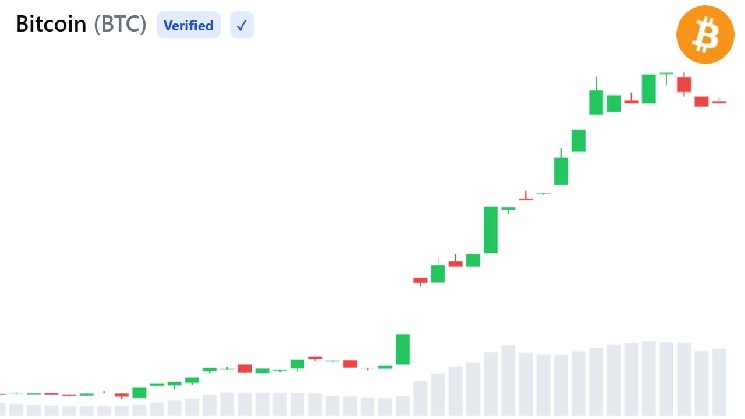
Bitcoin broke through $64,000 intraday, rising 3% from the day's low. Digital assets found support against a weaker dollar backdrop. COMEX silver for August delivery closed up 1.74% at $66.121/ounce.

What to Watch Today

Market focus on Tuesday will be in two directions.

First, subsequent developments in the U.S.-Iran situation. Following the MOU expiration, any new contacts or escalation in confrontation will directly impact oil prices and risk asset performance. Trump's "no hurry" stance suggests geopolitical risk premium will be difficult to eliminate in the short term.

Second, Baidu's earnings report and conference call. Key points will be the pulling effect of AI large models on cloud business and the recovery pace of advertising. With the Golden Dragon Index underperforming, Baidu's results will test whether global funds' stance on Chinese stocks is seeing marginal changes.


Трендові криптовалюти

Пов'язані питання

QWhat were the main factors contributing to the rise in oil prices as mentioned in the article?

AThe main factor was the heightened geopolitical risk from the U.S.-Iran tensions. The article states that the negotiating window for the U.S.-Iran memorandum of understanding expired with no extension. Hardline statements from both sides, including warnings from Trump, dimmed prospects for a long-term agreement. This political uncertainty, rather than fundamental supply and demand, drove the risk premium in oil prices.

QWhy did U.S. Treasury yields, particularly the 30-year yield, rise significantly according to the article?

AAccording to the article, the 30-year U.S. Treasury yield rose to its highest level since 2007, driven primarily by supply pressures. Two key factors were cited: massive corporate debt issuance (a record for August) to fund AI investments, and continuous high issuance of government bonds to finance the U.S. deficit. Additionally, major foreign holders like China were reportedly selling U.S. Treasuries, reducing demand and pushing yields higher.

QHow did the Philadelphia Semiconductor Index perform relative to the broader market, and which specific chip sectors were highlighted?

AThe Philadelphia Semiconductor Index rebounded 1.6%, returning to a bull market after a very short bear market period. This performance was strong and went against the trend of the broader market, where major indices were down. The article specifically highlighted that memory chip stocks (like SanDisk, Western Digital, Micron) and optical communication stocks (like Coherent, Lumentum) were the leaders of this gain, driven by confidence in AI-related demand.

QWhat was the contrasting performance between the 'Magnificent Seven' tech stocks and the semiconductor sector?

AThe performance was contrasting or diverging. The 'Magnificent Seven' tech giants, including Meta, all closed lower, acting as a drag on the main indices. This was attributed to pressure from rising long-term bond yields, which negatively impact high-valuation growth stocks. Meanwhile, the semiconductor sector, particularly AI hardware segments, outperformed and closed higher. The article suggests this indicates money rotated within the tech sector from mega-cap tech into AI hardware perceived as having higher demand certainty.

QWhat were the price movements for key currencies and gold, and what were the driving forces behind them?

AThe U.S. Dollar Index fell for a third consecutive day, hitting a two-month low. Offshore Chinese Yuan (CNH) strengthened, breaking past 6.74 per dollar to a three-year high. Gold prices rose over 1% to close at a two-month high. The article attributes gold's strength to strong safe-haven demand due to heightened geopolitical risk, which outweighed the typical negative pressure from rising U.S. Treasury yields. The movements in currency and gold were partly linked to dollar weakness and risk-off sentiment.

Пов'язані матеріали

Mysterious "Whale" Sells $576 Million Worth of Bitcoin Amid BTC Price Approach to $80,000

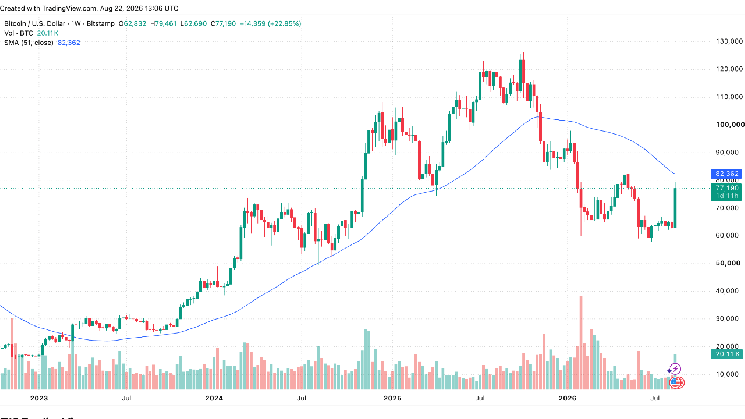
An unidentified crypto "whale" sold 2,700 BTC (worth approximately $211.8 million) in a single transaction, bringing its total sales over three days to 7,700 BTC for roughly $576.6 million. This selling pressure occurs as Bitcoin trades near the $80,000 mark, having recently retreated from nearly reaching that level. While large holders often sell to realize profits during sharp rallies, on-chain data only confirms the movement of coins, not the motive. So far, these sales have had little impact on Bitcoin's upward momentum, with the asset posting double-digit gains recently and its strongest weekly increase since 2024. The rally was fueled by a U.S. Treasury Department announcement to at least double its long-term bond buyback operations starting September 9th, which lowered bond yields and pushed investors toward riskier assets like Bitcoin. This week's selling marks a reversal from a recent accumulation trend, where large holders had added about 43,000 BTC (worth ~$2.75B) over a 60-day period ending in mid-August, helping set the stage for the current price surge. As Bitcoin hovers around $80,000, traders are watching key factors: whether other major holders will follow suit and sell into strength, and if renewed institutional demand from ETFs can absorb the selling pressure. The outcome will likely determine Bitcoin's next major price move.

cryptonews.ru27 хв тому

Mysterious "Whale" Sells $576 Million Worth of Bitcoin Amid BTC Price Approach to $80,000

cryptonews.ru27 хв тому

Illinois' 0.2% Cryptocurrency Tax Sparks Major Legal Battle

Blockchain Association and Crypto Council for Innovation filed a lawsuit on August 21 in an Illinois district court against state officials, seeking to declare the state's Digital Asset Tax Act unlawful and block its implementation. The lawsuit centers on Illinois' plan to impose a 0.2% tax on the value of a digital asset for certain transactions through a digital asset broker, effective January 1. Plaintiffs argue the tax applies even to non-sales activities like transferring assets between wallets or paying for custody services, which is unlike the treatment of traditional assets like stocks or gold. They contend this discriminates against digital assets, taxing the mechanism of storage or transfer rather than an economic gain. The complaint highlights multiple ambiguities: a single crypto purchase involving exchange, deposit, and custody could trigger multiple taxable events; the law doesn't define how to value the asset or determine a customer's residency for tax purposes, leaving brokers guessing. Businesses face potential civil and criminal penalties for non-compliance, possibly leading them to avoid Illinois customers. The groups also challenge the legislative process, noting the tax was added as a small part of a massive 1,624-page bill passed hastily, violating constitutional requirements. They claim the tax violates federal laws like the Internet Tax Freedom Act and the dormant Commerce Clause. The immediate goal is to obtain an injunction before the January 1 enforcement date, testing whether a state can single out digital asset transactions for such a tax.

cryptonews.ru30 хв тому

Illinois' 0.2% Cryptocurrency Tax Sparks Major Legal Battle

cryptonews.ru30 хв тому

Торгівля

Спот

Популярні статті

Як купити CHIP

Ласкаво просимо до HTX.com! Ми зробили покупку USD.AI (CHIP) простою та зручною. Дотримуйтесь нашої покрокової інструкції, щоб розпочати свою криптовалютну подорож.Крок 1: Створіть обліковий запис на HTXВикористовуйте свою електронну пошту або номер телефону, щоб зареєструвати обліковий запис на HTX безплатно. Пройдіть безпроблемну реєстрацію й отримайте доступ до всіх функцій.ЗареєструватисьКрок 2: Перейдіть до розділу Купити крипту і виберіть спосіб оплатиКредитна/дебетова картка: використовуйте вашу картку Visa або Mastercard, щоб миттєво купити USD.AI (CHIP).Баланс: використовуйте кошти з балансу вашого рахунку HTX для безперешкодної торгівлі.Треті особи: ми додали популярні способи оплати, такі як Google Pay та Apple Pay, щоб підвищити зручність.P2P: Торгуйте безпосередньо з іншими користувачами на HTX.Позабіржова торгівля (OTC): ми пропонуємо індивідуальні послуги та конкурентні обмінні курси для трейдерів.Крок 3: Зберігайте свої USD.AI (CHIP)Після придбання USD.AI (CHIP) збережіть його у своєму обліковому записі на HTX. Крім того, ви можете відправити його в інше місце за допомогою блокчейн-переказу або використовувати його для торгівлі іншими криптовалютами.Крок 4: Торгівля USD.AI (CHIP)Легко торгуйте USD.AI (CHIP) на спотовому ринку HTX. Просто увійдіть до свого облікового запису, виберіть торгову пару, укладайте угоди та спостерігайте за ними в режимі реального часу. Ми пропонуємо зручний досвід як для початківців, так і для досвідчених трейдерів.

901 переглядів усьогоОпубліковано 2026.04.21Оновлено 2026.06.02

Як купити CHIP

Обговорення

Ласкаво просимо до спільноти HTX. Тут ви можете бути в курсі останніх подій розвитку платформи та отримати доступ до професійної ринкової інформації. Нижче представлені думки користувачів щодо ціни CHIP (CHIP).

活动图片