Grayscale Lists 3 Reasons Why Bitcoin Is Worth Buying Right Now

cryptonews.ruОпубліковано о 2026-08-22Востаннє оновлено о 2026-08-22

Анотація

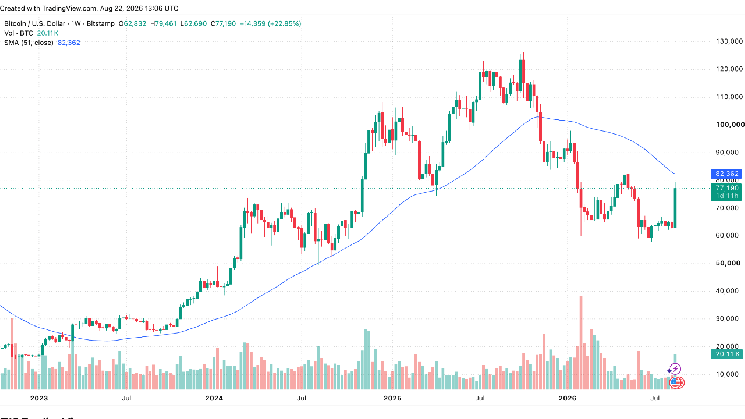
Grayscale's Head of Research, Zach Pandl, suggests Bitcoin may currently be a favorable buying opportunity for long-term investors. In an assessment from August 21st, he based this view on three key factors, while emphasizing that Bitcoin's future behavior remains uncertain. The first factor is the enduring structural trend of Bitcoin adoption, driven by government deficits, growing blockchain use in financial services, and generational shifts in investment portfolios. The second is Bitcoin's market cycle position, noting the current bear market has lasted 10 months, approaching the typical duration of past cycles. The third factor is the macroeconomic outlook, particularly real interest rates and Federal Reserve policy, which has recently shifted to be more favorable. Pandl acknowledges Bitcoin's price volatility, referencing a recent swing to $79,461 before a pullback, and cautions that further Fed rate hikes could pressure prices. He concludes that, taken together, these three factors—ongoing adoption, a deep bear market phase, and generally supportive macro conditions—indicate current prices could be an attractive entry point for long-term investors. Grayscale's evaluation focuses on market conditions rather than predicting an absolute price bottom.

According to Zack Pandl, Head of Research at Grayscale, Bitcoin may currently represent a favorable buying opportunity for investors with long-term horizons. In his August 21 assessment on whether now is a suitable time to buy Bitcoin, Pandl formulated the decision based on three questions, though he emphasized that no one knows how Bitcoin will behave in the future.

Grayscale generally does not recommend that investors try to time the market and instead advises considering Bitcoin as part of a diversified portfolio. Pandl noted that uncertainty about the optimal purchase price may prevent some people from allocating funds to this investment, especially after significant market downturns or sudden price spikes.

The Grayscale Head of Research stated:

"We believe that all three factors indicate that current prices may represent an attractive entry point for investors with long-term perspectives. The trend towards structural adoption remains unchanged, we are in a deep bear market phase, and macroeconomic prospects generally look favorable. Of course, time will tell."

Bitcoin does not generate cash flow like stocks or bonds, making it difficult to apply traditional valuation methods. Investors cannot assess its value based on earnings, dividends, or interest payments, so decisions often depend on adoption trends, market cycles, monetary conditions, and expectations about future demand.

Bitcoin's recovery has made the question of timing the purchase more relevant for those considering acquisition. The BTC price rose to $79,461 before declining to around $77,000. This movement highlights how quickly market conditions can change.
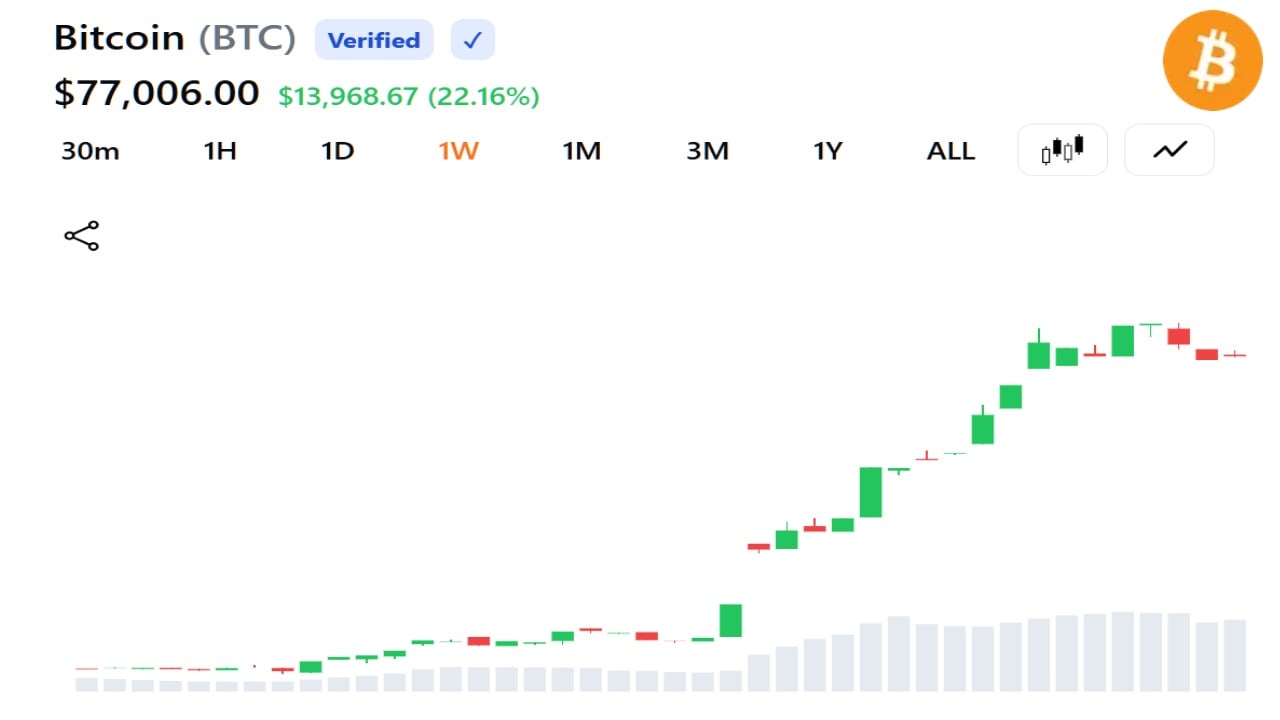
Bitcoin price chart as of August 22. Source: Bitcoin.com Markets

Bitcoin's Adoption and Cycle Confirm Grayscale's Arguments

The first factor is whether the long-term trend towards Bitcoin adoption will persist, despite its price falling from the October 2025 record high. Previously, Grayscale highlighted three factors driving Bitcoin adoption: government deficit, growing blockchain use in financial services, and generational shifts in investors' portfolio approaches.

Government borrowing supports Grayscale's view that demand for assets with limited supply may grow, although rising debt does not automatically lead to Bitcoin purchases. Official US Treasury Department data showed that on August 20, the total national debt was approximately $40.03 trillion, including $32.28 trillion held by the public.

The second factor is Bitcoin's position within its recurring cycle of price increases and decreases. Grayscale reported that the current bear market has lasted 10 months, while the average and median duration of the four previous cyclical bear markets ranged from 11 to 12 months. Prior to the August recovery, Bitcoin had already experienced a prolonged but relatively shallow bear market.

Interest Rates May Determine If Bitcoin Has Bottomed

The third factor is the outlook for macroeconomic risks, specifically real interest rates and Federal Reserve policy. In July, the Fed's Open Market Committee decided to keep the federal funds rate at 3.5–3.75%, although three officials favored a quarter-percentage-point increase. Grayscale stated that future rate hikes could subject Bitcoin to further losses.

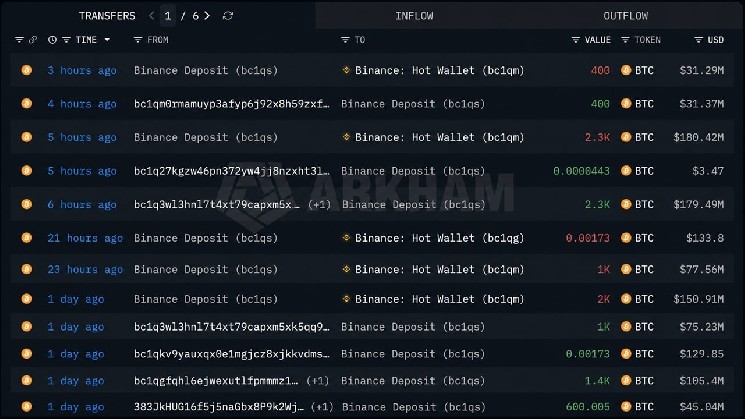
Financial conditions recently shifted in Bitcoin's favor when Pandl published his assessment. On August 21, Bitcoin reached $79,461, as spot buying, short covering, and demand from exchange-traded funds supported a strong Bitcoin market recovery. However, analysts warned that coins transferred to exchanges for profit-taking could create new selling pressure.

Pandl added:

"Investors trying to determine if now is the right time to buy Bitcoin should consider structural adoption trends, the state of the cycle, and macroeconomic risks. We believe that all three factors together make this moment an attractive entry point for investors."

Bitcoin can be purchased using several payment methods, while also choosing whether the asset will be credited to a personal wallet or a platform account. Fees, identification requirements, and settlement times vary by method, and the storage form determines who controls the keys—the buyer or the platform. Grayscale's assessment concerns market conditions, not certainty that the current price represents the ultimate bottom.

Пов'язані питання

QAccording to Grayscale's head of research, what are the three key factors that currently make Bitcoin an attractive entry point for long-term investors?

AAccording to Grayscale's head of research, Zach Pandl, the three key factors are: 1) The enduring structural trend of Bitcoin adoption, 2) The asset being in a deep phase of a bear market, and 3) Favorable macroeconomic prospects, particularly regarding real interest rates.

QWhat is one of the challenges in valuing Bitcoin mentioned in the article, and how does it differ from traditional assets like stocks?

AOne major challenge in valuing Bitcoin is that it does not generate cash flow like stocks or bonds. Therefore, traditional valuation methods based on earnings, dividends, or interest payments cannot be applied. Investment decisions instead rely on factors like adoption trends, market cycles, monetary conditions, and future demand expectations.

QBased on historical cycles, how long is the average duration of Bitcoin's previous bear markets, and how does the current one compare?

AAccording to Grayscale, the average and median duration of the four previous cyclical bear markets was 11 to 12 months. The current bear market, at the time of the report, had lasted for 10 months, suggesting it is already in a deep and relatively prolonged phase.

QWhat potential risk from the Federal Reserve could subject Bitcoin to further losses, as noted by Grayscale?

AGrayscale noted that a future increase in the federal funds rate by the Federal Reserve could subject Bitcoin to further losses. At their July meeting, three officials had voted for a quarter-point hike despite the rate being held steady.

QWhat event on August 21st contributed to Bitcoin's price reaching $79,461, and what subsequent warning did analysts provide?

AOn August 21st, Bitcoin reached $79,461 due to a combination of spot purchases, short covering, and demand from exchange-traded funds, which supported a strong market recovery. However, analysts warned that coins being transferred to exchanges for profit-taking could create new selling pressure.

Пов'язані матеріали

Mysterious "Whale" Sells $576 Million Worth of Bitcoin Amid BTC Price Approach to $80,000

An unidentified crypto "whale" sold 2,700 BTC (worth approximately $211.8 million) in a single transaction, bringing its total sales over three days to 7,700 BTC for roughly $576.6 million. This selling pressure occurs as Bitcoin trades near the $80,000 mark, having recently retreated from nearly reaching that level. While large holders often sell to realize profits during sharp rallies, on-chain data only confirms the movement of coins, not the motive. So far, these sales have had little impact on Bitcoin's upward momentum, with the asset posting double-digit gains recently and its strongest weekly increase since 2024. The rally was fueled by a U.S. Treasury Department announcement to at least double its long-term bond buyback operations starting September 9th, which lowered bond yields and pushed investors toward riskier assets like Bitcoin. This week's selling marks a reversal from a recent accumulation trend, where large holders had added about 43,000 BTC (worth ~$2.75B) over a 60-day period ending in mid-August, helping set the stage for the current price surge. As Bitcoin hovers around $80,000, traders are watching key factors: whether other major holders will follow suit and sell into strength, and if renewed institutional demand from ETFs can absorb the selling pressure. The outcome will likely determine Bitcoin's next major price move.

cryptonews.ru50 хв тому

Mysterious "Whale" Sells $576 Million Worth of Bitcoin Amid BTC Price Approach to $80,000

cryptonews.ru50 хв тому

Illinois' 0.2% Cryptocurrency Tax Sparks Major Legal Battle

Blockchain Association and Crypto Council for Innovation filed a lawsuit on August 21 in an Illinois district court against state officials, seeking to declare the state's Digital Asset Tax Act unlawful and block its implementation. The lawsuit centers on Illinois' plan to impose a 0.2% tax on the value of a digital asset for certain transactions through a digital asset broker, effective January 1. Plaintiffs argue the tax applies even to non-sales activities like transferring assets between wallets or paying for custody services, which is unlike the treatment of traditional assets like stocks or gold. They contend this discriminates against digital assets, taxing the mechanism of storage or transfer rather than an economic gain. The complaint highlights multiple ambiguities: a single crypto purchase involving exchange, deposit, and custody could trigger multiple taxable events; the law doesn't define how to value the asset or determine a customer's residency for tax purposes, leaving brokers guessing. Businesses face potential civil and criminal penalties for non-compliance, possibly leading them to avoid Illinois customers. The groups also challenge the legislative process, noting the tax was added as a small part of a massive 1,624-page bill passed hastily, violating constitutional requirements. They claim the tax violates federal laws like the Internet Tax Freedom Act and the dormant Commerce Clause. The immediate goal is to obtain an injunction before the January 1 enforcement date, testing whether a state can single out digital asset transactions for such a tax.

cryptonews.ru53 хв тому

Illinois' 0.2% Cryptocurrency Tax Sparks Major Legal Battle

cryptonews.ru53 хв тому

Musk Awaits $50 Trillion: Is There a Limit to the U.S. National Debt and What Comes Next?

Elon Musk reacted to a projection of US national debt reaching $50 trillion by 2030, labeling it a "precise timeline" with a laughing emoji. The debt has recently passed the $40 trillion mark. Skeptics note that specific debt thresholds have been breached before without immediate collapse. However, analysts warn the focus should shift from the nominal debt amount to its affordability. A key metric is when the average interest rate on the debt exceeds the economy's growth rate, a point the US Congressional Budget Office projects for 2031. Once this "debt spiral" begins, interest costs grow self-reinforcing. Currently, interest payments have already surpassed defense spending, exceeding $1 trillion annually. Ray Dalio warns a debt crisis could occur within "three years, plus or minus two," advising portfolio diversification into gold and some Bitcoin. Potential outcomes if debt becomes unmanageable include: 1) Financial repression and monetization (the "Japanese path" of controlled yields and inflation), seen as the most likely; 2) Severe austerity (the "Greek path" of spending cuts/tax hikes), considered politically unlikely; or 3) Technical default/restructuring, which would cause global financial shock. The most probable path is a hybrid of moderate financial repression and gradual inflation, leading not to a sudden crash but to long-term economic stagnation and a declining standard of living. By 2056, debt could reach 175% of GDP. Ultimately, the limit for US debt is not a fixed number but a function of market confidence in the dollar.

cryptonews.ru2 год тому

Musk Awaits $50 Trillion: Is There a Limit to the U.S. National Debt and What Comes Next?

cryptonews.ru2 год тому

Торгівля

Спот
活动图片