How to Uncover New Wealth Opportunities? Renowned Independent Crypto Analyst Releases Top 10 Predictions for 2026

marsbitОпубліковано о 2026-01-13Востаннє оновлено о 2026-01-13

Анотація

In this article, independent crypto analyst Miles Deutscher shares his top 10 predictions for the cryptocurrency market in 2026. Key forecasts include Bitcoin ending the year higher than it started, potentially above $90,000, though a parabolic surge beyond $150,000 is uncertain. He anticipates that institutional investors will continue to drive the market more than retail, emphasizing the importance of tokens with strong revenue models and real utility. Major growth is expected in several sectors: prediction markets could see a 5x volume increase, perpetual futures trading will expand beyond crypto into stocks and metals, and ICO participation will hit new highs due to favorable regulations. Real-World Assets (RWA) are predicted to have their second-biggest year, while neobanks leveraging crypto and stablecoins are poised for exponential growth as infrastructure improves. The intersection of AI and crypto is highlighted as a major narrative, with advancing technology enabling practical applications in agents, data, and automation. Additionally, stablecoin supply is projected to grow by over 50%, fueled by regulatory developments like the U.S. Clarity Act. Deutscher encourages readers to focus on fundamental value and emerging narratives to capture upside opportunities.

Author:Miles Deutscher

Compiled by: Jiahuan, ChainCatcher

In this article, I will break down my top 10 cryptocurrency predictions for 2026 in detail. These include my price prediction for $BTC, top altcoin narratives, the prospects of crypto and AI integration, and more. This is an exercise I do every year, and it really helps me calibrate my direction for the new year. Even if you don't agree with all the predictions here, I hope this will inspire your thinking and prompt you to create your own list to prepare for this year and capture the greatest upside potential.

10. Prediction Market Trading Volume to Grow 5x

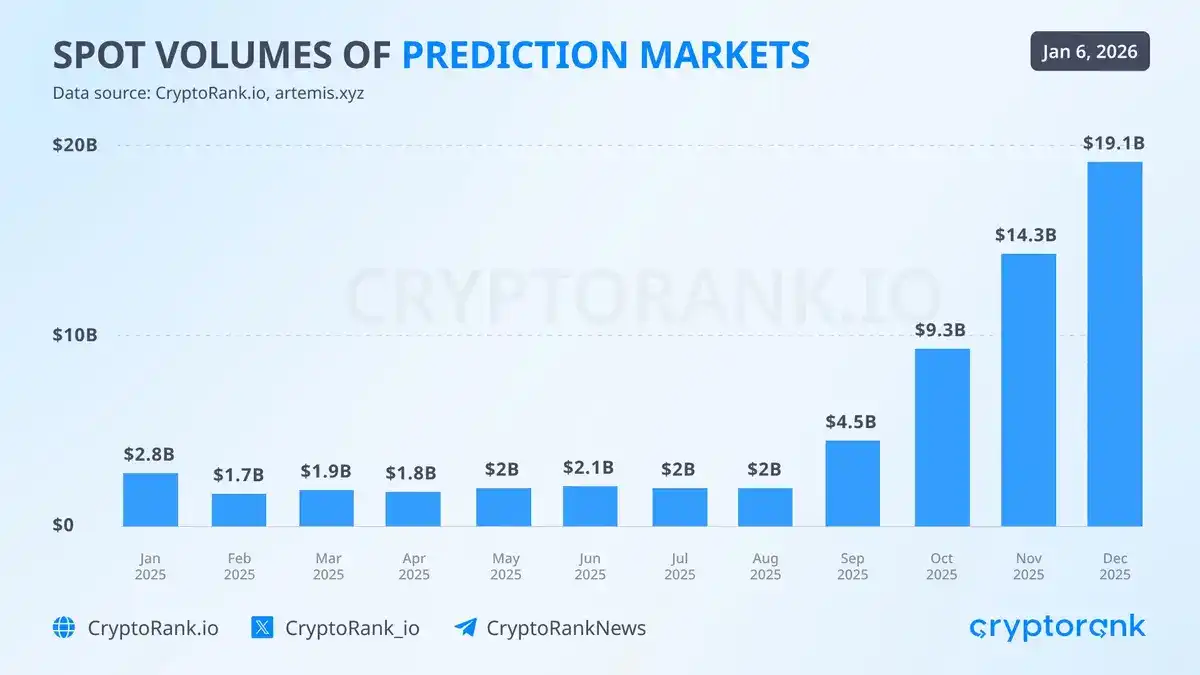
From January 2025 to today, the trading volume of prediction markets has grown by about 10 times. I believe this trend will continue, and in 2026, we will see at least one month where the volume reaches 5 times the current level. A 5x increase from the current trading volume would equate to approximately $95 billion per month. Another factor to consider is the rise of "adjacent protocols" built on top of prediction markets. For example, @intodotspace is building the first leveraged prediction market. This trend will further amplify trading volume.
9. Explosive Growth in Stock/Metal Perpetual Contracts

The argument here is simple: we will continue to see the proliferation of perpetual contracts in the mainstream—not just limited to crypto token trading. 2025 was the year perpetual futures technology exploded in the crypto space—instant settlement, excellent UI/UX, decentralization, etc. Secondly, gold/metals/stocks are in a fierce bull market. Typically, as the cycle nears its peak, people move further down the risk curve in pursuit of returns (perpetual contracts are well-suited to benefit from small-cap/emerging markets).

In many cases, accessing through crypto channels is easier and faster than buying stocks/gold through traditional finance (TradFi) channels. Due to this combined effect, I believe we will see explosive growth in the trading volume of stocks/metals on perpetual DEXs, and perpetual contract trading will extend far beyond crypto tokens.

8. The "Renaissance" of ICOs Continues

Due to a major shift in the regulatory environment, the public now has unprecedented access to participate in token sales. ICO participation is at an all-time high, and I expect this overall upward trend to continue. If you're interested in profiting from ICOs, I recently published a complete tweet thread and a free Notion template to help you stay organized in this space—you can check it out below.

7. Altcoins with Strong Revenue Models Will Win

The market sentiment has clearly shifted, favoring real businesses over pure speculation and hype. Of course, the latter will always have a place in the market, but more and more investors (both large and small) are looking for real "flywheels" to support token prices (amid a sea of token dilution).

I believe protocols that genuinely generate revenue will continue to dominate. Simply put, protocols with real revenue mechanisms will perform better than those without. Keep an eye on companies/projects/teams that are actually generating revenue.

6. RWA Will Have Its Second-Biggest Breakout Ever

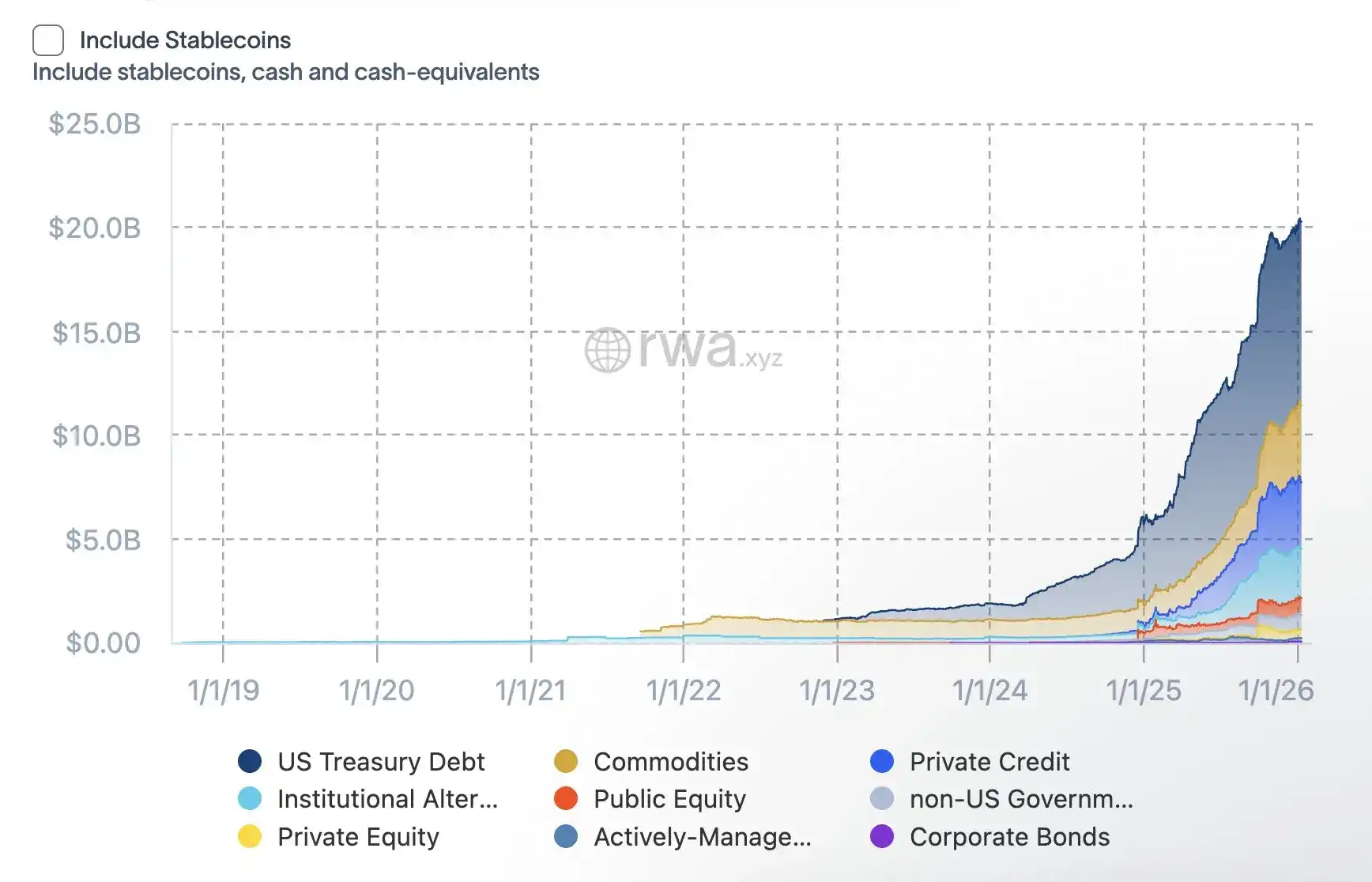
I’d love to say RWA will have its biggest year ever. However, technically, it’s hard to beat the $14 billion growth in 2025. I think liquidity will continue to flow into this space, and it will be another fruitful year, but the percentage increase might be smaller than in 2025. 2026 may bring many yield/tokenization opportunities and numerous altcoin trading setups in this field.
5. Neobanks Become the Most Exponentially Growing Sector in Crypto

It feels like we’ve finally reached a tipping point for crypto/stablecoin banking. The infrastructure has finally caught up with demand, and we’re seeing explosive growth in the adoption of many products. Being able to easily convert between cryptocurrency and fiat is a much-needed solution. This sector has the largest total addressable market (basically the entire financial world) and is actively solving problems in developing countries and regions where traditional financial systems are less accessible. This is a huge market, and I expect we will finally (truly) crack it this year.

4. AI / AI Agents Make a Real Comeback

Last January, we either experienced a crazy AI hype season that drove up the prices of Crypto x AI protocols—the only problem was that the technology hadn’t caught up yet. Entering 2026, things are different; the technology can actually deliver on the hype. For me, 2026 is undoubtedly the most critical year for AI so far (just like every year), and as people speculate on AI’s upside, retail interest can easily spill over into the crypto space. Crypto x AI is the perfect synergy. Crypto brings the freedom of financial rails, and AI brings automation, which I believe is the future of finance. I think this will create opportunities in many AI sub-sectors, including x402, robotics, agentic workflows, AI data/infrastructure, etc.

3. Stablecoin Supply to Grow by Over 50%

Last year, the total stablecoin supply grew by 50% (from $200 billion to $300 billion). I believe this year we will see similar growth in stablecoin supply, further catalyzed by the U.S. Clarity Act for stablecoins.

2. Institutional Driving Force in Crypto Market to Surpass Retail

This entire cycle has been institutionally driven (DATs, ETF pushes, etc.). I expect this shift toward institutionally driven markets to continue—which is why I focus on tokens/protocols that can attract institutional interest (back to my point about focusing on real revenue projects).

1. BTC Year-End Price Will Be Higher Than Year-Start

Whether $BTC will experience a crazy "blow-off top" above $150,000 this year depends on many factors: fund flows/buyer demand, DATs, macro background, etc.

Frankly, I’m not sure if the market can gather all the right conditions to trigger that most extreme疯牛见顶 mode. However, I think Bitcoin will close with a bullish price candle at the end of 2026. This means $BTC must close above the $90,000 range.

To summarize my long logic on this (I may go into more detail in a later post): we are likely in the final year of the business cycle, and we’re seeing price bottoming behavior similar to previous years, which makes me believe we will at least close green this year—I’ll dive deeper into my exact thesis on this in the coming weeks, stay tuned.

Пов'язані питання

QWhat is the author's price target for Bitcoin by the end of 2026?

AThe author believes Bitcoin will close the year with a bullish candle, meaning it must close above the $90,000 range.

QWhich sector does the analyst predict will be the most exponentially growing in crypto space for 2026?

AThe analyst predicts that Digital Banks (Neobanks) will be the most exponentially growing sector in the crypto space for 2026.

QWhat is the predicted growth for the total stablecoin supply in 2026?

AThe analyst predicts the stablecoin supply will increase by more than 50% in 2026, similar to its growth the previous year.

QAccording to the predictions, what will be the main driving force of the crypto market in 2026, institutions or retail?

AThe main driving force of the crypto market in 2026 is predicted to be institutions, surpassing retail investors.

QWhich narrative does the analyst believe will make a 'real comeback' in 2026 with the technology now able to deliver on its promises?

AThe analyst believes that AI / AI Agents will make a real comeback in 2026, as the technology can now deliver on its promises.

Пов'язані матеріали

From 'Word Unit' to 'Symbol Unit': The Debate Over the Chinese Translation of 'Token' and Its Underlying AI Cognitive Implications

Recent discussions have emerged regarding the official Chinese translation of the AI term "Token," which has been recommended as “词元” (Cíyuán, meaning "word unit") by the National Committee for Terminology in Science and Technology. While this translation is argued to align with historical usage in natural language processing (NLP) and is considered concise and communicable, this article presents a critical counterview advocating for “符元” (Fúyuán, meaning "symbol unit") as a more structurally accurate and future-proof alternative. The author argues that defining Token based on its origin in NLP—as a linguistic semantic unit—overlooks its evolution into a general-purpose, discrete symbolic unit used across multimodal systems (text, image, audio, etc.). Using “词元” ties the concept too narrowly to language, causing cognitive misalignment and semantic drift when applied in non-linguistic contexts. By contrast, “符元” reflects Token’s fundamental role as a symbol in information theory and computation, independent of modality. The article further critiques the reliance on metaphorical extensions (e.g., comparing image patches to “words”) as insufficient for rigorous terminology. It highlights risks including confusion with existing linguistic terms like Lemma (also translated as “词元”), poor cross-lingual reversibility (e.g., difficult back-translation to English), and systemic misunderstanding among non-expert audiences. In conclusion, the author emphasizes that terminology should align with computational essence—not historical usage or explanatory convenience—to ensure conceptual clarity and scalability in AI’s multidisciplinary future. “符元” is proposed as a more neutral, stable, and structurally coherent translation for Token.

marsbit1 год тому

From 'Word Unit' to 'Symbol Unit': The Debate Over the Chinese Translation of 'Token' and Its Underlying AI Cognitive Implications

marsbit1 год тому

Aave Mired in a Crisis of Confidence: Service Providers Exit En Masse, Failures in Technology, Governance, and Risk Control

Aave, a leading DeFi lending protocol, is facing a severe internal crisis marked by the departure of key service providers, raising concerns about its governance, security, and future direction. The crisis began when Chaos Labs, the protocol's long-time risk management provider, terminated its relationship with Aave. The firm cited financial losses, the exit of other major contributors, and fundamental disagreements over the risk architecture of the upcoming Aave V4. Aave Labs declined Chaos Labs' demands for a significant fee increase and exclusive control over key functions like risk management and oracle services. This exit followed the departure of two other critical partners. BGD Labs, the primary technical contributor to Aave V3, accused Aave Labs of forcing an aggressive transition to V4 by limiting V3 development and devaluing its work. Subsequently, the Aave Chan Initiative (ACI), a major governance service provider, announced its planned exit, criticizing Aave Labs for centralizing power and controlling a large portion of voting tokens. The conflict highlights a central paradox within DAOs: the tension between founder-led vision and decentralized governance, and between long-term protocol health and short-term capital interests. Aave Labs is pushing for a more integrated and efficient "Aave Will Win" model with V4, arguing it is necessary for competing at an institutional level. However, critics warn this centralization comes at the cost of the protocol's decentralized credibility and increases systemic risk. The immediate impacts include a potential security downgrade, a loss of institutional knowledge, and damaged community trust. While Aave Labs views this as a painful but necessary transition, the market is watching cautiously as the protocol navigates this period of significant internal turmoil.

marsbit1 год тому

Aave Mired in a Crisis of Confidence: Service Providers Exit En Masse, Failures in Technology, Governance, and Risk Control

marsbit1 год тому

Торгівля

Спот
Ф'ючерси
活动图片