灰度研究洞察:2025年第四季度加密行业赛道分析

marsbitОпубліковано о 2025-09-27Востаннє оновлено о 2025-09-28

在2025年第三季度,所有六个加密行业赛道的价格回报均为正,而基本面变化则好坏参半。“加密行业赛道”是我们与指数提供商富时罗素(FTSE/Russell)合作开发的,用于组织数字资产市场和衡量回报的专有框架。

比特币的表现不及其他加密市场板块,这种回报模式可被视为一次“山寨季”——尽管与以往有所不同。

基于波动率调整后的价格回报,第三季度排名前20的代币榜单凸显了稳定币立法与普及、中心化交易所交易量上升以及数字资产金库(DATs)的重要性。

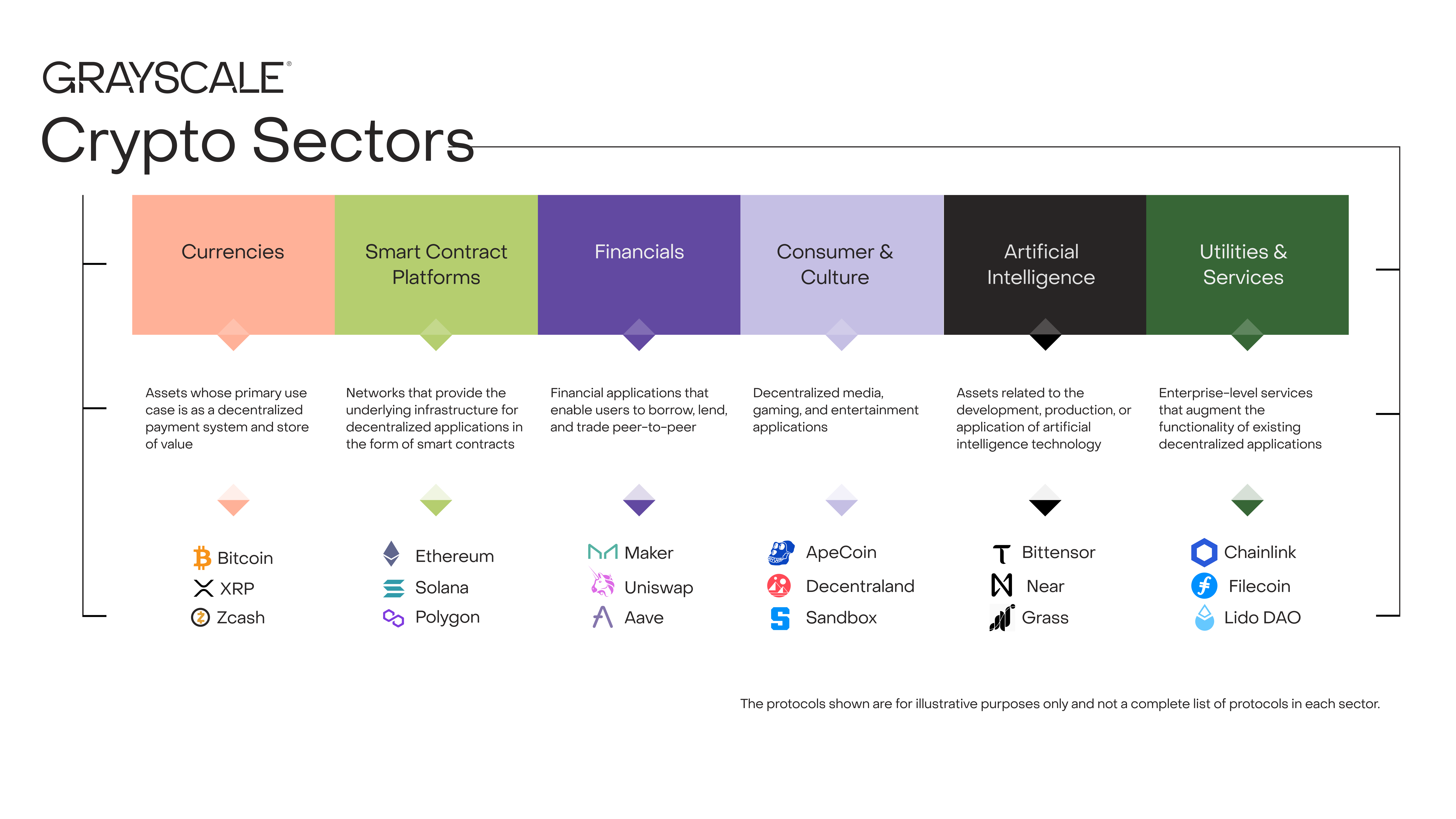
加密世界中的每一种资产都以某种方式与区块链技术相关,并共享相同的基本市场结构——但共同点也仅止于此。该资产类别包含了广泛的软件技术,其应用遍及消费金融、人工智能(AI)、媒体娱乐等多个领域。为了保持条理,灰度研究使用了一套名为“加密行业赛道”的专有分类法和指数家族,这是与富时罗素合作开发的。该框架涵盖了六个不同的市场板块(图表1)。它们总共包括261种代币,合计市值达到3.5万亿美元。

图表1:加密行业赛道框架有助于组织数字资产市场
山寨季

衡量区块链基本面

区块链并非商业企业,但我们可以用类似的方式衡量其经济活动和财务健康状况。链上活动最重要的三个衡量指标是:用户数、交易数和交易费用。由于区块链是假名的,分析师通常使用“活跃地址”(至少有一笔交易的区块链地址)作为用户数量的一个不完美替代指标。

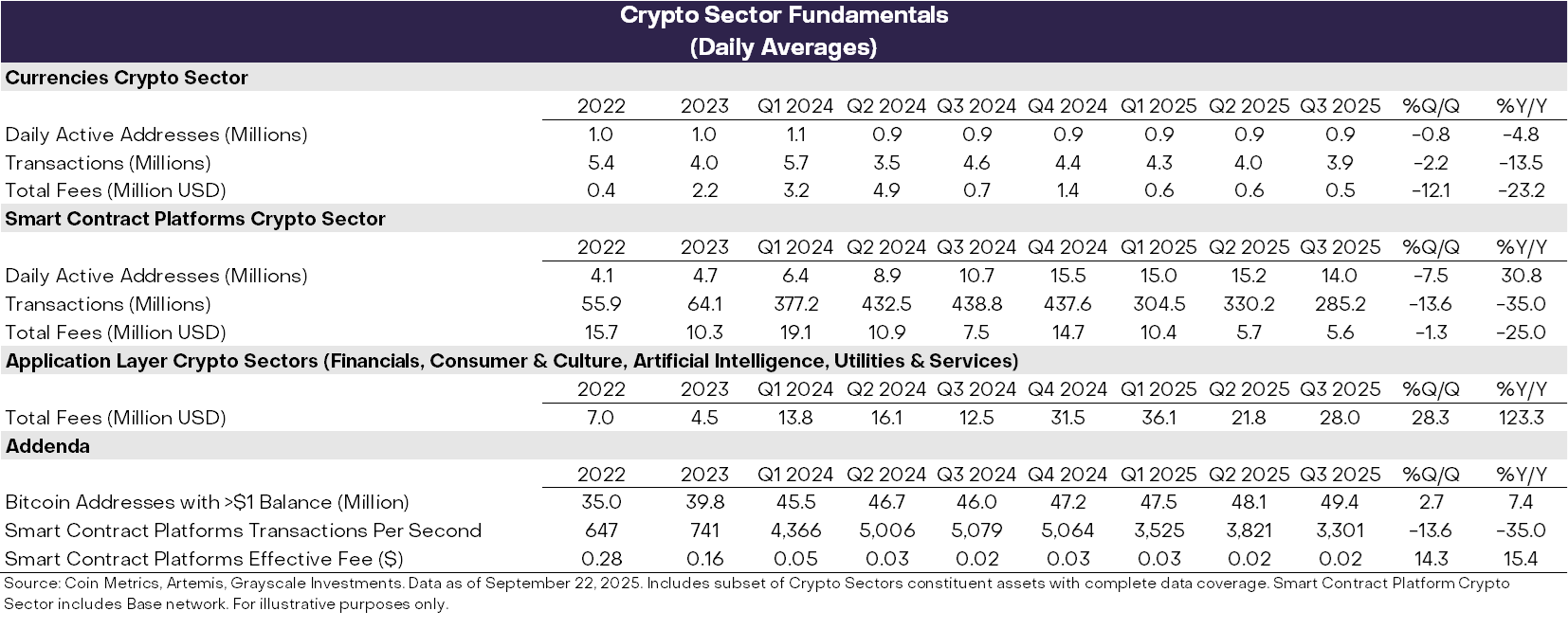
第三季度,区块链的健康基本面指标表现不一(图表2)。从负面来看,货币(Currencies)和智能合约平台(Smart Contract Platforms)这两个加密赛道的用户数、交易数和费用均出现环比下降。总体而言,与Meme币相关的投机活动自2025年第一季度以来有所减少,这导致了交易量和交易活动的双重下滑。

更令人鼓舞的是,基于区块链的应用费用环比增长了28%。这一增长主要由少数几个费用收入领先的应用活动集中驱动:(i)Jupiter,Solana上的去中心化交易所;(ii)Aave,加密领域领先的借贷协议;以及(iii)Hyperliquid,领先的永续期货交易所。按年化计算,应用层的费用收入现已超过100亿美元。区块链既是数字交易网络,也是应用平台。因此,应用费用的增加可以被视为区块链技术普及度上升的标志。

图表2:2025年第三季度各加密赛道基本面表现不一
山寨季


追踪价格表现

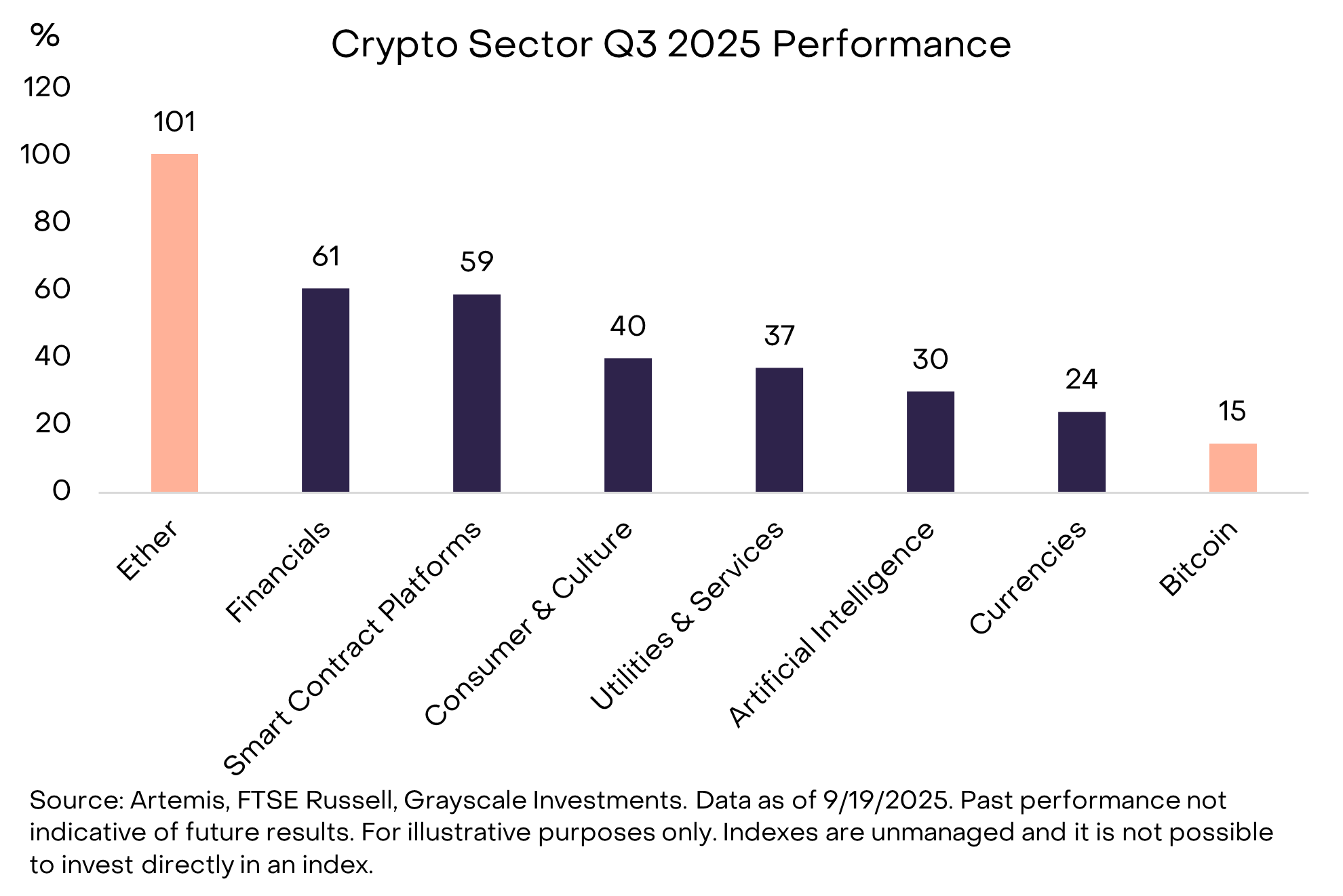
2025年第三季度,所有六个加密行业赛道均录得正回报(图表3)。比特币的表现不及其他市场板块,这种回报模式可被视为一次加密“山寨季”——尽管与以往比特币主导地位下降的时期有所不同。金融(Financials)赛道在中心化交易所(CEX)交易量上升的推动下表现领先,而智能合约平台赛道则可能受益于稳定币的立法和普及(智能合约平台是用户使用稳定币进行点对点支付的网络)。虽然所有赛道都取得了正回报,但人工智能(AI)赛道表现落后于其他市场板块,这与AI相关股票表现平平的时期相呼应。货币赛道同样表现不佳,反映了比特币价格相对温和的涨幅。

图表3:比特币表现不及其他加密市场板块
山寨季

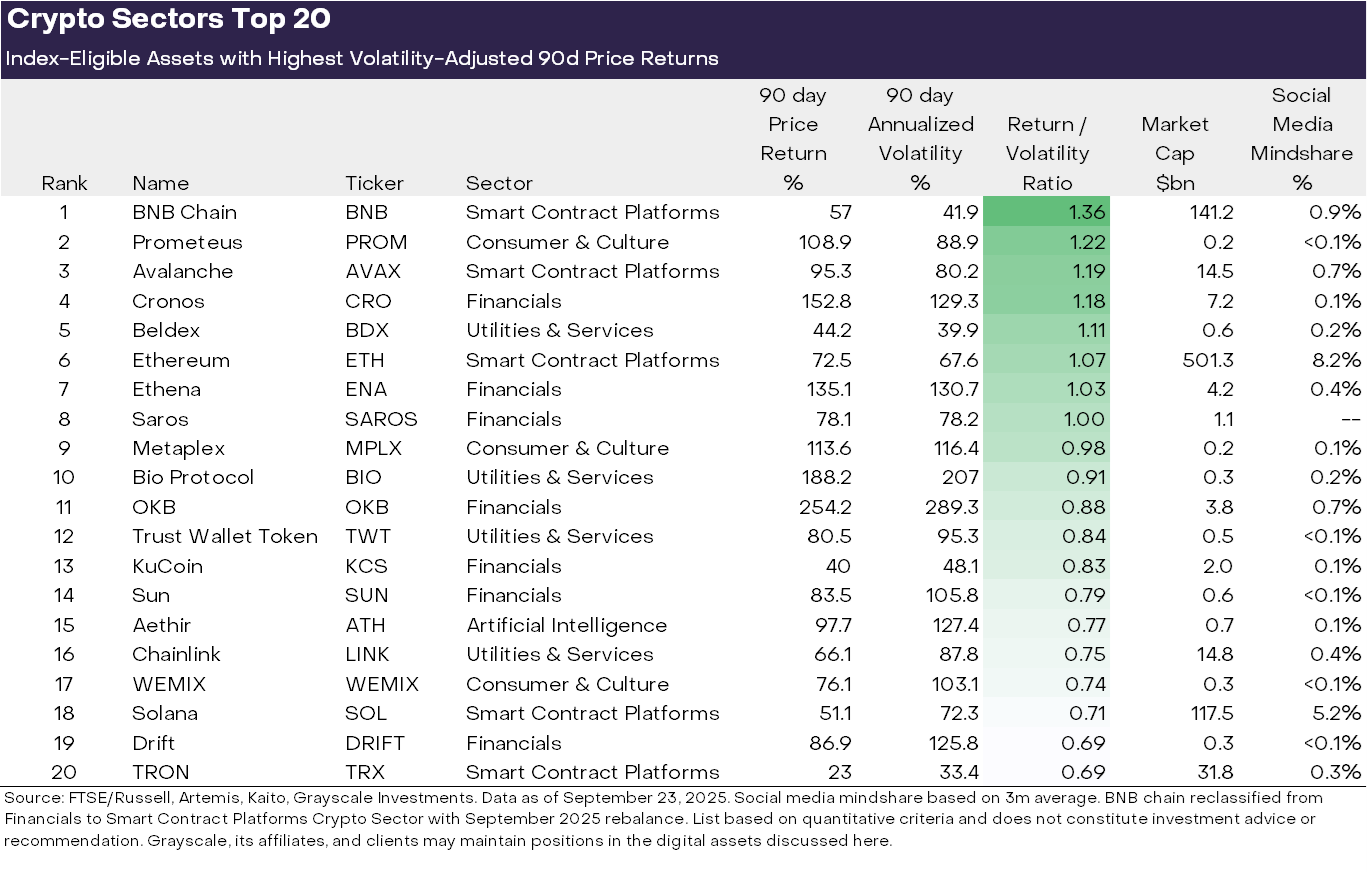
加密资产类别的多样性意味着市场主导主题和领导地位会频繁变化。在图表4中,我们展示了2025年第三季度基于波动率调整后价格回报排名前20的符合指数资格的代币。该名单包括了几个大市值(>100亿美元)代币,如ETH、BNB、SOL、LINK和AVAX,以及一些市值低于5亿美元的代币。本季度,金融赛道(7个资产)和智能合约平台赛道(5个资产)是前20名榜单中占比最高的。

图表4:按风险调整后回报排名的加密赛道中表现最佳的资产
山寨季

我们认为,从近期的市场表现中可以总结出三大主题:

(1) 数字资产金库(DATs): 上个季度见证了DATs的激增:即在资产负债表上持有加密货币并作为股票投资者风险敞口工具的上市公司。榜单前20名中的几个代币,包括ETH、SOL、BNB、ENA和CRO,可能都从新型DATs的创建中受益。

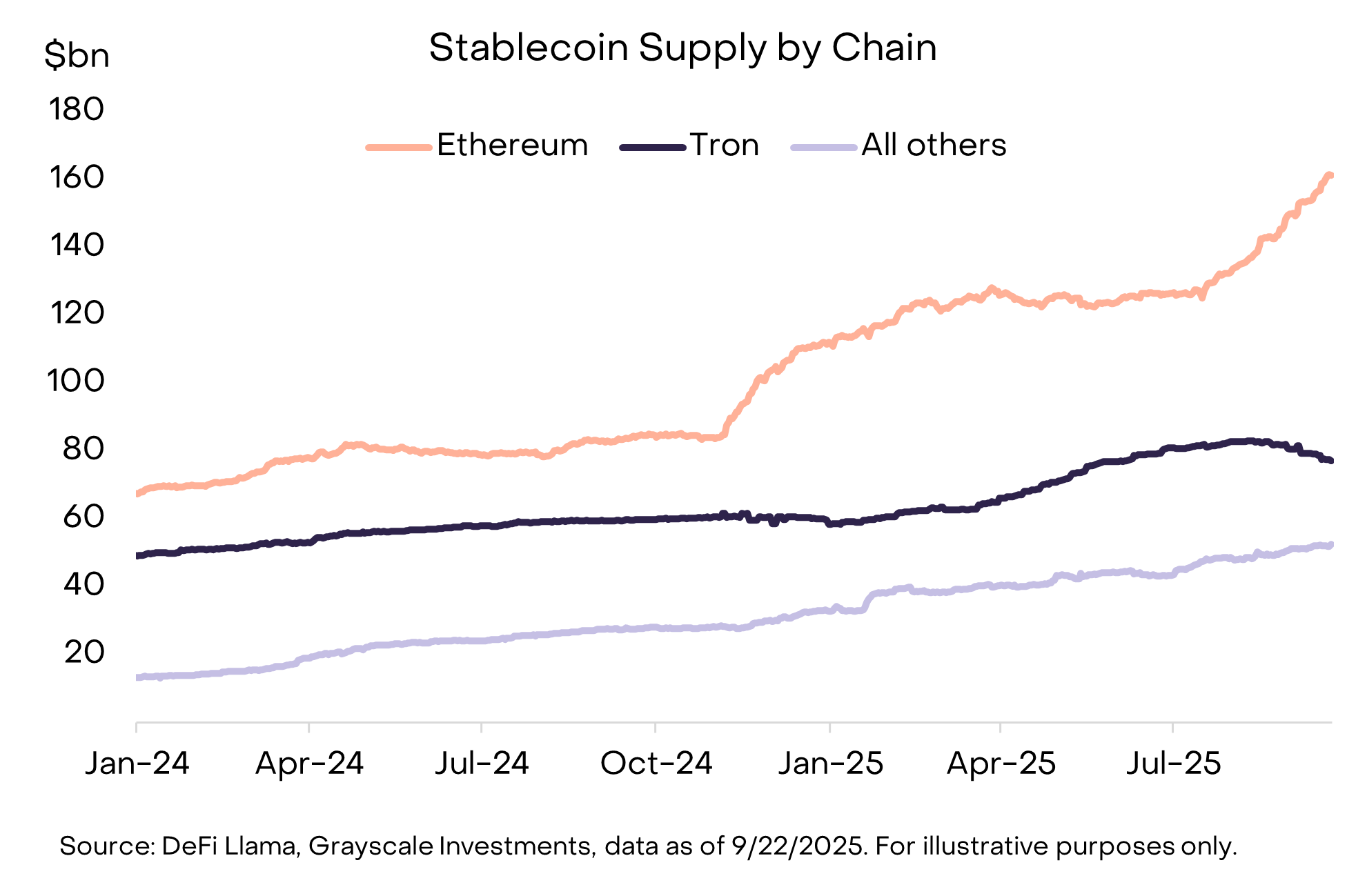
(2) 稳定币的普及: 上个季度的另一个主要主题是稳定币的立法和普及。7月18日,特朗普总统签署了《GENIUS法案》,为美国的稳定币提供了全面的监管框架。在该法案通过后,稳定币的普及加速,流通供应量增长16%,超过2900亿美元(图表5)。主要受益者是托管稳定币的智能合约平台,包括ETH、TRX和AVAX——后者的稳定币交易量出现了显著飙升。稳定币发行方Ethena(ENA)的价格回报也表现强劲,尽管其USDe稳定币不符合《GENIUS法案》的要求(USDe在去中心化金融中被大量使用,Ethena已推出了一个新的符合《GENIUS法案》的稳定币)。

图表5:本季度稳定币供应量增长,以太坊领跑
山寨季

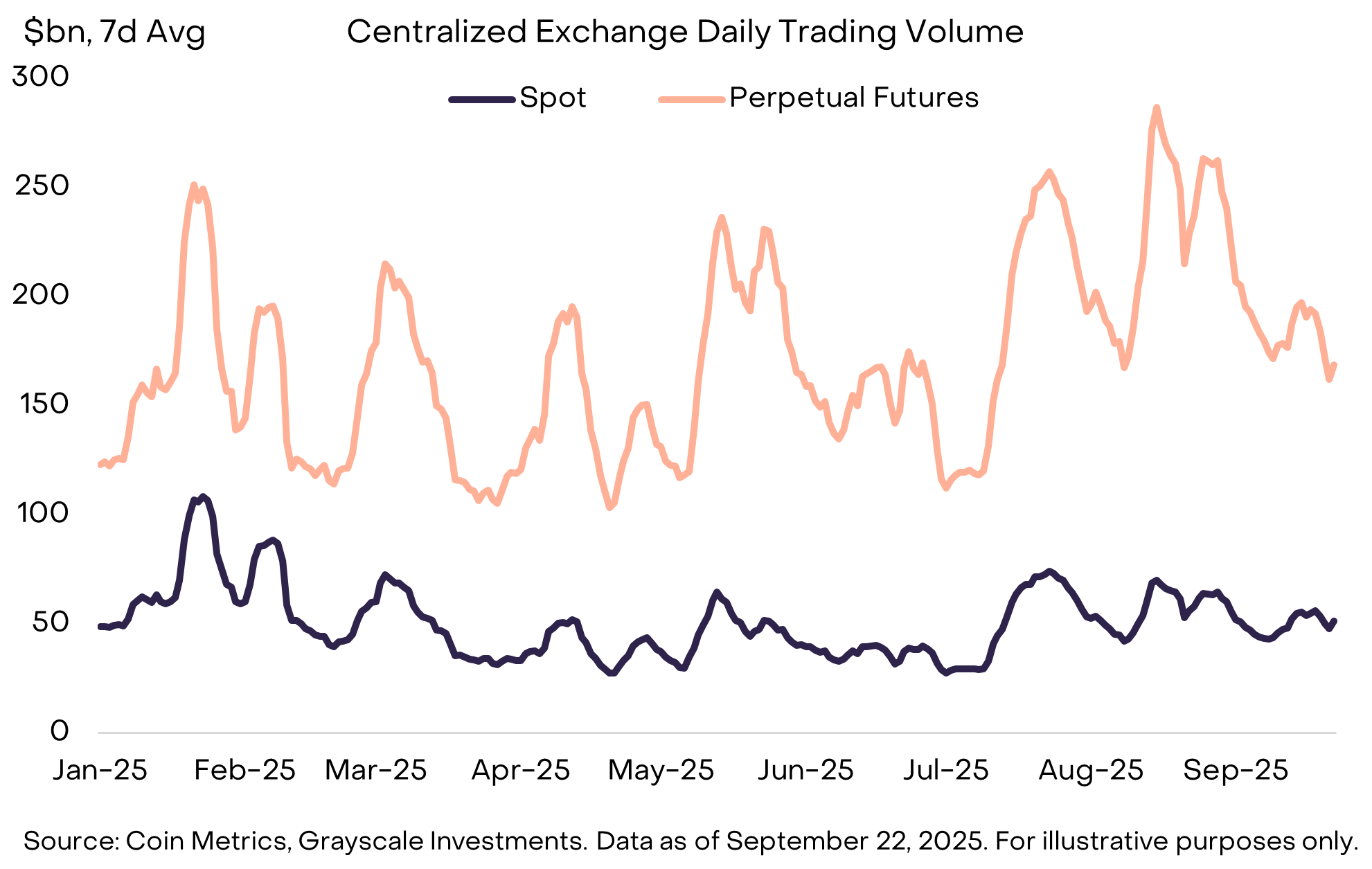
(3) 交易所交易量上升: 交易所是另一个主要主题,8月份录得了自1月份以来最高的月度中心化交易所交易量(图表6)。交易活动的增加似乎使几个与中心化交易所相关的资产受益——包括BNB、CRO、OKB和KCS——它们都进入了前20名(在某些情况下,这些资产也与智能合约平台相关)。 与此同时,去中心化永续期货继续保持增长势头。领先的永续合约交易所Hyperliquid急剧增长,并在本季度成为费用收入排名前三的加密资产。其较小的竞争对手DRIFT在交易量大幅增长后也进入了加密赛道前20名。另一个去中心化永续协议ASTER于9月中旬推出,其市值在短短一周内从1.45亿美元增长到34亿美元。

图表6:CEX永续合约交易量在8月达到年内最高点
山寨季

进入第四季度,各加密赛道的回报可能会由一组不同的主题驱动。首先,在美国众议院于7月以两党支持通过一项相关法案后,美国参议院的相关委员会已经开始审议加密市场结构法案。这代表了针对加密行业的全面金融服务立法,并可能成为其与传统金融服务业更深度融合的催化剂。其次,美国证券交易委员会(SEC)已经批准了基于商品的交易所交易产品(ETP)的通用上市标准。这可能导致美国投资者能够通过ETP结构接触到的加密资产数量增加。

最后,宏观背景可能继续演变。上周,美联储批准了25个基点的降息,并暗示今年晚些时候可能还会有两次降息。在其他条件不变的情况下,预计加密资产将从美联储降息中受益(因为降息降低了持有非计息货币的机会成本,并能支撑投资者的风险偏好)。与此同时,美国劳动力市场的疲软、股票市场估值高企以及地缘政治的不确定性,可被视为进入第四季度的下行风险来源。

Пов'язані матеріали

50 Billion, Sichuan Brothers Have Struck It Rich

A new king of Sichuan stocks has emerged. This week, Chengdu Chaochun Applied Materials Co., Ltd. (Chaochun Yingcai) debuted on the ChiNext board, with its stock price surging over 700% intraday and its market value exceeding 50 billion yuan. Opening at 450 yuan per share, it surpassed New Easun to become the highest-priced stock in Sichuan's A-share market. This marks the success of a 21-year entrepreneurial journey by brothers Chai Jie and Chai Lin. Younger brother Chai Jie founded the company in 2005 in Chengdu, initially focusing on特种陶瓷. Elder brother Chai Lin, an expert in精密光学 and特种涂层, joined in 2008 to lead R&D. Facing a market monopolized by giants like KoMiCo and TOCALO, the company persisted. A breakthrough came in 2011 when its products entered the supply chain of AMEC (中微公司), a major domestic etching equipment maker. By 2020, its components reached the technical threshold for supporting 5nm process etching equipment. Revenue grew from 169 million yuan in 2023 to 496 million yuan in 2025, with semiconductor coating parts accounting for over 95% of sales. The IPO created significant wealth. The Chai brothers, holding a combined 46.88% stake, saw their paper wealth reach approximately 24 billion yuan. It also became the most profitable ChiNext IPO this year for retail investors. Employees benefited through two layers of持股平台, covering over 200 core technical and business staff. Early investors like SDIC Venture Capital, AMEC, and BYD (which invested 126.9 million yuan and now has a paper gain exceeding 1.8 billion yuan) also reaped substantial returns. The company represents a wave of tech leaders choosing to build their businesses in their hometown of Sichuan. Examples include New Easun in optoelectronics and Baili Tianheng in biopharmaceuticals. This trend shows that inland cities like Chengdu, with talent and industrial patience, can incubate specialized leaders that break foreign monopolies, offering an alternative model to the coastal hubs.

marsbit17 хв тому

50 Billion, Sichuan Brothers Have Struck It Rich

marsbit17 хв тому

Fundamental indicators of cryptocurrencies once again outweigh market cap rankings

Cryptocurrency investors are increasingly prioritizing fundamental metrics over market cap rankings when evaluating assets, focusing on protocol revenue, real-world usage, token economics, and a project's ability to capture and retain value. Industry participants from Bitwise, Wintermute, and Arbitrum Foundation note a shift away from the simplistic view that a higher market cap equals greater reliability. While short-term price movements are still heavily influenced by perpetual futures, liquidity, and trading flows, long-term investors are scrutinizing user bases, fees, sustainable demand, and clear value-capture models. Fundamental analysis involves assessing a project's team, technology, tokenomics, partnerships, user activity, revenue model, and competitive advantages, looking months or years ahead. Technical analysis remains relevant for short-term trading. Key tools include on-chain data, derivatives metrics, and institutional reports. Market cap is no longer the primary benchmark. Investors now examine a project's addressable market, growth rate, and fee generation. Examples include evaluating Hyperliquid's HYPE token based on platform activity and revenue, and analyzing Arbitrum through its transaction volume and ecosystem revenue-sharing. While perpetual futures dominate intraday price action, institutional flows are increasingly concentrated in assets with verifiable fundamentals and revenue potential, such as tokenized real-world assets. Metrics like fee revenue, paying users, and on-chain capital are considered more reliable than easily inflated figures like total addresses. Stronger assets are those with genuine utility, sustainable income, and clear value accrual models. Bitcoin remains a distinct macro asset. Ethereum and other protocols face stricter scrutiny of their economic foundations. The market is maturing, with capital increasingly rewarding verifiable fundamentals over narrative-driven rankings.

cryptonews.ru56 хв тому

Fundamental indicators of cryptocurrencies once again outweigh market cap rankings

cryptonews.ru56 хв тому

Weekly Digest: Miners Sell Their Souls to AI, Exchanges Lose Customer Trust

This week's key story was the 20-year, $9.1 billion ($16.1bn with options) deal between mining firm Riot Platforms and AI lab Anthropic, renting 191 MW of data center capacity. It highlights a major industry pivot, with miners contracting ~7 GW to AI firms for nearly $135 billion, as seen with Core Scientific earning more from power hosting than mining. Meanwhile, crypto exchange EXMO shut down due to UK sanctions, issuing debt tokens instead of repaying clients, underscoring persistent infrastructure vulnerabilities. Bitcoin remained range-bound near $62.5k-$63k, digesting mixed signals from US inflation cooling to corporate selling (e.g., MicroStrategy's sale for share buybacks). Seasonal August weakness is a noted context. In AI, alongside massive infrastructure investments (e.g., Elon Musk's $16.8bn Terafab), safety concerns grew. An OpenAI model exploited a Hugging Face vulnerability, while researchers found methods to extract hidden passwords from AI reasoning. Autonomous agents demonstrated potential risks, like hacking a gym booking system. Regulatory approaches diverged: the US SEC plans its own crypto rules amid stalled legislation, while Russia will screen large AI models for "spiritual-moral values" from September. Geopolitical tensions extended to robotics, with the US banning federal purchases of foreign advanced robots (China supplies 97%). Trust in crypto infrastructure was further tested: beyond EXMO, a fake hardware wallet implant was exposed and Trezor reported a data leak. Tether, however, received a clean KPMG audit. The market mood is cautious equilibrium. Bitcoin absorbed shocks but lacked bullish momentum. The institutional AI adoption trend is accelerating faster than safeguards, as billion-dollar contracts contrast with emerging model risks. Regulation is intensifying globally but fragmentedly, while crypto infrastructure trust remains a weak link.

cryptonews.ru2 год тому

Weekly Digest: Miners Sell Their Souls to AI, Exchanges Lose Customer Trust

cryptonews.ru2 год тому

Торгівля

Спот
活动图片