特朗普家族代币WLFI上线,代币分配谣言引发价格剧烈波动

marsbitОпубліковано о 2025-08-23Востаннє оновлено о 2025-08-24

谣言风暴:从社交媒体到30美元暴跌​​

Aave

2025年8月23日,一则关于“Aave将获得World Liberty Financial(WLFI)代币总量7%”的提案传闻在加密社区疯传。

疑似WLFI团队成员Dylan_0x(@0xDylan_)紧急辟谣,称该消息为“虚假关联”,并强调“WLFI公告从未承诺此类分配”。尽管其身份未经官方证实,市场已迅速反应:

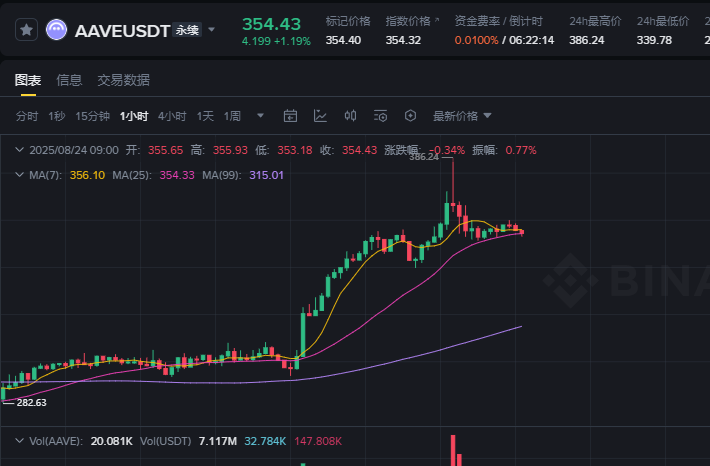
​​AAVE价格从385.99美元骤跌至365美元,单日跌幅超5%​​,市值蒸发近3亿美元。

Aave

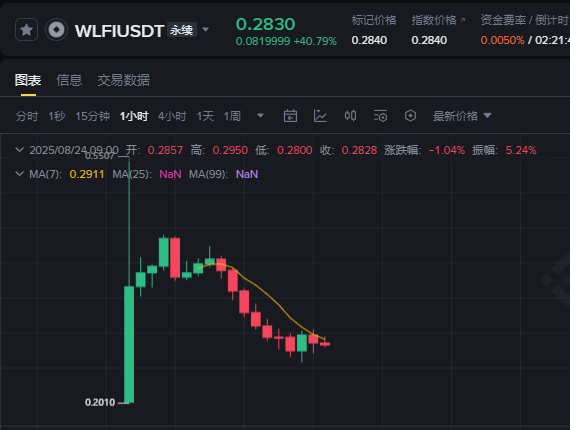
与此同时,币安数据显示,WLFI合约价格由上线0.55美元跌至当前0.28美元,上线最高点已下跌近40%。

这一波动源于吴忌寒引述的2024年10月WLFI社区提案。该提案曾明确约定:Aave DAO将获得WLFI流通代币的​​7%分配权​​及Aave v3上部署WLFI协议收入的​​20%分成​​。Aave创始人Stani Kulechov以“交易的艺术”回应争议,暗示条款效力未失效,但未能平息恐慌。链上数据显示,巨鲸账户在暴跌中集中抛售6826枚AAVE,亏损达29.1万美元,进一步加剧流动性危机。

WLFI的政治烙印:特朗普家族的“影子金融帝国”​​

World Liberty Financial(WLFI)绝非普通DeFi协议,其股权架构揭示了深层的政治资本运作:

  • ​​控制权垄断​​:特朗普家族通过DT Marks DeFi LLC控股WLF 60%股权,享有75%的代币销售收入及60%的营业利润。2025年1月收购后,联合创始人被边缘化,特朗普家族成为实际控制方。
  • ​​代币分配争议​​:白皮书草案显示,WLFI代币70%预留给内部人士(创始人、团队及服务商),仅30%面向公募。消息人士嘲讽这一比例“高得可笑”(LMAO)。
  • ​​金融政治化野心​​:WLFI稳定币USD1被定位为“特朗普支持者的美元”,旨在将政治认同转化为金融资产。其战略合作伙伴ALT5通过纳斯达克上市,将WLFI代币换股,使特朗普家族间接接入传统证券体系。


这种高度中心化的治理结构与DeFi“去信任化”理念背道而驰,也为Aave的合作埋下隐患——当协议收益分配依赖政治实体的单边决策,市场敏感度必然飙升。


Aave的脆弱性:清算危机与机构敞口埋雷​​

Aave的暴跌不仅是谣言冲击,更是其内在风险链的连锁反应:

  1. ​​历史清算创伤​​:2024年8月,以太坊暴跌触发Aave上3亿美元清算,导致AAVE单周下跌9%,抵押品价值缩水暴露风控缺陷。2025年2月,持有10.2万枚AAVE的巨鲸因循环借贷面临清算,浮亏358万美元,预示高杠杆策略在波动市场中的致命性。
  2. ​​机构敞口风险​​:Aave对Ethena的47亿美元敞口被Chaos Labs警告可能引发“流动性紧缩”。USDe持有者将大量代币存入Aave,而发行方Ethena同时借出支持资产,形成再抵押循环,放大系统性风险。
  3. ​​收益依赖症​​:尽管Aave的USDT存款规模突破81亿美元,但借贷利率波动剧烈。2025年7月USDT借贷APY飙升至16.01%,吸引套利资本涌入,进一步扭曲资金池健康度。


DeFi 领域因机构关注而崛起
Aave

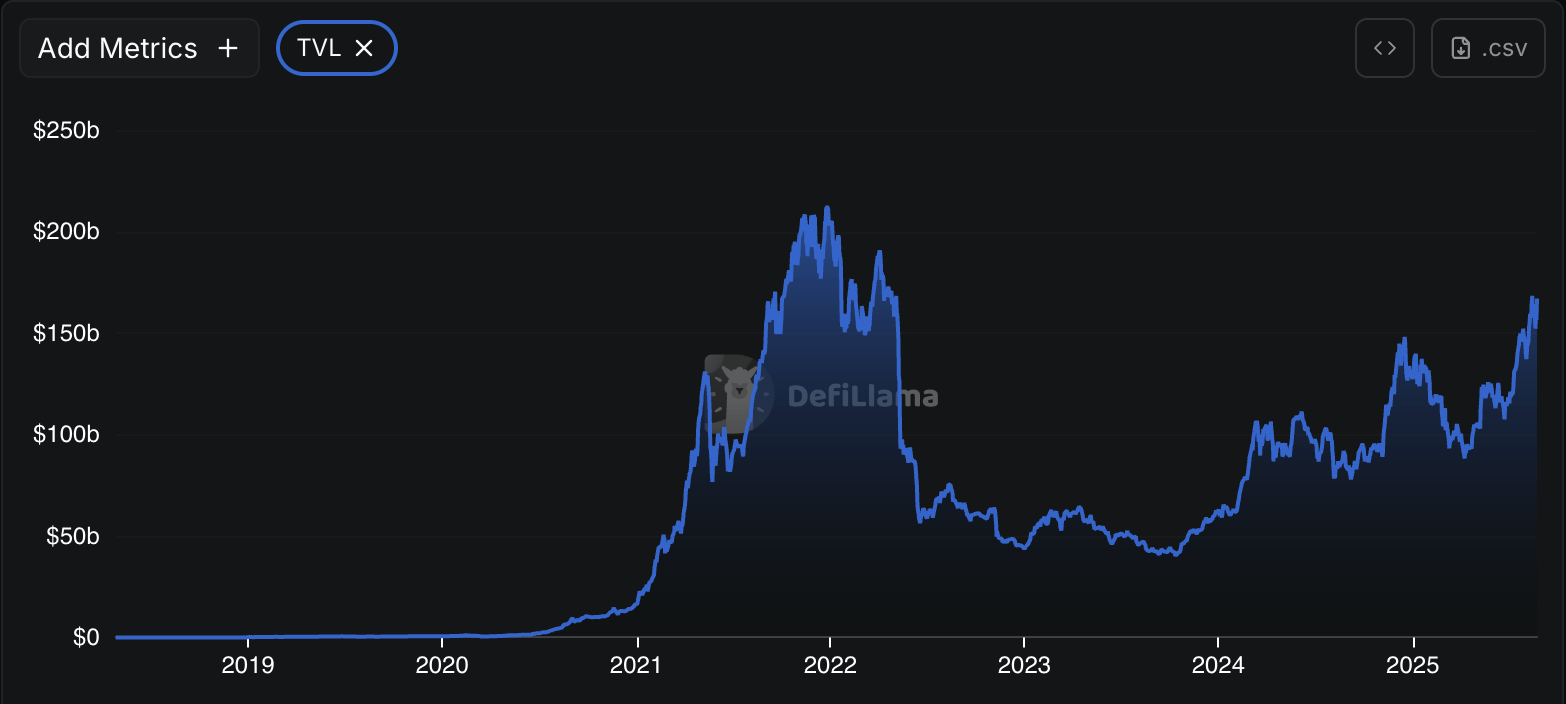
2024 年美国大选后,DeFi 的总锁定价值 (TVL) 大幅上涨。来源:DeFiLlama

根据 DeFiLlama 的数据, DeFi 协议中的总锁定价值 (TVL) 目前超过 1670 亿美元,并且正在接近 2021 年 12 月创下的 2120 亿美元的历史最高水平。

由于预期美国将为加密货币提供更加友好的监管环境,2024 年美国大选结果公布后,DeFi TVL 大幅上涨。

包括银行、资产管理公司、企业和金融服务公司在内的机构投资者越来越多地参与加密货币和 DeFi,塑造了当前市场周期中的许多叙事。

这种参与引发了加密社区关于政府对去中心化协议的监管侵犯以及传统金融机构可能对 DeFi 的占领的争论。
Пов'язані матеріали

Who Will Define the Rules of the AI Era? Anthropic Discusses the 2028 US-China AI Landscape

This article, based on Anthropic's analysis, outlines the intensifying systemic competition between the U.S./allies and China for AI leadership by 2028. It argues that access to advanced computing power ("compute") is the critical bottleneck, where the U.S. currently holds a significant advantage through chip export controls and allied innovation. However, China's AI labs remain competitive by exploiting policy loopholes—via chip smuggling, overseas data center access, and "model distillation" attacks to copy U.S. model capabilities—keeping them close to the frontier. The piece presents two contrasting scenarios for 2028. In the first, decisive U.S. action to tighten compute controls and curb distillation locks in a 12-24 month AI capability lead, cementing democratic influence over global AI norms, security, and economic infrastructure. In the second, policy inaction allows China to achieve near-parity through continued access to U.S. technology, enabling Beijing to promote its AI stack globally and integrate advanced AI into its military and governance systems, altering the strategic balance. Anthropic contends that maintaining a decisive U.S. lead is essential for shaping safe AI development and governance. The core recommendation is for U.S. policymakers to urgently close compute and model access loopholes while promoting global adoption of the U.S. AI technology stack to secure a lasting strategic advantage.

marsbit17 хв тому

Who Will Define the Rules of the AI Era? Anthropic Discusses the 2028 US-China AI Landscape

marsbit17 хв тому

“Why Didn’t You Buy 2x Long SK Hynix?”

The article discusses the immense popularity of the "2x Long SK Hynix ETF" (07709.HK) in Hong Kong, which became the world's largest single-stock leveraged ETF by May 2026. Launched in October 2025, the ETF's net value soared over 1000% in seven months, significantly outperforming the 324% gain of SK Hynix's underlying stock, driven by the AI boom and a critical shift in industry demand from computing power to memory. It highlights the mechanics and risks of daily-rebalanced leveraged ETFs. In a smooth bullish market, they generate amplified returns, but during volatile periods—exemplified by market swings during geopolitical tensions in the Strait of Hormuz in March-April 2026—they suffer severe "volatility decay," where choppy price action can cause losses far exceeding twice the drop of the underlying asset. The piece frames SK Hynix, as NVIDIA's primary HBM supplier, within the classic cycle of the memory chip industry—a commoditized sector prone to boom-and-bust cycles of shortage, price hikes, overcapacity, and crashes. While current AI-driven demand and high margins (Q1 2026毛利率~79%) create a "super cycle," the article questions its sustainability. It warns that extreme profits will inevitably tempt competitors like Samsung and Micron to ramp up HBM production, potentially eroding scarcity. Furthermore, the entire narrative remains tethered to the massive AI capital expenditure of tech giants. In conclusion, the ETF's trajectory symbolizes the accelerated, all-in nature of the current AI revolution, where timeframes are compressed and market moves are extreme. However, it also underscores that while industry trends define ultimate returns, macro-geopolitical risks dictate the volatile and uncertain path to get there.

marsbit19 хв тому

“Why Didn’t You Buy 2x Long SK Hynix?”

marsbit19 хв тому

a16z Crypto: A Guide to the CLARITY Act for Crypto Entrepreneurs

The CLARITY Act, a bipartisan crypto market structure bill, has advanced through the Senate Banking Committee, marking a potential historic shift in U.S. digital asset regulation. For years, a lack of clear rules has stifled innovation, pushed development overseas, and exposed consumers to risk. This bill aims to establish a comprehensive framework, providing long-needed regulatory clarity for blockchain networks and digital assets. It builds upon previous legislative efforts like FIT21 and the House version of CLARITY, which gained strong bipartisan support. CLARITY is crucial because it recognizes that blockchain networks are fundamentally different from traditional companies. Networks operate through decentralized, shared rules rather than centralized control. Applying corporate legal frameworks to networks forces them into a centralized model, concentrating power and value. In contrast, decentralized blockchain networks can function as user-owned public infrastructure, distributing value more equitably among participants. The bill seeks to enable the safe launch of networks in the U.S., clarify regulatory jurisdiction between the SEC and CFTC, oversee crypto exchanges, and enhance consumer protections. Its passage would align U.S. law with the nature of decentralized technology, allowing builders to operate transparently and fund projects domestically without structural compromises due to regulatory uncertainty. Similar to the positive impact seen after the stablecoin-focused GENIUS Act, CLARITY could unlock a new wave of innovation, helping the U.S. reclaim leadership in the crypto space while combating fraud and abuse.

链捕手36 хв тому

a16z Crypto: A Guide to the CLARITY Act for Crypto Entrepreneurs

链捕手36 хв тому

Торгівля

Спот
Ф'ючерси
活动图片