特朗普 x ADA:又一次“政策暴涨”剧本?

投研日志Опубліковано о 2025-03-05Востаннє оновлено о 2025-03-05

Анотація

无论如何,这次 ADA 的上涨,依旧延续了它“政策驱动”的剧本。对于投资者来说,追高需谨慎,政策兑现才是关键。你认为 ADA 这次能否借着特朗普的东风真正腾飞?还是说,这只是一场短期的市场狂欢?

最近,加密市场迎来了一波“政治牛市”。美国总统特朗普在社交媒体上提到,ADA 可能被纳入加密货币战略储备,随即 ADA 价格狂飙,一度突破 1.1 美元,24 小时涨幅仍保持在 60% 以上。Cardano 社区一片欢腾,市场情绪迅速进入 FOMO 模式。

但关键问题是,这次上涨到底是由“真金白银”推动,还是一次短暂的政治炒作?在你决定是否追高进场之前,我们需要从多个角度分析这波行情的真实性,包括 ADA 的基本面、市场格局,以及更关键的投资策略。

1. ADA 真的值得长期持有吗?

在探讨价格上涨的驱动力之前,我们先来看看 ADA 的基本面,分析它是否真的具备长期价值。

1.1 Cardano 的技术优势与发展瓶颈

Cardano(ADA)由 Ethereum 联合创始人 Charles Hoskinson 于 2017 年创建,目标是打造“学术派”公链,采用严格的科学研究方法,构建一个更安全、可扩展、去中心化的区块链平台。它的核心技术包括:

Ouroboros PoS 共识机制:ADA 采用独特的权益证明(PoS)机制,号称比比特币的工作量证明(PoW)更加环保,同时具备更强的去中心化属性。

分层架构设计:Cardano 采用计算层(CCL)+ 结算层(CSL)的双层架构,理论上可以提升扩展性,让智能合约和交易结算并行处理。

学术审查机制:所有技术进展均需经过同行评审,以确保代码安全性和理论严谨性。这种方式虽然提升了安全性,但也导致开发进度较慢,因此 Cardano 经常被戏称为“乌龟链”。

1.2 Cardano 生态在市场中的地位

尽管 Cardano 在技术层面有一定优势,但在生态发展方面,它的增长速度远不及 Solana、Ethereum 等主流公链。来看几个关键数据:

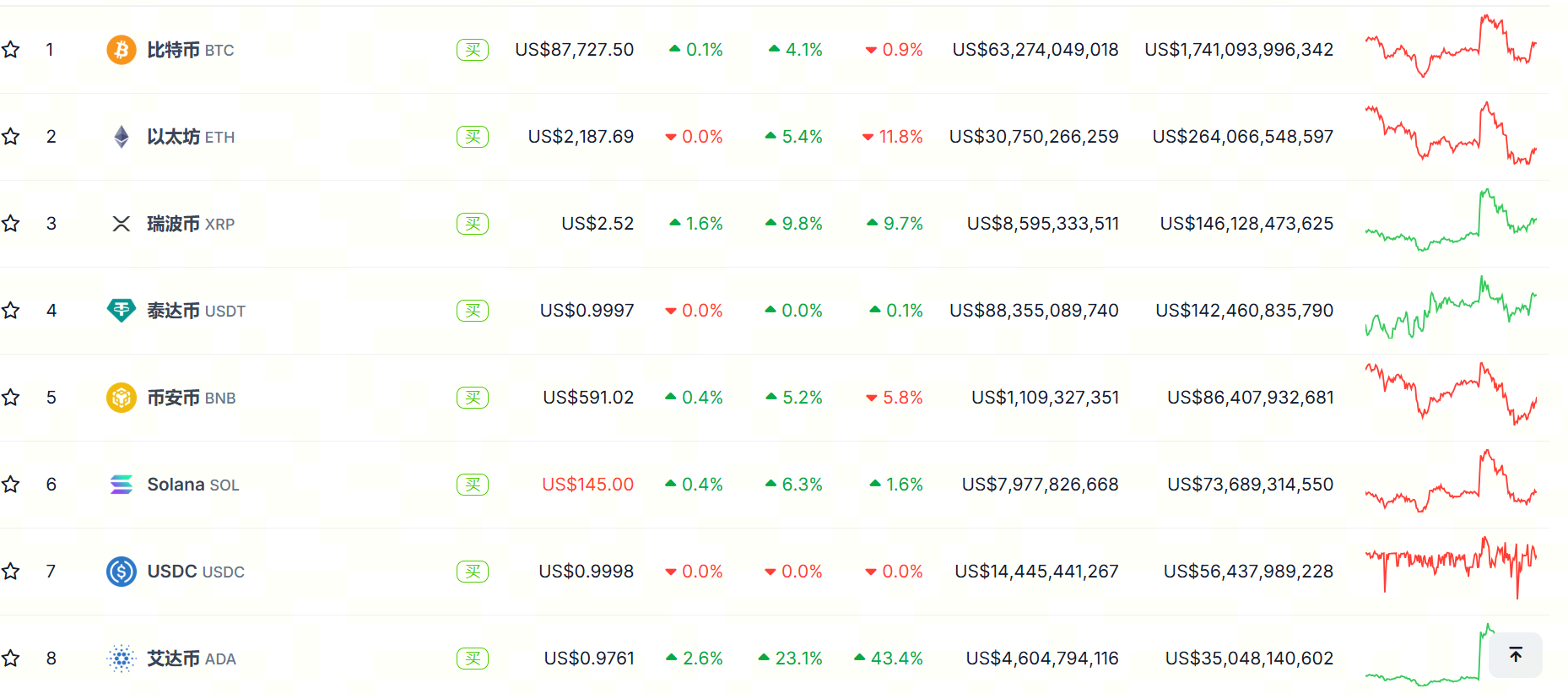
总市值:ADA 目前总市值约 350 亿美元,排名全球第 8,远低于 ETH(约 2000 亿美元)和 SOL(约 700 亿美元)。
链上锁仓价值(TVL):Cardano 链上活跃协议仅 40 个,TVL 仅 4.1 亿美元,相比之下,Solana 和以太坊的生态更为繁荣,Cardano 在主流公链叙事中较为边缘化。
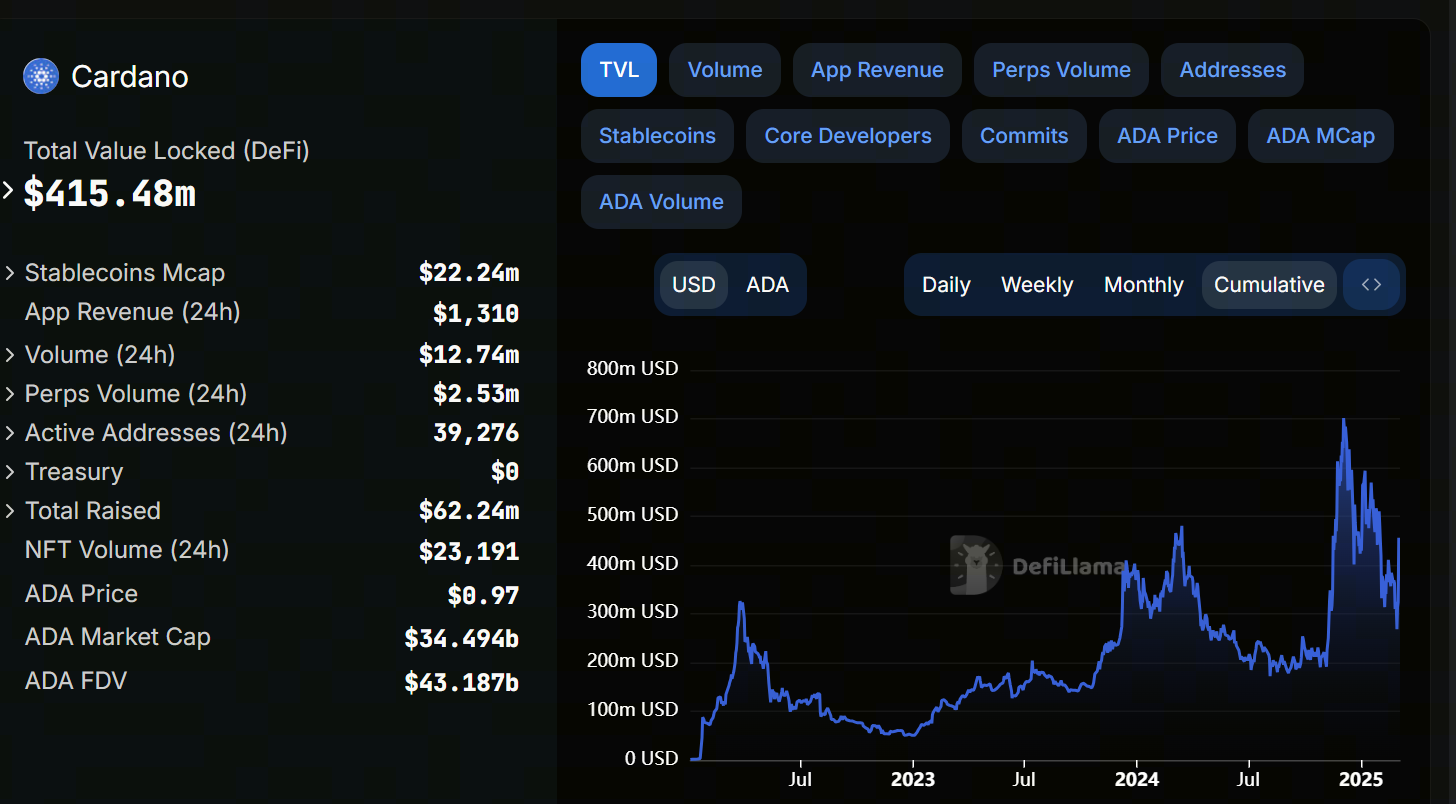
从数据来看,Cardano 虽然有技术底蕴,但生态活跃度仍然不足。这意味着,特朗普的这次“喊单”可能更多是市场情绪炒作,而非基于 Cardano 的技术突破或生态繁荣。

2. ADA 过去的“政治牛市”模式

这并不是 ADA 第一次因特朗普的消息大幅上涨,回顾过去,它的价格走势似乎总是与政治话题密切相关。

2024 年 11 月:特朗普成功当选美国总统后,有媒体报道 Cardano 创始人 Hoskinson 计划与新政府合作,推动加密货币立法改革。这一消息直接导致 ADA 上涨 30%+,最高触及 0.597 美元。

2025 年 1 月:市场监测到巨鲸买入 1 亿枚 ADA,随后价格突破 1 美元,再次拉升。

2025 年 3 月:ADA 再次受特朗普相关消息影响,从 0.66 美元 暴涨至接近 1.2 美元,涨幅近 100%!

不难发现,ADA 的每一波暴涨,都伴随着 Charles Hoskinson 的“市场预热”和舆论造势。而这一次,特朗普直接提及 ADA 可能被纳入战略储备,更像是一场提前写好的剧本。

3. ADA 真的能成为美国的战略储备资产吗?

特朗普此次提及 ADA,可能有以下几种考量:

履行竞选承诺:加密市场的用户体量不断增长,特朗普在竞选期间曾明确支持加密货币,并接受了不少加密行业的竞选捐助,因此可能是履行承诺的表现。

反对美联储数字美元(CBDC):特朗普一直批评美联储推出 CBDC,他更倾向于支持去中心化资产作为储备资产。

单纯的政治炒作:特朗普曾多次在社交媒体上发布极具争议性的言论,ADA 可能只是被随口提及,并没有太深远的战略意义。

ETF 申请进展:美国 SEC 于 2025 年 2 月 24 日正式受理 Grayscale Cardano Trust 的 ETF 申请,启动 240 天审查期。这是美国首个独立的 Cardano 现货 ETF 申请,也可能是市场炒作 ADA 的理由之一。

但问题在于,美国政府真的会考虑 ADA 作为战略储备资产吗?

4. 可能性较小,原因如下

储备资产通常需要稳定性和抗风险能力。目前,比特币(BTC)已经被一些国家(如萨尔瓦多)纳入国家储备,而 ADA 由于市值较小、波动性较大,难以满足官方储备资产的标准。

ADA 在加密市场的生态地位有限。相比以太坊、比特币,Cardano 的实际应用场景较少,DeFi 生态远不如其他主流公链,缺乏全球影响力。

政策不确定性依然存在。即便特朗普支持加密货币,美国政府内部仍有大量反对加密资产作为官方储备的声音,ADA 能否真正进入战略储备仍是未知数。

5. 结论:追高需谨慎,警惕市场情绪炒作

特朗普的发言确实让 ADA 再次站上风口,但这更像是市场情绪炒作,而非 ADA 本身的价值提升。从基本面来看,ADA 目前的生态仍然较弱,短期内难以进入主流资产配置范畴。

如果未来真的有明确的政策落地,ADA 可能会迎来新的资金流入,但如果仅仅是市场的 FOMO 情绪推动,那么 ADA 可能会在短期暴涨后迎来回调。对于投资者来说,现在最需要关注的是政策是否有实质进展,而不是盲目追高被市场情绪裹挟。


Трендові криптовалюти

Пов'язані матеріали

Anthropic Creates an AI Jailbreak 'Penal Code': Your Requests, Four Ways to Die

Anthropic has publicly detailed its security measures and a new "Cyber Jailbreak Severity" (CJS) framework following the controversial takedown of its Fable 5 model. The incident, triggered by simple user requests like counting letters or stating a profession, highlighted overzealous safety filters. Anthropic classifies cybersecurity-related prompts into four tiers: malicious activities (blocked), high-risk dual-use (like pentesting, with strict limits), low-risk dual-use (often blocked by "safety margin" errors), and harmless tasks (theoretically allowed but still frequently flagged). The company admits its classifiers are tuned for high sensitivity, leading to many false positives. The newly proposed CJS framework aims to objectively score the severity of AI "jailbreaks" (prompts that bypass safety rules) on a 0-10 scale across four dimensions: Capability Gain (does it grant new attack abilities?), Breadth (does it work across multiple attack types?), Weaponization Ease (how hard is it to turn into a real attack?), and Discoverability (how easy is it to find?). The score determines the response, from no action (CJS-0) to a potential model takedown (CJS-4). The score is context-dependent; for example, discovering a major unknown vulnerability today scores high, while asking about a well-known one scores low. The article raises concerns about Anthropic's dual role: it is both creating powerful models (like the restricted Mythos 5) and defining the rules (CJS) for judging their misuse, potentially giving it disproportionate influence. This is set against the backdrop of U.S. export controls, which for the first time directly restricted API access to a model (Fable 5), creating a "tiered" system where public models are heavily filtered and advanced ones are limited to vetted partners. The CJS framework is portrayed as potentially providing regulators with a metric to justify future API shutdowns. For users, the advice is to carefully phrase prompts, watch for signs of being downgraded to a weaker model, and wait indefinitely for promised filter improvements.

marsbit30 хв тому

Anthropic Creates an AI Jailbreak 'Penal Code': Your Requests, Four Ways to Die

marsbit30 хв тому

$100M Annual Revenue, Two Berkeley Roommates in Their 20s Build the Most Profitable AI Business

Arena, the AI model ranking platform, has become a $100 million annual revenue business just eight months after launching its commercial service. Originally a UC Berkeley open-source research project called Chatbot Arena, it created a "battle arena" where users blind-test and vote on anonymous AI model responses. This has generated a highly trusted, community-driven leaderboard based on over 10 million user evaluations and 82 million votes. Major AI companies like OpenAI, Google, and Anthropic submit their flagship models to be ranked. The core monetization strategy is its AI Evaluations service, where model developers and large enterprises pay for in-depth performance analysis from Arena's massive user community. This provides real-world feedback on model strengths, weaknesses, and hallucinations—a critical service as models become more complex. The company, spun out from Berkeley in early 2025, quickly raised $100 million in seed funding at a $600 million valuation and later secured a $150 million Series A at a $1.7 billion valuation. The founding team includes CEO Anastasios Angelopoulos, a mathematician focused on rigorous model evaluation; CTO Wei-Lin Chiang, creator of the popular Vicuna chatbot; and co-founder Ion Stoica, a renowned Berkeley professor. Arena is now expanding beyond chat benchmarks into "Agent Mode," evaluating AI agents on complex, multi-step tasks like coding and research. The company's success illustrates the growing value and cost of independent, real-world AI model evaluation as the industry intensifies.

marsbit34 хв тому

$100M Annual Revenue, Two Berkeley Roommates in Their 20s Build the Most Profitable AI Business

marsbit34 хв тому

Racking Up 24,000 Stars: With One Command, AI Can Now Find Its Own Skills

Vercel, known for its developer tools like Next.js, has launched 'skills', a package manager for AI coding agents, garnering 24,000 GitHub stars. It allows developers to add specialized capabilities, such as React best practices, to AI assistants like Claude Code or Cursor with a single command: `npx skills add <package>`. Skills are shareable, reusable modules that define an AI agent's behavior for specific tasks, moving beyond one-off prompt engineering towards standardized 'capability engineering'. A key innovation is the 'find-skills' skill, which acts as an internal search engine, allowing an agent to autonomously find and install the right skill for a user's request. This lowers the barrier for non-developers to leverage advanced AI coding assistance. However, this 'npm moment' for AI brings significant security risks. Security audits of thousands of skills on platforms like skills.sh and ClawHub found over 30% contained security flaws, with about 13% classified as severe. Threats include malicious scripts that can access local files and credentials, and prompt injection hidden within skill documentation. Unlike traditional code packages, skills blend instructions, code, and system access, posing a direct risk to user machines and data. Experts advise treating skills like code—reviewing them carefully before installation, especially their scripts, and being wary of excessive permissions. Ultimately, Vercel's initiative represents a major shift towards modular, reusable AI capabilities, but its rapid adoption requires developers to bring the same caution used in managing traditional software dependencies.

marsbit35 хв тому

Racking Up 24,000 Stars: With One Command, AI Can Now Find Its Own Skills

marsbit35 хв тому

Claude Engineer Finally Unveils Fable 5's Ultimate Strategy, Teaching You How to Bridge the Information Gap with AI Models

This article, titled "Claude Engineer Finally Releases Fable 5 'Skill-Burning' Guide, Teaching How to Bridge the Information Gap with Models," details a blog post by Claude Code engineer Thariq Shihipar. The core concept is the "information gap" or "unknowns"—the disconnect between a user's instructions (the "map") and the actual task requirements (the "territory"). The article argues that with powerful models like Claude Fable 5, work quality depends on the user's ability to identify and clarify these unknowns. Shihipar categorizes unknowns into four types: Known Knowns (explicit instructions), Known Unknowns (awareness of gaps), Unknown Knowns (implicit, unstated knowledge), and Unknown Unknowns (unforeseen issues). The blog provides a framework for addressing these gaps throughout the workflow: * **Before Implementation:** Techniques include "Blindspot Scanning" to uncover Unknown Unknowns, brainstorming/prototyping for visual or complex tasks, having Claude ask clarifying questions, using reference code/examples, and creating implementation plans. * **During Implementation:** Maintaining an "implementation notes" file for Claude to document deviations and decisions made due to encountered edge cases. * **After Implementation:** Creating summary documents for review and having Claude generate quizzes to ensure the user fully understands the completed changes. The article concludes that as models become more capable, the key to success is systematically discovering and defining these unknowns through low-cost methods like prototyping and planning, allowing for more effective collaboration.

marsbit40 хв тому

Claude Engineer Finally Unveils Fable 5's Ultimate Strategy, Teaching You How to Bridge the Information Gap with AI Models

marsbit40 хв тому

Торгівля

Спот

Популярні статті

Як купити ADA

Ласкаво просимо до HTX.com! Ми зробили покупку Cardano (ADA) простою та зручною. Дотримуйтесь нашої покрокової інструкції, щоб розпочати свою криптовалютну подорож.Крок 1: Створіть обліковий запис на HTXВикористовуйте свою електронну пошту або номер телефону, щоб зареєструвати обліковий запис на HTX безплатно. Пройдіть безпроблемну реєстрацію й отримайте доступ до всіх функцій.ЗареєструватисьКрок 2: Перейдіть до розділу Купити крипту і виберіть спосіб оплатиКредитна/дебетова картка: використовуйте вашу картку Visa або Mastercard, щоб миттєво купити Cardano (ADA).Баланс: використовуйте кошти з балансу вашого рахунку HTX для безперешкодної торгівлі.Треті особи: ми додали популярні способи оплати, такі як Google Pay та Apple Pay, щоб підвищити зручність.P2P: Торгуйте безпосередньо з іншими користувачами на HTX.Позабіржова торгівля (OTC): ми пропонуємо індивідуальні послуги та конкурентні обмінні курси для трейдерів.Крок 3: Зберігайте свої Cardano (ADA)Після придбання Cardano (ADA) збережіть його у своєму обліковому записі на HTX. Крім того, ви можете відправити його в інше місце за допомогою блокчейн-переказу або використовувати його для торгівлі іншими криптовалютами.Крок 4: Торгівля Cardano (ADA)Легко торгуйте Cardano (ADA) на спотовому ринку HTX. Просто увійдіть до свого облікового запису, виберіть торгову пару, укладайте угоди та спостерігайте за ними в режимі реального часу. Ми пропонуємо зручний досвід як для початківців, так і для досвідчених трейдерів.

1.0k переглядів усьогоОпубліковано 2024.12.10Оновлено 2026.06.02

Як купити ADA

Обговорення

Ласкаво просимо до спільноти HTX. Тут ви можете бути в курсі останніх подій розвитку платформи та отримати доступ до професійної ринкової інформації. Нижче представлені думки користувачів щодо ціни ADA (ADA).

活动图片