特朗普支持的世界自由金融项目引发加密货币圈内外的质疑

marsbitОпубліковано о 2024-09-18Востаннє оновлено о 2024-09-19

DeFi

在社交媒体平台 X 上由加密货币名人 Farokh 主持的长达两个多小时的 Spaces 直播中,该项目的支持者表示,他们计划推出一种名为 WLFI 的不可转让治理代币。

“唐纳德·特朗普对加密货币的突然热情是显而易见的,也是投机取巧的,”加密货币友好型众议员威利·尼克尔在给 The Block 的一份声明中表示。

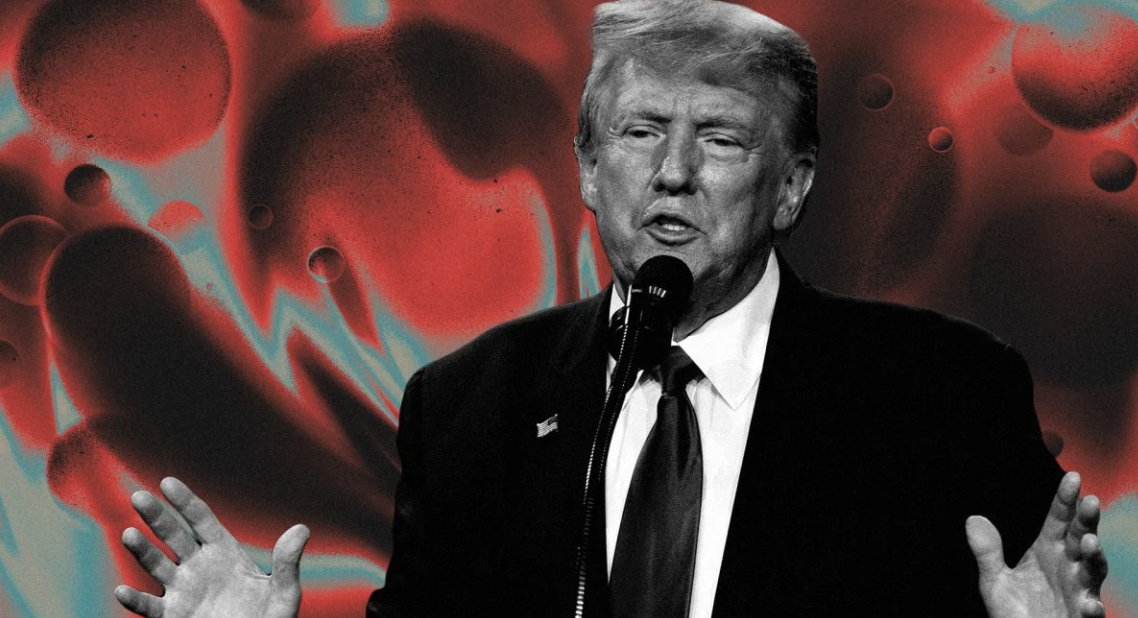
本周,加密货币批评者和支持者都一致认为,共和党总统候选人唐纳德·特朗普备受期待的加密货币项目 World Liberty Financial 的启动弊大于利。

“唐纳德·特朗普对加密货币的突然热情显而易见,也充满机会主义,”北卡罗来纳州支持加密货币的民主党众议员威利·尼克尔 (Wiley Nickel) 在发给 The Block 的电子邮件声明中表示。尼克尔在过去一年中支持了多项加密货币法案。“在白宫期间,他没有为加密货币做任何事情,现在才推出 World Liberty Financial,以从他从未支持过的运动中获利。”

在社交媒体平台 X 上由加密货币名人 Farokh 主持的长达两个多小时的直播 Spaces 中,该项目的支持者表示,他们计划推出一种名为 WLFI 的不可转让治理代币。此前,该项目表示希望推动稳定币的采用,并表示 DeFi 将成为其中的一部分。

在直播期间,特朗普表示加密货币“规模很大,但与未来相比,它还处于起步阶段”。后来,小唐纳德·特朗普、埃里克·特朗普、父子房地产投资者史蒂夫和扎克·维特科夫以及 Dough Finance 联合创始人扎卡里·福克曼和蔡斯·赫罗都出席了直播,宣传这项投资。在 Lara 和 Tiffany Trump 的 X 账户均遭到黑客攻击并发布有关据称与 World Liberty Financial 相关的代币的帖子后,该项目也面临挑战。

“这个人触碰的一切都是一种骗局,他新采取的政策立场也不例外,”尼克尔说。“对于我们这些通过真正的两党行动推动加密创新的人来说,特朗普的参与只会损害为数字资产建立安全和受监管未来的认真努力。”

一位因与特朗普竞选团队有联系而不愿透露姓名的加密行业人士告诉 The Block,X 空间“在细节上乏善可陈”。他们补充说,加密圈和政界人士对该项目并不了解,也不太了解参与该项目的人员。他们说,共和党议员对特朗普项目的细节也一无所知。

“华盛顿有些人认为,特朗普和国会山的一些人几乎像邪教一样追随他,”他们说。“据我​​所知,我们没有看到任何人真正跳出来为这个项目辩护,或者为它做宣传,或者做其他任何事情。”

消息人士说,世界自由金融的“陷阱比好处多得多”。

“关于谁参与了这个项目,有很多疑问,”他们说。“关于参与该项目的人的很多故事已经足以让华盛顿的人们警惕起来。”

还有很多不足之处

宾夕法尼亚州立大学迪金森分校法学院教授托尼亚·埃文斯博士认为,此次发布缺乏细节。埃文斯此前曾在 8 月份的 Crypto4Harris 活动上发表过演讲。

“特朗普家族推出 WLFI 无疑是一次备受瞩目的活动,但在透明度(数字资产社区最佳实践的标志)和细节方面,还有很多不足之处,”埃文斯在一封电子邮件声明中表示。“虽然他们成功地吸引了人们对该项目的关注,并引发了马戏团般的好奇心,但缺乏关于 WLFI 治理代币、路线图和实际功能的明确细节,引发的问题远多于答案。”

在周一的 X 空间中,该项目的创建者表示,鉴于监管的不确定性,WLFI 计划将参与人数限制在合格投资者的范围内。埃文斯说,这一限制“严重破坏了金融民主化的叙述”。

“真正的 DeFi 是广泛参与,而不是限制最富有的人的使用,”Evans 说。“如果 WLFI 继续走这条路,它可能会被视为政治精英利用金融产品造福少数特权群体,同时将 DeFi 可以赋权的社区拒之门外的另一个例子。”

Evans 说,该项目的一个好处是它让“DeFi 成为焦点”,从而可以将有关创新和金融包容性的讨论带入主流。

“然而,大多数情况下,支持者会增加对特朗普竞选活动的捐款,并可能获得更多单一问题比特币和加密货币选民的支持,”Evans 说。

加密货币创新委员会的政策顾问帕特里克·柯比 (Patrick Kirby) 表示,世界自由金融的推出表明“加密货币的影响力日益增强”。

“我认为,政策制定者必须尝试技术,尤其是去中心化交易协议,就像我们在这里看到的那样,这样才能真正更好地理解 DeFi 的好处,并通过实践和经验建立起这种理解,”柯比在接受 The Block 采访时表示。

国会的批评

加密货币批评家、伊利诺伊州民主党众议员肖恩·卡斯滕 (Sean Casten) 在周三举行的众议院金融服务数字资产小组委员会听证会上批评了 World Liberty Financial 的分销结构。

创始人周一宣布,63% 的 WLFI 代币将向公众出售,17% 将用于用户奖励,20% 将用于团队薪酬。

卡斯滕似乎暗示,如果共和党领导的一项加密市场法案通过,该法案规定,如果实体的所有权低于 20%,则不受监管,最终将使 World Liberty Financial 受益。

卡斯滕还抨击了特朗普本人。

“我理解为什么有欺诈历史、有洗钱历史的人会觉得这很有吸引力,”卡斯滕说。

Пов'язані матеріали

Metrics Ventures Market Watch: The Brewing Storm

In the past month, the market has been actively trading contrasting expectations, balancing global supply chain disruptions fueling re-inflation against both actual and anticipated (Walsh) interest rate hikes. This volatility has impacted commodities and most equities, though tech has temporarily benefited from concentrated short-term liquidity. Fundamentally, as previously analyzed regarding the Strait of Hormuz situation, the US faces deep-seated balance sheet issues beyond what any single Fed chair can resolve. Hypotheses around a figure like Walsh could only materialize if AI fundamentally reshapes production relations. Until then, most non-AI-leading nations (effectively all except the US and China) risk fiscal and monetary policy collapse, rendering the identity of the Fed chair ultimately irrelevant. For crypto assets, there is currently no clear role in these dominant narratives. The market remains strongly capped by the 200-day moving average. While trends may shift from "anything but AI" to "anything but mines," this phase is dominated by the silicon vs. carbon (AI vs. traditional) dichotomy, leaving little room for crypto—though its time will come. **Market Overview & Commentary** The crypto market lacks significant catalysts beyond hype, plagued by low volume and scarce innovation, with clear technical resistance. Currently, crypto struggles for attention as global focus lies elsewhere. Assets like gold, oil, and grains are more direct hedges against supply-chain-driven inflation/stagflation. Bitcoin needs more time for capitulation and consolidation; this reset is expected to last until at least Q4 2026. Looking ahead, three factors will likely drive future market volatility: 1. Whether Walsh repeats the patterns of predecessors like Bassant or Musk, shifting stance into a new policy cycle. 2. The market underestimates the severity of global supply chain damage and the prolonged time needed for repair, which will eventually lead to recognition of acute resource shortages and price swings. 3. AI non-beneficiary, high-inflation nations (e.g., UK, Japan) will face severe fiscal and monetary crises. Rapid AI-driven displacement could trigger a collapse of existing credit and welfare systems. Ultimately, the market may realize that an AI bubble burst could spark contagious sovereign credit crises. The monetary and fiscal responses to such a scenario could serve as the ultimate catalyst for Bitcoin's next major bull run.

marsbit38 хв тому

Metrics Ventures Market Watch: The Brewing Storm

marsbit38 хв тому

Insiders Betting on Musk Are Reaping 'Historic Returns'

The largest IPO in history is imminent as SpaceX, led by Elon Musk, is set to price its offering on June 12. At a targeted valuation near $2 trillion, this event will mint new billionaires from Musk's inner circle of long-time allies, rewarding their loyalty with unprecedented returns. Key beneficiaries include Antonio Gracias, Musk's close friend and confidant, who holds a 7.3% stake potentially worth over $140 billion, making him the second-largest individual shareholder. Gwynne Shotwell, President and COO since 2002, holds shares valued at roughly $2 billion. Bret Johnsen, the CFO, holds stock worth approximately $1.4 billion. Luke Nosek, a PayPal co-founder and early investor, stands to gain about $5.3 billion. The IPO filing also reveals complex and controversial financial arrangements. SpaceX has guaranteed nearly $20 billion in payments from xAI's subsidiary to Gracias's Valor Equity Partners for AI hardware leases—deals auditors flagged as "failed sale-leaseback" transactions, forcing SpaceX to record them as debt. Despite rapid revenue growth, SpaceX is not profitable, posting a $49 billion loss in 2025 and a $4.3 billion loss in Q1 2026. Capital expenditures are soaring, with over 60% directed toward AI. Public investors will inherit these losses, significant debts, and a governance structure heavily controlled by insiders, including a provision granting Musk up to a billion additional shares if one million people live on Mars.

链捕手40 хв тому

Insiders Betting on Musk Are Reaping 'Historic Returns'

链捕手40 хв тому

Ethereum Reduced to a Chinese Concept Stock

The article titled "Ethereum Becomes a Chinese Concept Stock" presents a critical analysis of Ethereum's perceived decline in market confidence and its structural parallels to Chinese companies listed on US stock exchanges. It begins by noting significant sell-offs by early investors like Wanxiang and key figures like Bankless's Hoffman in 2026, despite Ethereum's strong fundamental activity. The piece questions the erosion of trust in Vitalik Buterin and the Ethereum Foundation (EF), arguing that while other ecosystems have faced founder controversies, Ethereum's issues stem from its internal governance model. The author draws a direct comparison to "China concept stocks," which are Chinese businesses operating globally but reliant on foreign capital and listings. Similarly, Ethereum, funded early by Chinese capital like Wanxiang, developed a strong institutional framework from its IXO to its PoS transition. The core problem, according to the article, is a leadership vacuum regarding price and direction. Vitalik's move to make the EF smaller and less active is framed as a mistake. While he advocates for ETH as a "commodity," the ecosystem lacks a clear entity to steward its price stability, creating tension within the PoS system, as seen with Lido's challenges. The narrative suggests that excessive abstraction and a hands-off approach from the EF have left the community adrift, contrasting with more proactive foundations like Solana's. The article then examines emerging technical narratives for Ethereum: privacy (ZK-proofs), AI integration, and a refocus on Layer-1. However, it observes a shift from Ethereum leading as a "world computer" to merely adapting to trends like AI, where crypto-native projects are finding success independently of Ethereum. The piece posits that Ethereum's unique value in an increasingly fragmented world may be as a permissionless, global financial testing ground—a neutral platform amid geopolitical tensions. In conclusion, it asserts that Ethereum's fate mirrors that of China concept stocks: an asset born from one region (conceptually "A"), funded by another ("B"), and dependent on "B" for exit liquidity. While Ethereum's "golden age" may be over, and selling pressure from early backers will continue, it remains positioned as a critical linkage point in a divided global landscape, standing at a new, albeit uncertain, starting point.

marsbit1 год тому

Ethereum Reduced to a Chinese Concept Stock

marsbit1 год тому

AI Agents Fundamentally Transform Web3 Gaming: From the Rugpull Bakery Bot Controversy to the New Agent Paradigm in 2026

AI Agents Are Redefining Web3 Gaming: From the Rugpull Bakery Bot Controversy to the 2026 Agentic Paradigm The recent controversy in Rugpull Bakery, a competitive baking game on Abstract chain, highlighted a pivotal shift. Player complaints about unfair bot automation in Season 2 led developers to not ban them, but instead formally integrate AI agents as core gameplay in Season 3, providing official guides (skill.md, agent.json). This move signals Web3 gaming's transition into the "Agentic Gaming" era, where AI agents are sovereign entities with independent strategy and economic rights, moving beyond simple automation. By 2026, AI agent integration has evolved into three core models reshaping the ecosystem: 1. **Autonomous Competitors & Economic Entities:** Agents act as independent players. Examples include TEN Protocol's poker-playing agents, AI Arena's trainable NFT fighters, Satoshi Strike Force's "Digital Athletes" trained on player data, and Somnia's "Agentic L1" blockchain providing native infrastructure for millions of autonomous agents. 2. **Modular Infrastructure & Programmable Environments:** Games like EVE Frontier enable "server-side modding," allowing AI agents to program game world logic directly into structures like smart storage, turrets, and stargates via Smart Assemblies. Coupled with standards like ERC-8183, which enables autonomous job creation and payment between agents, in-game infrastructure gains a "commercial soul." 3. **Hybrid Companions & Dynamic Adaptive Worlds:** This model focuses on human-AI collaboration. In Parallel Colony, players guide highly autonomous AI Avatars with unique personalities and goals. Illuvium plans to use AI to transform NPCs into dynamic, context-aware entities that create personalized, emergent narratives. The conclusion is clear: blocking automation is futile. The future lies in leveraging blockchain's transparency and programmability to empower AI agents as first-class citizens. Web3 gaming is shifting from inefficient human labor to efficient algorithmic interplay and emergent intelligence, creating a "post-human" digital frontier where players become commanders and symbiotic partners in a new socioeconomic experiment.

marsbit1 год тому

AI Agents Fundamentally Transform Web3 Gaming: From the Rugpull Bakery Bot Controversy to the New Agent Paradigm in 2026

marsbit1 год тому

Торгівля

Спот
Ф'ючерси
活动图片