SEC Asks Court for Summary Judgement Against Do Kwon, Terraform

CoinDeskPolicyОпубліковано о 2023-11-02Востаннє оновлено о 2023-11-03

Анотація

The request follows a move by Kwon's defense team to do the same.

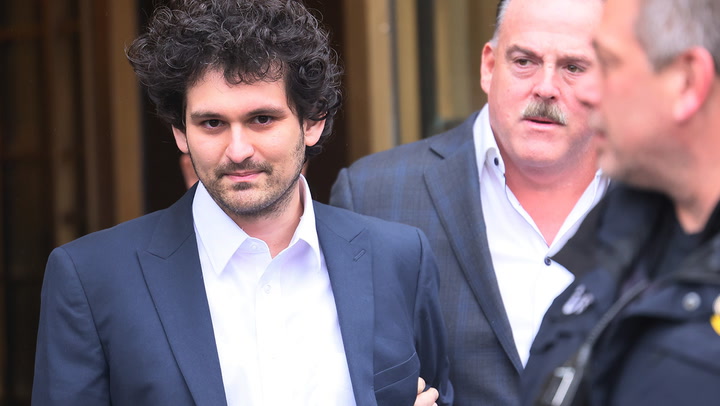
The Securities and Exchange Commission (SEC) is asking a federal judge for a summary judgment – saving everyone the spectacle of a full trial – because it says there is "no genuine dispute as to any material fact" in its case against Do Kwon and Terraform Labs.

"There is no dispute that purchasers made an investment of money, either through fiat currency or crypto assets," the SEC wrote in its filing, which continues to rehash the regulator's argument that Kwon and Terraform sold securities.
10
'Santa Rally' Could Spark Bitcoin to $56K by Year-End; PayPal Faces SEC Inquiry
0 seconds of 2 minutes, 16 secondsVolume 0%
Press shift question mark to access a list of keyboard shortcuts
Keyboard ShortcutsEnabledDisabled
Play/PauseSPACE
Increase Volume
Decrease Volume
Seek Forward
Seek Backward
Captions On/Offc
Fullscreen/Exit Fullscreenf
Mute/Unmutem
Seek %0-9
Up Next
Curve Finance’s Stablecoin Maintains Peg as Others Struggle: Kaiko
01:27
Settings
OffEnglish
Font Color
White
Font Opacity
100%
Font Size
100%
Font Family
Arial
Character Edge
None
Background Color
Black
Background Opacity
50%
Window Color
Black
Window Opacity
0%
Reset
WhiteBlackRedGreenBlueYellowMagentaCyan
100%75%50%25%
200%175%150%125%100%75%50%
ArialCourierGeorgiaImpactLucida ConsoleTahomaTimes New RomanTrebuchet MSVerdana
NoneRaisedDepressedUniformDrop Shadow
WhiteBlackRedGreenBlueYellowMagentaCyan
100%75%50%25%0%
WhiteBlackRedGreenBlueYellowMagentaCyan
100%75%50%25%0%
00:25
01:51
02:16
 
  • Curve Finance’s Stablecoin Maintains Peg as Others Struggle: Kaiko
    01:27
    Curve Finance’s Stablecoin Maintains Peg as Others Struggle: Kaiko
  • CoinDesk Published a Scoop on Alameda Research One Year Ago
    01:11
    CoinDesk Published a Scoop on Alameda Research One Year Ago
  • A Look Back on the Collapse of Sam Bankman-Fried's Empire
    07:06
    A Look Back on the Collapse of Sam Bankman-Fried's Empire
  • Crypto Markets Update as Federal Reserve Leaves Rates Unchanged
    16:28
    Crypto Markets Update as Federal Reserve Leaves Rates Unchanged
  • The filing says that money being pooled in a common enterprise with the expectation of profits predominantly from the efforts of the promoters satisfies the Howey test and warrants judgment in favor of the SEC. The Howey test is a legal test used to determine whether a transaction qualifies as investment contract and can be considered a security under U.S. federal law.

    A D V E R T I S E M E N T
    A D V E R T I S E M E N T

    Terraform and Kwon also engaged in fraudulent conduct and made misleading statements, the SEC reiterated in the filing, re-emphasizing that they committed fraud by deceiving investors about the stability of UST, falsely crediting their algorithm for its price stabilization while secretly arranging third-party intervention, making their claims about the algorithm's efficiency misleading and materially omitting crucial information. Terra collapsed in May last year, destroying billions of dollars in investor wealth.

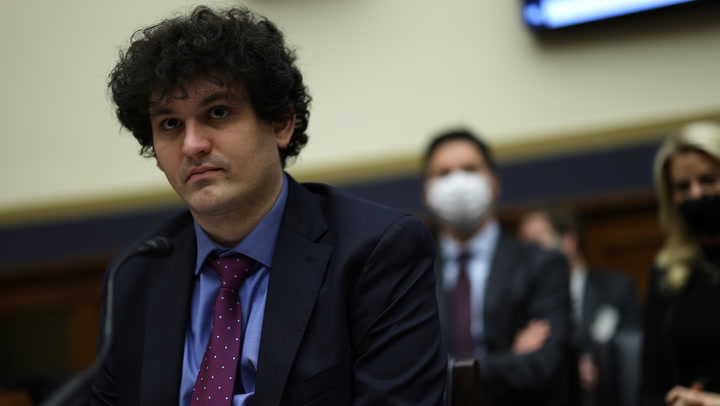
    All this comes days after Kwon's defense team filed a similar document asking the court to side with them as the SEC, in their opinion, hasn't managed to prove they were offering securities.

    Kwon remains in Montenegro, where he is serving a sentence for document forgery after being caught in an airport with fake passports.

    Recently, Terraform co-founder Daniel Shin, on trial in South Korea, attributed the failure of Terraform Labs to former Kwon's mismanagement, asserting his own separation from the company and its activities two years prior to its collapse.

    Edited by Omkar Godbole.

    Пов'язані матеріали

    Glue Finance Founder: ETH Has Entered a Phase of Non-Consensus, an Inflection Point Is Coming

    "Glue Finance founder argues Ethereum's current price underperformance stems from its 'unfinished machine' status. Despite record usage and settlement value in 2026, ETH remains below its 2021 peak because the protocol's continued development creates a dependency on the Ethereum Foundation for guidance and fixes. Key issues include centralized L2 sequencers, governance-based freezes (as seen with Arbitrum), state bloat, a vulnerable public mempool, and looming quantum computing threats. This 'dependency discount' prevents ETH from accruing the 'ossification premium' that markets award to immutable, trustless systems like Bitcoin. The author, a self-described Ethereum maximalist, rejects two flawed escape paths: a 'war mode' shift towards centralization for speed (which would sacrifice Ethereum's core value), or simply replacing the EF with another governing body. The only solution is the 'Manhattan Plan' or 'Lean Ethereum': a concerted, accelerated effort to complete and then *freeze* the protocol's neutral core. This involves finalizing critical upgrades in consensus (Lean Consensus), scaling (targeting 1 trillion gas/sec), quantum resistance (leanXMSS signatures), and full ZK-provable execution. The goal is to pass the 'walk-away test'—where Ethereum could run forever, neutrally, without the EF. Success would transform Ethereum into the first programmable, quantum-resistant, immutable global settlement layer, flipping its current discount into a unique 'eternity premium' that surpasses Bitcoin's. Failure—stagnation or trading neutrality for speed—would relegate it to being a slower, less trustworthy competitor."

    marsbit26 хв тому

    Glue Finance Founder: ETH Has Entered a Phase of Non-Consensus, an Inflection Point Is Coming

    marsbit26 хв тому

    Glue Finance Founder: ETH Has Entered a Phase of Non-Consensus, an Inflection Point Is Approaching

    Glue Finance founder argues that Ethereum's current price underperformance, despite high on-chain activity, stems from its incomplete state and lingering dependency on central stewards like the Ethereum Foundation. The core thesis is that the market is discounting ETH not for lack of use, but because the protocol remains a "machine under construction." Key unresolved issues include centralized L2 sequencers with limited escape hatches, state bloat, vulnerable public mempools, and the looming quantum computing threat. This perpetual "work-in-progress" status forces reliance on a small group of maintainers, undermining the network's promise of credible neutrality and immutability. The author, a self-described Ethereum maximalist, rejects two flawed paths: a "wartime mode" of centralizing for speed (surrendering Ethereum's unique value) or merely replacing the Foundation with another governing entity. The only solution is to complete and then "freeze" the protocol's neutral core through a focused "Manhattan Project" dubbed "Lean Ethereum." This project aims to bundle critical upgrades—consensus layer overhaul, massive scaling via ZK-proofs, quantum resistance, and statelessness—into a decisive push to finalize the base layer. Once the core rules are cryptographically solidified and beyond anyone's control (passing the "walk-away test"), Ethereum would shed its dependency discount and earn a "rigidity premium" for its credible neutrality and programmability, potentially surpassing Bitcoin's valuation. The race is between completing this hardening and the risks of protocol capture or stagnation.

    链捕手28 хв тому

    Glue Finance Founder: ETH Has Entered a Phase of Non-Consensus, an Inflection Point Is Approaching

    链捕手28 хв тому

    Hackers Steal Nearly $17 Million in 40 Days as 'Zombie Contracts' Become Their ATMs

    According to an analysis published by ZeroDrift on June 22, 2026, attackers have stolen approximately $16.9 million over 40 days from five deprecated but still operational smart contracts across various blockchains. The primary issue is not a specific vulnerability but the incomplete decommissioning of legacy contracts. These "zombie contracts" often retain economic value, operational permissions, and callable functions, making them prime targets long after teams cease active development. The most significant loss occurred at DxSale, where an old locker contract lost about $7.3 million due to a forgotten control path becoming accessible again. Other affected projects include TrustedVolumes (~$5.87M), Raydium's legacy AMM pool (~$1.34M), Aztec Connect (~$2.28M), and Huma Finance V1 pool (~$101k). These incidents involved diverse systems—RFQ settlement, credit pools, liquidity lockers, AMMs—demonstrating the widespread nature of the risk. The analysis highlights that automated tools are lowering the cost for attackers to systematically scan for these long-tail targets, which have public code and weaker monitoring. In contrast, defensive practices for contract retirement remain underdeveloped. While the DeFi industry has mature audit processes for new deployments, it lacks strict protocols for securely sunsetting old contracts, which only become truly "retired" after all funds, permissions, authorizations, and trust assumptions are removed.

    marsbit1 год тому

    Hackers Steal Nearly $17 Million in 40 Days as 'Zombie Contracts' Become Their ATMs

    marsbit1 год тому

    Valuation Rout of Old Titans: The Demise of a Generation's Asset Valuation Framework

    "The Old Titans' Valuation Collapse: The Death of an Era's Valuation Framework" Between Alibaba's 2014 NYSE debut at $93.89 and its 2026 price of ~$95, twelve years have passed with zero price appreciation. This stagnation symbolizes a wholesale valuation reset for an entire generation of Chinese internet assets. Companies like Tencent, Pinduoduo, Meituan, Bilibili, and Kuaishou have seen catastrophic declines of 80-98% from their peaks. The core question arises: what framework now prices these companies, or has the framework itself expired? The valuation logic for Chinese internet stocks followed a clear "anchor-setting and anchor-removing" process. From 2014-2017, the dominant narrative was "US comparable discounting" – applying a growth premium and governance discount to US peers' multiples. This anchor loosened with the 2018 US-China trade war and the VIE structure risk, then was violently uprooted by the 2020-2021 regulatory crackdowns (Ant Group, Didi, anti-monopoly fines). The 2022 delisting panic and subsequent 2025-2026 geopolitical shocks (US military lists, AI espionage accusations) completed the demolition. The old "US对标打折" model is dead. However, this is not solely a China story. A structural mirror exists in US "old titan" stocks ("老登股"). In 2026, even Microsoft – with robust fundamentals – saw its PE compress from a 34x median to 22x, its worst performer status among the "Magnificent Seven" driven by a $190 billion annual AI capex crushing free cash flow. The core dilemma is universal: legacy platform giants, whether Alibaba or Microsoft, are spending colossal sums to chase an AI paradigm that may颠覆 their own high-margin, user/subscription-based business models. They have shifted from "companies defining the future" to "companies needing to prove they won't be淘汰ed by the future." This phenomenon of a dying valuation坐标系 has a historical precedent: post-1989 Japan. After its bubble burst, the "Japan premium" narrative ("most efficient manufacturing + perpetual growth") collapsed. A 25-year valuation vacuum ensued until Warren Buffett provided a new language in the 2010s: "low valuation + high dividend + governance reform." China's internet sector is now in a similar vacuum six years into its reset. While different from Japan's deflationary context, the parallel is clear: the old macro assumption of "deep integration with global capital" is falsified, but a new pricing framework is absent. Potential "new languages" for Chinese internet valuations are contradictory. AI transformation requires gutting profitable core businesses (e.g., Alibaba's ad-driven e-commerce) for an unproven consumption-based model, risking a Microsoft-like cash flow crunch. Alternatively, shareholder returns (buybacks/dividends) could build a floor, following Buffett's Japanese playbook, but current scales are insufficient to form a standalone anchor. The current state mirrors mid-1990s Japan: the old framework is dead, the new one unborn. The market waits in a vacuum for a重新定义ing force – a person, event, or proven business model shift – to answer "why buy." This may only be the middle phase of a prolonged re-rating.

    marsbit1 год тому

    Valuation Rout of Old Titans: The Demise of a Generation's Asset Valuation Framework

    marsbit1 год тому

    Торгівля

    Спот
    活动图片