# WeChat İlgili Makaleler

HTX Haber Merkezi, kripto endüstrisindeki piyasa trendleri, proje güncellemeleri, teknoloji gelişmeleri ve düzenleyici politikaları kapsayan "WeChat" hakkında en son makaleleri ve derinlemesine analizleri sunmaktadır.

From Tencent and Circle: Looking at the Easy and Hard Questions of Investment

The article contrasts the investment prospects of Tencent and Circle in the AI era, framing the decision as a choice between "easy" and "hard" problems, inspired by Charlie Munger's philosophy. Tencent's stock has declined despite strong earnings, as the market shifted from fearing insufficient AI investment to worrying about excessive spending. The author argues this pessimism is overdone. WeChat's nascent AI agent, Yuanbao, is seen as a prototype for a future, more powerful system-native agent. Crucially, this agent would have system-level permissions to seamlessly interact with the massive Mini Program ecosystem (housing apps like Meituan, Didi, etc.), making it a practical, usable product for billions. The author believes the high-probability success of this inevitable development makes investing in Tencent an "easy" decision that the market is currently overlooking. Conversely, Circle's recent rise is fueled by the AI narrative, specifically the belief that AI agents will require blockchain-based stablecoins for settlement, with USDC as the leading compliant option. The author deconstructs this bullish thesis, identifying high uncertainties in its core assumptions: whether AI transactions will *necessarily* use stablecoins (vs. other protocols like Google's UCP), USDC's ability to maintain its lead against competitors like Tether or PayPal, and whether stablecoins even possess strong network effects in an agent-dominated world where cost and friction are paramount. The compounding uncertainty makes investing in Circle a "hard" problem, riskier than market sentiment suggests. In summary, the author posits that Tencent presents a clear, high-probability opportunity (easy), while Circle's future is built on a chain of speculative assumptions (hard).

marsbit03/21 11:20

From Tencent and Circle: Looking at the Easy and Hard Questions of Investment

marsbit03/21 11:20

The Ghost of X.com, Musk's 25-Year Revenge

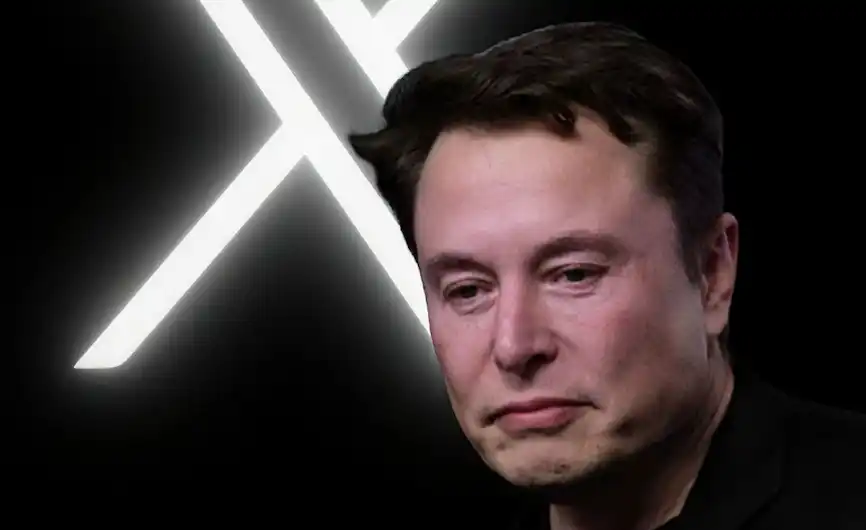
Elon Musk's 25-year quest to reclaim his original vision for X.com culminated in the acquisition and transformation of Twitter. In 1999, Musk invested his entire $22 million fortune from the sale of Zip2 into X.com, an ambitious online financial platform. The venture merged with Confinity (later PayPal), but Musk was ousted in a board coup while on his honeymoon. The X.com brand was discarded, leaving a "fishbone" of regret in Musk. His 2022 acquisition of Twitter was not primarily about free speech but about复仇 (revenge) for that early betrayal. He systematically rebranded it as X and began a gradual transformation from a microblogging site into an all-in-one "everything app." This involved introducing long-form content, enhanced video, creator monetization, and, most crucially, laying the groundwork for financial services. The key development is the "Smart Cashtags" feature, allowing users to embed asset tickers (e.g., $TSLA) in posts that link to real-time data and, ultimately, enable direct trading. This creates a seamless loop from seeing information to making a financial decision to executing a trade, all within X. To build trust for this financial future, Musk took the unprecedented step of open-sourcing the platform's algorithm. The article frames this as Musk finally realizing his 1999 vision, an idea validated by the success of Chinese super-apps like WeChat. The timing is now perfect, with mature mobile payments, crypto adoption, and shifting regulations. Musk's lifelong obsession with the letter "X" (SpaceX, Model X, xAI, his son's name) is presented as a unifying thread in his mission to control the flow of global capital and information, making X the central nervous system of the digital economy.

marsbit01/14 09:21

The Ghost of X.com, Musk's 25-Year Revenge

marsbit01/14 09:21

From Manus' Xiao Hong: The Crypto Interns Who Made It to the Big Leagues

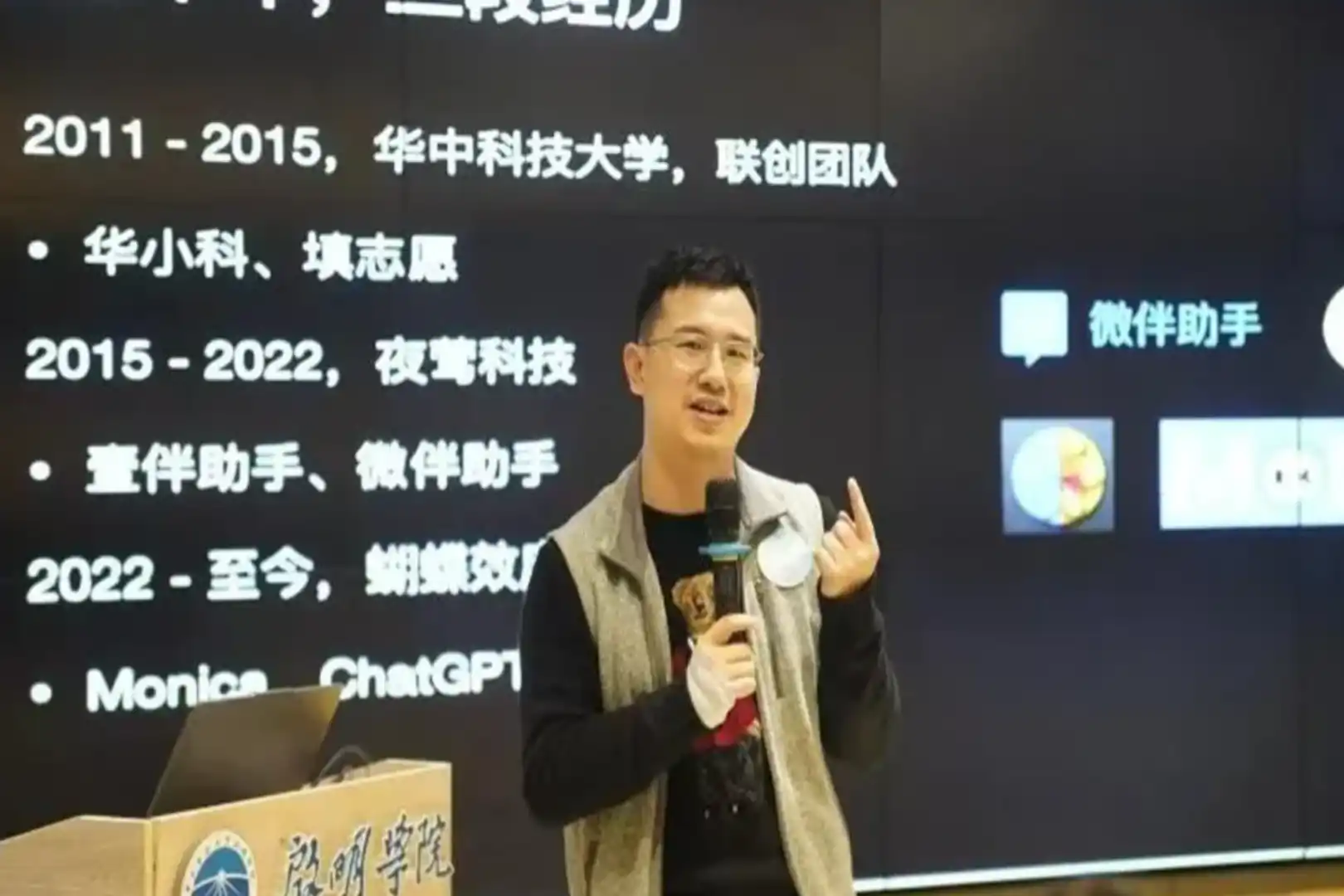
The article "From Manus' Xiao Hong to Those Crypto Interns Who Made It Big" explores the early careers of several key figures in the cryptocurrency and tech industries, highlighting how their internships and early roles during Bitcoin's formative years shaped their later success. In late 2025, Meta acquired AI company Manus, founded by Xiao Hong, who was revealed to be an early Bitcoin holder. Xiao, now a Meta VP, had his first internship in 2013 at Yibit, one of China’s earliest Bitcoin media companies, founded by prominent miner Mao Shixing (aka "Shenyu"). This experience exposed him to decentralized systems and crypto ideals that later informed his work in AI. The piece also tells the story of Ge Yuesheng, a 21-year-old intern who became an early angel investor in Bitmain, providing crucial funding and resources. He eventually co-founded Matrixport and became one of the youngest crypto billionaires. Another example is Wang Hui, OKCoin’s first employee, who built its technical infrastructure from scratch. After leaving, he co-founded JEX, which was later bought by Binance. These stories underscore common themes: timing (entering crypto during its 2013–2017 "chaotic" early days), the importance of following visionary leaders, and a willingness to embrace risk and uncertainty. While these are survivor stories, they illustrate how early exposure to crypto’s foundational ideas provided a unique vector for recognizing future tech trends—from Bitcoin to AI. The article concludes by reflecting on the rapid evolution of the industry, where a decade can transform an intern into a billionaire, and emphasizes the unpredictable, high-reward nature of betting early on emerging technologies.

marsbit01/09 03:53

From Manus' Xiao Hong: The Crypto Interns Who Made It to the Big Leagues

marsbit01/09 03:53

From Intern to the Main Table: The 'Fast Lane of Life' for Early Crypto Participants

From Intern to the Main Table: The "Fast Track" of Early Crypto Participants The article chronicles the remarkable journeys of early cryptocurrency adopters who leveraged internships and entry-level roles during Bitcoin's nascent stages (2013-2017) to achieve extraordinary success. It highlights three key figures: 1. **Xiao Hong (founder of AI company Manus, acquired by Meta in 2025)**: As a sophomore intern at Chinese Bitcoin media outlet YiBit in 2013, he absorbed decentralized principles that later informed his AI work. His path exemplifies how early crypto exposure provided a "vector" for identifying future technological shifts. 2. **Ge Yuesheng (youngest billionaire in Bitmain’s founding team)**: Initially an intern at a私募 firm, he used family resources to become Bitmain’s earliest angel investor at age 21, securing 28% equity. His risk-taking during crypto’s volatility led to co-founding Matrixport. 3. **Wang Hui (OKCoin’s first employee)**: He built OKCoin’s technical infrastructure from scratch, later founding JEX (acquired by Binance). His story underscores OKCoin’s role as a "crypto黄埔军校" (Huangpu Military Academy) for talent. Common success factors include: - **Timing**: Entering during crypto’s "chaotic phase" (2013-2017) offered disproportionate growth opportunities. - **Mentorship**: Aligning with visionaries like神鱼(Shenyu), Wu Jihan, or Xu Mingxing provided access to high-value networks. - **Risk tolerance**: Embracing uncertainty during bear markets and early adoption yielded outsized returns. The piece acknowledges survivorship bias but argues that early crypto immersion cultivated a unique mindset—blending technical intuition, product agility, and long-term conviction—that enabled these individuals to thrive across subsequent tech waves (AI, Web3). In a rapidly evolving industry, today’s interns could be tomorrow’s billionaires.

比推01/08 14:29

From Intern to the Main Table: The 'Fast Lane of Life' for Early Crypto Participants

比推01/08 14:29

活动图片