The Ghost of X.com, Musk's 25-Year Revenge

marsbit2026-01-14 tarihinde yayınlandı2026-01-14 tarihinde güncellendi

Özet

Elon Musk's 25-year quest to reclaim his original vision for X.com culminated in the acquisition and transformation of Twitter. In 1999, Musk invested his entire $22 million fortune from the sale of Zip2 into X.com, an ambitious online financial platform. The venture merged with Confinity (later PayPal), but Musk was ousted in a board coup while on his honeymoon. The X.com brand was discarded, leaving a "fishbone" of regret in Musk. His 2022 acquisition of Twitter was not primarily about free speech but about复仇 (revenge) for that early betrayal. He systematically rebranded it as X and began a gradual transformation from a microblogging site into an all-in-one "everything app." This involved introducing long-form content, enhanced video, creator monetization, and, most crucially, laying the groundwork for financial services. The key development is the "Smart Cashtags" feature, allowing users to embed asset tickers (e.g., $TSLA) in posts that link to real-time data and, ultimately, enable direct trading. This creates a seamless loop from seeing information to making a financial decision to executing a trade, all within X. To build trust for this financial future, Musk took the unprecedented step of open-sourcing the platform's algorithm. The article frames this as Musk finally realizing his 1999 vision, an idea validated by the success of Chinese super-apps like WeChat. The timing is now perfect, with mature mobile payments, crypto adoption, and shifting regulations. Musk's ...

Author: Niusike, Deep Tide TechFlow

Some dreams never die, they just wait for the right time.

The Premature Baby of 1999

In March 1999, in Palo Alto, 27-year-old Elon Musk made a decision that seemed almost absurd at the time.

He bet all the $22 million he made from selling Zip2 on a website called X.com.

At that time, Silicon Valley was still the era of Yahoo and America Online (AOL), and the internet in people's eyes was equivalent to portal websites. Proposing the concept of "online banking" at this point was like selling rockets in the era of carriages. But Musk's ideal X.com was not just an online bank; he wanted to create an online financial operating system: allowing all financial services to be realized on one platform, including transfers, investments, loans, insurance, and even daily consumption.

Silicon Valley at the time thought this young man from South Africa was crazy.

It was the era of dial-up internet, accompanied by the screeching sound of modems, and it sometimes took half a minute to open a webpage. Asking users to transfer money on a 28.8K turtle-speed network? It sounded like a joke.

The ambition was terrifyingly big, but reality hit back harder.

A year later, X.com merged with Peter Thiel's Confinity (the predecessor of PayPal). It should have been a "genius alliance," but it turned into a Silicon Valley version of "Game of Thrones." Thiel's elite group from Stanford couldn't stand Musk's chaotic radicalism, thinking this engineer-turned-CEO was a dangerous madman.

In September 2000, the collapse came. Musk flew to Australia for his honeymoon. Just as his flight landed in Sydney, before he could even leave the airport, the board called: you're out.

Peter Thiel took over everything. A few months later, the sign "X.com" that Musk loved was taken down, and the company was renamed PayPal.

The foundation of the "financial empire" that Musk spent a year building was bulldozed by a group of investment bankers in Brioni custom suits, leaving only the simplest function: payment.

In 2002, eBay acquired PayPal, and Musk received $180 million. Financially, he won, but at that moment, he was like a child whose favorite toy had been taken away. A fishbone was deeply stuck in his heart.

For the next twenty years, he built the best electric cars, sent rockets into space, and vowed to die on Mars. But whenever someone mentioned PayPal, he couldn't hide his disappointment.

X.com was always his inner demon.

Bringing the "Sink" to Wall Street

On October 27, 2022, Musk walked into the Twitter headquarters building, holding a sink.
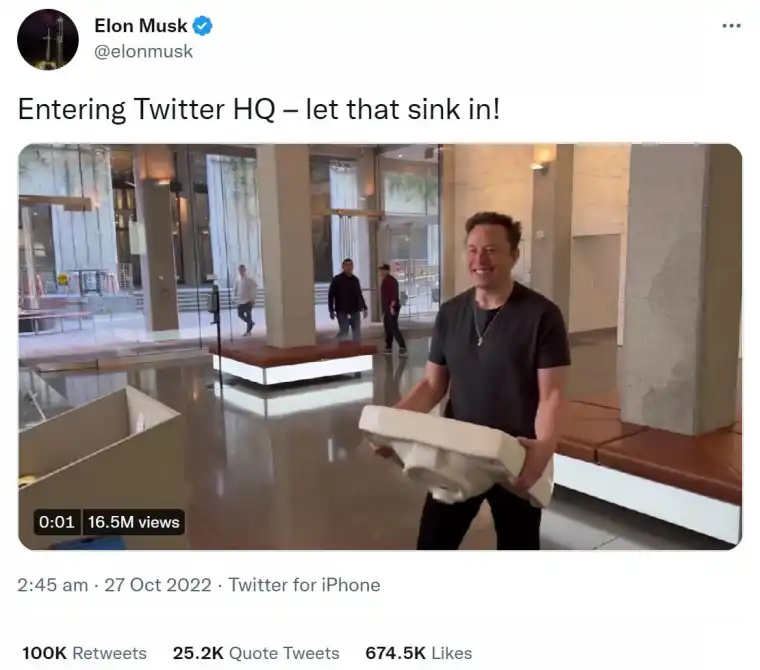
This detail was later wildly reported by the media, but the real signal was the sentence he wrote on Twitter: "Let that sink in."

A pun. Let the sink in, and let it all sink in.

The outside world thought he bought Twitter for free speech or to defend Trump. They were all wrong. Musk wanted revenge, revenge for that betrayal 25 years ago.

The first step was to change the name.

X. One letter, carrying all his anger and ambition. Those who mocked X.com for being too advanced back then would now witness its resurrection on this platform.

But Musk was smart. He knew he couldn't go all the way at once; turning Twitter directly into a bank would scare users away. So he chose a gradual transformation.

In early 2023, X was still mainly a lightweight social platform with a 140-character limit. Musk first adjusted the content strategy, encouraging more original content and real-time discussions. Then came paid subscriptions, getting users used to spending money on the platform.

By mid-year, the long-tweet feature was launched. Users could publish longer, more in-depth content, and the platform began to shift from a short-message square to an information center.

Next came a significant enhancement of video features. Musk wanted X to become a one-stop platform for information consumption, so users no longer needed to jump to YouTube or other video sites.

At the end of 2023, the creator revenue-sharing plan was officially launched. The platform began to have an economic ecosystem, and users could earn income through content creation. This was a crucial step; Musk was cultivating users' transaction habits.

Then came the big move in 2024.

Financial license applications, payment system construction... Musk no longer hid his intentions; he wanted to turn X into a financial platform.

In January 2026, X product lead Nikita Bier stated that the platform is developing the Smart Cashtags feature, allowing users to precisely point to specific assets or smart contracts when publishing ticker symbols.
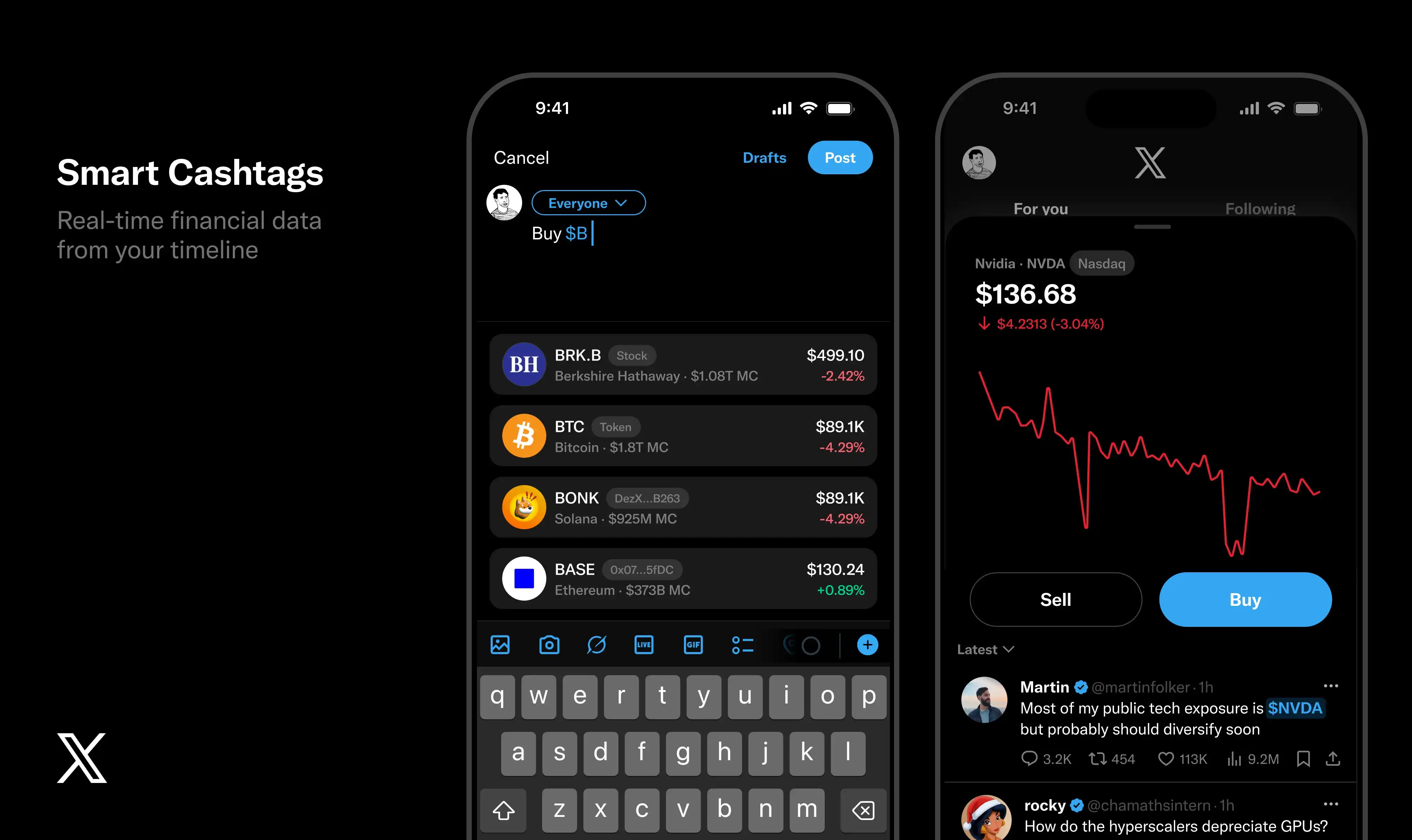
Users can embed tags like $TSLA in tweets to display stock prices in real-time. It seems like just an information display feature, but it's actually the final piece of the financialization puzzle.

Imagine: you see a tweet about NVIDIA's new chip on X, the stock price immediately rises 5%, and you directly click the $NVDA tag to place a buy order.

Social, information, and trading, all in one. This is the vision Musk wanted to realize with X.com back in the day.

From a town square to an information center, and then to a trading hall. Musk spent two years gradually guiding users to accept X's transformation.

To dispel users' doubts, Musk made an unprecedented decision: open-sourcing all algorithms.

On January 10, 2026, Musk announced on X that he would officially open-source X platform's latest content recommendation algorithm within a week, covering the recommendation of organic and ad content code, with updates every four weeks along with developer documentation.

The recommendation algorithms of platforms like Facebook, YouTube, and TikTok are black boxes; no one knows why they see certain content. When it comes to financial services, this lack of transparency becomes a fatal flaw.

Musk broke the black box with open source. Users can inspect the code, developers can audit security, and regulators can supervise compliance.

All to pave the way for financialization.

Belated Validation

X.com in 1999 died because it was "born at the wrong time." The internet back then was still in the dial-up era, with broadband penetration below 10%. Online payments required dozens of security verifications, and users were full of fear about putting money online.

More importantly, the regulatory environment was extremely strict. Banking regulators saw internet finance as a flood beast, and the government was also feeling its way. Musk's radical strategy seemed too risky in that conservative era.

But history proved his judgment right.

It's just that the validation came too late, and from an unexpected place: China.

In 2011, WeChat launched. Initially just a chat app, it quickly became the super app that Musk had envisioned back in the day. Chatting, payments, ride-hailing, food delivery, wealth management—it could do everything. Alipay also evolved from a simple third-party payment tool to a comprehensive financial platform.

Musk saw it and felt anxious.

In June 2022, at his first all-hands meeting with Twitter employees, he publicly stated: "In China, people basically live on WeChat because it's so useful and helpful in daily life. I think if we can achieve that with Twitter, or even just get close, it would be a huge success."

This sounded like praise for WeChat, but also regret for his own failure 25 years ago. The Chinese had achieved in ten years what he wanted to do in 1999.

Now it was his turn.

Mobile payments have rewritten global users' consumption habits, cryptocurrencies have gone from geek toys to pension fund investments. Blockchain technology has made decentralized finance a reality. Regulators have also begun to embrace innovation.

The U.S. Securities and Exchange Commission approved Bitcoin ETFs, the European Union launched a digital euro plan, and the People's Bank of China is piloting the digital yuan.

Musk waited 25 years for this moment.

With this background, when you look at Smart Cashtags, you'll understand that Musk's opponent was never Zuckerberg.

Meta controls social relationships, Google controls information indexing, and Apple controls hardware access. But so far, no tech giant has truly controlled the global "flow of funds."

This is X's endgame. Finance is the underlying protocol of the business world. Whoever controls the flow of funds holds the throat of the digital economy. This is more lethal than making a search engine or selling a phone.

Musk is reshaping an ultra-fast chain from "information" to "decision" to "action." Imagine: Musk tweets about a new Tesla technology. Within seconds, hundreds of thousands of people click the $TSLA tag. The algorithm predicts trends based on sentiment analysis, automatically pushes trading suggestions, and users place orders with one click. Influence is instantly converted into trading volume.

This is the financialization of social media. The traditional Wall Street model, with its analysts writing reports and brokers making calls, will seem clumsy and expensive in the face of algorithms.

Back to the initial question: why did Musk acquire Twitter?

The answer was already public. On October 5, 2022, Musk tweeted that acquiring Twitter accelerated the creation of the super app "X."

It's just that now, everyone finally understands this sentence.

Back to 1999, the ghost of X.com finally found the right time to resurrect. This time, no one can stop him. He is no longer the 27-year-old entrepreneur who had to kowtow to others, but the world's richest man with absolute authority.

Welcome to the X Universe

If we zoom out, beyond the rises and falls of Wall Street and the grudges of Silicon Valley, you'll discover an even more chilling pattern.

Musk's obsession with the letter "X" has long transcended the scope of a commercial brand, becoming an almost pathological totem worship.

Look at what he's done over the past twenty years: When he tried to send humans to Mars, he named the company SpaceX; when he wanted to build a flagship SUV to define Tesla's future, he insisted on calling it Model X despite opposition; when he left OpenAI to develop his own AI large model, he named it xAI.

He even named his most beloved son X Æ A-12, and in daily life, he only calls him "Little X."
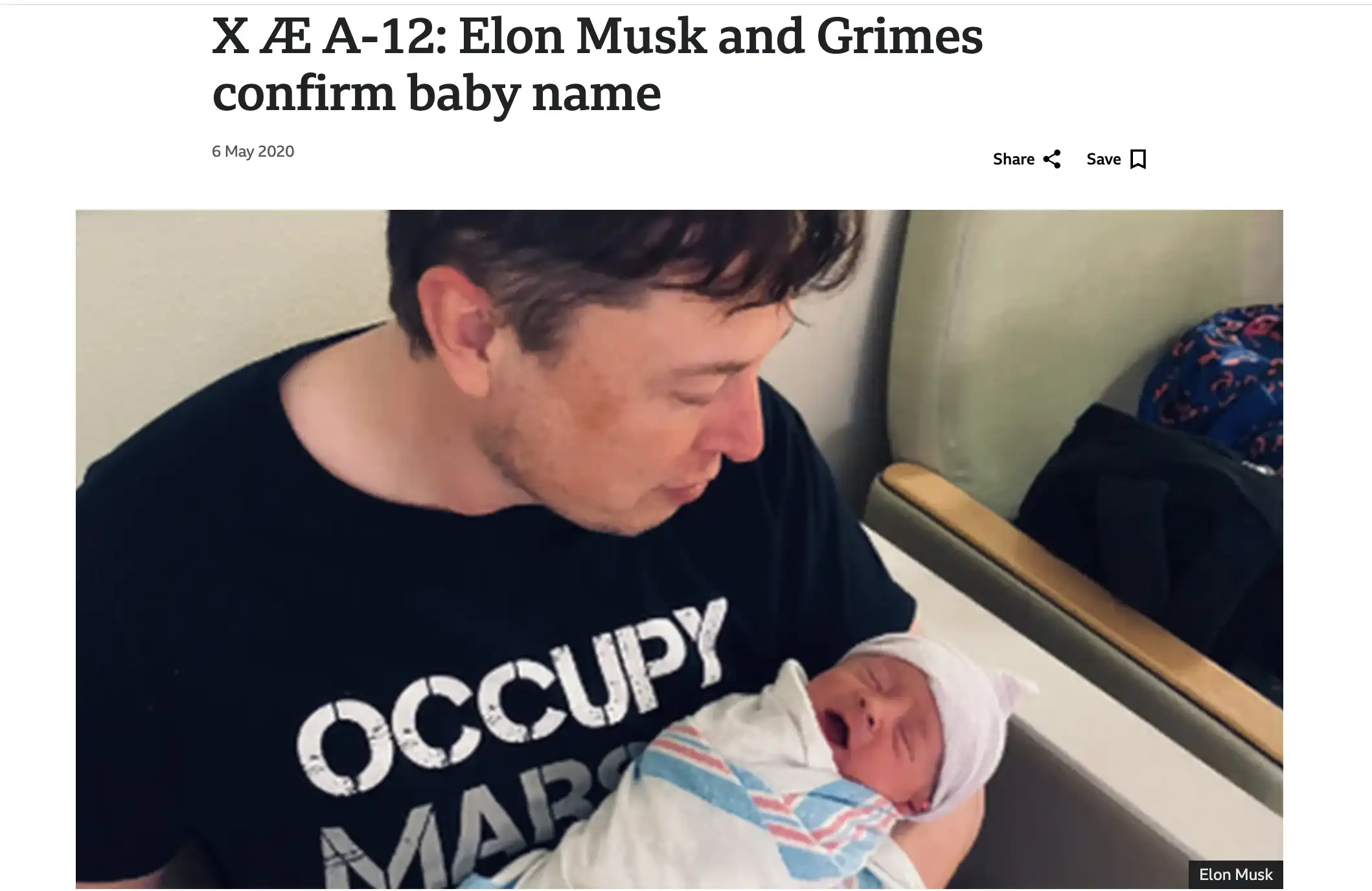
In mathematics, X represents the unknown, representing infinite possibilities. But in Musk's life story, X is the only constant.

Twenty-five years ago, that young man kicked out by the PayPal board lost his X. Twenty-five years later, the richest man who owns rockets, cars, AI, and the world's largest court of public opinion has finally picked up that puzzle piece.

Everything, everything, is to make X happen.

Welcome to Musk's X Universe.

İlgili Sorular

QWhat was the original vision for X.com that Elon Musk had in 1999?

AElon Musk envisioned X.com not just as an online bank, but as a comprehensive online financial operating system where all financial services—transfers, investments, loans, insurance, and even daily consumption—could be conducted on a single platform.

QWhy was the original X.com considered a failure and what happened to Musk's departure?

AX.com was considered ahead of its time due to slow dial-up internet and conservative regulatory environments. It merged with Confinity (later PayPal), but internal conflicts led to Musk being ousted by the board while he was on his honeymoon in 2000. The company was later renamed PayPal.

QHow is Musk's acquisition and transformation of Twitter (now X) connected to his original X.com vision?

AMusk acquired Twitter to accelerate the creation of a super app 'X,' fulfilling his original 1999 vision. He is transforming the platform from a social network into an integrated information and financial hub, incorporating features like payments, smart cash tags, and open-source algorithms to enable seamless social and financial interactions.

QWhat role does the 'Smart Cashtags' feature play in X's financialization strategy?

ASmart Cashtags allow users to embed asset tickers (like $TSLA) in posts, displaying real-time prices and enabling direct trading. This feature bridges social content with financial action, turning X into a platform for instant information consumption and transaction execution.

QHow does Musk's obsession with the letter 'X' manifest across his ventures and personal life?

AMusk's obsession with 'X' is evident in his companies: SpaceX for space exploration, Model X for Tesla's SUV, and xAI for his artificial intelligence venture. He even named his son 'X Æ A-12,' commonly referred to as 'Little X.' The letter symbolizes infinite possibilities and is a constant theme in his ambitious projects.

İlgili Okumalar

How Many Tokens Away Is Yang Zhilin from the 'Moon Chasing the Light'?

The article explores the intense competition between two leading Chinese AI companies, DeepSeek and Kimi (Moon Dark Side), and the mounting pressure on Yang Zhilin, the founder of Kimi. While DeepSeek re-emerged after 15 months of silence with its powerful V4 model—boasting 1.6 trillion parameters and low-cost, long-context capabilities—Kimi has been focusing on long-context processing and multi-agent systems with its K2.6 model. Yang faces a threefold challenge: technological rivalry, commercialization pressure, and investor expectations. Despite Kimi’s high valuation (reaching $18 billion), its revenue heavily relies on a single product with low paid conversion rates, while DeepSeek’s strategic silence and open-source influence have strengthened its market position and valuation prospects, now targeting over $20 billion. Both companies reflect broader trends in China’s AI ecosystem: Kimi aims for global influence through open-source contributions and agent-based advancements, while DeepSeek prioritizes foundational innovation and hardware independence, notably shifting to Huawei’s chips. Their competition is seen as vital for China’s AI progress, with the gap between top Chinese and U.S. models narrowing to just 2.7% on the Elo rating scale. Ultimately, the article argues that this rivalry, though anxiety-inducing for leaders like Zhilin, is essential for driving innovation and solidifying China’s role in the global AI landscape.

marsbit6 saat önce

How Many Tokens Away Is Yang Zhilin from the 'Moon Chasing the Light'?

marsbit6 saat önce

TechFlow Intelligence Bureau: ChatGPT Helps Amateur Mathematician Crack 60-Year-Old Problem, CFTC Sues New York Regulator Over Coinbase and Gemini

An amateur mathematician, with the assistance of ChatGPT, has solved a combinatorial mathematics puzzle originally proposed by Hungarian mathematician Paul Erdős in the 1960s. This marks another milestone in AI-aided mathematical research, demonstrating the evolving capabilities of large language models in formal reasoning. In other AI developments, OpenAI introduced a new privacy filter tool for enterprise API usage, automatically screening sensitive data. Meanwhile, the Qwen3.6-27B model achieved 100 tokens per second on a single RTX 5090 GPU using quantization, significantly lowering the cost barrier for local AI deployment. In crypto and Web3, the U.S. CFTC sued New York’s financial regulator, challenging its oversight of Coinbase and Gemini—a first-of-its-kind federal-state regulatory clash. Following a vulnerability, KelpDAO and major DeFi protocols established a recovery fund. Tether froze $344 million in assets linked to Iran’s central bank upon U.S. Treasury request, highlighting the centralized control risks in stablecoins. Separately, Litecoin underwent a 3-hour chain reorganization to undo a privacy-layer exploit. In the U.S., former President Trump invoked the Defense Production Act to address power grid bottlenecks affecting AI data centers and dismissed the entire National Science Board, raising concerns over research independence. A retail trader gained 250% on a $600k Intel options bet amid AI-related speculation. Xiaomi announced its first performance electric vehicle, targeting rivals like Tesla. Meanwhile, iPhone users reported devices automatically reinstalling a hidden app daily, suspected to be MDM-related. A Chinese securities report noted that A-share institutional crowding has reached its second-longest streak since 2007, signaling high valuations and potential style rotation. The day’s developments reflect a dual narrative: AI is enabling unprecedented individual breakthroughs, while centralized power structures—whether governmental or corporate—are becoming more assertive, underscoring that decentralization is as much a political-economic challenge as a technical one.

marsbit6 saat önce

TechFlow Intelligence Bureau: ChatGPT Helps Amateur Mathematician Crack 60-Year-Old Problem, CFTC Sues New York Regulator Over Coinbase and Gemini

marsbit6 saat önce

İşlemler

Spot
Futures

Popüler Makaleler

$S$ Nedir

SPERO'yu Anlamak: Kapsamlı Bir Genel Bakış SPERO'ya Giriş İnovasyonun manzarası gelişmeye devam ederken, web3 teknolojilerinin ve kripto para projelerinin ortaya çıkışı dijital geleceği şekillendirmede önemli bir rol oynamaktadır. Bu dinamik alanda dikkat çeken projelerden biri SPERO, $$s$$ olarak adlandırılmaktadır. Bu makale, SPERO hakkında ayrıntılı bilgi toplamak ve sunmak amacıyla, meraklılar ve yatırımcıların web3 ve kripto alanlarındaki temellerini, hedeflerini ve yeniliklerini anlamalarına yardımcı olmayı amaçlamaktadır. SPERO,$$s$$ Nedir? SPERO,$$s$$, kripto alanında merkeziyetsizlik ve blok zinciri teknolojisi ilkelerini kullanarak etkileşimi, faydayı ve finansal kapsayıcılığı teşvik eden bir ekosistem yaratmayı amaçlayan benzersiz bir projedir. Proje, kullanıcıların yenilikçi finansal çözümler ve hizmetler sunarak eşler arası etkileşimleri yeni yollarla kolaylaştırmayı hedeflemektedir. SPERO,$$s$$'nin temel amacı, bireyleri güçlendirmek ve kripto para alanındaki kullanıcı deneyimini artıran araçlar ve platformlar sağlamaktır. Bu, daha esnek işlem yöntemlerini mümkün kılmayı, topluluk odaklı girişimleri teşvik etmeyi ve merkeziyetsiz uygulamalar (dApp'ler) aracılığıyla finansal fırsatlar yaratmayı içermektedir. SPERO,$$s$$'nin temel vizyonu kapsayıcılık etrafında dönmekte olup, geleneksel finansal sistemlerdeki boşlukları kapatmayı ve blok zinciri teknolojisinin faydalarından yararlanmayı hedeflemektedir. SPERO,$$s$$'nin Yaratıcısı Kimdir? SPERO,$$s$$'nin yaratıcısının kimliği bir miktar belirsizdir, çünkü kurucusu(ları) hakkında ayrıntılı arka plan bilgisi sağlayan sınırlı kamuya açık kaynaklar bulunmaktadır. Bu şeffaflık eksikliği, projenin merkeziyetsizlik taahhüdünden kaynaklanabilir—birçok web3 projesinin paylaştığı bir etik anlayışı, bireysel tanınmanın yerine kolektif katkıları önceliklendirmektedir. Topluluk ve onun kolektif hedefleri etrafında tartışmaları merkezileştirerek, SPERO,$$s$$, belirli bireyleri öne çıkarmadan güçlendirme özünü taşımaktadır. Bu nedenle, SPERO'nun etik anlayışını ve misyonunu anlamak, tek bir yaratıcının kimliğini belirlemekten daha önemlidir. SPERO,$$s$$'nin Yatırımcıları Kimlerdir? SPERO,$$s$$, kripto sektöründe yeniliği teşvik etmeye adanmış girişim sermayedarlarından melek yatırımcılara kadar çeşitli yatırımcılar tarafından desteklenmektedir. Bu yatırımcıların odak noktası genellikle SPERO'nun misyonuyla uyumlu olup, toplumsal teknolojik ilerlemeyi, finansal kapsayıcılığı ve merkeziyetsiz yönetimi vaat eden projeleri önceliklendirmektedir. Bu yatırımcı temelleri, yalnızca yenilikçi ürünler sunan projelere değil, aynı zamanda blok zinciri topluluğuna ve ekosistemlerine olumlu katkılarda bulunan projelere de ilgi duymaktadır. Bu yatırımcıların desteği, SPERO,$$s$$'yi hızla gelişen kripto projeleri alanında dikkate değer bir rakip haline getirmektedir. SPERO,$$s$$ Nasıl Çalışır? SPERO,$$s$$, onu geleneksel kripto para projelerinden ayıran çok yönlü bir çerçeve kullanmaktadır. İşte benzersizliğini ve yeniliğini vurgulayan bazı temel özellikler: Merkeziyetsiz Yönetim: SPERO,$$s$$, kullanıcıların projenin geleceğiyle ilgili karar alma süreçlerine aktif olarak katılmalarını sağlayan merkeziyetsiz yönetim modellerini entegre etmektedir. Bu yaklaşım, topluluk üyeleri arasında sahiplik ve hesap verebilirlik duygusunu teşvik etmektedir. Token Kullanımı: SPERO,$$s$$, ekosistem içinde çeşitli işlevler sunmak üzere tasarlanmış kendi kripto para token'ını kullanmaktadır. Bu token'lar, işlemleri, ödülleri ve platformda sunulan hizmetlerin kolaylaştırılmasını sağlayarak genel etkileşimi ve faydayı artırmaktadır. Katmanlı Mimari: SPERO,$$s$$'nin teknik mimarisi, modülerlik ve ölçeklenebilirliği destekleyerek projenin evrimi sırasında ek özelliklerin ve uygulamaların sorunsuz bir şekilde entegrasyonuna olanak tanımaktadır. Bu uyum sağlama yeteneği, sürekli değişen kripto manzarasında geçerliliği sürdürmek için hayati öneme sahiptir. Topluluk Katılımı: Proje, işbirliği ve geri bildirim teşvik eden mekanizmalar kullanarak topluluk odaklı girişimlere vurgu yapmaktadır. Güçlü bir topluluk oluşturarak, SPERO,$$s$$, kullanıcı ihtiyaçlarını daha iyi karşılayabilir ve piyasa trendlerine uyum sağlayabilir. Kapsayıcılığa Odaklanma: Düşük işlem ücretleri ve kullanıcı dostu arayüzler sunarak, SPERO,$$s$$, daha önce kripto alanında yer almamış bireyler de dahil olmak üzere çeşitli bir kullanıcı tabanını çekmeyi hedeflemektedir. Bu kapsayıcılık taahhüdü, erişilebilirlik yoluyla güçlendirme misyonuyla uyumludur. SPERO,$$s$$ Zaman Çizelgesi Bir projenin tarihini anlamak, gelişim yolculuğu ve kilometre taşları hakkında kritik bilgiler sağlar. Aşağıda, SPERO,$$s$$'nin evriminde önemli olayları haritalayan önerilen bir zaman çizelgesi bulunmaktadır: Kavram Geliştirme ve Fikir Aşaması: SPERO,$$s$$'nin temelini oluşturan ilk fikirler, blok zinciri endüstrisindeki merkeziyetsizlik ve topluluk odaklılık ilkeleriyle yakından uyumlu olarak geliştirildi. Proje Beyaz Kağıdının Yayınlanması: Kavramsal aşamayı takiben, SPERO,$$s$$'nin vizyonunu, hedeflerini ve teknolojik altyapısını ayrıntılı bir şekilde açıklayan kapsamlı bir beyaz kağıt yayımlandı ve topluluk ilgisini ve geri bildirimini toplamak amacıyla sunuldu. Topluluk Oluşturma ve Erken Katılımlar: Projenin hedefleri etrafında tartışmalar yürüterek destek toplamak ve erken benimseyenler ile potansiyel yatırımcılar için bir topluluk oluşturmak amacıyla aktif iletişim çabaları gerçekleştirildi. Token Üretim Etkinliği: SPERO,$$s$$, yerel token'larını erken destekçilere dağıtmak ve ekosistem içinde başlangıç likiditesini sağlamak amacıyla bir token üretim etkinliği (TGE) gerçekleştirdi. İlk dApp'in Yayınlanması: SPERO,$$s$$ ile ilişkili ilk merkeziyetsiz uygulama (dApp) faaliyete geçti ve kullanıcıların platformun temel işlevleriyle etkileşimde bulunmalarını sağladı. Sürekli Gelişim ve Ortaklıklar: Projenin tekliflerine sürekli güncellemeler ve iyileştirmeler yapılmakta olup, blok zinciri alanındaki diğer oyuncularla stratejik ortaklıklar, SPERO,$$s$$'yi rekabetçi ve gelişen bir oyuncu haline getirmiştir. Sonuç SPERO,$$s$$, web3 ve kripto paranın finansal sistemleri devrim niteliğinde dönüştürme ve bireyleri güçlendirme potansiyelinin bir kanıtıdır. Merkeziyetsiz yönetime, topluluk katılımına ve yenilikçi tasarlanmış işlevselliğe olan bağlılığıyla, daha kapsayıcı bir finansal manzaraya doğru bir yol açmaktadır. Hızla gelişen kripto alanındaki herhangi bir yatırımda olduğu gibi, potansiyel yatırımcılar ve kullanıcılar, SPERO,$$s$$ içindeki devam eden gelişmelerle ilgili olarak kapsamlı bir araştırma yapmaları ve düşünceli bir şekilde katılmaları teşvik edilmektedir. Proje, kripto endüstrisinin yenilikçi ruhunu sergileyerek, sayısız olasılığını keşfetmeye davet etmektedir. SPERO,$$s$$'nin yolculuğu hala devam ederken, temel ilkeleri, teknoloji, finans ve birbirimizle etkileşim biçimimizi etkileyebilir.

89 Toplam GörüntülenmeYayınlanma 2024.12.17Güncellenme 2024.12.17

$S$ Nedir

AGENT S Nedir

Agent S: Web3'te Otonom Etkileşimin Geleceği Giriş Web3 ve kripto para dünyasında sürekli gelişen manzarada, yenilikler bireylerin dijital platformlarla etkileşim biçimlerini sürekli olarak yeniden tanımlıyor. Bu tür öncü projelerden biri olan Agent S, açık ajans çerçevesi aracılığıyla insan-bilgisayar etkileşimini devrim niteliğinde değiştirmeyi vaat ediyor. Otonom etkileşimlerin yolunu açarak, Agent S karmaşık görevleri basitleştirmeyi ve yapay zeka (AI) alanında dönüştürücü uygulamalar sunmayı hedefliyor. Bu detaylı inceleme, projenin karmaşıklıklarına, benzersiz özelliklerine ve kripto para alanındaki etkilerine dalacaktır. Agent S Nedir? Agent S, bilgisayar görevlerinin otomasyonunda üç temel zorluğu ele almak üzere özel olarak tasarlanmış çığır açıcı bir açık ajans çerçevesidir: Alan Spesifik Bilgi Edinimi: Çerçeve, çeşitli dış bilgi kaynaklarından ve iç deneyimlerden akıllıca öğrenir. Bu çift yönlü yaklaşım, alan spesifik bilgi açısından zengin bir veri havuzu oluşturmasını sağlar ve görev yürütmedeki performansını artırır. Uzun Görev Ufukları Üzerinde Planlama: Agent S, karmaşık görevlerin verimli bir şekilde parçalanmasını ve yürütülmesini kolaylaştıran deneyim artırımlı hiyerarşik planlama kullanır. Bu özellik, çoklu alt görevleri etkili ve verimli bir şekilde yönetme yeteneğini önemli ölçüde artırır. Dinamik, Homojen Olmayan Arayüzlerle Başlama: Proje, ajanlar ve kullanıcılar arasındaki etkileşimi geliştiren yenilikçi bir çözüm olan Ajan-Bilgisayar Arayüzü'ni (ACI) tanıtmaktadır. Çok Modlu Büyük Dil Modellerini (MLLM'ler) kullanarak, Agent S çeşitli grafik kullanıcı arayüzlerini sorunsuz bir şekilde gezinebilir ve manipüle edebilir. Bu öncü özellikler aracılığıyla, Agent S, makinelerle insan etkileşimini otomatikleştirmede karşılaşılan karmaşıklıkları ele alan sağlam bir çerçeve sunarak, AI ve ötesinde birçok uygulama için zemin hazırlıyor. Agent S'nin Yaratıcısı Kimdir? Agent S'nin kavramı temelde yenilikçi olsa da, yaratıcısı hakkında spesifik bilgiler belirsizliğini koruyor. Yaratıcı şu anda bilinmiyor, bu da projenin yeni aşamasını veya kurucu üyeleri gizli tutma stratejik tercihini vurguluyor. Anonimlikten bağımsız olarak, odak çerçevenin yetenekleri ve potansiyeli üzerinde kalıyor. Agent S'nin Yatırımcıları Kimlerdir? Agent S, kriptografik ekosistemde oldukça yeni olduğundan, yatırımcıları ve finansal destekçileri hakkında ayrıntılı bilgiler açıkça belgelenmemiştir. Projeyi destekleyen yatırım temelleri veya organizasyonları hakkında kamuya açık bilgilerdeki eksiklik, finansman yapısı ve gelişim yol haritası hakkında sorular doğuruyor. Destekleyicilerin anlaşılması, projenin sürdürülebilirliğini ve potansiyel pazar etkisini değerlendirmek için kritik öneme sahiptir. Agent S Nasıl Çalışır? Agent S'nin temelinde, çeşitli ortamlarda etkili bir şekilde çalışmasını sağlayan son teknoloji bir sistem yatmaktadır. İşleyiş modeli birkaç ana özellik etrafında inşa edilmiştir: İnsan Benzeri Bilgisayar Etkileşimi: Çerçeve, bilgisayarlarla etkileşimleri daha sezgisel hale getirmeyi amaçlayan gelişmiş AI planlaması sunar. Görev yürütmedeki insan davranışını taklit ederek, kullanıcı deneyimlerini yükseltmeyi vaat eder. Anlatı Belleği: Yüksek düzeyde deneyimlerden yararlanmak için kullanılan Agent S, görev geçmişlerini takip etmek amacıyla anlatı belleğini kullanarak karar verme süreçlerini geliştirir. Episodik Bellek: Bu özellik, kullanıcılara adım adım rehberlik sağlayarak, çerçevenin görevler gelişirken bağlamsal destek sunmasına olanak tanır. OpenACI Desteği: Yerel olarak çalışabilme yeteneği ile Agent S, kullanıcıların etkileşimleri ve iş akışları üzerinde kontrol sağlamasına olanak tanır ve Web3'ün merkeziyetsiz felsefesiyle uyumlu hale gelir. Dış API'lerle Kolay Entegrasyon: Çeşitli AI platformlarıyla uyumluluğu ve çok yönlülüğü, Agent S'nin mevcut teknolojik ekosistemlere sorunsuz bir şekilde entegre olmasını sağlar ve geliştiriciler ile organizasyonlar için cazip bir seçenek haline getirir. Bu işlevsellikler, Agent S'nin kripto alanındaki benzersiz konumuna katkıda bulunarak, karmaşık, çok aşamalı görevleri minimum insan müdahalesi ile otomatikleştirir. Proje geliştikçe, Web3'teki potansiyel uygulamaları dijital etkileşimlerin nasıl gelişeceğini yeniden tanımlayabilir. Agent S'nin Zaman Çizelgesi Agent S'nin gelişimi ve kilometre taşları, önemli olaylarını vurgulayan bir zaman çizelgesinde özetlenebilir: 27 Eylül 2024: Agent S'nin kavramı, “Bilgisayarları İnsan Gibi Kullanan Açık Bir Ajans Çerçevesi” başlıklı kapsamlı bir araştırma makalesi ile tanıtıldı ve projenin temelini sergiledi. 10 Ekim 2024: Araştırma makalesi arXiv'de kamuya açık olarak yayınlandı ve çerçevenin derinlemesine bir incelemesini ve OSWorld benchmark'ına dayalı performans değerlendirmesini sundu. 12 Ekim 2024: Agent S'nin yetenekleri ve özellikleri hakkında görsel bir içgörü sağlayan bir video sunumu yayımlandı ve potansiyel kullanıcılar ve yatırımcılarla daha fazla etkileşim sağlandı. Bu zaman çizelgesindeki işaretler, sadece Agent S'nin ilerlemesini değil, aynı zamanda şeffaflık ve topluluk katılımına olan bağlılığını da göstermektedir. Agent S Hakkında Ana Noktalar Agent S çerçevesi gelişmeye devam ederken, birkaç ana özellik öne çıkmakta ve yenilikçi doğasını ve potansiyelini vurgulamaktadır: Yenilikçi Çerçeve: İnsan etkileşimine benzer bir bilgisayar kullanımı sağlamak üzere tasarlanan Agent S, görev otomasyonuna yeni bir yaklaşım getiriyor. Otonom Etkileşim: GUI aracılığıyla bilgisayarlarla otonom olarak etkileşim kurabilme yeteneği, daha akıllı ve verimli hesaplama çözümlerine doğru bir sıçrama anlamına geliyor. Karmaşık Görev Otomasyonu: Sağlam metodolojisi ile karmaşık, çok aşamalı görevleri otomatikleştirerek süreçleri daha hızlı ve daha az hata payı ile gerçekleştirebilir. Sürekli İyileştirme: Öğrenme mekanizmaları, Agent S'nin geçmiş deneyimlerden öğrenmesini sağlar ve sürekli olarak performansını ve etkinliğini artırır. Çok Yönlülük: OSWorld ve WindowsAgentArena gibi farklı işletim ortamlarında uyumlu olması, geniş bir uygulama yelpazesine hizmet edebilmesini sağlar. Agent S, Web3 ve kripto alanında kendini konumlandırırken, etkileşim yeteneklerini artırma ve süreçleri otomatikleştirme potansiyeli, AI teknolojilerinde önemli bir ilerlemeyi temsil etmektedir. Yenilikçi çerçevesi aracılığıyla, Agent S dijital etkileşimlerin geleceğini örneklemekte ve çeşitli sektörlerde kullanıcılar için daha sorunsuz ve verimli bir deneyim vaat etmektedir. Sonuç Agent S, AI ve Web3'ün birleşiminde cesur bir sıçramayı temsil ediyor ve teknoloji ile etkileşim biçimimizi yeniden tanımlama kapasitesine sahip. Henüz erken aşamalarında olmasına rağmen, uygulama olanakları geniş ve çekici. Kritik zorlukları ele alan kapsamlı çerçevesi ile Agent S, otonom etkileşimleri dijital deneyimin ön plana çıkmasına taşımayı hedefliyor. Kripto para ve merkeziyetsizlik alanlarına daha derinlemesine girdikçe, Agent S gibi projelerin teknoloji ve insan-bilgisayar işbirliğinin geleceğini şekillendirmede önemli bir rol oynayacağı kesin.

440 Toplam GörüntülenmeYayınlanma 2025.01.14Güncellenme 2025.01.14

AGENT S Nedir

S Nasıl Satın Alınır

HTX.com’a hoş geldiniz! Sonic (S) satın alma işlemlerini basit ve kullanışlı bir hâle getirdik. Adım adım açıkladığımız rehberimizi takip ederek kripto yolculuğunuza başlayın. 1. Adım: HTX Hesabınızı OluşturunHTX'te ücretsiz bir hesap açmak için e-posta adresinizi veya telefon numaranızı kullanın. Sorunsuzca kaydolun ve tüm özelliklerin kilidini açın. Hesabımı Aç2. Adım: Kripto Satın Al Bölümüne Gidin ve Ödeme Yönteminizi SeçinKredi/Banka Kartı: Visa veya Mastercard'ınızı kullanarak anında Sonic (S) satın alın.Bakiye: Sorunsuz bir şekilde işlem yapmak için HTX hesap bakiyenizdeki fonları kullanın.Üçüncü Taraflar: Kullanımı kolaylaştırmak için Google Pay ve Apple Pay gibi popüler ödeme yöntemlerini ekledik.P2P: HTX'teki diğer kullanıcılarla doğrudan işlem yapın.Borsa Dışı (OTC): Yatırımcılar için kişiye özel hizmetler ve rekabetçi döviz kurları sunuyoruz.3. Adım: Sonic (S) Varlıklarınızı SaklayınSonic (S) satın aldıktan sonra HTX hesabınızda saklayın. Alternatif olarak, blok zinciri transferi yoluyla başka bir yere gönderebilir veya diğer kripto para birimlerini takas etmek için kullanabilirsiniz.4. Adım: Sonic (S) Varlıklarınızla İşlem YapınHTX'in spot piyasasında Sonic (S) ile kolayca işlemler yapın.Hesabınıza erişin, işlem çiftinizi seçin, işlemlerinizi gerçekleştirin ve gerçek zamanlı olarak izleyin. Hem yeni başlayanlar hem de deneyimli yatırımcılar için kullanıcı dostu bir deneyim sunuyoruz.

1.3k Toplam GörüntülenmeYayınlanma 2025.01.15Güncellenme 2025.03.21

S Nasıl Satın Alınır

Tartışmalar

HTX Topluluğuna hoş geldiniz. Burada, en son platform gelişmeleri hakkında bilgi sahibi olabilir ve profesyonel piyasa görüşlerine erişebilirsiniz. Kullanıcıların S (S) fiyatı hakkındaki görüşleri aşağıda sunulmaktadır.

活动图片














