# Tech İlgili Makaleler

HTX Haber Merkezi, kripto endüstrisindeki piyasa trendleri, proje güncellemeleri, teknoloji gelişmeleri ve düzenleyici politikaları kapsayan "Tech" hakkında en son makaleleri ve derinlemesine analizleri sunmaktadır.
U.S. Stock Market Trend (August 12): Stocks Fluctuated and Closed Lower on Eve of CPI, Storage Sector Bucked the Trend

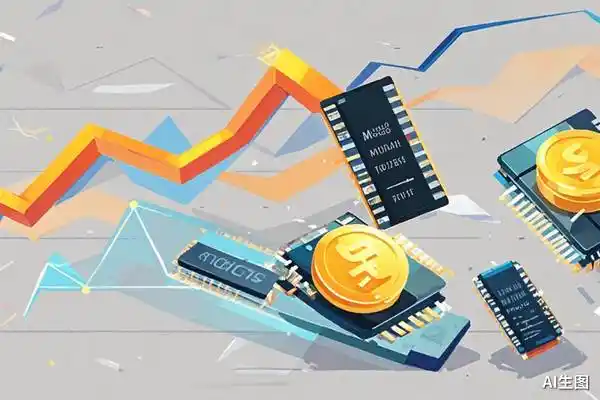
U.S. Stock Market Trends (August 12): Stocks Dip, Storage Sector Gains Ahead of CPI Data On Tuesday, ahead of the July CPI release, major U.S. stock indices closed lower. The S&P 500 fell 0.32%, the Dow Jones declined 0.34%, and the Nasdaq dropped 0.60%, though the Russell 2000 rose 0.32%. Market pressures stemmed from fluctuating tensions in the Strait of Hormuz and concerns over AI financing impacting large-cap tech stocks. The alternative asset management sector rallied strongly, with KKR surging nearly 7%. The storage/semiconductor sector also gained, providing market support. Investors reduced positions cautiously, awaiting inflation data to set the tone for the September Fed rate path. Treasury yields edged lower reflecting dovish expectations, while gold retreated from recent highs. Oil prices rose over 1%. Large-cap tech stocks faced pressure, with Google falling nearly 4% amid ongoing AI capital expenditure concerns. Nvidia clarified details of a reported financing plan but still closed lower. The alternative asset management sector saw broad gains (KKR +6.92%, Apollo +6.23%, Blackstone +3.89%) as funds rotated toward sectors benefiting from potential rate cuts and strong capital intermediation demand. The storage segment advanced despite mixed signals: SK Hynix plans to expand its China NAND factory capacity, but Korean brokerages concurrently cut price targets for Samsung and SK Hynix, citing peak cycle concerns for general memory chips. The market focused on sustained AI-related HBM demand. The Nasdaq Golden Dragon China Index fell 2.94%, with Tencent Music down nearly 12%, as investors took profits amid macro uncertainty. The market's focus remains squarely on the upcoming CPI data, which will determine whether the recent bond rally and sector rotations persist or if a correction is ahead.

marsbit11 saat önce

U.S. Stock Market Trend (August 12): Stocks Fluctuated and Closed Lower on Eve of CPI, Storage Sector Bucked the Trend

marsbit11 saat önce

U.S. Stock Market Trend (August 11): Oil Prices Surge, Treasury Yields Rise, Tech Stocks Under Pressure, Optical Communication Plummets

U.S. Stock Market Trends (August 11): Oil Surge and Rising Bond Yields Pressure Tech; Optical Communication Stocks Plunge. U.S. stock indices closed slightly lower on Monday, with the S&P 500 and Dow Jones retreating from recent record highs. The primary market pressures were a significant oil price jump of over 5% amid unresolved negotiations to reopen the Strait of Hormuz and a consequent rise in U.S. Treasury yields, which weighed on growth stock valuations. The technology sector faced pressure, with Nvidia falling nearly 3% despite news of its pursuit of a $500 billion AI infrastructure financing consortium with major Wall Street firms. The optical communication sector saw a sharp sell-off, with Coherent dropping over 14%. In contrast, Chinese stocks listed in the U.S. were a notable bright spot, as the Nasdaq Golden Dragon China Index rose nearly 2%. Gold prices advanced for a second consecutive session on inflation hedging demand, while Bitcoin fell below $64,000. Key market movers included surging oil prices (WTI and Brent up ~5%) due to stalled Strait of Hormuz talks and heightened supply concerns, pushing the 10-year Treasury yield near 4.71%. Major tech stocks were mixed. Beyond Nvidia's decline, Intel fell over 4% on a new share offering plan. The Philadelphia Semiconductor Index dropped approximately 1.2%. Market attention remains on oil price dynamics, the impact of rising yields, and the forthcoming U.S. CPI data.

marsbitDün 02:19

U.S. Stock Market Trend (August 11): Oil Prices Surge, Treasury Yields Rise, Tech Stocks Under Pressure, Optical Communication Plummets

marsbitDün 02:19

New Job in the Robotics Industry: A 'Bone Doctor' Earning 6,000 Yuan Monthly, Specializing in Treating Broken Limbs

A new job has emerged in the robotics sector: the "orthopedic surgeon" for robots, earning around 6,000 RMB per month by specializing in repairing robots and robotic dogs. As the number of robots explodes, with IDC projecting 18,000 humanoid robots shipped globally in 2025 and China's MIIT predicting over 100,000 units produced domestically in 2026, demand for maintenance and repair is rising. The repair process, as demonstrated by Zhao Xin, a former service industry worker turned self-taught repairman, involves diagnosing issues like joint noises, disassembly, and part replacement. The technical barrier is relatively low, often simpler than repairing drones, with basics learnable in a month. The real challenge is obtaining proprietary parts, which are monopolized by manufacturers, lack public schematics, and are expensive. Currently, third-party repair shops, like those run by Zhao Xin or Nanjing Kaogong Yunji's Fang Jinghua, offer cheaper (10-15% of robot price, 20-50% cheaper than OEM) and faster (one week vs. over a month) service, mainly for out-of-warranty units used in entertainment performances. However, repair volume remains low—just 1-3 robots/month for some shops—making it unsustainable as a primary business. Most repair shops rely on other revenue streams like training, drone repair, or leasing. Training programs are emerging, with courses from 8 to 40 days and fees from 5,000 to 30,000 RMB. Graduates often enter sales or operations roles. For pure repair jobs, salaries range from 6,000-8,000 RMB/month for beginners to over 10,000 RMB for experienced technicians. While companies like JD.com plan large-scale technician training, the robot repair market still awaits broader industry growth to become a fully viable standalone profession.

marsbit2 gün önce 05:31

New Job in the Robotics Industry: A 'Bone Doctor' Earning 6,000 Yuan Monthly, Specializing in Treating Broken Limbs

marsbit2 gün önce 05:31

Shenzhen Is Leading the Entire Nation in 'Getting Rich'

Shenzhen, emerging as a leader in China's innovation economy, is pioneering a novel model of regional development by creating and sharing significant capital wealth with cities across the country. In 2026, Shenzhen leads major Chinese cities in new IPOs, adding 26 listed companies. Notably, a substantial portion of these successful firms, operating in strategic sectors like semiconductors (e.g., Dapu Micro, HKC), industrial AI, and new energy materials, feature state-backed investment funds from various cities in their shareholder lists. These external investors, from Nanjing, Mianyang, Changsha, Gui'an, and others, are reaping enormous financial returns from early-stage investments. This trend stems from nationwide confidence in Shenzhen's unparalleled ecosystem for nurturing high-tech firms, supported by massive government-guided funds, a complete industrial chain, and mature capital markets. For other cities, particularly smaller ones, investing in Shenzhen's proven innovators offers a strategic alternative to costly and uncertain local cultivation of industries. Beyond capital gains, these investments often secure agreements for manufacturing bases to be established in the investor cities, fostering local industrial clusters—a "double benefit" of equity appreciation and industrial upgrading. This collaborative model, where Shenzhen focuses on R&D and headquarters functions while sharing growth via equity and decentralizing production, moves beyond traditional zero-sum regional competition. It replaces subsidy-based rivalry with market-driven, mutually beneficial partnerships. This logic of open collaboration and shared prosperity aligns with the core principles of APEC, whose 33rd Leaders' Meeting will be held in Shenzhen, highlighting the city's role as a microcosm of regional cooperation and innovation-led growth.

marsbit2 gün önce 05:22

Shenzhen Is Leading the Entire Nation in 'Getting Rich'

marsbit2 gün önce 05:22

U.S. Stocks Trend (August 10): Nonfarm Payrolls Drop by 23K, Inflation Takes Over to Test New Highs

US Stock Market Weekly Review (August 10th): Nonfarm Payrolls Drop by 23K, Inflation Takes Over Testing New Highs Last week, US stocks closed with their strongest weekly gains since mid-April, led by a tech rebound and adjusted rate expectations. The S&P 500 and Dow hit new record closing highs. Weekend developments centered on Strait of Hormuz negotiations, Berkshire Hathaway's capital deployment, and US government funding. The core focus this week shifts to whether incoming inflation data can justify current market pricing for interest rates. The July Nonfarm Payrolls report showed a loss of 23,000 jobs, missing expectations and leading to a decline in September rate hike probabilities. This eased pressure on tech valuations. However, discussions between Iran and Oman on Strait of Hormuz navigation are pending execution, and renewed attacks on energy facilities kept oil prices volatile, with potential implications for inflation. Berkshire Hathaway reported strong earnings and shifted its capital allocation strategy, ending a long streak of net stock sales and making significant new investments, including in Alphabet. The US Senate passed a stopgap funding bill, reducing near-term government shutdown risks. This week's calendar is dominated by key inflation readings (July CPI & PPI), retail sales data, and earnings from AI and tech infrastructure companies like CoreWeave, Lumentum, Cisco, and Applied Materials. The market expects CPI to show a moderation. If inflation data is benign, supporting stable or lower Treasury yields, and corporate earnings remain solid, indices may find further upside. Conversely, a resurgence in inflation or rising oil prices could trigger a swift reversal in interest rate expectations, testing the market's record highs.

marsbit2 gün önce 02:32

U.S. Stocks Trend (August 10): Nonfarm Payrolls Drop by 23K, Inflation Takes Over to Test New Highs

marsbit2 gün önce 02:32

1.65 Billion Yuan: Sichuan Power Semiconductor Company Sells Itself

Sichuan-based power semiconductor company Jingyi Semiconductor is being acquired by its customer, Jiangsu-listed power semiconductor firm Suzhou Kaiweite Semiconductor Co., Ltd. ("Kaiweite"), for 1.65 billion yuan. Following the transaction, Jingyi Semiconductor will become a wholly-owned subsidiary of Kaiweite. Kaiweite will pay for the acquisition partly with new shares (approximately 901 million yuan worth) and partly in cash (approximately 749 million yuan). The deal is considered a major asset restructuring as Jingyi Semiconductor's assets and revenue in 2025 were 176.34% and 137.38% of Kaiweite's, respectively. Financially, Kaiweite has reported losses for 2024 and 2025. In contrast, Jingyi Semiconductor has remained profitable. The acquisition is expected to significantly improve Kaiweite's profitability. Jingyi Semiconductor's controlling shareholder and chairman, Yi Kun, along with employee持股 platforms, will hold a 13.28% stake in Kaiweite post-transaction. Founded in 2015 and listed on Shanghai's STAR Market in 2023, Kaiweite is a national-level "Little Giant" specializing in intelligent power semiconductor devices and power integrated chips. Established in 2019, Jingyi Semiconductor is a fabless power semiconductor company and a national-level专精特新重点"Little Giant." Its products, including Intelligent Power Modules (IPM), are supplied to major domestic appliance makers like Midea, Xiaomi, Gree, TCL, and Hisense-Hitachi. The company holds a leading 53.5% market share in China's IPM半桥 module segment for white goods. The strategic acquisition aims to repair Kaiweite's profitability and expand its power semiconductor product portfolio through integration in technology, products, and customer channels.

marsbit08/07 02:46

1.65 Billion Yuan: Sichuan Power Semiconductor Company Sells Itself

marsbit08/07 02:46

The July Tech Stock Pullback: Which Funds Are Paying the Price for Buying High?

In July, China's technology stocks experienced a sharp correction, causing significant pain for actively managed mutual funds that aggressively increased their holdings in the sector during the second quarter. The sell-off saw major indices like the ChiNext and STAR 50 fall over 25% and 28% for the month, respectively. Funds that piled into tech at its June peak faced steep losses. Notably, several veteran "value investor" fund managers, known for long-term holdings in consumer staples, made dramatic shifts. Star managers like Zhang Kun (E Fund Blue Chip Selected) and Liu Yanchun (Invesco Great Wall Dingyi) drastically reduced positions in liquor stocks like Kweichow Moutai, switching instead to semiconductor and AI hardware companies like SMIC and Ingenic International. Data shows active equity funds' allocation to the electronics sector reached a historical high of 42.64% by end-Q2. Around 67 funds saw their TMT (Technology, Media, Telecom) weighting surge from an average of 6.75% to 54.99%. The consequences were severe in July: these high-TMT funds fell an average of over 20%, with 12 plunging more than 40%. Examples include Jinhua High-Quality Growth and Guoshou Anbao Wenhui, which fell 26.34% and nearly 40% respectively after raising TMT weights above 70%. The article also highlights issues of "style drift," where funds with names like "high-dividend" held high-P/E tech stocks instead, confusing investors. Newly launched funds suffered even more. For instance, Guotai Haitong New Energy RuiXuan Hybrid, launched in mid-June, saw its net asset value plummet to 0.5509 yuan by July 30, a loss of nearly 45%. Analysts note the extreme sector concentration mirrored past bubbles (e.g., 2021 new energy). The intense, crowded trade itself became a major risk. While tech stocks rebounded sharply on July 31, the funds that chased the high face a longer-term market test.

marsbit08/04 04:45

The July Tech Stock Pullback: Which Funds Are Paying the Price for Buying High?

marsbit08/04 04:45

Annual Salary of Millions Competing for Electricians, Meta Rushes to Open Its Own Technical School

The AI boom is facing an unexpected bottleneck: a severe shortage of skilled construction workers and electricians. As tech giants like Meta, OpenAI, and Alphabet race to build massive data centers—such as OpenAI's $16 billion "Stargate" project—they are hitting a critical labor wall. The U.S. needs an estimated 130,000 more electricians, 240,000 construction workers, and 150,000 supervisors by 2030 for AI infrastructure alone, but tens of thousands of electrician jobs go unfilled each year. While AI companies offer high premiums, with electricians earning up to $280,000 annually, worker scarcity still causes massive losses—delays on a single project can cost $14.2 million per month. The complexity of building AI data centers, which require immense power (equivalent to powering hundreds of thousands of homes), sophisticated electrical systems, and advanced liquid cooling solutions, demands highly skilled technicians who are in short supply. To combat this, companies are investing heavily in training. Meta has committed $115 million to a free training school offering tuition, housing, and stipends, targeting 5,000 new workers. OpenAI is partnering with unions to secure skilled labor. These efforts are paying off, with a significant rise in Gen Z interest in trade schools over college. However, the power demands are staggering. AI data centers are driving a rapid surge in electricity consumption, projected to account for up to 12% of U.S. power use by 2028 and raising costs for consumers. Furthermore, the construction boom is project-based, leading to a potential future glut of trained workers once building peaks, which could depress wages industry-wide. The race for AI supremacy now depends as much on skilled hands as on advanced chips.

marsbit08/03 02:21

Annual Salary of Millions Competing for Electricians, Meta Rushes to Open Its Own Technical School

marsbit08/03 02:21

活动图片