Within One Week, Cryptocurrency Holders Face Fake Investment Sites and Phony IRS Letters

cryptonews.ru2026-08-10 tarihinde yayınlandı2026-08-10 tarihinde güncellendi

Özet

New York State Police are warning residents of the Twin Tiers region about a cryptocurrency and gold investment scam. Fraudsters contact potential victims, build rapport, and then direct them to fake but legitimate-looking investment websites. Once victims enter their banking or account details, their funds are stolen. Authorities advise hanging up on unsolicited calls and calling 911, especially if the caller requests financial information. Separately, the IRS Criminal Investigation division warned on July 30th of a scam targeting cryptocurrency holders. Victims receive fake IRS letters claiming they must register on a non-existent "Digital Asset Compliance Portal" by a deadline. The letters contain QR codes redirecting to IRS-lookalike sites that steal personal information, wallet details, or exchange login credentials. The IRS confirms it does not operate such a portal. The advisory notes that while the IRS uses QR codes in some legitimate letters, taxpayers should ignore codes on suspicious mail and visit IRS.gov directly. The scam's scale and how the crypto holders' information was obtained remain unclear. This follows similar phishing campaigns, including one in May using fake Ledger security update emails. The FBI reports Americans lost approximately $21 billion to cybercrime and online fraud in 2025.

According to New York State Police, scammers are operating in the Twin Tiers area, offering residents staged investments. They lure victims into cryptocurrency, gold bullion, and coins, and then drain their accounts when they provide financial information.

Investigators issued a warning this week. Those who fall for this scheme could lose all their savings.

How the Twin Tiers Scam System Works

New York State Police reported that the callers spend some time establishing rapport with the person they are trying to deceive before directing them to a website that looks like a legitimate investment platform. Once the victim enters their bank details or account information on this site, the money is at risk.

Police officers warn people who receive an unsolicited call offering to buy cryptocurrency or gold not to give out any information or visit websites suggested by the caller.

State Police advise hanging up and calling 9-1-1. This advice is particularly relevant if the caller offers to sell cryptocurrency and requests financial information.

New York State Police stated that anyone who believes they have already been caught should immediately call local law enforcement or State Police, and then contact their bank and close all accounts.

Federal Warning Came Days Earlier

On July 30th, the Criminal Investigation Division of the U.S. Internal Revenue Service reported that scammers were sending fake letters from the IRS to cryptocurrency holders. The letters informed recipients of the need to register on a "Digital Asset Compliance Portal" by a set deadline, but no such portal exists.

The letters contain a QR code that redirects victims to a website styled after IRS[.]gov, where a page requests personal information, wallet data, or exchange login credentials, the agency reported.

"The U.S. Internal Revenue Service does not operate a Digital Asset Compliance Verification Portal," a press release stated. "This is a scam."

Jarod Koopman, head of the IRS Criminal Investigation Division, said: "Before responding to unexpected requests for personal information, stop, verify the source, and report potential fraud schemes to law enforcement."

The agency does include QR codes in some legitimate notices, including CP53E letters, so an IRS-CI spokesperson said taxpayers should ignore codes printed on any letter and go directly to the IRS[.]gov website or call the contact information listed there.

The IRS statement did not explain how names and addresses of cryptocurrency owners were obtained for the mailings. A spokesperson for the IRS Criminal Investigation Division declined to discuss the scale of the campaign.

Coinbase and the cybersecurity firm DarkTower traced the operation to a domain registered through a Hong Kong registrar and hosted in Romania.

In May, Cryptopolitan reported that scammers were sending Ledger customers fake letters about a "Quantum Resistance security update" containing QR codes leading to sites that stole 24-word recovery phrases.

According to the FBI, Americans lost approximately $21 billion to cybercrime and online fraud in 2025, Cryptopolitan previously reported.

end-content

Trend Kriptolar

İlgili Sorular

QWhat is the main warning issued by New York State Police regarding the Twin Tiers scam?

AThe New York State Police warn residents to hang up and call 9-1-1 if they receive an unsolicited call offering to sell cryptocurrency or gold and requesting financial information.

QAccording to the IRS Criminal Investigation Division warning, what is the purpose of the fake letters sent to cryptocurrency holders?

AThe fake letters claim recipients must register on a non-existent 'Digital Asset Compliance Portal' by a deadline. They contain QR codes that lead to fake websites designed to steal personal information, wallet data, or exchange login credentials.

QWhat advice did IRS-CI Chief Jim Lee give to people who receive unexpected requests for personal information?

AJim Lee advised people to stop, check the source, and report potential scams to law enforcement before responding to unexpected requests for personal information.

QWhat should a victim do if they believe they have already fallen for one of these scams?

AThey should immediately call their local law enforcement or the state police, then contact their bank and close all accounts.

QAccording to the FBI, what was the financial loss to Americans from cybercrime and online fraud in 2025?

AAccording to the FBI, Americans lost about $21 billion to cybercrime and online fraud in 2025.

İlgili Okumalar

Bitcoin Withstood 10 Bearish Blows in 2026, Yet Experienced Its Mildest Bear Market

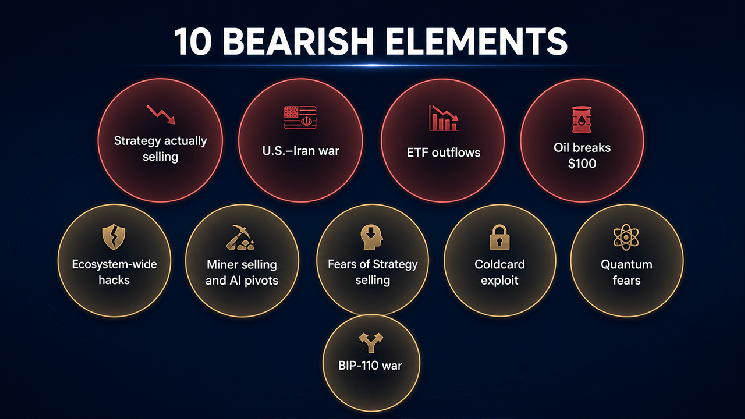
Bitcoin, the leading cryptocurrency by market cap, peaked above $126,000 in early October before entering a prolonged decline. By August, it was mainly trading between $63,000 and $65,400, inflicting losses on late buyers but resulting in what is, historically for Bitcoin, an unusually shallow bear market—down about 49% from its peak, compared to typical 75-80% plunges. Throughout 2026, Bitcoin faced multiple headwinds yet demonstrated notable resilience. Geopolitical tensions in the Middle East and volatile oil prices revived inflation concerns but failed to trigger the panic-driven sell-offs seen in prior cycles. A significant psychological blow came from corporate seller MicroStrategy, a longtime accumulator, which began strategic sales to bolster its cash position, reducing its holdings. U.S. spot Bitcoin ETFs also faced sustained outflows, though a late-week inflow hinted at potential relief. Pressure also came from within the ecosystem. A contentious blockchain proposal, BIP-110, failed after a minority chain stalled. Miners, facing tighter economics, sold reserves and pivoted infrastructure toward AI. A major security breach involving Coldcard hardware wallets saw an estimated 2,000 BTC stolen, shaking confidence in self-custody. Long-term threats like quantum computing resurfaced in discussions. Despite this confluence of corporate selling, ETF outflows, miner capitulation, geopolitical shocks, internal conflict, and security issues—any one of which could historically cause sharp declines—Bitcoin stubbornly held above a key $60,000 support level. Deeper market liquidity, regulated products, and long-term holders appear to be absorbing selling pressure that once would have caused deeper crashes. This resilience suggests a maturing market structure, though risks remain. Another shock could still push Bitcoin toward $50,000. For now, its 49% decline, severe for most assets, is relatively moderate by Bitcoin's own volatile standards. The remaining months of 2026 will test whether $60,000 is a durable floor or merely the next major line of defense.

cryptonews.ru29 dk önce

Bitcoin Withstood 10 Bearish Blows in 2026, Yet Experienced Its Mildest Bear Market

cryptonews.ru29 dk önce

Korean Financial Supervisory Service to Revise Compensation System for Phishing Losses Involving Crypto Transfer

The South Korean Financial Supervisory Service (FSS) is overhauling its system for reimbursing victims of voice phishing scams. Starting in October, the new system will be able to calculate and compensate losses held in cryptocurrency, not just in Korean won. Previously, the reimbursement system assumed stolen funds were in won, failing to fully compensate victims whose money was converted into digital assets. The upgraded software will apply a recovery ratio to determine the specific type and quantity of tokens owed to each victim, based on the token's value at the time the payment was frozen. It will also better track cases where fraud proceeds are split across multiple accounts and later consolidated. These changes follow March 31st amendments to the Act on Reimbursement of Losses from Telecommunications Fraud, which now classify virtual assets as both damaged and recoverable property. Major Korean crypto exchanges like Upbit and Bithumb must now comply with the same anti-phishing obligations as banks, including verifying transaction purposes and tracking suspicious funds. The revised law takes effect October 1st, with the FSS allocating a three-month period and a budget of 118.53 million won for system implementation and troubleshooting. The update addresses schemes where stolen money is intentionally laundered through cryptocurrency for overseas transfer. Notably, telecom fraud losses in South Korea rose 14.1% to 433.8 billion won in 2025, a five-year high.

cryptonews.ru40 dk önce

Korean Financial Supervisory Service to Revise Compensation System for Phishing Losses Involving Crypto Transfer

cryptonews.ru40 dk önce

İşlemler

Spot

Popüler Makaleler

ONE Nasıl Satın Alınır

HTX.com’a hoş geldiniz! Harmony (ONE) satın alma işlemlerini basit ve kullanışlı bir hâle getirdik. Adım adım açıkladığımız rehberimizi takip ederek kripto yolculuğunuza başlayın. 1. Adım: HTX Hesabınızı OluşturunHTX'te ücretsiz bir hesap açmak için e-posta adresinizi veya telefon numaranızı kullanın. Sorunsuzca kaydolun ve tüm özelliklerin kilidini açın. Hesabımı Aç2. Adım: Kripto Satın Al Bölümüne Gidin ve Ödeme Yönteminizi SeçinKredi/Banka Kartı: Visa veya Mastercard'ınızı kullanarak anında Harmony (ONE) satın alın.Bakiye: Sorunsuz bir şekilde işlem yapmak için HTX hesap bakiyenizdeki fonları kullanın.Üçüncü Taraflar: Kullanımı kolaylaştırmak için Google Pay ve Apple Pay gibi popüler ödeme yöntemlerini ekledik.P2P: HTX'teki diğer kullanıcılarla doğrudan işlem yapın.Borsa Dışı (OTC): Yatırımcılar için kişiye özel hizmetler ve rekabetçi döviz kurları sunuyoruz.3. Adım: Harmony (ONE) Varlıklarınızı SaklayınHarmony (ONE) satın aldıktan sonra HTX hesabınızda saklayın. Alternatif olarak, blok zinciri transferi yoluyla başka bir yere gönderebilir veya diğer kripto para birimlerini takas etmek için kullanabilirsiniz.4. Adım: Harmony (ONE) Varlıklarınızla İşlem YapınHTX'in spot piyasasında Harmony (ONE) ile kolayca işlemler yapın.Hesabınıza erişin, işlem çiftinizi seçin, işlemlerinizi gerçekleştirin ve gerçek zamanlı olarak izleyin. Hem yeni başlayanlar hem de deneyimli yatırımcılar için kullanıcı dostu bir deneyim sunuyoruz.

670 Toplam GörüntülenmeYayınlanma 2024.12.12Güncellenme 2026.06.02

ONE Nasıl Satın Alınır

Tartışmalar

HTX Topluluğuna hoş geldiniz. Burada, en son platform gelişmeleri hakkında bilgi sahibi olabilir ve profesyonel piyasa görüşlerine erişebilirsiniz. Kullanıcıların ONE (ONE) fiyatı hakkındaki görüşleri aşağıda sunulmaktadır.

活动图片