# Talent Retention İlgili Makaleler

HTX Haber Merkezi, kripto endüstrisindeki piyasa trendleri, proje güncellemeleri, teknoloji gelişmeleri ve düzenleyici politikaları kapsayan "Talent Retention" hakkında en son makaleleri ve derinlemesine analizleri sunmaktadır.

Deconstructing Anthropic: The Best AI Company Might Also Be an 'Organizational Invention'

Anthropic has emerged as one of the most compelling and fastest-growing AI companies. Its core strengths lie in strategic focus and unique organizational culture. Strategically, Anthropic concentrated early on coding as the critical path to AGI and commercial success, a focus driven by resource constraints and validated by market results. This contrasts with OpenAI's more expansive, multi-pronged approach. Co-founder Dario Amodei's technical conviction and low FOMO personality fostered this decisive focus. Organizationally, Anthropic has cultivated a distinctive culture characterized by: 1. **Deep Mission-Orientation:** A genuine, almost religious commitment to AI safety as the primary goal, even above corporate success. 2. **High Trust, Low Ego:** An environment where brilliant researchers collaborate effectively without internal politics or status battles. 3. **Strong Humanistic Values:** A bookish, idealistic ethos reflected in its hiring and model naming. This culture is maintained through rigorous cultural screening in hiring, extreme transparency and context-sharing from leadership (like Dario's frequent all-hands), a unique seven-cofounder equal-equity structure that disperses cultural influence, and a "one team" philosophy that minimizes silos. The culture stems partly from business necessity—excelling at the "dirty work" of data engineering for coding/agentic AI—and partly from Dario's negative experiences with political infighting at previous companies, motivating him to build Anthropic as an antithesis. While OpenAI remains a formidable competitor with greater resources and exploratory zeal, Anthropic demonstrates that success in the AI era can also come from focused bets, cohesive culture, and a steadfast mission, offering a distinct model of organizational invention.

marsbit05/21 04:04

Deconstructing Anthropic: The Best AI Company Might Also Be an 'Organizational Invention'

marsbit05/21 04:04

600 People, $66 Billion: The First Major Cash-Out in the Era of Large Models

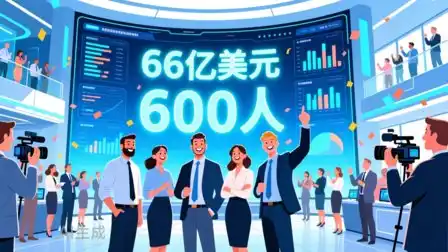
The first systematic "big cash-out" of the AI era occurred in October 2025, when over 600 current and former OpenAI employees sold a total of $6.6 billion in shares via a secondary market. Approximately 75 individuals maxed out a $30 million per-person sale limit, while around 525 others cashed out an average of $8.3 million each. This event, exceeding the scale of any 2024 US IPO, functioned as a "shadow IPO." It marked a radical departure from the traditional Silicon Valley path of waiting for a public listing, instead allowing employees to convert equity to cash after just two years of tenure—a direct retention tool in a fiercely competitive talent market where rivals like Meta have offered packages worth hundreds of millions. This massive liquidity event presents a dual-edged sword for OpenAI. While it helps retain talent, it also risks triggering a brain drain as newly wealthy employees may depart. Furthermore, it creates a dilemma for those who sold: they forfeited potential future gains as the company's valuation soared from $400 billion to $852 billion within months. In stark contrast, employees at rival Anthropic demonstrated greater reluctance to sell during their own secondary offering. The financial narratives of the two labs also diverge sharply. OpenAI, while achieving over $20 billion in annualized revenue by 2025, faces massive projected losses (up to $14 billion in 2026), a long path to cash flow positivity, and significant revenue-sharing payments to Microsoft. Anthropic reports rapid revenue growth, improving gross margins, and a faster path to profitability. OpenAI's trajectory is thus balanced precariously between skyrocketing valuation based on funding narratives and the pressures of sustained financial losses post-cash-out. The event underscores that the AI race has evolved into a capital and human experiment, where immense wealth crystallizes the complex calculations of greed, fear, and ambition within the industry.

marsbit05/12 07:46

600 People, $66 Billion: The First Major Cash-Out in the Era of Large Models

marsbit05/12 07:46

Meta: Can Afford Trillion-Dollar Computing Power, But Can't Keep Key People

Meta's AI Ambition: A $135 Billion Bet on Chips, But Losing Key Talent In July 2025, Meta recruited top AI infrastructure engineer Ruoming Pang from Apple with a compensation package worth over $200 million. However, just seven months later, he left for OpenAI, forfeiting much of his unvested equity. This high-profile departure is part of a broader trend of key talent leaving Meta's AI division, including Chief AI Scientist Yann LeCun and other senior figures. The exodus is largely attributed to the fallout from the Llama 4 model's release in April 2025. The model was later revealed to have been benchmarked unethically, using different model versions to optimize scores on different tests, severely damaging trust within the developer community. This scandal led CEO Mark Zuckerberg to lose confidence in the team, resulting in a major reorganization. He appointed 28-year-old Scale AI CEO Alexandr Wang as Chief AI Officer, who now oversees the new Meta Superintelligent Lab (MSL). The planned flagship model, Llama 4 Behemoth, was indefinitely delayed. Compounding these software issues, Meta also canceled its most advanced in-house AI training chip project, a critical part of its plan to reduce reliance on Nvidia. This failure has triggered a panic-buying spree. In February 2026, Meta announced a capital expenditure budget of $115-$135 billion, nearly double the previous year's. Within ten days, it signed massive, multi-year chip deals: a multi-billion dollar agreement with Nvidia for Blackwell and Vera Rubin GPUs, a $60-$100 billion deal with AMD for MI450 GPUs (which included warrants for a 10% stake), and a multi-billion dollar deal to rent Google's TPU chips. This strategy of acquiring immense, diverse hardware from three different architectures (CUDA, ROCm, XLA/JAX) creates immense engineering complexity. Ironically, Meta is spending hundreds of billions on the world's most complex hardware while losing the rare engineers, like Pang, capable of building the cross-platform frameworks needed to make it all work. Zuckerberg's gamble mirrors his all-in bet on the metaverse: see a trend, spend heavily, reorganize frequently. The difference is that AI is a more tangible opportunity, and Meta's core advertising business generates massive cash flow to fund it. However, the article concludes that money can buy chips and算力, but it cannot guarantee the retention of top talent or the development of a winning model. If Meta's next model, codenamed "Avocado," fails to compete with GPT-5 and Gemini 3 Ultra, its massive expenditure will have only built expensive data centers full of underutilized hardware. The AI race is won by those who can build transformative models, not just those who can write the biggest checks.

marsbit02/28 09:41
Meta: Can Afford Trillion-Dollar Computing Power, But Can't Keep Key People

marsbit02/28 09:41

活动图片