Exclusive Interview with Suji: Taking Over the Hot Potato Lens, Whose Ideal Is Mask Paying For?
Interview with Suji Yan: Taking Over the "Hot Potato" Lens—Whose Ideal is Mask Network Betting On?
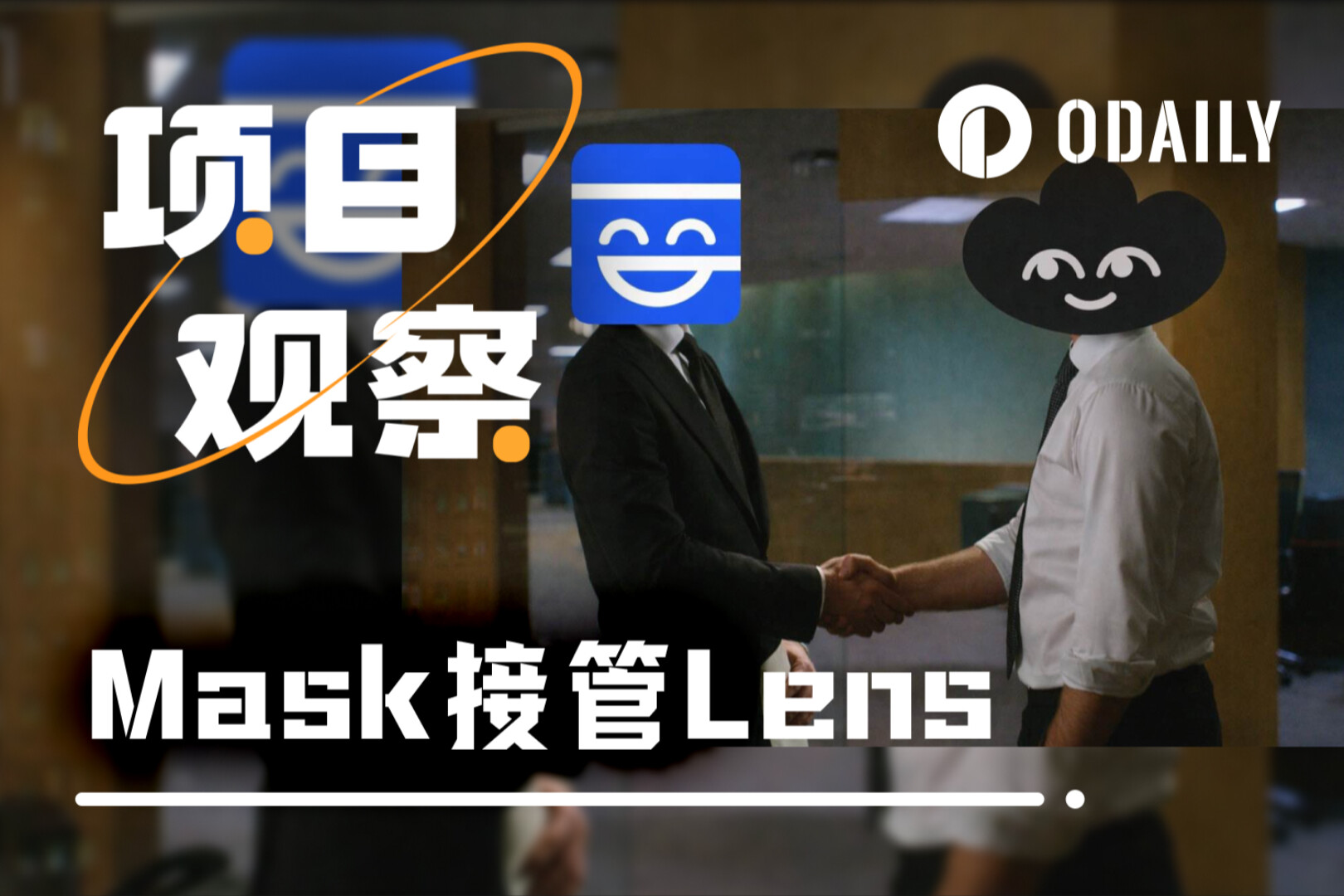
On January 20, the decentralized social protocol Lens announced the transfer of its project management to Mask Network, with the original team stepping back as technical advisors. This move sparked significant discussion in the crypto community. While many were not surprised by Stani Kulechov’s decision to hand off Lens—given the declining interest in decentralized social platforms—it raised questions about why Mask would take on what some consider a “mess.”
Lens was once a star in the SocialFi space, backed by Aave’s founder, solid technology, and a compelling narrative of user-controlled social networking. However, by 2025, its growth stalled, especially after the launch of Lens Chain without an accompanying token.
Mask Network, founded in 2017, aims to bridge Web2 and Web3. Its browser extension allows users to access Web3 services on platforms like X and Facebook. According to Suji Yan, Mask’s founder, the decision to take over Lens was driven by shared vision and trust. Both he and Stani believe that decentralized social platforms should avoid over-monetization and token-centric models, which they see as a core reason for the failure of projects like Friend.tech.
Suji criticizes Farcaster for lacking neutrality and being too aligned with Coinbase, while praising Lens for its independence. He emphasizes that “non-neutral social platforms are doomed to fail,” citing Truth Social as an example of a biased platform with limited reach.
Under Mask’s management, Lens will integrate with Mask’s existing products like web3.bio, Orb, and Firefly—a social app that deeply integrates with X, allowing cross-posting to Lens, Farcaster, and Bluesky. This aligns with Mask’s goal of building Web3 social on top of Web2, rather than in opposition to it.
Suji acknowledges the challenges: without token incentives, attracting users is difficult. However, he believes that focusing on product quality and user experience—not short-term gains—will ultimately succeed. He remains committed to the long-term vision of seamlessly connecting Web2 and Web3 users, despite the uncertainties ahead.
Odaily星球日报01/23 13:19