# Simulation İlgili Makaleler

HTX Haber Merkezi, kripto endüstrisindeki piyasa trendleri, proje güncellemeleri, teknoloji gelişmeleri ve düzenleyici politikaları kapsayan "Simulation" hakkında en son makaleleri ve derinlemesine analizleri sunmaktadır.

Qingyan Jingzhun Raises Hundreds of Millions in Funding, with Investment from National Equipment Manufacturing Giants

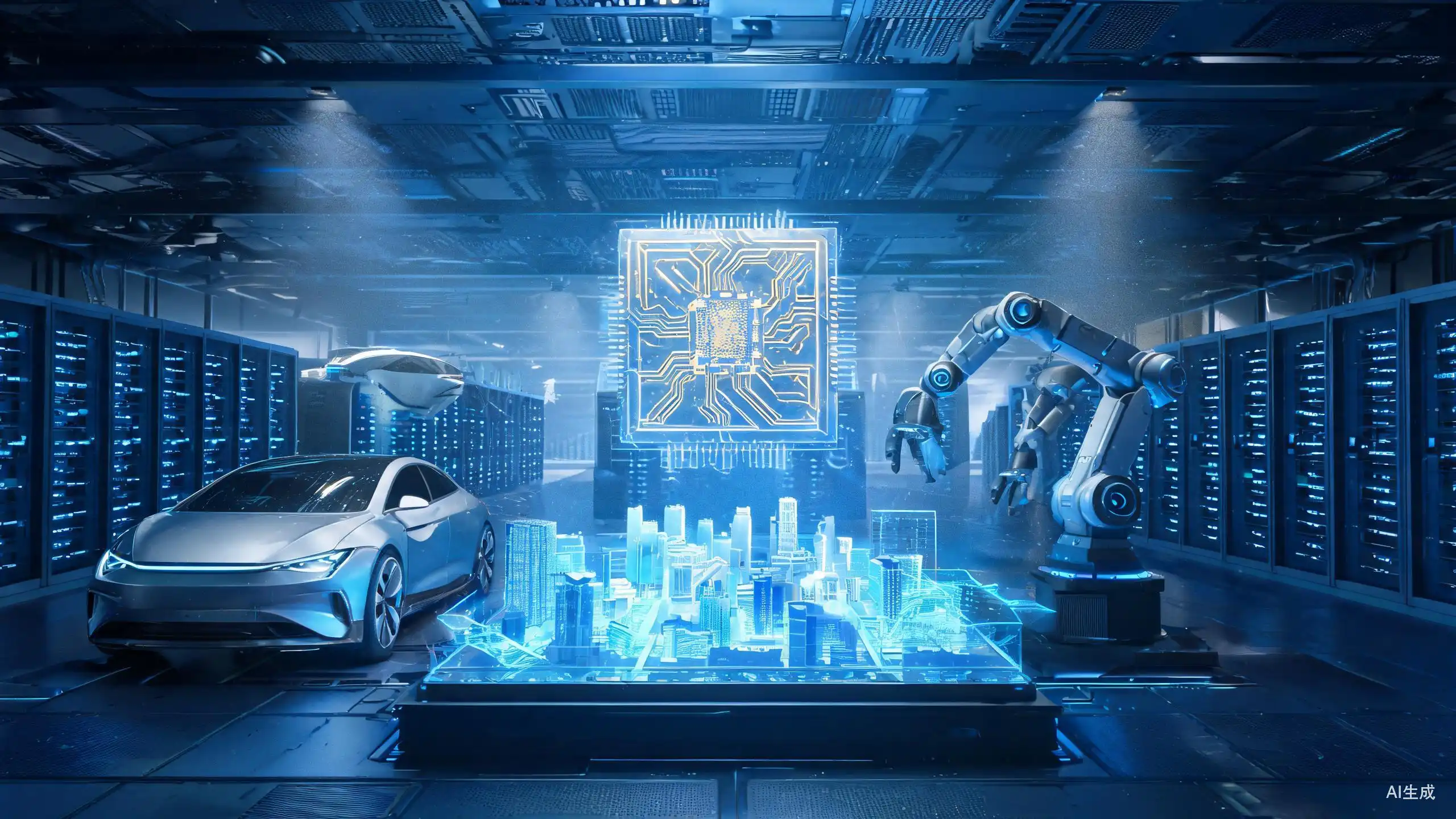
Qingyan Precision, a provider of physical AI infrastructure, has secured billions of RMB in Series B financing. The investment round, led by prominent automotive industry funds and notably featuring the state-owned China National Machinery Industry Corp. (Sinomach) fund, underscores a strategic shift in the capital market towards companies with proven industrial application capabilities. The company positions itself as the "engineering foundation for physical AI," specializing in enabling embodied intelligence (like humanoid robots) to operate in complex, real-world industrial environments. Its core offering is the "TsingLoop" multi-modal data engineering pipeline, which captures and standardizes data from physical workspaces (like visual, force, and process parameters) to create reusable data assets. This system supports a "Robot-in-the-Loop" testing framework that validates robotic performance in digital twin simulations and real-world conditions before deployment. Qingyan Precision leverages over eight years of experience and a network of 2000+ industrial sensor nodes across sectors like automotive and mining. This provides a crucial "training ground" for embodied AI models. The founding team combines academic pedigree from Tsinghua University and Stanford with deep industry experience from leading robotics firms. The company's vision is to build "one foundation, one brain, and hundreds of vertical applications," using its data platform and industrial world model to deploy scalable physical intelligence across various industrial tasks.

marsbit07/13 04:30

Qingyan Jingzhun Raises Hundreds of Millions in Funding, with Investment from National Equipment Manufacturing Giants

marsbit07/13 04:30

Nearly a Hundred Players Rush into Embodied Data: With 4.47 Billion Yuan in Financing in One Year, Who Can Really Make Money by 'Selling Data'?

The domestic embodied AI data industry has attracted nearly 100 players, with 70 focused on data collection and 27 on data infrastructure. In the past year, 15 independent embodied data service providers raised approximately 4.47 billion yuan. Despite this growth, the sector remains early-stage, fragmented, and faces significant challenges. Data collection methods are diverse, categorized into four main routes: teleoperation of real robots, human demonstration without a robot (using motion capture, exoskeletons, etc.), simulation synthesis, and distillation from internet videos. Most companies (43%) adopt hybrid approaches, combining multiple routes, as no single method can meet all training needs. Teleoperation alone is pursued by 31% of players, often by state-owned platforms and robot companies, while newer firms favor asset-light, no-hardware human demonstration. Independent data service providers now form the largest player group (40%), indicating the emergence of a distinct industry segment rather than just a subsidiary function for robot makers. Two-thirds of all players are "embodied-native" startups, while one-third are companies that pivoted from fields like AI data annotation, which are more prevalent in the data infrastructure layer. Current annual industry capacity is estimated at 1.6-1.8 million hours plus 70-80 million data points, with a short-term goal to increase this 15-20 fold within 1-3 years. Data collection factories are spread across 20 provinces in China, concentrated in the Yangtze River Delta, Beijing-Tianjin-Hebei, and Pearl River Delta regions. Financially, the 4.47 billion yuan raised in the past year pales compared to the 43.8 billion yuan raised by the broader embodied intelligence sector in just the first half of 2026, highlighting that data remains a less "sexy" bet for investors. The 15 funded independent providers show clear stratification: a top tier led by a unicorn (Lightwheel Intelligence, 3.1 billion yuan), a middle tier of 11 firms raising tens to hundreds of millions, and an early-stage tier of 3 companies. Sixty-nine investment institutions have participated, but none have made concentrated bets, reflecting uncertainty about viable business models. Over half of these funded companies are less than a year old, most are at pre-A or A rounds, and profitability remains largely unproven. In summary, the embodied data industry has become an independent track creating jobs and local economic activity. However, it is still nascent, with unformed consensus, unsolved problems, and unproven business models. The coming 1-2 years will be a critical validation window to see if companies can build sustainable, profitable businesses purely by "selling data."

marsbit07/12 02:30
Nearly a Hundred Players Rush into Embodied Data: With 4.47 Billion Yuan in Financing in One Year, Who Can Really Make Money by 'Selling Data'?

marsbit07/12 02:30

1600 Lines of Code Create an Underwater Manhattan, Fable 5 Leaves Karpathy Stunned

Title: Fable 5 Stuns Karpathy with 3D Worlds Built from 1600 Lines of Code An AI model, Fable 5, has demonstrated a remarkable leap in generating complex, interactive 3D worlds with minimal code. Showcased by Peter Gostev of Arena.ai, the model created 63 diverse 3D environments across themes like immersive cityscapes, explorable famous paintings, natural wonders, and cosmic phenomena. Many were generated in a single attempt. A standout creation is a detailed, submerged Manhattan built with only 1600 lines of Three.js code. Other highlights include traversable versions of Van Gogh's "Starry Night," a bear catching a salmon with realistic physics, and a split Red Sea. The model's ability to cohesively manage vast numbers of elements within a scene represents a significant technical advancement. Andrej Karpathy, who recently joined Anthropic's pre-training team, expressed amazement, particularly at how the model intuitively understood and rendered complex real-world interactions like a fish struggling when caught. He coined the term "fablemaxxing" to describe this qualitative leap. While Fable 5 excels at world-building, Gostev notes current limitations in creating engaging, long-form gameplay. The model also sometimes requires prompting to fully utilize its capabilities. Having topped the Agent Arena benchmark for real-world task completion, Fable 5 signals that the boundaries of AI-generated content are rapidly expanding, with its full potential yet to be discovered.

marsbit07/06 09:48

1600 Lines of Code Create an Underwater Manhattan, Fable 5 Leaves Karpathy Stunned

marsbit07/06 09:48

Introduction to the Concept of World Models: A Story from Psychology to the Main Battlefield of AI

**World Models: From Psychology to AI's Core Concept** "World model" is a trending but often confusing term in AI, describing a system that allows machines to internally simulate, predict, and rehearse potential outcomes before taking real-world action—like a mental "sandbox." While definitions vary—Yann LeCun emphasizes physical understanding, OpenAI's Sora is a video-based "world simulator," Google DeepMind's Genie 3 creates interactive 3D environments, and companies like Alibaba and Tesla focus on practical applications—the core goal is consistent: reduce reliance on vast real-world data by creating an internal, predictive model for safer and more efficient AI. The concept has deep roots, tracing back to psychologist Kenneth Craik (1943). In AI, it was revitalized by researchers like David Ha and Jürgen Schmidhuber (2018). Major technical approaches include: 1) generative video models (e.g., Sora) for visual realism; 2) abstract predictive models (e.g., LeCun's JEPA) for efficiency and physical reasoning; and 3) explicit 3D simulators (e.g., NVIDIA Omniverse) for precision. Fei-Fei Li proposes a classification based on the AI action loop: renderers (output observations), simulators (output world states), and planners (output actions). The emerging "World Action Model" (WAM) paradigm aims to unify future prediction and action generation. An industry framework is forming: upstream (data, compute, sensors), midstream (general and vertical platforms), and downstream applications (autonomous driving, robotics, gaming, etc.). Autonomous driving is currently the most mature use case. The current lack of a unified definition reflects the field's early, dynamic stage, similar to past tech revolutions. Different approaches—focusing on pixels, physics, or behavior—represent parallel explorations of how best to compress and understand the world. This diversity, while seemingly chaotic, signals that world models have moved from an academic idea to a critical industrial battleground, ultimately aiming to give machines the ability to understand, imagine, and reason about the world.

marsbit06/29 05:09

Introduction to the Concept of World Models: A Story from Psychology to the Main Battlefield of AI

marsbit06/29 05:09

World Models, Metaverse, Digital Twins, Physical AI: Are They the Same Thing?

Title: World Models, the Metaverse, Digital Twins, Physical AI: Are They the Same Thing? The article clarifies that concepts like the metaverse, Web3, simulation platforms, digital twins, and Physical AI are not the same thing but are all part of the broader trend of blurring the lines between the digital and physical worlds. It positions "world models" as the foundational "cognitive layer" or "operating system" that enables AI to understand and simulate the world. Key distinctions are made: - The **Metaverse** is a destination for immersive social and economic experiences. World models could act as its "engine," generating interactive 3D content efficiently. - **Web3** focuses on decentralized ownership and economics (rules layer), operating on a different technical level than world models. - **Simulation Data Platforms** (e.g., for autonomous vehicles) are a 1.0 version, relying on manual design. World models represent a 2.0 version, using AI to generate realistic, varied scenarios autonomously. - **Digital Twins** create high-fidelity, real-time mirrors of physical systems (e.g., a factory). World models go a step further by enabling predictive simulation of future states. - **Physical AI** (robots, AVs) refers to AI that acts in the physical world. World models are a core component, providing the understanding and prediction needed for planning. A proposed hierarchy places world models at the cognitive layer, supported by infrastructure (compute, data) and supporting application tools (simulation, digital twins), action systems (Physical AI), user experiences (metaverse), and rules (Web3). In conclusion, while distinct, many of these previously hyped concepts may ultimately rely on advances in world model technology to fulfill their promises, as world models provide the essential cognitive foundation for simulating and interacting with complex environments.

marsbit06/28 10:41

World Models, Metaverse, Digital Twins, Physical AI: Are They the Same Thing?

marsbit06/28 10:41

The War Without a Unified Name: The Domestic Tech Giants' World Model Landscape

The article outlines the diverse and fragmented landscape of "World Models" in China's tech industry, where major players are pursuing similar goals under different names like world foundational models, physical AI, or integrated within autonomous driving and embodied intelligence systems. The core aim is to enable AI to create an internal, dynamic environment for simulation, reasoning, and learning, reducing reliance on infinite real-world data. This "data engine" allows for unlimited generation, experimentation, and iteration. The report categorizes the approaches of different companies: * **Internet Giants:** Alibaba is developing models for linguistic, virtual, and physical worlds (Qwen-AgentWorld, HappyOyster, Qwen-RobotWorld). Tencent's HY-World focuses on 3D, game, and social scenarios. ByteDance leverages its vast video data for a potential "digital twin" model. Huawei integrates its model into industrial applications like smart cars and robotics without separately branding it. Baidu embeds world model capabilities within its Apollo autonomous driving and Ernie systems. * **Automakers:** Companies like NIO, Li Auto, XPeng, and Geely are using world models as virtual "driving schools" and "testing grounds." They generate complex scenarios (e.g., rain, snow) to train and validate autonomous driving systems in simulation, aiming for more capable and safer AI drivers. * **Autonomous Driving Suppliers:** Firms such as Momenta, Horizon Robotics, Haomo.ai, and DeepRoute.ai are building the underlying "world engines." They focus on large-scale video generation for simulation, reinforcement learning, and enhancing end-to-end autonomous driving models, often integrating these capabilities into commercial products. While startups bring focus and innovation, they face challenges like limited data, compute resources, and deployment channels. Large companies possess these advantages and are rapidly transitioning world models from research projects into core business infrastructure powering products in vehicles, games, and industry. The conclusion is that world models represent an evolution and convergence of existing AI fields into crucial industrial infrastructure, moving the competition from simply building a model to effectively deploying it to understand and interact with the physical world.

marsbit06/25 06:52

The War Without a Unified Name: The Domestic Tech Giants' World Model Landscape

marsbit06/25 06:52

Three Months, 35 Billion Yuan: Investors Rush to Grab the OpenAI of the Physical World

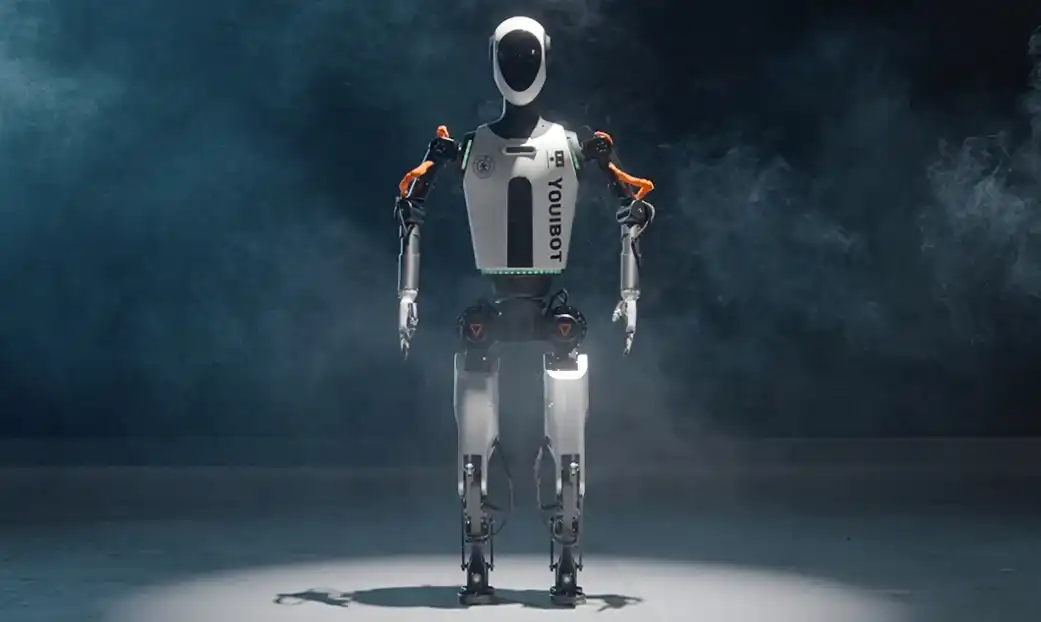
Investors flock to a physical AI startup as the race for the "OpenAI of the physical world" heats up. Ji Jia Shi Jie (GigaWorld), a company dedicated to developing Artificial General Intelligence (AGI) for the physical world, has raised 3.5 billion RMB (approximately $490 million) in just three months, according to a report from investment media outlet Touzijie. The latest B2 funding round of 1 billion RMB attracted a wide range of top-tier investors, including sovereign wealth funds, industrial capital, and financial institutions. This brings the total funding for the young company, now valued over 10 billion RMB, to 3.5 billion RMB across three recent rounds. The company is led by Huang Guan, a post-90s Tsinghua University PhD with extensive experience in AI, autonomous driving, and entrepreneurship. Its core innovation is a "dual-pyramid" system comprising a five-layer data pyramid (from internet videos to real-world robot data) and a three-layer algorithm pyramid focused on world simulation, action alignment, and reinforcement learning. This system underpins its key models: the "World Action Model" (e.g., GigaBrain series for robot control) and the "World Generation Model" (e.g., GigaWorld series for simulating and understanding the physical world). Its models have reportedly achieved top rankings in global robotics benchmarks. Ji Jia Shi Jie argues that while current digital AGI excels in information processing, the next frontier is physical AGI—systems that can understand and interact with the real world. The company believes the field is approaching its "GPT-3 moment," a key inflection point in capability scaling. To achieve this, the company is pursuing a dual-market strategy. For the consumer (C) market, it launched the "SeeLight" brand and its S1 general-purpose humanoid robot, which has secured initial orders for deployment in real homes. For the business (B) market, it focuses on industrial automation with its Maker series robots, having signed agreements for large-scale deployment in factories, and its DriveDreamer world model for autonomous driving, which is already in use with over 30 automakers and tech companies. The report concludes that by bridging the gap between digital intelligence and physical action, Ji Jia Shi Jie aims to unlock a new wave of productivity, ultimately bringing physical AGI into everyday life.

marsbit06/15 01:30

Three Months, 35 Billion Yuan: Investors Rush to Grab the OpenAI of the Physical World

marsbit06/15 01:30

Robots Begin to 'Consume Data': The Hidden Production Chain from Indian Data Factories to Billion-Dollar Humanoid Robots

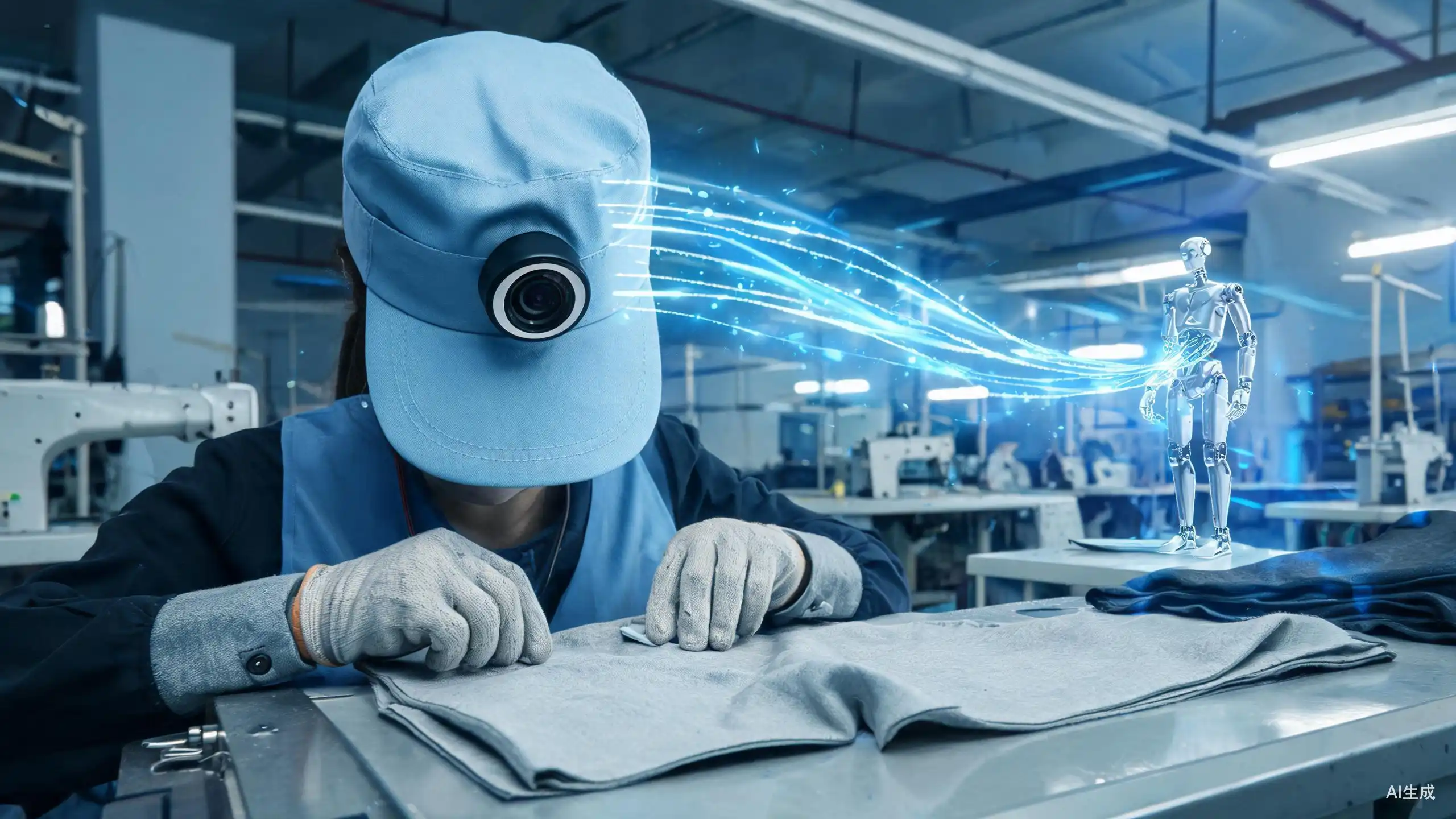
Robots have started to 'consume data,' driving the formation of a new industrial supply chain focused on producing training data for embodied AI. Unlike large language models, which are trained on vast internet text corpora, embodied AI models face a 'data desert' in the physical world. This has created a massive demand for first-person perspective video data (Ego Data), captured by workers wearing cameras in places like Indian garment factories. Companies like Neocambrian AI are establishing 'data factories' where workers perform standardized tasks (e.g., sorting clothes, kitchen organization) to generate thousands of hours of video. Research, such as NVIDIA's EgoScale, demonstrates that scaling this human demonstration data predictably improves robot performance, particularly for dexterous manipulation. This has validated a training path combining large-scale human data for pre-training with smaller amounts of robot-specific data for fine-tuning. The value of different data types varies significantly, forming a 'data pyramid.' The base consists of low-cost, large-scale internet and Ego Data. Higher layers include more expensive motion-capture data (e.g., from data gloves), simulation/synthetic data, and the most costly and scarce layer: real robot teleoperation data. This demand has spawned a layered ecosystem of data suppliers: low-cost data factories, motion capture and alignment specialists, robot-native teleoperation service providers, simulation data companies, and platforms aiming for data standardization. Robot companies themselves are adopting a 'layered procurement' strategy: outsourcing generic Ego Data while building in-house capabilities for robot-specific adaptation data and the critical deployment/failure data generated in real-world applications. The industry is shifting focus from hardware and basic mobility to the data pipelines required for general-purpose capability. While parallels exist to data labeling companies like Scale AI in the LLM boom, the physical complexity of robot data—involving action success ambiguity and sim-to-real gaps—requires more integrated solutions for data collection, annotation, and a continuous feedback loop. The race is on to build the data engines that will teach robots to operate reliably in the unstructured real world.

marsbit06/13 03:32

Robots Begin to 'Consume Data': The Hidden Production Chain from Indian Data Factories to Billion-Dollar Humanoid Robots

marsbit06/13 03:32

Fei-Fei Li's Manifesto for World Models

"Feifei Li's World Model Manifesto" draws a crucial distinction between current AI's linguistic prowess and its lack of understanding of the physical world. Citing Wittgenstein, Li argues that true intelligence requires moving beyond text statistics to comprehend physical laws like optics, inertia, and collision. The article diagnoses the current confusion around "world models" and proposes a clear taxonomy based on the Partially Observable Markov Decision Process (POMDP) framework. Li identifies three core, interdependent pillars for building such models: 1) The **Renderer**, which masters visual plausibility and pixel generation (e.g., Sora, image models) but lacks structural integrity. 2) The **Simulator**, which prioritizes strict adherence to physical laws (mass, friction, collision) and is essential for robotics and real-world application, though it is computationally demanding and data-hungry. 3) The **Planner**, which connects perception to action, enabling decision-making in complex, unstructured environments. Li posits the **Simulator as the critical nexus** linking rendering and planning, highlighting NVIDIA's Omniverse as a leading example. Mastering physical simulation is key to industrial AI applications. Despite challenges like scarce annotated 3D data and "physics-unrealistic" generative outputs, a convergent trend is emerging. The future lies in a **unified foundational model** that seamlessly integrates rendering, simulation, and planning into a dynamic, interactive system. Ultimately, this pursuit of "world models" represents the next evolutionary step for AI: developing **spatial intelligence** to interact with the physical world. It's not merely an algorithmic challenge but a redefinition of digital-physical standards on the path to AGI. However, as noted by Yann LeCun, achieving even rudimentary physical understanding akin to a dog's intelligence may still be years away.

marsbit06/09 00:37

Fei-Fei Li's Manifesto for World Models

marsbit06/09 00:37

From Code to Cognition: A Ten-Thousand-Word Guide to the Evolution of the Robot Brain

"From Code to Cognition: The Evolution of Robot Brains" The journey of robotic intelligence has shifted dramatically from manually coded systems to AI-driven brains. For decades, robots relied on layered software stacks—perception, state estimation, planning, control—each handcrafted. While predictable, they lacked adaptability. The 2010s saw deep learning revolutionize perception (e.g., object detection) and control (via reinforcement learning), but learned skills remained narrow. The arrival of Large Language Models (LLMs) marked a turning point. LLMs acted as high-level planners, interpreting natural language instructions and generating sequences of actions for traditional robotic systems to execute. However, true integration came with Visual-Language-Action (VLA) models, which fused vision, language, and motion prediction into a single network. Pioneered by models like RT-2 and open-source projects like OpenVLA, VLAs enable robots to reason and act directly from visual input and commands. The most advanced humanoid robots now employ a "dual-brain" architecture: a slow-thinking, large VLA (System 2) for reasoning and planning, and a fast-reacting, small network (System 1) for high-frequency motion control, sometimes with an even lower-level System 0 for balance. This split balances cognition with the physics of real-time movement. Computation is split between onboard hardware (e.g., NVIDIA Jetson) for safety-critical control loops and cloud/edge servers for non-critical tasks like learning and interfaces. A crucial driver is the open-source ecosystem—models like GR00T and OpenVLA allow startups to build upon pre-trained brains and fine-tune them with their own data, accelerating development. Despite progress, current systems struggle with recovery from errors, sample inefficiency, and long-horizon tasks. This has spurred the rise of **World Models**—neural networks that predict the consequences of actions. By simulating possible futures before acting (like NVIDIA Cosmos or Meta V-JEPA), robots can plan, recover, and generalize better. This represents the next frontier: shifting intelligence from learned reactions to an internal model of physics and cause-and-effect. The field is rapidly evolving. While not yet at its "ChatGPT moment," the convergence of cheaper hardware, scalable simulation, and world models points toward robots that are increasingly capable, adaptive, and useful. The question is shifting from "what can robots do?" to "what *should* they do?"

marsbit06/07 12:55

From Code to Cognition: A Ten-Thousand-Word Guide to the Evolution of the Robot Brain

marsbit06/07 12:55

活动图片