# Risk Assets İlgili Makaleler

HTX Haber Merkezi, kripto endüstrisindeki piyasa trendleri, proje güncellemeleri, teknoloji gelişmeleri ve düzenleyici politikaları kapsayan "Risk Assets" hakkında en son makaleleri ve derinlemesine analizleri sunmaktadır.

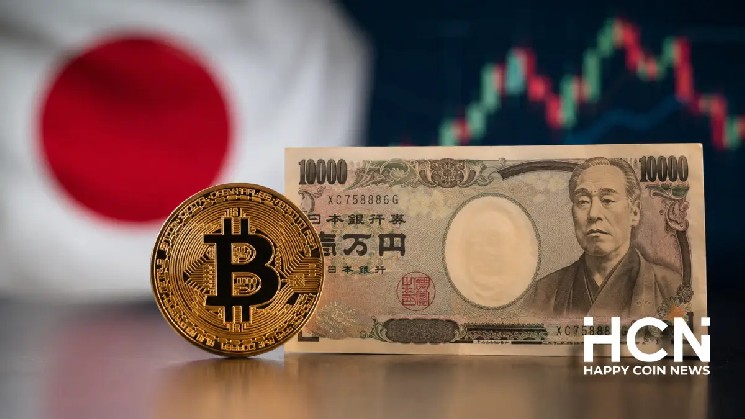
Alarm Bells Ringing: BOJ's Imminent 25bp Rate Hike, a Repeat of the 2024-Style Flash Crash for US Stocks and Crypto?

The Bank of Japan (BoJ) is highly expected to raise its short-term policy rate by 25 basis points to 1.0% at its June 15-16 meeting, marking the highest level since 1995. This imminent hike, driven by energy-induced inflation and a persistently weak yen, risks triggering a global market correction by forcing the unwinding of an estimated $500 billion in yen carry trades. As investors borrow cheap yen to fund investments in higher-yielding assets like U.S. stocks and cryptocurrencies, a BoJ rate hike would increase funding costs and potentially strengthen the yen. This could force a rapid deleveraging cycle: investors would sell overseas assets, buy back yen to repay loans, and amplify selling pressure. A similar scenario in August 2024 caused a global flash crash, with Bitcoin plunging nearly $20,000 in a single day. High-valuation assets are particularly vulnerable. AI-driven tech stocks, sensitive to liquidity and financing costs, face pressure from rising energy expenses and potential regulatory shifts. For cryptocurrencies, already competing with AI for market liquidity, the tightening of global leverage poses a significant near-term risk. Analysts warn this liquidity shock could lead to sharp corrections in both equities and crypto, urging investors to exercise caution regarding leverage amid heightened volatility.

Odaily星球日报5 saat önce

Alarm Bells Ringing: BOJ's Imminent 25bp Rate Hike, a Repeat of the 2024-Style Flash Crash for US Stocks and Crypto?

Odaily星球日报5 saat önce

BIT Research: After U.S.-China Summit, Markets Begin Repricing "Long-Term Competition"

The market is undergoing a macro repricing driven by geopolitics and policy expectations. Initial interpretations of the recent U.S.-China summit as a signal of eased tensions triggered a risk-on rally, boosting tech stocks and Bitcoin while weakening the dollar. However, as details emerged, this optimism faded due to a lack of concrete progress on tariffs, AI export controls, or key geopolitical issues like Taiwan and Iran. Inflation concerns have resurfaced, renewing selling pressure on bonds and precious metals. Longer-term, the summit underscored ongoing strategic competition: a marginal decline in dollar dominance, a push for diversified global reserve assets, AI and semiconductor supply chain restructuring, and intensified rivalry in frontier tech like low-earth orbit satellites. Bitcoin's price action mirrored high-beta tech stocks more than a structural hedge, highlighting its continued sensitivity to risk appetite and liquidity over traditional safe-haven characteristics. While the meeting yielded modest outcomes like a U.S. agricultural purchase pledge and continued dialogue mechanisms, it primarily reflects "managed competition." Structural tensions remain unresolved in areas like tech and geopolitics, affirming trends toward strategic decoupling and prolonged geopolitical risk. The key for markets is the broader repricing of global liquidity, real yields, and this enduring competitive landscape.

marsbit05/22 03:22

BIT Research: After U.S.-China Summit, Markets Begin Repricing "Long-Term Competition"

marsbit05/22 03:22

BIT Research: Escalating Geopolitical Conflicts, Why is Bitcoin Starting to Outperform Traditional Assets?

The market is undergoing a macro repricing phase dominated by escalating geopolitical tensions, particularly related to Iran, which is increasing uncertainty around energy supply, inflation, and global growth. While initial market expectations leaned toward looser policy, rising conflict risks are prompting a reassessment of rate cut timelines and a potential shift toward more hawkish policies. In the initial phase, rising oil prices drove inflation expectations higher, tightening financial conditions and pressuring risk assets, including Bitcoin. However, Bitcoin demonstrated relative resilience due to its prior price correction, which limited passive selling pressure. Unlike gold, Bitcoin has no physical carry cost, giving it a comparative advantage in a high real-rate environment. As the shock persists, the narrative is transitioning from inflation concerns to growth worries, with weakening industrial metals like copper reflecting dampened demand. If the situation continues, a third policy response phase may emerge, where governments and central banks intervene with fiscal support or liquidity measures. At this stage, market focus would shift from inflation to liquidity expectations, historically a supportive environment for Bitcoin as a non-sovereign asset. Additionally, structural shifts in global capital flows—such as resource-exporting nations diversifying away from U.S. assets amid reserve neutrality concerns—are tightening global liquidity and raising long-term rates. Bitcoin’s performance is increasingly tied to both risk sentiment and its sensitivity to liquidity cycles. Once policy easing expectations rise, Bitcoin may strengthen further relative to traditional assets, which face dual pressure from rates and growth. The key for investors is to monitor the transition in macro narrative: from oil-driven inflation to growth constraints, and eventually to policy-led liquidity. Bitcoin, having already undergone significant adjustment, is positioned to show relative outperformance as the market shifts toward liquidity-driven pricing.

marsbit03/30 05:51

BIT Research: Escalating Geopolitical Conflicts, Why is Bitcoin Starting to Outperform Traditional Assets?

marsbit03/30 05:51

活动图片