# Regulation İlgili Makaleler

HTX Haber Merkezi, kripto endüstrisindeki piyasa trendleri, proje güncellemeleri, teknoloji gelişmeleri ve düzenleyici politikaları kapsayan "Regulation" hakkında en son makaleleri ve derinlemesine analizleri sunmaktadır.

Regulatory Crossroads: The United States, Europe, and the Future of Crypto Assets

The article "Regulatory Crossroads: The US, Europe, and the Future of Crypto Assets" examines the divergent regulatory paths shaping the cryptocurrency landscape. It begins by contrasting Bitcoin’s origins as a decentralized, anti-establishment innovation with its current status as a heavily industrialized, energy-intensive asset. The piece draws parallels between the unregulated pre-1933 US stock market and today's crypto space, arguing that a shift from a libertarian "wild west" to a compliant asset class is inevitable. The US approach is portrayed as increasingly pragmatic and institutionally friendly. Key developments include the GENIUS Act, which mandates 1:1 Treasury backing for stablecoins, the repeal of restrictive accounting rules, and a perceived regulatory "regime change" at the SEC under Paul Atkins. This framework aims to integrate crypto into traditional finance, with major banks like JPMorgan now offering crypto-backed loans and the Treasury viewing stablecoins as tools for extending dollar hegemony. In stark contrast, the EU’s Markets in Crypto-Assets (MiCA) regulation is criticized as a risk-averse, innovation-stifling "bureaucratic masterpiece." Its high compliance burdens, treatment of crypto founders like sovereign banks, and effective ban on non-euro stablecoins like USDT are seen as creating a "regulatory moat" that drives talent and startups to more favorable jurisdictions like Switzerland and the UAE. The article concludes that the US is poised to become the dominant global crypto financial center by normalizing DeFi, while Europe risks becoming a "financial museum" due to its oppressive regulatory framework. It calls for urgent, decisive action to build a functional crypto industry that protects investors and allows for safe institutional capital entry before the window of opportunity closes.

深潮12 saat önce

Regulatory Crossroads: The United States, Europe, and the Future of Crypto Assets

深潮12 saat önce

Everyone is MicroStrategy: When JPMorgan Starts Accepting BTC as Collateral, Will You Still Sell Your Coins?

The article discusses a major shift on Wall Street, where major banks like JPMorgan, Citi, and Bank of America have reportedly begun accepting Bitcoin as collateral for cash loans. This move, revealed by MicroStrategy's Michael Saylor, signifies Bitcoin's evolution into a "pristine collateral" asset, comparable to U.S. Treasuries or gold. It allows holders to access liquidity without selling their Bitcoin, avoiding capital gains taxes and maintaining exposure to potential price appreciation. This development effectively democratizes the "Buy, Borrow, Die" strategy previously accessible only to large institutions and the ultra-wealthy. It is framed as a critical step in Bitcoin's monetary evolution, enabling credit creation. A "credit flywheel" is described: rising BTC prices increase collateral value, allowing for larger loans, which can be used to purchase more assets, potentially driving prices higher. This shift also suggests a weakening of restrictive regulations like the SEC's SAB 121, transferring power from crypto-native exchanges to traditional financial institutions. The article concludes with a warning about the risks of leverage, as price drops could trigger mass, forced liquidations. It offers advice for investors: adopt a "debt mindset" to use loans for expenses while holding assets, cautiously manage loan-to-value ratios to avoid margin calls, and watch for a resurgence of regulated, compliant CeFi platforms.

marsbit7 saat önce

Everyone is MicroStrategy: When JPMorgan Starts Accepting BTC as Collateral, Will You Still Sell Your Coins?

marsbit7 saat önce

The New Frontier of Privacy Coins: Technology, Prevention, and Regulatory Game

Privacy coins are at a critical juncture, shaped by technological evolution, regulatory pressure, and judicial decisions. In 2024–2025, court rulings, law enforcement actions, and technical adjustments are redefining the boundaries of this sector. Key developments include debates over whether decentralized mixing tools constitute sanctionable property, cross-border crackdowns on anonymous transaction services in Europe and the U.S., and privacy-focused projects adopting more compliant technical designs. Judicially, U.S. courts have issued influential rulings questioning whether immutable smart contracts fit traditional legal frameworks. Meanwhile, European authorities continue to target mixing services accused of facilitating money laundering. Technologically, some privacy projects are incorporating optional privacy features, flexible fee mechanisms, and improved audit interfaces to enhance usability and reduce regulatory friction. Macro-trends show countries advancing comprehensive crypto regulatory frameworks covering custody, trading, stablecoins, and anti-money laundering (AML) standards. Regulatory bodies increasingly demand that high-privacy tools provide verifiable audit trails or compliance-friendly modes to access legal financial services. Looking ahead, three main trajectories are emerging: continued legal clarification around smart contracts and mixer liabilities, a shift in privacy protocols from absolute anonymity toward optional privacy with auditability, and a market reassessment of the regulatory risk associated with privacy assets. This is causing a strategic split within the industry—some communities insist on strong privacy for niche demands, while others pursue “compliance-friendly privacy” models like enterprise-grade confidential transactions or auditable privacy pools. In essence, privacy coins are transitioning from pursuing maximum anonymity to seeking sustainable existence within regulatory boundaries. Future judicial rulings, policies, and protocol upgrades will determine which projects survive market and legal pressures. Those offering meaningful privacy while maintaining legal compliance are most likely to endure.

cointelegraph_中文5 saat önce

The New Frontier of Privacy Coins: Technology, Prevention, and Regulatory Game

cointelegraph_中文5 saat önce

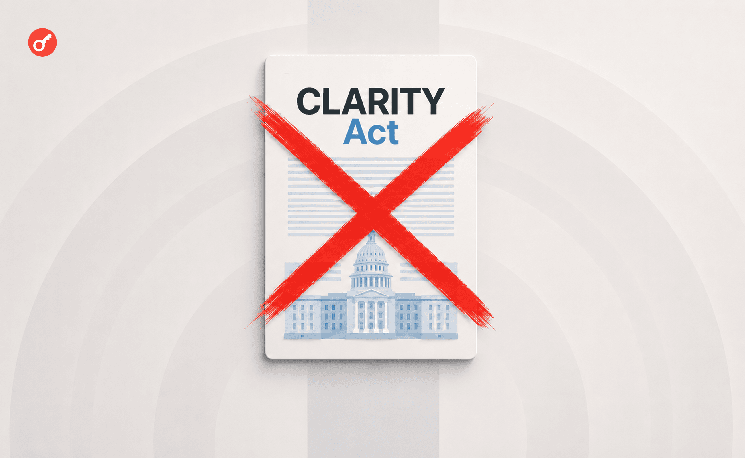
Securities or Commodities? A Decade-Long Tug-of-War Ends as the 'Crypto Market Structure Act' Races to the Senate

The "Cryptocurrency Market Structure Act" (CLARITY Act) is advancing to the U.S. Senate for final review after passing the House with strong support. The bill aims to resolve the long-standing regulatory debate over whether cryptocurrencies are classified as securities or commodities. It introduces a clear framework: tokens on decentralized blockchains are defined as "digital commodities" under CFTC oversight, while those meeting the Howey test remain securities regulated by the SEC. Key provisions include a "mature blockchain" exemption for highly decentralized networks like Bitcoin and Ethereum, a 360-day temporary registration pathway for trading platforms, and a fundraising exemption of up to $75 million for certain token offerings with enhanced disclosure. The bill also establishes a joint advisory committee to improve coordination between the CFTC and SEC and explicitly exempts non-custodial DeFi actors from broker-dealer regulations. This legislative effort aligns with the Trump administration's pro-crypto stance, including the appointment of industry-friendly leaders at key agencies like the SEC and CFTC, and recent moves to allow regulated spot crypto trading on CFTC-approved exchanges. If enacted, the law would provide regulatory clarity, encourage institutional adoption, and position the U.S. as a leader in the digital asset space.

Odaily星球日报5 saat önce

Securities or Commodities? A Decade-Long Tug-of-War Ends as the 'Crypto Market Structure Act' Races to the Senate

Odaily星球日报5 saat önce

U.S. Stablecoin Regulatory Framework Finalized, Global Crypto Finance Enters New Institutionalized Phase

The United States has enacted its first federal regulatory framework for stablecoins, marking a pivotal moment for the global cryptocurrency industry. This framework transitions stablecoins from a state of fragmented oversight to a unified federal system, establishing clear legal definitions and operational standards for dollar-pegged payment stablecoins. Key provisions mandate that stablecoin issuers must hold high-quality liquid assets—such as cash and short-term U.S. Treasury securities—as reserves. They are also required to comply with strict auditing, transparency, risk management, and consumer protection rules. The regulatory structure adopts a dual approach: larger issuers will be overseen at the federal level, while smaller ones may fall under state jurisdiction. This development is expected to significantly enhance the role of stablecoins like USDC and USDT as critical infrastructure for cross-border payments, settlements, and decentralized finance (DeFi). By providing legal certainty, the framework is likely to encourage greater adoption by traditional financial institutions, payment companies, and fintech firms, integrating stablecoins more deeply into the mainstream financial system. However, the new rules also present challenges. Higher compliance costs and operational requirements may pressure smaller issuers and could lead to industry consolidation. The shift emphasizes regulatory-driven competition over innovation-driven growth. Furthermore, global regulatory disparities remain, as jurisdictions worldwide have differing definitions and standards for stablecoins, potentially creating friction in international flows. Overall, this U.S. regulatory move signals a structural shift from an enforcement-led approach to a rules-based system for digital assets. It is seen as a maturation of the industry, setting the stage for stablecoins to evolve from crypto trading tools into foundational components of the future digital financial ecosystem, including in cross-border trade, retail payments, and financial market settlements.

cointelegraph_中文4 saat önce

U.S. Stablecoin Regulatory Framework Finalized, Global Crypto Finance Enters New Institutionalized Phase

cointelegraph_中文4 saat önce

Bitcoin ETFs See $4 Billion Outflow! Altcoin ETFs Defy Trend, Attracting $1.3 Billion as New Capital Locks on XRP and Solana

Summary: In November 2025, Bitcoin and Ethereum spot ETFs experienced significant outflows totaling over $4 billion, while the first wave of altcoin ETFs, particularly those tracking XRP and Solana, attracted approximately $1.3 billion in new capital. This divergence highlights a shift in institutional investment strategies amid a broader market downturn. XRP ETFs gathered $676 million with almost no outflows since launch, and XRP’s price rose 7.2% in November, supported by clearer regulatory conditions, a narrative shift toward cross-border payment utility, and competitive fee structures. Solana ETFs attracted $918 million with about $613 million in net inflows, despite SOL’s price dropping 29.2%. These ETFs offered 6-8% annualized staking yields, appealing to investors seeking returns even during price declines. In contrast, Litecoin and Dogecoin ETFs saw minimal interest, with combined inflows under $8 million, reflecting their weaker fundamental narratives and lack of use cases in institutional portfolios. This trend suggests that the market is moving beyond broad altcoin sentiment and is now evaluating projects based on regulatory clarity, real-world utility, cash flow potential, and ecosystem activity. The approval and performance of altcoin ETFs are acting as a stress test, separating assets with long-term viability from those reliant on speculation. The data indicates that institutions are not merely rotating into altcoins but are selectively allocating to tokens with defensible value propositions, even in a bear market. The emergence of altcoin ETFs has introduced a more transparent, rigorous framework for evaluating crypto assets, emphasizing sustainable fundamentals over hype.

cointelegraph_中文4 saat önce

Bitcoin ETFs See $4 Billion Outflow! Altcoin ETFs Defy Trend, Attracting $1.3 Billion as New Capital Locks on XRP and Solana

cointelegraph_中文4 saat önce

In Surgut, 'Money Launderers' Laundered Nearly ₽100 Million Through Cryptocurrency

In Surgut, Russia, enforcement authorities have dismantled an organized criminal group that laundered nearly 100 million rubles using cryptocurrency. The group specialized in the illegal circulation of payment means, according to an official statement from the Ministry of Internal Affairs. The criminals purchased bank cards from individuals to gain access to their accounts, which were then used to collect illicitly obtained funds. The group subsequently cashed out the money, converted it into cryptocurrency, and transferred it to their "curators," charging a commission of 3-15% for their services. According to data from a cryptocurrency exchange, the transaction volume involving the suspects exceeded 94 million rubles. The purchased bank cards were also used for remote thefts across Russia. Three members of the group have been detained, with another placed under travel restrictions. A criminal case has been initiated under the relevant article of the Russian Criminal Code. The Bank of Russia plans to enhance monitoring of the crypto market and strengthen measures against fraud, including the launch of the "Antidrop" system by mid-2027. This system will provide banks with information on "drops" – individuals whose bank details are used for shadow transactions. As part of this effort, banks will be required to link Russian citizens' accounts to their tax identification numbers (INN).

RBK-crypto4 saat önce

In Surgut, 'Money Launderers' Laundered Nearly ₽100 Million Through Cryptocurrency

RBK-crypto4 saat önce

活动图片