Original / Odaily Planet Daily (@OdailyChina)
Author / DingDang (@XiaMiPP)
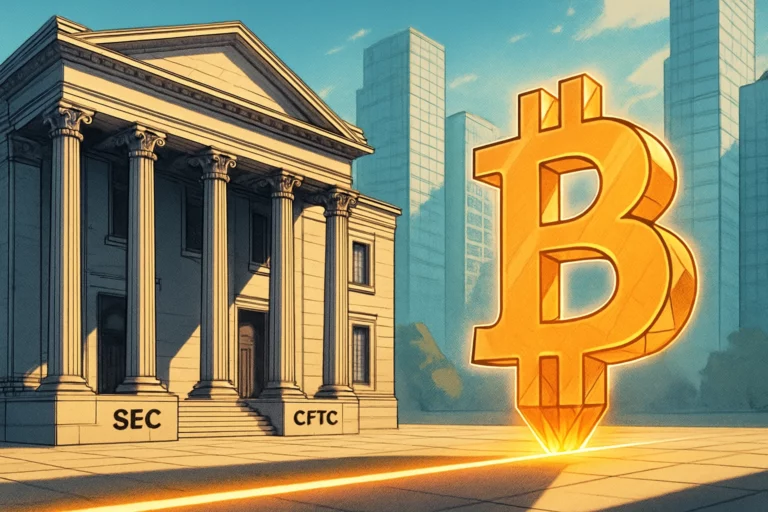
On December 10, U.S. Senators Gillibrand and Lummis stated at the Blockchain Association Policy Summit that the draft of the Crypto-Asset Market Structure Act (CLARITY Act) is expected to be released this weekend and enter the revision and hearing vote stage next week. This means this long-brewing legislative project has officially entered a decisive window.
The bill was first introduced in the U.S. House of Representatives on May 29, 2025, co-sponsored by House Financial Services Committee Chairman Patrick McHenry and Digital Assets and Innovation Subcommittee Chairman French Hill. It passed the House vote by an overwhelming majority (294 votes in favor) on July 17 and is now awaiting final review by the Senate.
Core Design of the Bill: Classification Over a One-Size-Fits-All Approach
The core of the Crypto-Asset Market Structure Act lies in its attempt to end the decade-long tug-of-war between U.S. regulators and the industry over "whether it's a security or a commodity." It is the first legislation to draw a clear boundary for digital assets, avoiding a "one-size-fits-all" regulatory model in favor of a classified regulatory framework. Specifically:
Legal Distinction Between "Digital Commodities" and "Digital Securities"
The bill explicitly defines the vast majority of tokens natively issued on decentralized blockchains as "digital commodities," placing them under the regulatory purview of the Commodity Futures Trading Commission (CFTC). Only those tokens that meet the Howey Test and possess typical "investment contract" characteristics will continue to be regulated by the SEC under securities laws.
"Mature Blockchain" Exemption Path
To prevent all tokens from being forcibly classified as securities, the bill establishes a "mature blockchain system" standard: a blockchain must simultaneously satisfy conditions of "high decentralization" (no single entity controls more than 20% of the token supply or validation power) and derive its value primarily from the actual use of the network to be exempt from SEC securities registration requirements. This provides a clear path for mainstream assets like Bitcoin and Ethereum, ensuring regulation does not stifle technological progress.
Comprehensive Shift of Secondary Market Regulation to the CFTC
The bill requires all platforms engaged in spot or derivative trading of digital commodities to register with the CFTC as a "Digital Commodity Exchange" (DCE), digital commodity broker, or dealer. Acknowledging industry realities, the bill also includes a 360-day "provisional registration" channel to ensure existing compliant platforms are not forced to shut down due to technical violations during the transition period, enabling a smooth handover.
Limited Fundraising Exemption
Even for initial token offerings on mature blockchains that are still deemed "investment contracts," issuers can apply for an exemption from the registration requirements of the 1933 Securities Act. However, the total annual fundraising amount must not exceed $75 million, and stricter information disclosure obligations must be fulfilled. This design seeks to balance encouraging innovation with protecting investors.
Division of Labor Between CFTC and SEC: From Confrontation to Collaboration
The prolonged jurisdictional tug-of-war between the SEC and CFTC over digital assets has long been described as the "Achilles' heel" of the crypto industry. Regulatory uncertainty has even been considered a significant hidden cost suppressing innovation vitality in the U.S. If the Crypto-Asset Market Structure Act officially takes effect, it will彻底 (completely) end this situation through legislation, establishing a clear division of responsibilities: the CFTC becomes the core regulator of the digital commodity secondary market, while the SEC focuses on token issuance and private placement activities in the primary market that still possess security attributes.
To ensure coordination between the two agencies in overlapping areas, the bill requires the establishment of a permanent "Joint Advisory Committee". Either agency must formally respond to non-binding recommendations put forward by the committee when formulating rules that might affect the other's jurisdictional scope. This mechanism aims to prevent future regulatory gaps or overlapping regulations.
Simultaneously, the bill provides clear protection for the decentralized finance (DeFi) ecosystem: protocol front-end developers, node validators, miners, and other non-custodial, non-profit roles will be explicitly excluded from the definitions of "broker" or "dealer," significantly reducing the compliance burden at the protocol level and preserving reasonable space for technological innovation.
Supporting Actions Progressing Simultaneously: CFTC is "Implementing First"
As the Senate review of the Crypto-Asset Market Structure Act enters a critical stage, on December 5, Acting Chairman of the U.S. Commodity Futures Trading Commission (CFTC), Caroline D. Pham, announced that spot cryptocurrency products will, for the first time, be permitted to trade on CFTC-registered regulated futures exchanges.
Pham stated that this move is part of the Trump administration's commitment to making the U.S. the "crypto capital of the world," aiming to address the lack of safeguards on offshore exchanges by providing a regulated domestic market.
Furthermore, as part of the "Crypto Sprint" plan, the CFTC will also promote the use of tokenized collateral (including stablecoins) in derivatives markets and revise rules to support the application of blockchain technology in infrastructure such as clearing and settlement. This will strengthen the CFTC's leadership role in the digital asset space, highly aligning with the spirit of the bill.
Trump's Nominations Accelerate: Crypto-Friendly Leadership in Place
Since Trump's second term, the personnel layout of major U.S. financial regulatory agencies has continued to tilt towards supporting digital assets. This shift has become a key catalyst for the accelerated development of the crypto industry.
U.S. Securities and Exchange Commission (SEC) Chairman Paul Atkins stated in an interview with CNBC that the U.S. "resistance" to cryptocurrency has lasted "too long." Paul Atkins was appointed by Trump and took office in 2025. He views the Crypto-Asset Market Structure Act as part of "Project Crypto," an initiative aimed at bringing order and fairness to digital asset classification through legislation and rules.
Simultaneously, on October 25, 2025, Trump nominated Brian Quintenz to serve as CFTC Chairman and Commissioner. A former crypto lawyer, Quintenz represented numerous crypto companies (such as venture capital funds and blockchain projects) at the law firm Willkie Farr & Gallagher and has served as Chief Legal Counsel for the SEC's Crypto Task Force since March 2025, reporting directly to Atkins.
Trump also nominated Travis Hill to serve as Chairman of the Federal Deposit Insurance Corporation (FDIC); he has been serving as Acting Chairman since 2025. Hill is also crypto-friendly, having publicly supported banks' involvement in crypto custody and stablecoin issuance, believing it can enhance financial inclusion. The FDIC regulates the interface between banks and crypto (e.g., stablecoin issuers), and his appointment may facilitate banks' entry into the crypto space.
After the government resumed operations, the SEC has successively introduced optimized systems to accelerate the ETF approval pace. The overall signal is very clear: regulatory logic is transitioning from defensive management to structural acceptance.
Conclusion: The U.S. is Completing the "Crypto Rule of Law Puzzle"
More importantly, the progress of the Crypto-Asset Market Structure Act may consolidate the effectiveness of the U.S. Stablecoin Innovation Act signed by Trump earlier this year, which already provides a safety framework for stablecoin issuance. This bill further completes the legislative puzzle for the crypto industry, filling the market structure gap and propelling the U.S. from a "follower" to a "leader" in global crypto regulation.
Overall, these policy and personnel changes预示 (foreshadow) structural opportunities for the U.S. crypto ecosystem. Regulatory clarity could attract more institutional capital inflows. However, challenges have not disappeared, such as coordinating DeFi regulatory details and aligning with international standards. But for global crypto practitioners, this is not just an American story; it is a crucial window period for the entire industry.