# OpenAI İlgili Makaleler

HTX Haber Merkezi, kripto endüstrisindeki piyasa trendleri, proje güncellemeleri, teknoloji gelişmeleri ve düzenleyici politikaları kapsayan "OpenAI" hakkında en son makaleleri ve derinlemesine analizleri sunmaktadır.

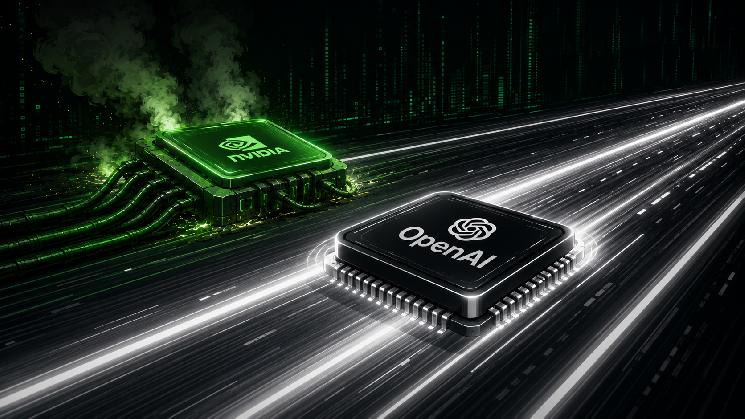
OpenAI Unveils Its Own Jalapeño Chip: An Accelerator 1.5–2 Times More Efficient Than Nvidia

On August 25, 2026, OpenAI unveiled test results for its custom inference accelerator, Jalapeño. On the public InferenceX benchmark, systems using the new chip delivered 1.5–1.9x more computations per watt at peak throughput and reduced response latency by 1.7–3.6x compared to systems based on Nvidia GB200 and GB300. The chip, rated at 700W nominal power, consumed up to 550W under tested loads, with a block of 128 units reaching 1.7 exaflops in 4-bit precision. OpenAI plans to deploy Jalapeño in its infrastructure by late 2026, marking the first generation of a multi-year platform. Jalapeño was developed in collaboration with Broadcom (for the die and networking) and Celestica (for boards and racks) over nine months. It is specifically designed for OpenAI's own predictable, high-volume inference workloads around its language models, computational kernels, and data movement, unlike Nvidia's general-purpose accelerators. The initiative is backed by an agreement with Broadcom to deploy 10 GW of OpenAI's custom accelerators between late 2026 and 2029. While OpenAI will continue relying on external suppliers like Nvidia for training cutting-edge models and parts of inference, the company aims to control the processor architecture for its largest daily computational stream. This shift addresses the economics of inference: by building chips as internal components, OpenAI avoids paying the market premium associated with Nvidia's high-margin commercial GPUs, directly lowering the cost per query. This move follows a trend where major AI players (e.g., Anthropic with Google TPUs) transition to custom silicon as their inference volume becomes predictable. However, specialization risks reducing flexibility for future AI architectures and creates a single point of failure with manufacturing partners. The challenge for OpenAI will be ensuring Jalapeño remains competitive through multiple future model generations.

cryptonews.ru1 saat önce
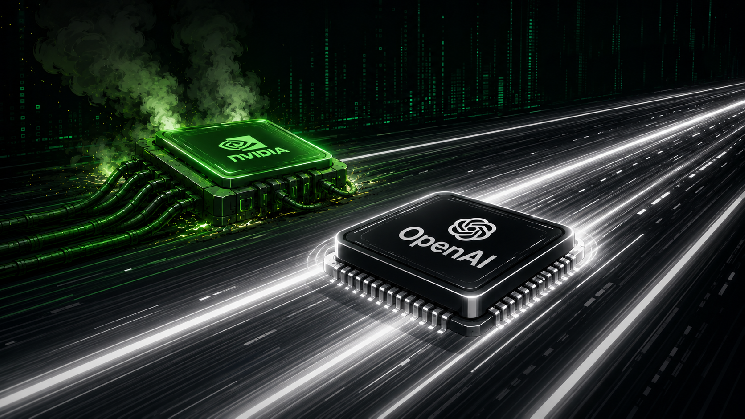
OpenAI Unveils Its Own Jalapeño Chip: An Accelerator 1.5–2 Times More Efficient Than Nvidia

cryptonews.ru1 saat önce

OpenAI Reveals Its Own Jalapeño Chip: Accelerator 1.5–2 Times More Efficient Than Nvidia

On August 25, 2026, OpenAI unveiled initial test results for its proprietary inference accelerator, the Jalapeño. Benchmarks on SemiAnalysis's InferenceX platform showed that systems using Jalapeño delivered 1.5–1.9 times more computations per watt at peak throughput and reduced latency by 1.7–3.6 times compared to systems based on Nvidia's GB200 and GB300, tested on models like GPT-OSS-120B. Designed specifically for OpenAI's own workloads, the 700W-rated chip was developed in nine months with partners Broadcom (silicon/network) and Celestica (boards/racks). It's the first in a planned multi-year platform. Deployment is slated for late 2026, backed by an OpenAI-Broadcom agreement to deploy 10 GW of custom accelerators through 2029. This move shifts a major portion of OpenAI's daily inference, crucial for services like ChatGPT and its API, away from Nvidia's universal GPUs. By controlling this hardware architecture, OpenAI aims to directly reduce the per-query cost of its massive service traffic, converting what was previously supplier profit (noting Nvidia's high margins) into internal savings and computational capacity. While OpenAI will still rely on external suppliers for training cutting-edge models and for parts of inference, Jalapeño represents a strategic industry trend where hyperscalers design custom chips once inference volume becomes predictable. However, this specialization risks future inflexibility if AI architectures shift and creates dependency on its manufacturing partners.

cryptonews.ru9 saat önce

OpenAI Reveals Its Own Jalapeño Chip: Accelerator 1.5–2 Times More Efficient Than Nvidia

cryptonews.ru9 saat önce

Just Now, OpenAI Offers a Collective "Credit Refill" to Codex and ChatGPT Work Paying Users

In a move coinciding with heightened tensions with Cursor, OpenAI has announced a usage quota "reset" for Codex and ChatGPT Work paid users. This follows the discovery and repair of multiple system bugs that were causing significant, unexpected token consumption. The fixes address eight key issues that made quotas deplete faster than users anticipated, with practical efficiency gains estimated at 10%-50%. Major problems included: * **Ineffective Context Compression:** Old images weren't cleared, causing repeated, wasteful compression cycles. * **Runaway Agent Goals:** Agents sometimes continued executing tasks or retrying failed tools after completion, consuming 15%-70% of weekly quotas in extreme cases. * **Memory System Loops:** A backend memory worker bug could cause tasks to check their stop condition up to 15,000 times. * **Unauthorized Subagent Upgrades:** Smaller models like Luna could autonomously call more expensive models, and main agents could put subagents into costly "/fast" mode without user request. * **Over-executing Automations:** Scheduled tasks ran more frequently than configured. * **Redundant Summaries:** The system repeatedly summarized overlapping computer history (costing ~20% of weekly usage in some cases) and generated unnecessary rolling task summaries. * **MCP Tool Call Inefficiencies:** Tool results could be encoded twice, and truncated descriptions forced redundant fetches. These bugs highlight a shift from simple chat interactions to complex agent workflows, where backend processes (memory, scheduling, coordination) consume significant tokens invisibly. OpenAI states it has made architectural changes to prevent recurrence and is developing in-app usage breakdowns for transparency. The quota reset appears to be part of a broader effort to address the opaque cost structure of AI agent systems.

marsbit15 saat önce

Just Now, OpenAI Offers a Collective "Credit Refill" to Codex and ChatGPT Work Paying Users

marsbit15 saat önce

Anthropic Eyes 'Training Chips'? Reportedly Considered Acquiring AI Chip Company MatX for $7 Billion

AI giant Anthropic reportedly discussed acquiring AI chip startup MatX for approximately $7 billion to accelerate its in-house chip development, specifically targeting "training chips" for large language models. This move follows OpenAI's recent unveiling of its own inference chip, "Jalapeño," highlighting a growing trend of major AI companies vertically integrating into hardware. However, the MatX deal was ultimately abandoned, with talks shifting toward potential collaboration instead. Anthropic's interest in MatX, a company founded in 2023 by former Google TPU engineers, underscores its strategic push to secure faster and more cost-efficient computing power for its Claude model. The company's broader chip ambitions are further evidenced by its recruitment of key industry veterans, including former Google TPU leader Amir Salek and ex-OpenAI chip engineer Clive Chan, to build an internal chip team. Anthropic is also actively meeting with several other AI chip startups to evaluate different architectures. Despite this significant investment in chip design capabilities, Anthropic reportedly plans to maintain a multi-vendor strategy, continuing its partnerships with major suppliers like Nvidia and Google. Developing advanced chips remains a costly and time-intensive endeavor, making the acquisition of an established startup like MatX an attractive, though currently unrealized, shortcut to gain expertise and potentially reduce long-term costs.

marsbitDün 06:01

Anthropic Eyes 'Training Chips'? Reportedly Considered Acquiring AI Chip Company MatX for $7 Billion

marsbitDün 06:01

Breaking News: OpenAI Completely Cuts Off Cursor

OpenAI has announced it will completely terminate its direct model supply to Cursor, the AI-powered code editor, on November 12. This decision follows the acquisition of Cursor by SpaceX (and thus Elon Musk) in a $60 billion deal two weeks prior. OpenAI cites Musk's history of contractual violations as the core reason, including past instances where xAI (now part of SpaceX) used OpenAI data for model training against terms of service. The move severs Cursor's official bundled access to OpenAI models like GPT. Crucially, it also explicitly excludes access to OpenAI's upcoming, highly capable "Astra" model, which is considered a strategic asset. Developers can continue using OpenAI models within Cursor by supplying their own API key, but this shifts costs from a bundled subscription to a direct, usage-based payment model, effectively raising prices for heavy users. Cursor's CEO confirmed negotiations are ongoing and emphasized Cursor's long-standing relationship with OpenAI, framing the decision as a departure from OpenAI's claimed platform neutrality. The article frames this event as part of a broader industry trend where model providers (like OpenAI and Anthropic) are increasingly cutting off integrated access to their models in tools owned by competitors or entities they distrust. The conclusion is that control over the foundational AI models has become the ultimate source of power, deciding who gets access to the most advanced capabilities.

marsbitDün 04:55

Breaking News: OpenAI Completely Cuts Off Cursor

marsbitDün 04:55

Two AI Giants Devour One-Third of Global New Computing Power, Nearing Half Next Year

Two AI giants, Anthropic and OpenAI, are projected to consume one-third of the world's new computing power this year, a share that could rise to nearly half by next year. By 2028, they may command the majority of the world's effective available AI compute, according to analysis by Dylan Patel of SemiAnalysis. This rapid growth is driven by soaring revenue per megawatt—Anthropic reportedly reaching up to $50 million per MW—which far exceeds the estimated $10-15 million cost. This creates a self-reinforcing cycle: higher earnings enable purchasing more advanced compute, leading to more powerful models and further revenue gains. While about 71% of AI compute is owned by major cloud providers, its usage is increasingly concentrated with these two labs. A significant portion of their compute (around 50%) is dedicated to research and experimentation rather than direct model training or inference. Looking ahead, Dylan suggests an increasing share of compute will be diverted from revenue-generating inference towards AGI research, despite potential investor pressure for returns. The massive capital expenditure—cumulatively around $11 trillion from 2024-2029—risks tightening global credit markets. Furthermore, government regulations, like withholding top-tier model releases or pausing data center tax exemptions, could disrupt the growth cycle by capping revenue-per-MW gains. The conversation highlights a concerning trend toward extreme centralization. As compute efficiency improves and costs drop, the "effective AI labor" controlled by a single leader could theoretically surpass the global human population within years. The core challenge is shifting from a race for AGI itself to a question of who will control it.

marsbit2 gün önce 11:52

Two AI Giants Devour One-Third of Global New Computing Power, Nearing Half Next Year

marsbit2 gün önce 11:52

The Pioneer of AI Boomerang Job-Hopping: No Ph.D., Fought Over by Top AI Labs in Silicon Valley

"AI's Boomerang Hire: The Unconventional Career of Barret Zoph Who is known as the first practitioner of 'boomerang hiring' in AI? Barret Zoph, now a Research VP at Google DeepMind, has an unconventional resume: former Senior Research Scientist at Google Brain, former VP of Post-Training Research at OpenAI, former co-founder/CTO of Thinking Machines Lab, former OpenAI Codex commercialization lead—all without a PhD. Zoph's career began at Google Brain in 2016 after his USC bachelor's degree. He co-authored the seminal "Neural Architecture Search with Reinforcement Learning," helping pioneer the NAS field. His later work included co-authoring the Switch Transformer, a key model for trillion-parameter scale training. He joined OpenAI in 2022, rising to VP focusing on reinforcement learning for post-training—a crucial step in aligning models like ChatGPT. USC later listed him among alumni who "paved the path for ChatGPT." In 2025, he co-founded Thinking Machines Lab with ex-OpenAI CTO Mira Murati but left under controversial circumstances less than a year later, returning briefly to OpenAI before his final move back to Google in 2026. His hiring coincides with significant talent churn at Google DeepMind. Data shows DeepMind's senior talent inflow/outflow ratio has sharply declined from 12:1 in 2023 to 2:1 in 2026, meaning for every two hires, one leaves—a stark contrast to Anthropic (22:1) and OpenAI (5.7:1). Key departures include founders and Nobel laureates moving to rivals. This fluid, sports-like transfer market for elite AI researchers is driven not just by pay but by competitive positioning, pre-IPO equity at startups, and concerns over shifting research priorities at large firms like Google as they focus more on commercial products like Gemini."

marsbit2 gün önce 08:11

The Pioneer of AI Boomerang Job-Hopping: No Ph.D., Fought Over by Top AI Labs in Silicon Valley

marsbit2 gün önce 08:11

活动图片