# Mythos İlgili Makaleler

HTX Haber Merkezi, kripto endüstrisindeki piyasa trendleri, proje güncellemeleri, teknoloji gelişmeleri ve düzenleyici politikaları kapsayan "Mythos" hakkında en son makaleleri ve derinlemesine analizleri sunmaktadır.

U.S. Government Bans Foreign Nationals from Using Fable 5, Anthropic Issues Rebuttal

U.S. Government Bans Foreign Access to Fable 5, Anthropic Issues Rebuttal On June 12th, the U.S. government ordered AI company Anthropic to immediately suspend all foreign access—including foreign nationals within the U.S. and Anthropic's own foreign employees—to its newly released Fable 5 and Mythos 5 AI models, citing national security concerns. This forced Anthropic to temporarily disable access to both models for all users globally, as it cannot technically differentiate user nationality at scale. The models, released just three days prior, represent Anthropic's highest public capability tier. Fable 5 is the first publicly available model from the advanced "Mythos" family, while Mythos 5 is a less-restricted version for approved cybersecurity and critical infrastructure partners. The government's directive was reportedly triggered by claims from another company that it could "jailbreak" Mythos 5, raising alarm within the Trump administration. Anthropic, in a detailed public statement, strongly challenged this rationale. The company argues the demonstrated "jailbreak" is a narrow, non-generalized technique that merely involves identifying minor, known software vulnerabilities—a capability common to other publicly available models like OpenAI's GPT-5.5 and routinely used by cybersecurity defenders. Anthropic stated it has complied with the order but disagrees with the government's standard, warning that applying it industry-wide would halt all new frontier model deployments. The company criticized the lack of a transparent, fact-based legal process and expressed confidence the situation stems from a misunderstanding. It is working to restore access and will release more technical details within 24 hours. Other Anthropic models remain unaffected.

链捕手06/13 08:04

U.S. Government Bans Foreign Nationals from Using Fable 5, Anthropic Issues Rebuttal

链捕手06/13 08:04

Public Version of Mythos Officially Launched: Analyzing the Advantages and Limitations of AI Smart Contract Auditing

Publicly available Mythos, Anthropic's AI model, has officially launched, demonstrating both significant potential and limitations in smart contract security auditing. The article analyzes its capabilities through real-world cases. AI excels in identifying subtle, low-level vulnerabilities through pattern recognition and large-scale code screening. A key example is detecting a storage slot collision between a custom rewards mapping and a third-party library's ReentrancyGuard, a vulnerability easily missed in manual audits. In the recent Zcash incident, AI also rapidly discovered a critical soundness bug that had remained hidden for years. However, AI currently struggles with complex, interconnected scenarios. When tested on the Curve LlamaLend sDOLA exploit, which involved manipulating prices across multiple protocols (Curve pools, lending markets) to trigger liquidations, Fable 5 failed to identify the core cross-protocol attack vector. These scenarios require a deep understanding of DeFi economic models and multi-contract interactions. In conclusion, while AI tools like Mythos significantly boost efficiency in finding standardized, syntactic vulnerabilities, they cannot yet replace expert analysis for complex, business-logic, and cross-protocol attacks. An effective audit workflow combines AI's speed for initial screening with human expertise for in-depth, holistic analysis.

marsbit06/11 08:06

Public Version of Mythos Officially Launched: Analyzing the Advantages and Limitations of AI Smart Contract Auditing

marsbit06/11 08:06

The Veil of Mythos Becomes Anthropic's Lever to Move Trillions

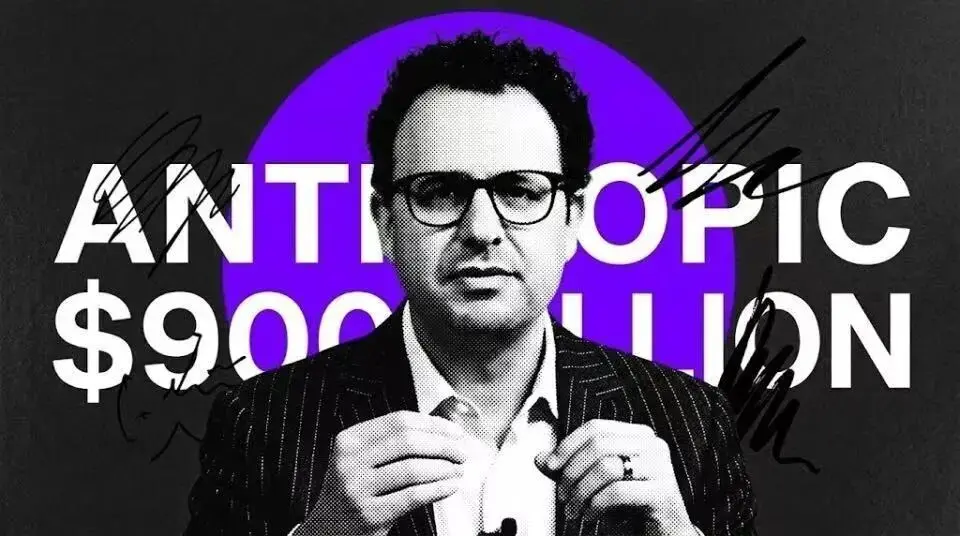
The article discusses Anthropic's reported upcoming $30 billion funding round, which would value the company at over $900 billion. It analyzes how the company has leveraged strategic narratives around its unreleased "Mythos" model, rather than just its publicly available products, to drive this massive valuation. Key points include Google's surprising $40 billion investment in a competitor, suggesting it is buying strategic positioning. Anthropic's "Glasswing" cybersecurity project and the unreleased Mythos model are portrayed not through direct proof, but through carefully crafted narratives of being "too powerful for public release," creating an aura of exclusive, high-level capability. This is bolstered by reports of the White House and NSA seeking access to Claude/Mythos despite previous security concerns, implying indispensable technology. Furthermore, Anthropic's reported rapid revenue growth—from a $1 billion annual run-rate in late 2024 to over $30 billion by April 2026, largely driven by enterprise API and Claude Code—provides a financial story for investors. The article concludes that Anthropic's core business model is effectively converting unverifiable technical potential, government interest, and future revenue projections into a compelling narrative that secures immense capital, using the actions of wealthy investors and powerful institutions as the ultimate validation of its worth.

marsbit05/24 10:10

The Veil of Mythos Becomes Anthropic's Lever to Move Trillions

marsbit05/24 10:10

The Real Battlefield of AI Lies in the 'Dark Forest'

The article "AI's Real Battlefield is in the 'Dark Forest'" discusses the shifting dynamics in the global AI landscape, contrasting the strategic directions of Chinese and U.S. AI developers. Chinese companies like Alibaba (with its "HappyHorse" video model), ByteDance (Seedance 2.0), and Kuaishou (Kling 3.0) have taken the lead in text-to-video generation, surpassing OpenAI’s now-discontinued Sora. These models are deeply integrated into their parent companies’ content ecosystems (e.g., Douyin, Kuaishou), serving to reduce content creation costs and enhance user engagement rather than operating as standalone profit centers. In contrast, U.S. firms are pivoting toward high-stakes enterprise and security applications. Anthropic’s Claude Mythos model demonstrates advanced capabilities in autonomously discovering and exploiting software vulnerabilities, prompting concern at the highest levels of U.S. financial and governmental institutions. OpenAI responded with its own GPT-5.4-Cyber, signaling a strategic shift from consumer-facing products to enterprise-grade tools focused on cybersecurity and programming. The divergence is attributed to fundamental differences in resources and market structures. U.S. companies, backed by vast computational resources (e.g., Amazon and Google supply Anthropic with substantial funding and TPU access), can pursue deep, specialized R&D in high-value B2B sectors. Chinese firms, facing significant compute power constraints and a less mature enterprise SaaS market, have found success by leveraging their massive consumer platforms and optimizing for cost-efficiency. The article warns that the AI race is entering a "dark forest" phase—a reference to competitive dynamics where cybersecurity capabilities could determine digital sovereignty. While Chinese models like Zhipu AI’s GLM-5.1 show promise in narrowing the gap in coding proficiency, the author stresses that achieving parity in security-critical AI will require asymmetric strategies, including greater investment in coding models, adaptation to domestic hardware, and exploring international markets in the Global South.

marsbit04/18 01:53

The Real Battlefield of AI Lies in the 'Dark Forest'

marsbit04/18 01:53

活动图片