# Hardware İlgili Makaleler

HTX Haber Merkezi, kripto endüstrisindeki piyasa trendleri, proje güncellemeleri, teknoloji gelişmeleri ve düzenleyici politikaları kapsayan "Hardware" hakkında en son makaleleri ve derinlemesine analizleri sunmaktadır.

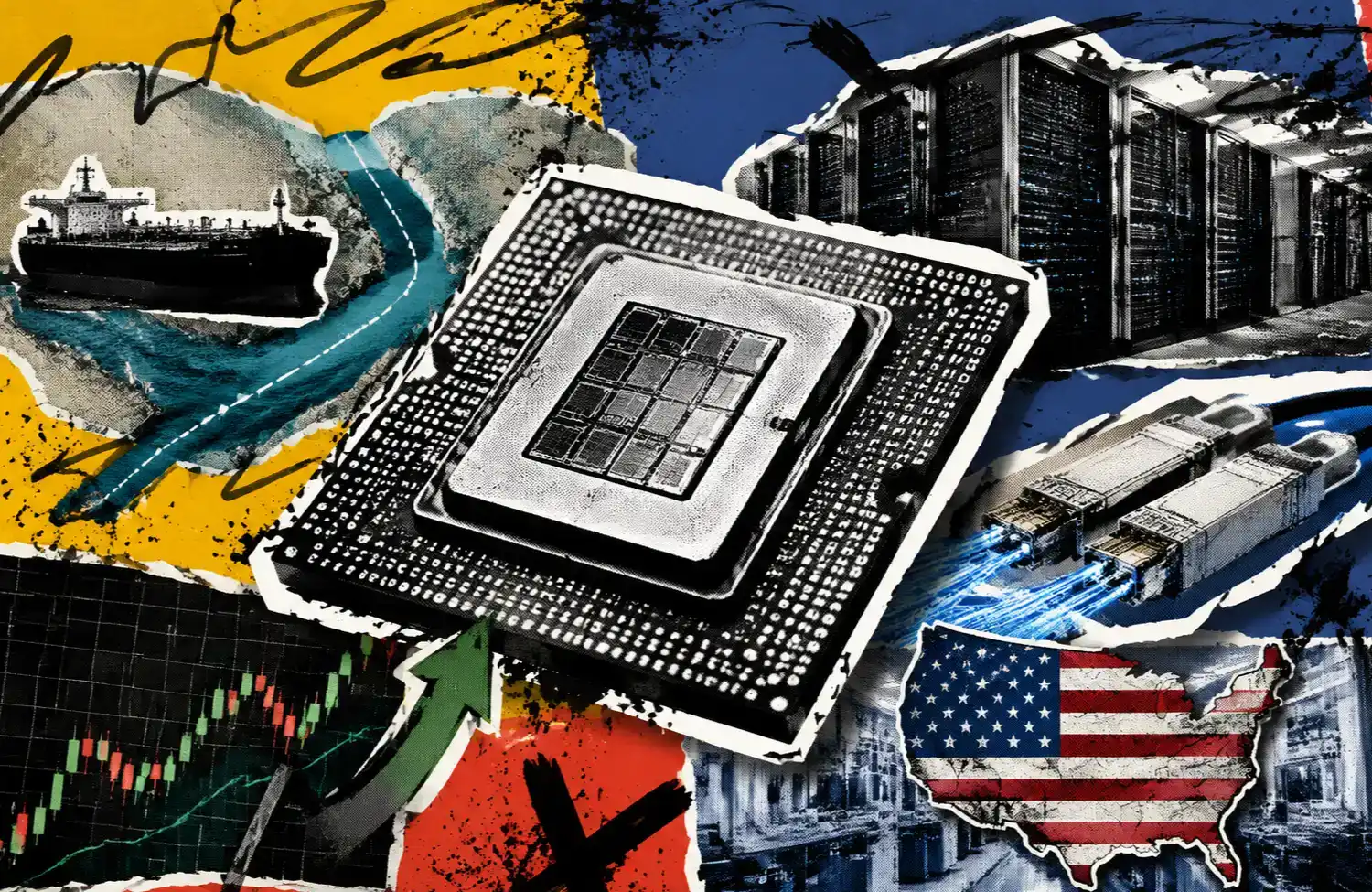
The Next Earthquake in AI: Why the Real Danger Isn't the SaaS Killer, But the Computing Power Revolution?

The next seismic shift in AI isn't about SaaS disruption but a fundamental revolution in computing power. While many focus on AI applications like Claude Cowork replacing traditional software, the real transformation is happening beneath the surface: a dual revolution in algorithms and hardware that threatens NVIDIA’s dominance. First, algorithmic efficiency is advancing through architectures like MoE (Mixture of Experts), which activates only a fraction of a model’s parameters during computation. DeepSeek-V2, for example, uses just 9% of its 236 billion parameters to match GPT-4’s performance, decoupling AI capability from compute consumption and slashing training costs by up to 90%. Second, specialized inference hardware from companies like Cerebras and Groq is replacing GPUs for AI deployment. These chips integrate memory directly onto the processor, eliminating latency and drastically reducing inference costs. OpenAI’s $10 billion deal with Cerebras and NVIDIA’s acquisition of Groq signal this shift. Together, these trends could collapse the total cost of developing and running state-of-the-art AI to 10-15% of current GPU-based approaches. This paradigm shift undermines NVIDIA’s monopoly narrative and its valuation, which relies on the assumption that AI growth depends solely on its hardware. The real black swan event may not be an AI application breakthrough but a quiet technical report confirming the decline of GPU-centric compute.

marsbit19 saat önce

The Next Earthquake in AI: Why the Real Danger Isn't the SaaS Killer, But the Computing Power Revolution?

marsbit19 saat önce

The Next Earthquake in AI: Why the Real Danger Isn't the SaaS Killer, but the Computing Power Revolution?

The next seismic shift in AI is not the threat of "SaaS killers" but a fundamental revolution in computing power. While many focus on how AI applications like Claude Cowork are disrupting traditional software, the real transformation is happening beneath the surface—in the infrastructure that powers AI. Two converging technological paths are challenging NVIDIA’s GPU dominance: 1. **Algorithmic Efficiency**: DeepSeek’s Mixture-of-Experts (MoE) architecture allows massive models (e.g., DeepSeek-V2 with 236B parameters) to activate only a small fraction of "experts" (9%) during computation, achieving GPT-4-level performance at 10% of the computational cost. This decouples AI capability from sheer compute power. 2. **Specialized Hardware**: Inference-optimized chips from companies like Cerebras and Groq integrate memory directly onto the chip, eliminating data transfer delays. This "zero-latency" design drastically improves speed and efficiency, prompting even OpenAI to sign a $10B deal with Cerebras. Together, these advances could cause a cost collapse: training costs may drop by 90%, and inference costs could fall by an order of magnitude. The total cost of running world-class AI may plummet to 10-15% of current GPU-based solutions. This paradigm shift threatens NVIDIA’s valuation, built on the assumption of perpetual GPU dominance. If the market realizes that GPUs are no longer the only—or best—option, the foundation of NVIDIA’s trillions in market cap could crumble. The real black swan event may not be a new AI application, but a quiet technical breakthrough that reshapes the compute landscape.

marsbitDün 01:58

The Next Earthquake in AI: Why the Real Danger Isn't the SaaS Killer, but the Computing Power Revolution?

marsbitDün 01:58

Doubao Phone Makes a Comeback: From 'Being Surrounded' to 'Counter-Siege'

Doubao Phone, a smartphone project by ByteDance, re-emerges after facing a major setback. In December 2025, its first-generation model, developed in partnership with ZTE’s Nubia, was quickly "besieged" by major internet platforms—including Meituan, WeChat, and Alibaba—due to its AI agent accessing core app data without authorization, nearly crippling its functionality. Despite this, ByteDance is pushing forward. A second-generation Doubao Phone is slated for release in Q2 2026, with higher expectations. To avoid another blockade, ByteDance is negotiating permissions with various app providers and has already reached agreements with some companies in ride-hailing, food delivery, and ticketing. The core strategy remains a system-level GUI Agent, which enables AI to operate the phone by simulating screen interactions, bypassing the need for API approvals. Additionally, ByteDance is pursuing partnerships with other smartphone makers. For major brands like OPPO and vivo, collaboration is limited to technical integration, such as model interoperability or modular products like "Doubao Input Method." For smaller manufacturers like Transsion, Meizu, and Lenovo, ByteDance is pushing for deeper integration—embedding Doubao AI directly into the OS, with phone makers paying tech licensing and subscription fees. Beyond phones, ByteDance is developing other AI hardware, including smart glasses (with and without displays, set for release in 2026) and AI-enabled earphones with cameras. These devices are designed to work seamlessly with Doubao’s ecosystem, enabling hands-free interaction. The broader vision is to make Doubao’s AI agent a standard interface across hardware, capturing user habits and building ecosystem loyalty. Rivals like Google are pursuing similar strategies with Gemini. ByteDance is also exploring overseas expansion, negotiating with manufacturers like vivo to pre-install Doubao Assistant on international models. With strong resources in models, talent, and data, ByteDance aims to establish Doubao as a central AI hardware platform, despite the challenges.

marsbit01/30 01:41

Doubao Phone Makes a Comeback: From 'Being Surrounded' to 'Counter-Siege'

marsbit01/30 01:41

活动图片