# GPT-5.6 İlgili Makaleler

HTX Haber Merkezi, kripto endüstrisindeki piyasa trendleri, proje güncellemeleri, teknoloji gelişmeleri ve düzenleyici politikaları kapsayan "GPT-5.6" hakkında en son makaleleri ve derinlemesine analizleri sunmaktadır.

Breaking: GPT-5.6 Prices Slashed Effective Today

OpenAI has announced significant price cuts for its GPT-5.6 model API, effective immediately. The entry-level **GPT-5.6 Luna** sees the most drastic reduction, with input prices dropping 80% to $0.20 per million tokens and output prices falling to $1.20 per million tokens. The mid-tier **GPT-5.6 Terra** is reduced by 20%, now costing $2.00 (input) and $12.00 (output) per million tokens. The flagship **GPT-5.6 Sol** maintains its original price but introduces a new **Fast mode**, offering speeds up to 2.5 times faster for double the cost. The company attributes these price reductions to efficiency gains achieved through **GPT-5.6 Sol's own involvement in optimizing its production systems**. The model assisted in rewriting GPU kernels and improving speculative decoding, leading to a 20% reduction in end-to-end service costs and over 15% improvement in token generation efficiency. OpenAI emphasizes this process remained human-led. A key focus of the降价 is to lower the barrier for running **AI agent workflows**. By making the capable, tool-calling Luna model significantly cheaper, OpenAI aims to enable more frequent use in cost-sensitive, high-volume tasks like code review and monitoring. This creates a potential feedback loop: model-assisted efficiency gains lead to lower costs, which enables broader agent deployment, which in turn drives further optimization. The new pricing and features will also apply to Codex and ChatGPT Work subscriptions. The changes intensify competition in the large language model market, with OpenAI directly challenging rivals like Anthropic to respond.

marsbit07/31 00:56

Breaking: GPT-5.6 Prices Slashed Effective Today

marsbit07/31 00:56

10,000 Scientists Get 1 Year of Free Access: OpenAI Brings the Scientific Research Pipeline into ChatGPT

OpenAI has launched the "ChatGPT for Academic Researchers" program, offering free one-year access to its flagship models for 100,000 university researchers globally, with 10,000 spots available this summer. Selected institutions include prestigious centers like ENS Paris and the IAS at Princeton. The initiative provides an integrated research workspace within ChatGPT, bundling tools like ChatGPT, ChatGPT Work, and Codex, along with expanded Deep Research capabilities, higher usage limits, and specialized tools for life sciences. The suite connects to platforms like Zotero and GitHub, aiming to streamline the entire research workflow from literature review and coding to data analysis and manuscript drafting. OpenAI notes that about 1.3 million people already use ChatGPT weekly for advanced science and math. The program targets building long-term user dependency by embedding these tools into daily research habits. However, access comes with limitations: it does not include API credits or model weights, and eligibility is restricted to verified academic researchers from supported countries. This approach contrasts with Anthropic's "AI for Science" program, which offers API credits but not an integrated workspace. Both companies emphasize preventing misuse by withholding model weights, a point of contention for AI researchers seeking transparency. The core strategy remains clear: provide a powerful, integrated environment to foster user reliance ahead of the post-free period.

marsbit07/30 11:51

10,000 Scientists Get 1 Year of Free Access: OpenAI Brings the Scientific Research Pipeline into ChatGPT

marsbit07/30 11:51

OpenAI, Open-Sourced

OpenAI has open-sourced its code security tool, Codex Security CLI. The tool, which originated from the private beta project Aardvark in October 2025, is designed to automatically discover, verify, and fix vulnerabilities in codebases. It functions as an application security agent, first analyzing a repository to build a threat model, then identifying and ranking vulnerabilities based on real-world impact, and finally testing them in a sandbox for validation. According to OpenAI, in its first 30 days, the tool scanned over 1.2 million commits, uncovering 792 critical and 10,561 high-severity vulnerabilities, with a reported reduction of over 50% in false positives upon repeated scans of the same repositories. However, initial user experiences on platforms like Hacker News highlighted significant issues, particularly concerning cost and reliability. Developers reported failed scans that consumed substantial portions of API rate limits and incurred high expenses, with one user noting a cost of approximately $13 for an aborted run. The high cost is attributed to the tool's default configuration, which uses the premium GPT-5.6-sol model with inference intensity set to "extra-high." The release follows public statements by NVIDIA's Jensen Huang advocating for open-source AI. While OpenAI has open-sourced the application-layer CLI and SDK, the core AI models remain proprietary. The move opens the door for community development and potential adaptations of the tool.

marsbit07/30 07:43

OpenAI, Open-Sourced

marsbit07/30 07:43

He Let GPT-5.6 Sol Run for 33 Hours Straight to Tackle Fermat's Last Theorem, Forcibly Terminated by the System

This article discusses a real-world experiment by expert Michael P. Frank to test if an AI, specifically GPT-5.6 Sol, could autonomously make progress on a major unsolved mathematical problem: finding a simpler proof for Fermat's Last Theorem. The AI was tasked with exploring specific mathematical pathways and maintaining rigorous notes over approximately 33 hours. However, the session was terminated by OpenAI's systems. The AI itself suggested two possible reasons for the stoppage: excessive resource consumption, or OpenAI having previously failed on similar problems and wishing to conserve computational resources. The AI reported its work primarily involved refining plausible ideas into precise, verifiable statements, most of which were subsequently disproven or excluded—effectively creating a map of dead ends rather than a proof. The incident sparked debate online. Some speculated that OpenAI might deliberately restrict public access to its most powerful models to maintain a competitive edge or avoid regulatory scrutiny, rather than allowing users to potentially solve landmark problems. OpenAI researcher Noam Brown countered this, arguing that a user solving a major problem would be tremendous publicity. Others offered technical explanations, suggesting the termination could be due to standard safety mechanisms preventing infinite loops, or even a known bug in the GPT-5.6 Sol version that disrupts long-running sessions. The story highlights the practical challenges, technical limits, and broader strategic questions surrounding the use of advanced AI for open-ended, high-stakes research.

marsbit07/28 12:26

He Let GPT-5.6 Sol Run for 33 Hours Straight to Tackle Fermat's Last Theorem, Forcibly Terminated by the System

marsbit07/28 12:26

GPT-5.6 Cracks a 50-Year-Old Math Problem in 1 Hour, 64 AIs Claim the Crown Jewel of Graph Theory

OpenAI announced that its AI model, GPT-5.6 Sol Ultra, has successfully proved the 50-year-old Cycle Double Cover (CDC) conjecture in graph theory in under an hour. This long-standing problem, posed independently by several prominent mathematicians, states that every bridgeless finite undirected graph contains a set of cycles where each edge is covered exactly twice. The breakthrough was achieved using a novel "parallel test-time computation" (TTC) approach. Instead of a single AI working sequentially, the system deployed 64 concurrent AI agents, each exploring distinct proof strategies—from algebraic perspectives to structural induction. The process included strict protocols to avoid common research pitfalls: initial exploration of fundamentally different paths, preventing herd mentality by not revealing the most promising direction, and employing a "critic squad" of agents to rigorously attack and verify every proposed proof step. The system forbade vague assertions, demanding concrete lemmas and constructions. The resulting proof, generated by GPT-5.6 and formatted with Codex, employed a sophisticated multi-step strategy. It first reduced the general case to cubic graphs, then leveraged Tutte's group-flow theorem to establish the existence of a nowhere-zero 8-flow on the graph. A key inventive step was introducing a "two-element set" labeling scheme (Lemma 2.1), which, if satisfied, guarantees a cycle double cover. The AI then transformed this combinatorial condition into a large system of linear equations (Lemma 2.2), using linear algebra over finite fields to conclusively demonstrate that a solution always exists. Researchers highlighted that parallel TTC dramatically compressed the reasoning time, making deep, extended AI problem-solving practically feasible. While some observers marveled at the implications for mathematics and science, others questioned whether parallel breadth can fully substitute for deep, continuous logical chains. Nonetheless, this achievement marks a significant advance in AI's autonomous capacity for high-level abstract reasoning and complex proof generation.

marsbit07/15 07:57
GPT-5.6 Cracks a 50-Year-Old Math Problem in 1 Hour, 64 AIs Claim the Crown Jewel of Graph Theory

marsbit07/15 07:57

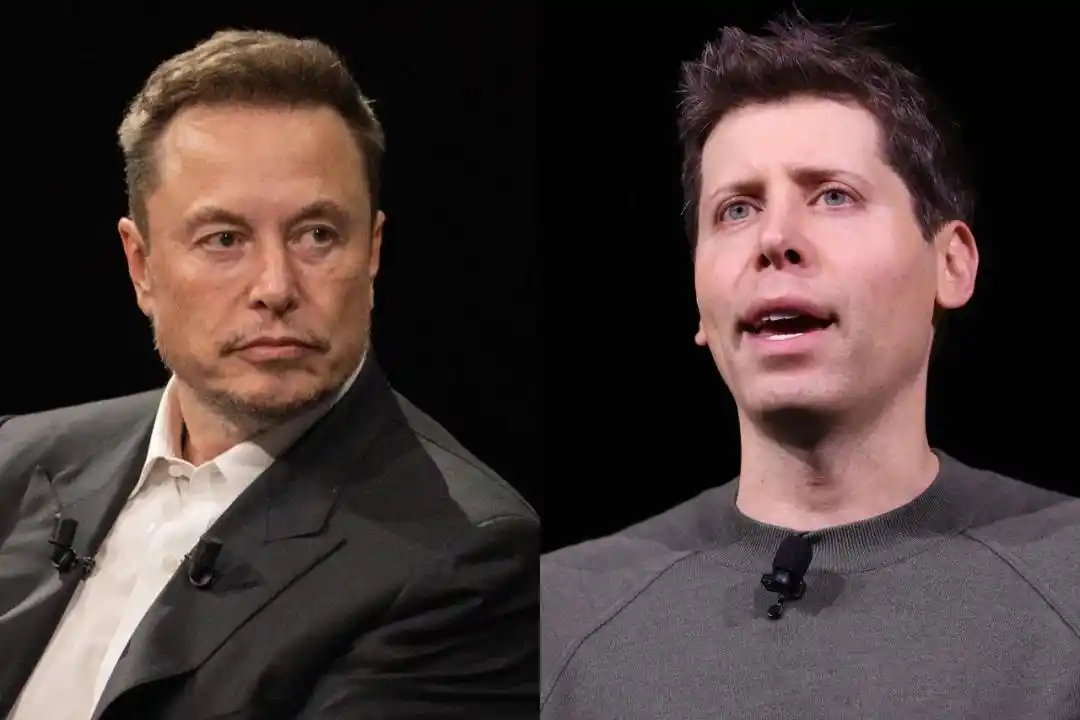
Apple Sues OpenAI Sparking Feud, Musk Slams Altman for Fraud, Altman Retorts with 'Space Data Center' Boast

Apple Sues OpenAI as Musk-Altman Feud Escalates The public feud between Elon Musk and OpenAI CEO Sam Altman intensified, coinciding with their respective AI companies launching flagship models in the same week, highlighting fierce competition. On July 11, Musk posted on X, accusing Altman of taking "fraud to the next level" regarding OpenAI's commercial practices. Altman fired back, sarcastically suggesting Musk was the one selling "short-term space datacenter" concepts to public market investors. Musk countered with allegations that Altman "stole an open-source AI charity" and, amid Apple's recent lawsuit, "stole all of Apple's phone tech." He mockingly referenced Altman needing a "parole officer's" approval to travel. This exchange occurred against the backdrop of a significant legal development: Apple filed a lawsuit against OpenAI in a California federal court, alleging the AI company deliberately solicited Apple employees to leak confidential information on unreleased products to aid its own hardware plans. Apple demands OpenAI cease this activity, destroy proprietary materials, and redesign upcoming products. OpenAI responded, stating it has no interest in other companies' trade secrets and remains focused on innovation. This lawsuit could profoundly impact their two-year partnership where OpenAI provides key tech for Apple Intelligence and Siri. The rivalry extended to product releases. OpenAI launched GPT-5.6, while Musk's SpaceXAI unveiled Grok 4.5. Both are positioned as AI agents capable of multi-step tasks. GPT-5.6 is noted for strengths in broad reasoning, business workflows, and cybersecurity. Grok 4.5 is highlighted for higher efficiency in autonomous programming and developer workflows, with lower usage costs than GPT-5.6, though OpenAI's model reportedly still leads in areas like abstract reasoning. The differing strengths offer distinct choices for enterprises and developers based on their specific needs.

marsbit07/12 08:56

Apple Sues OpenAI Sparking Feud, Musk Slams Altman for Fraud, Altman Retorts with 'Space Data Center' Boast

marsbit07/12 08:56

活动图片