# Crisis İlgili Makaleler

HTX Haber Merkezi, kripto endüstrisindeki piyasa trendleri, proje güncellemeleri, teknoloji gelişmeleri ve düzenleyici politikaları kapsayan "Crisis" hakkında en son makaleleri ve derinlemesine analizleri sunmaktadır.

Ray Dalio's Latest Macro Analysis Full Text: Buy More Gold, Add Some Bitcoin

In his latest macro analysis, Ray Dalio applies his framework from "How Countries Go Broke: The Big Cycle" to the current global debt environment. He highlights recent events like Japan selling U.S. Treasuries and rising U.S. long-term yields as signs of an unsustainable debt dynamic. Dalio explains that excessive government debt leads to either unacceptably high interest rates, severe economic downturns, or significant currency debasement through central bank money printing. He summarizes the U.S. fiscal situation: with $5.5 trillion in revenue, $7.5 trillion in spending, a $2 trillion deficit, and total debt at six times annual revenue, debt servicing costs are immense. Without correction, U.S. debt could reach $55-$60 trillion in a decade. Dalio proposes a "3% Three-Way" solution: reducing the budget deficit to 3% of GDP through balanced spending cuts, tax increases, and interest rate reductions to avoid a traumatic adjustment. In response to FAQs, he argues that the risk of a U.S. debt crisis is high and could materialize within a few years if the current path continues. He dismisses the notion that the dollar's reserve status makes the U.S. immune, citing historical precedents of reserve currency declines. He is also unconvinced by Japan's high-debt stability, noting poor returns for yen-denominated assets. For investors, Dalio recommends diversifying globally, underweighting bonds, and overweighting assets like gold and a small allocation to Bitcoin (around 10-15% to gold) to hedge against currency debasement and poor debt returns.

marsbit9 saat önce

Ray Dalio's Latest Macro Analysis Full Text: Buy More Gold, Add Some Bitcoin

marsbit9 saat önce

BitMart's Final 9 Days: A True Exchange Crisis Is Never About Shutting Down

BitMart's Final 9 Days: A True Exchange Crisis Is Not About Shutting Down On August 17, 2026, with just 9 days until BitMart's scheduled cessation of trading, the focus shifted from the platform's orderly closure to serious questions about user withdrawals, platform solvency, employee payments, and reserve transparency. Stakeholders, claiming to represent users and staff, publicly demanded asset/liability disclosures, explanations for withdrawal delays, a user repayment plan, and an independent audit, setting an August 19 deadline. While BitMart CEO Sheldon Lee denied allegations of insolvency or wrongdoing, the controversy highlighted a core vulnerability of centralized exchanges (CEXs). When an exchange announces its shutdown, normal user behavior changes dramatically, triggering a mass withdrawal event—the ultimate stress test for its liquidity and custodial integrity. The key question becomes not whether the platform has assets, but whether it holds sufficient *liquid* assets to cover all user liabilities on demand. The article argues that the trust placed in CEXs is based on the convenience they provide, abstracting users from direct control of their private keys. This trust is rarely questioned during normal operations but becomes critically exposed during a wind-down. The situation underscores the limitations of simple Proof of Reserves, which shows "what we have" but not the crucial "what we owe." True financial credibility requires transparent, auditable data on assets, liabilities, and segregated user funds. BitMart's situation reflects a broader, often overlooked issue in the crypto industry: while there is extensive focus on growth mechanisms for exchanges, there is little discussion or established protocol for a safe and transparent "exit mechanism." The final measure of an exchange's integrity, the article concludes, is not its user count or trading volume during a bull market, but its ability to ensure every last user can successfully withdraw their assets when the doors are closing. The outcome will be determined not by statements, but by whether the final user's funds securely leave the platform.

marsbit08/18 02:06

BitMart's Final 9 Days: A True Exchange Crisis Is Never About Shutting Down

marsbit08/18 02:06

Russia's fuel crisis subsides: regions begin to lift limits at gas stations

Russia's fuel crisis is showing signs of abating. Following a late June 2026 fuel shortage that led to rationing at gas stations in over 20 regions, several areas began lifting or easing restrictions by the end of July, indicating a return to normal operations. Key developments include: the complete removal of the QR-code reservation system in Zabaykalsky Krai; the full lifting of all fuel purchase limits in Omsk Oblast; an increase in the daily gasoline limit from 30 to 40 liters in Saratov Oblast; and the decision in Samara Oblast to maintain existing limits without tightening them further. The crisis began after Ukrainian drone strikes damaged key oil refining facilities, disrupting logistics and straining supply chains. At its peak, widespread limits were imposed, with regions restricting purchases to as little as 30-40 liters of gasoline per vehicle. Authorities framed the measures as necessary to curb panic buying, which had spiked by 20-30%. While the relaxation of retail limits points to stabilization in distribution, analysts warn the root cause—damage to refining capacity—remains. Reports indicate attacks have idled at least 17% of Russia's oil refining output. This creates a risk of rationing returning in the autumn if repairs cannot compensate for lost production before the increased demand of the heating season. The sustainability of the current recovery remains uncertain.

cryptonews.ru08/01 08:06

Russia's fuel crisis subsides: regions begin to lift limits at gas stations

cryptonews.ru08/01 08:06

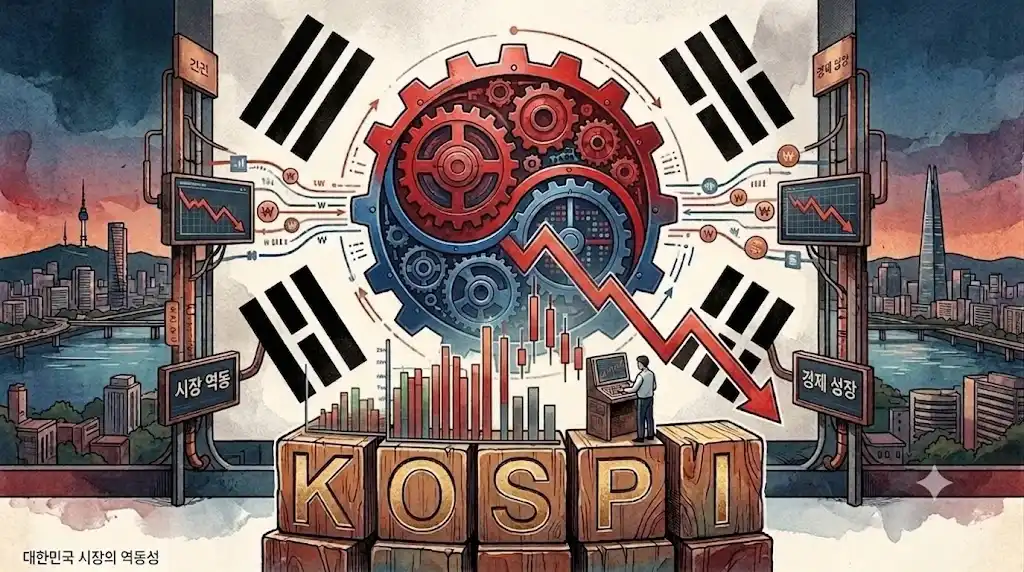
From the "National Fortune ETF" to "Bloody July": How to Defuse South Korea's Stock Market Leverage Crisis?

From "National Destiny ETF" to "Bloody July": How South Korea's Stock Market Leverage Crisis Unfolded In mid-July, South Korea's stock market experienced an epic "deleveraging" storm. Leveraged ETFs tied to semiconductor giants like Samsung and SK Hynix, once marketed as a shortcut to wealth, turned into financial shredders as market sentiment reversed. Over nine trading days, losses in popular leveraged ETFs exceeded 59.5 billion USD, with retail investors bearing 60% of the impact. Data shows散户 investors suffered losses of around 1.45 billion USD in a month. A severe wave of margin calls affected over 1.2 million accounts, leading to the complete liquidation of 460,000 accounts, 62% of which belonged to investors in their 20s and 30s. The crisis peaked around July 13th, with SK Hynix plunging over 15% and related 2x leveraged ETFs crashing 30%. The daily rebalancing mechanism within leveraged ETFs amplified the sell-off into a stampede. The situation was worsened by a credit crunch, as major banks neared their annual household lending caps, leaving散户 unable to borrow funds to meet margin calls. An unexpected 25-basis-point rate hike by the Bank of Korea on July 16th further intensified the panic. Facing mounting political pressure, President李在明 intervened. Financial authorities quickly announced seven stringent measures, including banning new sales of single-stock leveraged ETFs, raising investment thresholds, and strengthening risk warnings. The regulatory approach focused not on forcibly liquidating existing products but on restricting new inflows, aiming for a gradual market cool-down. However, risks persist, with over 235.5 billion USD in margin loan balances still outstanding in the market. The crisis served as a stark reminder of the dangers of excessive leverage, especially for retail investors, when speculative bubbles built on easy credit and complex products inevitably burst.

marsbit07/18 04:01

From the "National Fortune ETF" to "Bloody July": How to Defuse South Korea's Stock Market Leverage Crisis?

marsbit07/18 04:01

When Traditional Finance Fails People in Crisis, Bitcoin Succeeds

When traditional finance fails to reach people in crisis, Bitcoin succeeds. This article highlights how fundraising platforms like GoFundMe face severe limitations in delivering aid to conflict zones like Gaza due to banking regulations, sanctions, and compliance rules. For instance, Sami Jamal Al-Shannat raised over £55,000 for his family but couldn't receive the funds directly; instead, money had to be routed through a beneficiary in another country, leading to disputes and loss of access. The piece explores how compliance requirements often force reliance on intermediaries, shifting risk and responsibility away from platforms and onto individuals. In contrast, Bitcoin and blockchain-based platforms like Geyser and Agora enable direct, peer-to-peer transactions, bypassing traditional financial bottlenecks. These platforms shift trust from centralized institutions to verifiers—local partners or trusted organizations—who validate projects, allowing donors to send funds directly to recipients' wallets. While not a panacea, Bitcoin offers a way to circumvent "transnational financial repression," where sanctions and AML rules inadvertently harm legitimate aid recipients, activists, and dissidents. The conclusion emphasizes that open payment networks and decentralized trust models represent a systemic shift, empowering beneficiaries and providing more resilient humanitarian fundraising in crisis situations. However, challenges around verification, accountability, and fraud prevention remain.

marsbit07/17 02:09

When Traditional Finance Fails People in Crisis, Bitcoin Succeeds

marsbit07/17 02:09

Rate Hikes to Save STRC, Selling Bitcoin to Preserve Credit: Strategy Picks Its Two Most Expensive Paths

Over the past six weeks, Strategy has faced a significant crisis of confidence, with its core securities MSTR and STRC experiencing sharp price declines. The situation escalated as the company utilized dollar reserves intended for dividends and interest payments to repurchase debt, and then sold a small amount of Bitcoin for the first time since 2022—an action that contradicted its "never sell" narrative and signaled potential liquidity strain. In response, Strategy introduced a Digital Credit capital framework. This formalized a series of measures to manage the pressure down its capital structure: ordinary shareholders have already borne costs through equity dilution from an $11.5 billion ATM offering; new rules enforce a hard dollar reserve covering at least 12 months of expected dividend and interest payments; the STRC dividend rate was increased from 11.5% to 12%; and, most notably, Bitcoin was officially integrated into the capital toolkit, with board authorization to sell up to $1.25 billion worth if needed to support obligations and repurchase programs. The market reacted with a mix of relief and skepticism. While the announcement triggered a sharp single-day rally in both MSTR and STRC, the preferred shares still trade at a significant discount. Supporters view the framework as pragmatic crisis management that provides a price floor and clearer rules. Critics argue that institutionalizing Bitcoin sales undermines the core investment thesis and, with Bitcoin's price below the company's average cost basis, amounts to selling assets at a loss to maintain its financial structure. The broader context shows institutional Bitcoin buying drying up, highlighting that Strategy's challenges and new framework are now a key indicator for overall market risk sentiment. Ultimately, the framework buys time, but STRC's return to par value depends on market belief in the company's ability to cover dividends without further dilution or substantial Bitcoin sales—a task that would be easier if Bitcoin's price recovers.

链捕手06/30 10:17

Rate Hikes to Save STRC, Selling Bitcoin to Preserve Credit: Strategy Picks Its Two Most Expensive Paths

链捕手06/30 10:17

Valuation Inversion Emerges, Bitcoin Treasury Companies Face Trust Crisis

"Valuation Inversion Emerges, Sparking Trust Crisis for Bitcoin Treasury Firms" The investment thesis for corporate Bitcoin treasury stocks has fundamentally shifted. Investors are no longer rewarding companies simply for accumulating more Bitcoin. Instead, the focus is now on net Bitcoin per share, with intense scrutiny on whether new financings truly benefit existing shareholders or merely dilute their stake. Key indicators highlight the new reality. Metaplanet's market capitalization has fallen below the total value of its Bitcoin holdings, indicating a valuation discount. While MicroStrategy maintains a premium, its core metric—Bitcoin per diluted share for common shareholders—has been declining due to dilution from financing activities, primarily through its STRAT permanent preferred shares. This marks a transition from a pure "asset accumulation" phase to an "equity attribution" phase. Investors now deduct costs like preferred dividends and debt to calculate the actual Bitcoin claim for common equity. The widespread adoption of spot Bitcoin ETFs has removed the scarcity value these stocks once held, forcing them to justify their structure with superior leverage, dividends, or capital efficiency. European entrants like France's Capital B and Sweden's BTC AB are testing this new environment with ambitious funding plans backed by relatively small Bitcoin holdings. They are asking investors to bear complex capital structures, betting future Bitcoin purchases will cover all dilution and dividend costs. The sector's core risk is a broken financing loop. Once a company's stock trades below its Bitcoin net asset value, it loses the ability to issue equity for accretive purchases. It is then left with unpalatable choices: dilutive financing at a discount, venturing into new businesses like Bitcoin lending, or selling assets. The winners in this next phase will be those that demonstrably increase Bitcoin per share for common shareholders with every financing move.

Foresight News06/30 09:37

Valuation Inversion Emerges, Bitcoin Treasury Companies Face Trust Crisis

Foresight News06/30 09:37

活动图片