# AML İlgili Makaleler

HTX Haber Merkezi, kripto endüstrisindeki piyasa trendleri, proje güncellemeleri, teknoloji gelişmeleri ve düzenleyici politikaları kapsayan "AML" hakkında en son makaleleri ve derinlemesine analizleri sunmaktadır.

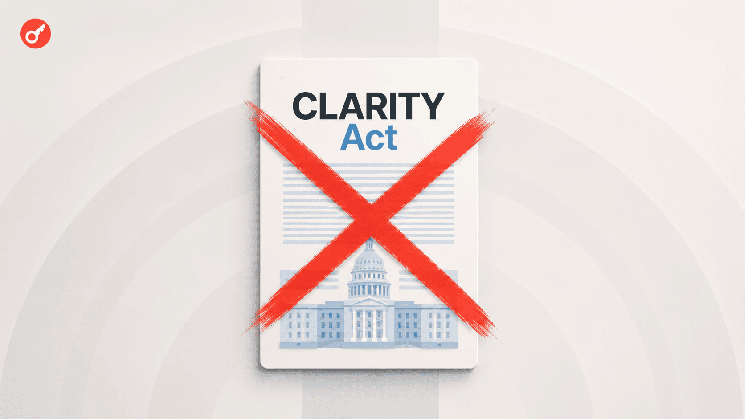
CLARITY Act Support Reaches 1 Million 7 Days Before Senate Recess

Stand With Crypto announced that its supporters have contacted lawmakers 1 million times to urge the Senate to pass the CLARITY Act before its August 7 recess. The milestone comes amid ongoing Senate disagreements over enforcement powers, financial conflicts of interest, anti-money laundering measures, DeFi, asset custody, and stablecoin provisions. Supporters frame the bill as a regulatory framework for federal agencies, while critics argue it could hamper state-level investigations and leave ethics gaps. Institutional backing from firms like BlackRock and Fidelity has grown, but Galaxy Research lowered its 2026 passage odds from 50% to 30%, citing disputes, Senate voting hurdles, and a tight legislative calendar. New York Attorney General Letitia James called for stricter crypto oversight, warning the CLARITY Act might limit state action against fraud. Senate Republicans counter that the bill preserves federal anti-fraud powers and extends Bank Secrecy Act rules to crypto intermediaries. A Senate minority analysis concluded the bill's ethics provisions would not affect former President Donald Trump's existing crypto ventures, fueling Democratic calls for broader rules on officials' digital asset holdings. With the Senate's August break approaching, lawmakers must reconcile public and institutional pressure for the bill with demands for stronger state controls, consumer protections, and ethics rules. Passing major legislation requires 60 votes, making bipartisan support crucial ahead of the recess.

cryptonews.ru08/01 09:46

CLARITY Act Support Reaches 1 Million 7 Days Before Senate Recess

cryptonews.ru08/01 09:46

SkyCapital Expands Cooperation with Crypto Services Amid Regulatory Changes

SkyCapital, a financial technology company, has announced an expansion of its partnership program for crypto services in response to new, stricter regulations coming into force in Russia in September 2026. The company will offer its infrastructure to other market participants to help them transition from anonymous P2P transfers to a more transparent, legally compliant business model. According to SkyCapital's managing director, Dmitry Galkin, the move addresses a growing industry demand. He explained that after the new law takes effect, services lacking proper KYC/AML checks, anti-fraud protection, and SBP (Russia's Fast Payments System) acquiring will only be able to operate under a transitional period. Ultimately, they will face a clear choice: adapt with compliant infrastructure or shut down. The partnership model allows other crypto services to maintain their own brand and customer interface while utilizing SkyCapital's backend infrastructure. This includes SBP-acquiring, transaction execution, KYC/AML verification, anti-fraud systems, and regulatory reporting. This approach enables faster, more cost-effective compliance for partners without needing to build such systems from scratch. Galkin warned that non-compliant operators risk not just payment blocks and business limitations, but also potential criminal and administrative prosecution. SkyCapital believes the crypto market is entering a phase where competition is increasingly supplemented by partnerships focused on shared, reliable infrastructure to mitigate operational, regulatory, and reputational risks. This strategic shift signifies SkyCapital's broader role in the market, moving beyond its own platform to provide technological and compliance solutions for the wider industry. It reflects a broader trend in the Russian crypto sector away from fragmented, informal models towards collaboration around secure and formalized solutions.

cryptonews.ru07/28 08:03

SkyCapital Expands Cooperation with Crypto Services Amid Regulatory Changes

cryptonews.ru07/28 08:03

One On-Chain Transfer Could Lead to 14 Years in Prison? UK Crypto Compliance Faces New Risks

A blockchain transfer could now lead to a 14-year prison sentence in the UK, following the designation of Iran's Islamic Revolutionary Guard Corps (IRGC) under the National Security Act 2023. A new criminal offense (Section 17C) makes it illegal for UK-linked persons or entities to obtain, receive, or retain any valuable benefit if they know, or should reasonably know, it originates from a designated entity like the IRGC. This applies broadly to crypto assets and on-chain transfers. The key challenge lies in timing and knowledge. A transfer can settle on-chain before the recipient identifies the sending wallet, and wallet attribution to a sanctioned entity may only occur post-transaction. Liability depends on what the recipient knew about the source of funds and when they knew it. The offense follows the value, not the payment path, and can involve indirect provision through intermediaries. While the designation itself doesn't trigger automatic asset freezes under UK sanctions law, it creates a separate criminal risk. For UK crypto exchanges, custodians, payment firms, and even users, this makes maintaining clear records of wallet attribution, transaction timelines, and subsequent actions critical for evidence. The law does not impose new reporting duties but emphasizes using existing suspicious activity reporting and consent processes. The lack of ability to reject on-chain transactions makes documented internal controls and decision-making timelines vital for legal defense.

marsbit07/20 08:26

One On-Chain Transfer Could Lead to 14 Years in Prison? UK Crypto Compliance Faces New Risks

marsbit07/20 08:26

BIS Report Compliance Observations: The True Risks of Stablecoins Go Beyond 'De-pegging'

The BIS report, "Anchoring trust in money: innovation beyond stablecoins," highlights that the primary risks of stablecoins extend beyond potential de-pegging. It argues that the core challenge is whether stablecoins can be integrated into a financial system that is identifiable, monitorable, accountable, and regulatable. While acknowledging efficiency gains like faster payments and programmability, BIS emphasizes that money requires an institutional framework—including legal certainty, liquidity support, and financial integrity controls—which many stablecoins currently lack. The report details compliance risks, noting that while blockchain transactions are transparent, address visibility does not equate to identity or purpose clarity. This creates a systemic risk as pseudonymity, non-custodial wallets, and cross-chain bridges can undermine AML/CFT controls. Furthermore, these risks can spill over into the traditional financial system through on- and off-ramps. The future direction, per BIS, is not to prohibit innovation but to embed regulatory rules—such as identity verification and transaction screening—directly into the technological infrastructure of tokenized finance. The key takeaway for compliance is that any new financial instrument must clearly address questions of customer identification, transaction monitoring, accountability, and cross-border rule consistency to be viable as a mainstream payment tool.

marsbit07/03 16:22

BIS Report Compliance Observations: The True Risks of Stablecoins Go Beyond 'De-pegging'

marsbit07/03 16:22

BIS Report Compliance Watch: The Real Risks of Stablecoins Are Not Just 'De-pegging'

BIS Report Compliance Observations: The real risks of stablecoins go beyond "depegging" The BIS report "Anchoring trust in money: innovation beyond stablecoins" argues that while stablecoins and tokenization offer efficiency gains, their primary risk lies in fitting into an identifiable, monitorable, accountable, and regulatable financial system. Money's trust stems not just from technology but from institutional arrangements: a common unit of account, guaranteed redemption at par, liquidity support, regulatory frameworks, and financial integrity requirements. Stablecoins, operating on permissionless blockchains with pseudo-anonymity and non-custodial wallets, create systemic compliance gaps: unclear customer identity, incomplete fund origins, unexplained transaction purposes, fragmented cross-chain paths, and ambiguous liability. On-chain transparency does not equal compliance transparency. Public addresses don't reveal identity or intent. While blockchain analytics aid law enforcement, they cannot replace routine, large-scale AML/CFT controls. Effective compliance requires a closed-loop process encompassing customer onboarding, transaction monitoring, investigation, reporting, and audit. Stablecoin risks are not confined to the blockchain; they re-enter the traditional financial system via on/off-ramps, exchanges, and payment institutions. This forces banks to monitor client accounts for activity linked to virtual assets. The future direction is not to prohibit innovation but to embed rules into the technology. Tokenized finance should integrate with the existing two-tier monetary system, embedding compliance—like customer identification, pre-transaction screening, and auditable data trails—directly into the transaction flow. For compliance professionals, the key takeaway is that any new financial instrument must answer core questions: Who identifies the customer? Who monitors transactions? Who handles exceptions? Who is liable? Compliance is not the antithesis of innovation but the essential infrastructure for its sustainable growth.

链捕手07/03 16:14

BIS Report Compliance Watch: The Real Risks of Stablecoins Are Not Just 'De-pegging'

链捕手07/03 16:14

活动图片