JustLend DAO's Second JST Buyback and Burn: Cumulative 10.96% of Total Supply Destroyed, Accelerating Entry into a New Era of Value Growth

marsbit2026-01-16 tarihinde yayınlandı2026-01-16 tarihinde güncellendi

Özet

JustLend DAO has executed its second major JST token buyback and burn, permanently removing 525 million JST (5.3% of total supply) from circulation. This brings the cumulative burned amount to over 1.08 billion JST, representing 10.96% of the total supply, significantly accelerating JST’s deflationary trajectory. The burn was funded by $10.19 million from Q4 2025 net profits and $10.34 million from accumulated reserve earnings, demonstrating the protocol’s strong financial health and sustainable revenue model. Key drivers include JustLend’s TVL surpassing $7.08 billion, robust growth in sTRX staking (over 9.3 billion TRX staked), and widespread adoption of GasFree smart wallets, which have facilitated over $46 billion in transactions and saved users $36.25 million in fees. Additionally, USDD’s multi-chain ecosystem reached a milestone with TVL exceeding $1 billion, further supporting JST’s value accrual mechanism. This burn reinforces JST’s transition from a governance token to a yield-backed asset tied to ecosystem cash flow. Market response has been positive, with JST’s market cap breaking $400 million and trading volume rising 21.92% amid a 10.82% monthly price increase. The recurring burn mechanism establishes a deflationary model that enhances scarcity, governance weight per token, and long-term value alignment with holders, setting a new standard for sustainable tokenomics in DeFi.

JustLend DAO Launches Second Round of Buyback and Burn: 525 Million JST Permanently Destroyed, Deflation Engine Continues to Accelerate

525 Million JST Burn Executed! JustLend DAO's Deflation Mechanism Fulfilled Again

Summary: Profit returns and transparent burns form a closed loop for JST value growth, providing a new paradigm for the DeFi market driven by real yield for token value.

January 15, 2026 - The JST token has officially completed its second large-scale buyback and burn. This burn action not only demonstrates the project's firm commitment to its deflation mechanism but also, with the scale of 525,000,000 JST burned (5.3% of the total supply), showcases the strong profitability and financial health of the JUST ecosystem to the entire cryptocurrency market.

According to the official JustLend DAO announcement, the estimated value corresponding to this burn exceeds $21 million USD. Combined with the amount from the first JST burn, the cumulative number of JST tokens burned has reached 1,084,890,753, accounting for 10.96% of the total supply. This means that in less than three months, JST has achieved the permanent removal of over one-tenth of its total supply, a remarkable deflation speed.

From a broader perspective, this burn marks a fundamental evolution in JST's value narrative. It is transitioning from a governance token to an equity asset anchored to the growth of the ecosystem's cash flow. This process not only enhances the scarcity and value foundation of the JST token but also provides a clear, traceable, practical path for the decentralized finance sector—one driven by real yield for token value—demonstrating a transparent and sustainable new paradigm for deflation.

Strong JustLend DAO Ecosystem Performance Forms the Financial Cornerstone for Large-Scale Buybacks

Such a large-scale buyback and burn necessarily requires a solid financial foundation as support. The announcement clearly reveals the dual pillars of the funding source: $10,192,875 came from JustLend DAO's net profit in Q4 2025, while another $10,340,249 originated from the project's accumulated retained earnings reserve. These two figures are, in themselves, the most powerful proof of performance. They collectively point to one core fact: the JustLend DAO ecosystem not only possesses strong immediate profitability but also boasts a robust financial structure and sustainable cash flow, which is the solid foundation supporting its commitment to buybacks and its deflation strategy.

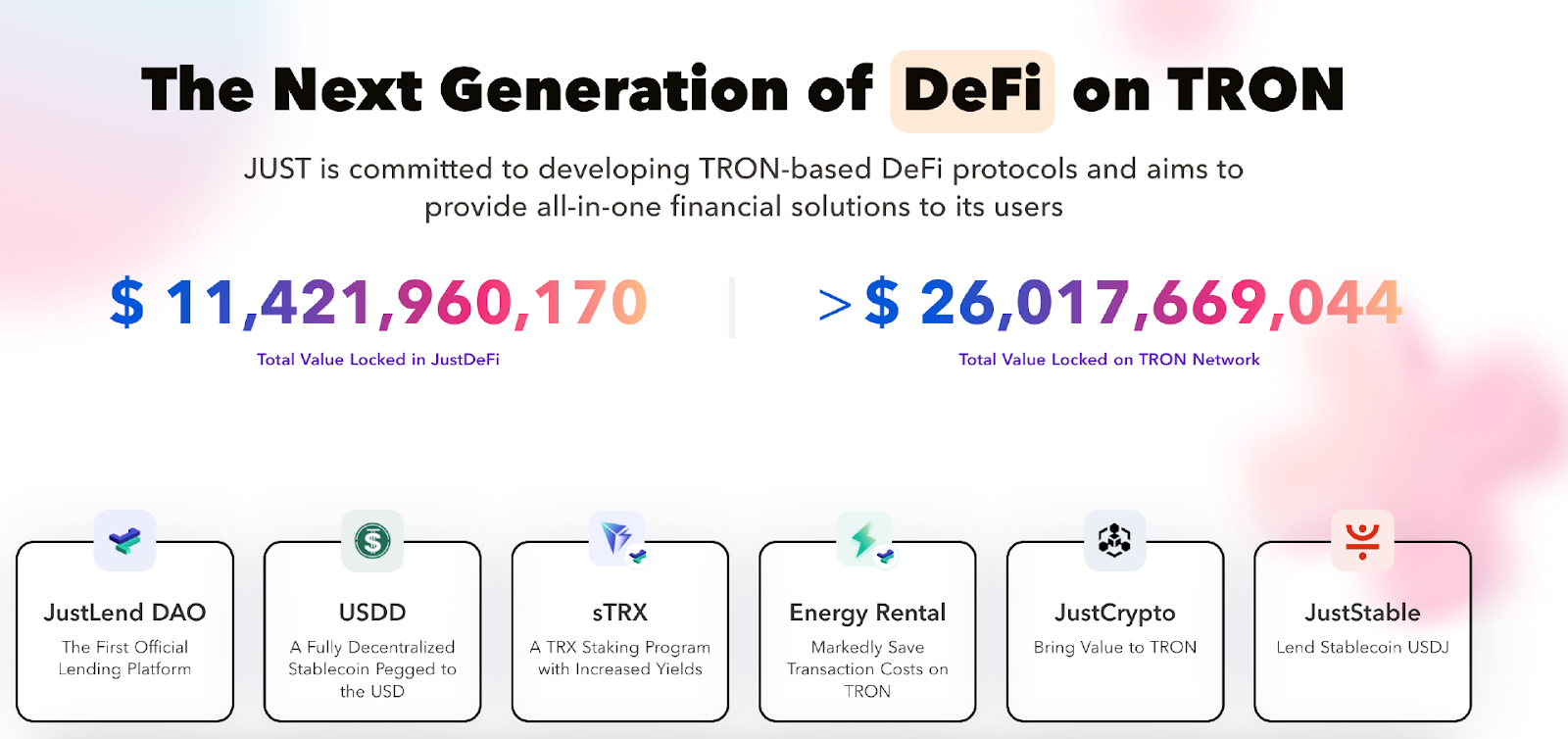
A deep dive into JustLend DAO's Q4 2025 performance reveals clear growth trajectories. First, as the flagship lending protocol of the JUST ecosystem, JustLend DAO benefits from the continuous improvement of the TRON infrastructure, with its Total Value Locked (TVL) breaking through the $7.08 billion mark in the fourth quarter, consistently ranking among the top three in the lending market, and the lending activity in its SBM market also climbed to a new cycle high.

It is worth noting that the source of the $10,340,249 in retained earnings, which forms a significant part of this buyback fund, can be traced back to the revenue generated from the reserve capital deposited into the SBM USDT market during the first JST buyback. The增值 process of this capital is itself the most direct proof of the SBM market's strong profitability. It demonstrates JustLend DAO's sophisticated financial operation model: strategically redeploying ecological profits for regenerative use within the protocol, allowing them to continue "self-generating blood," thereby providing an endogenous, sustainable source of funding for subsequent value returns.

On this basis, JustLend DAO's revenue structure shows a trend of diversification. While the traditional lending market, its fundamental business, maintains steady growth, JustLend DAO has innovatively built a product matrix including sTRX (Staked TRX) and Energy Rental, greatly expanding the boundaries and depth of its value capture.

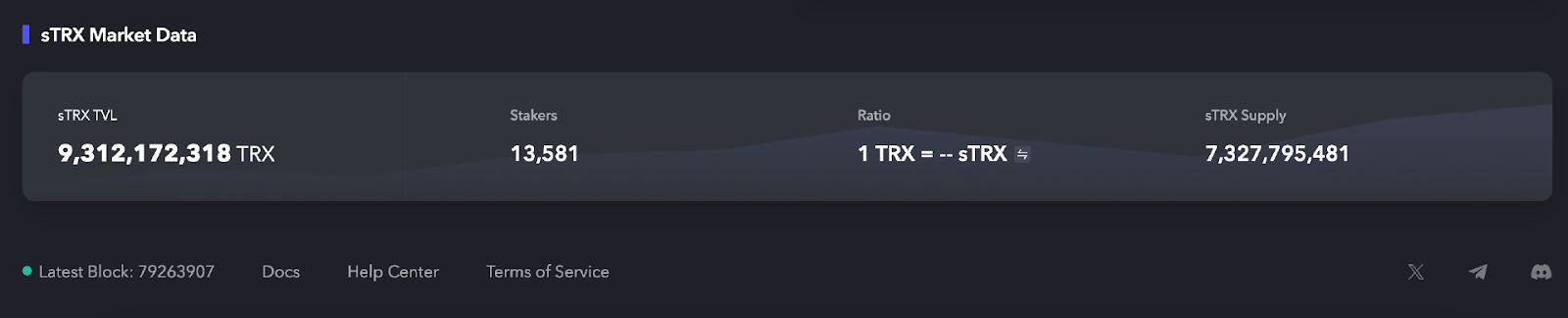
Among these, the sTRX service allows users to stake TRX to earn rewards while still flexibly participating in other DeFi activities. This innovative design significantly improves capital efficiency and user stickiness. As of January 15th, the platform's TRX staking volume has surpassed 9.3 billion tokens. This staggering figure not only reflects the community's high recognition of the sTRX product but also brings considerable and sustainable service revenue.
At the same time, the "Energy Rental" service, designed to reduce user on-chain operation costs, has also demonstrated strong market appeal through active rate optimization. Since September 2025, the base fee rate for this service was significantly reduced from 15% to a more competitive 8%. The fee optimization directly stimulated market demand and transaction frequency, thereby creating steady incremental revenue for the protocol through more active leasing business.

While the core product matrix continues to exert force, JustLend DAO, focusing on lowering the participation barrier for general users, innovatively launched the GasFree smart wallet in March 2025. This feature completely breaks the long-standing barrier for new users of having to pre-hold native tokens (TRX) to pay transaction fees. It allows users to deduct and pay the required network fees directly from the token assets they are transferring (e.g., USDT). This design not only achieves ultimate operational convenience but also fundamentally broadens the accessibility of blockchain finance.

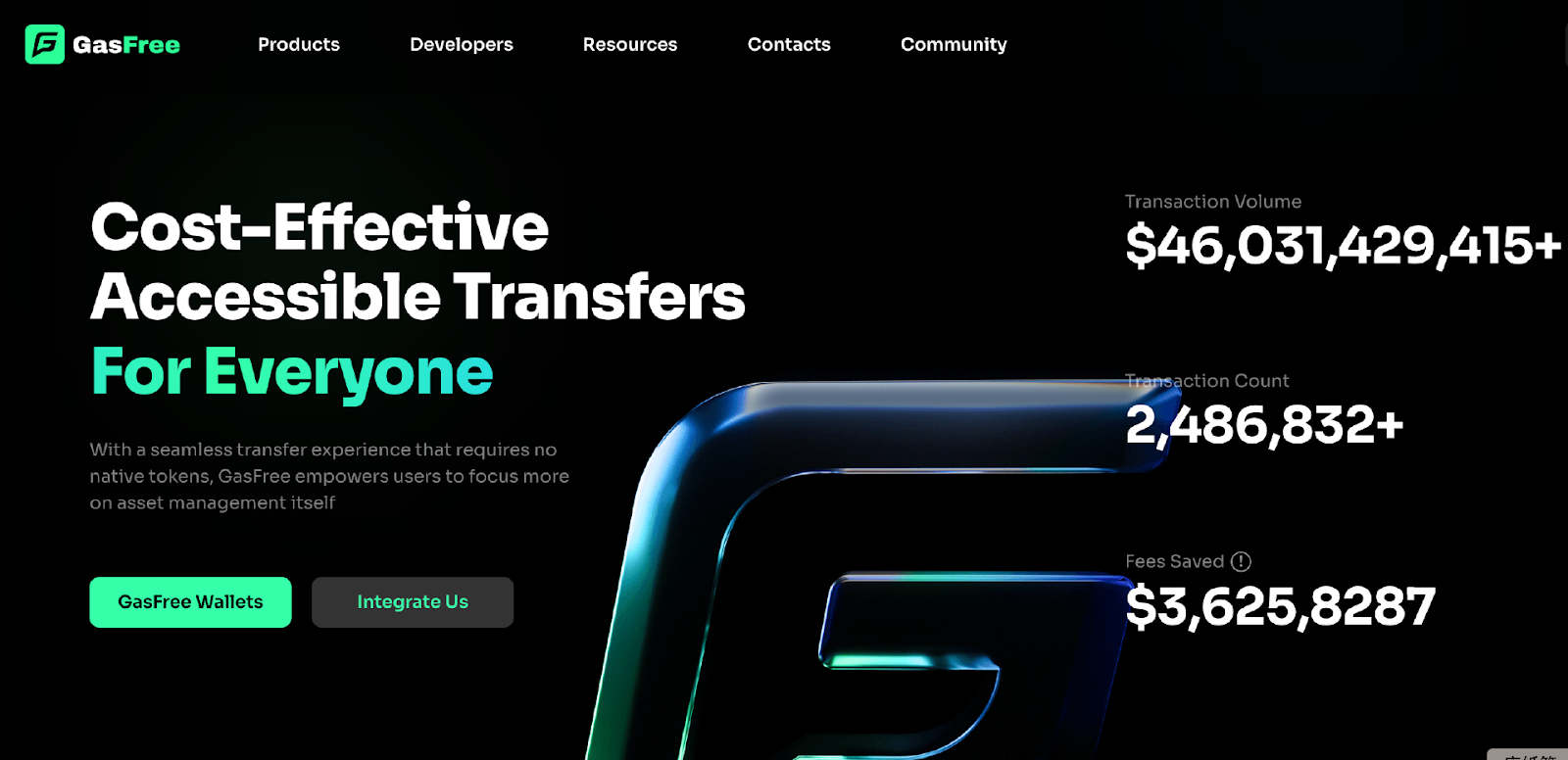
To accelerate the adoption of this innovative feature, JustLend DAO simultaneously launched a highly attractive 90% transfer fee subsidy campaign. With this support, users using the GasFree function for USDT transfers only need to pay an extremely low fee of about 1 USDT. This combined strategy quickly ignited market demand. As of January 15th, the total transaction volume driven by the GasFree smart wallet has surpassed $46 billion. This staggering scale not only validates the market's strong desire for a frictionless transaction experience but also directly saved users a cumulative total of over $36.25 million in network fee costs. This innovation, by significantly reducing actual usage costs and cognitive barriers, has introduced massive incremental users and capital flow into the ecosystem, constituting another strong growth pole for the platform's network effects and revenue potential.
Meanwhile, another funding channel in the buyback and burn plan, the incremental revenue from the USDD multi-chain ecosystem (the portion exceeding $10 million), also constitutes a significant source. USDD, as the core decentralized stablecoin of the TRON ecosystem, has seen fruitful results from its multi-chain expansion strategy. It has been successfully deployed on mainstream public chains like Ethereum and BNB Chain, broadening its application scenarios and user base.

Its ecosystem value recently achieved a milestone breakthrough. On January 14th, USDD's TVL historically broke through the $1 billion mark. This means that in less than two months, USDD's TVL scale achieved an astonishing 100% growth, its expansion speed and market acceptance fully confirming the strong momentum and deep asset appeal of this stablecoin in the multi-chain ecosystem. The rapid growth of its TVL and the continued prosperity of its ecosystem significantly enhance the potential scale of this funding channel, providing an anticipated value source for JST's buyback and burn plans in subsequent quarters.

Through deep integration with various DeFi protocols, USDD not only consolidates its peg stability but also creates continuous value inflow for the entire ecosystem. The inclusion of USDD ecosystem's excess income in the JST buyback and burn plan builds a value closed loop of "stablecoin + lending protocol + governance token". In this model, the expansion and prosperity of USDD and JustLend DAO directly power JST's deflation, while the increase in JST's value in turn enhances the attractiveness and cohesion of the entire TRON DeFi ecosystem, creating a powerful internal synergy and value feedback effect.

Deepening Deflation Mechanism: Revolutionary Reshaping of JST's Value Foundation

In summary, the significance of this buyback and burn extends far beyond mere price support; it is triggering a series of profound structural changes. Most fundamentally, it completes the reshaping of JST's value support logic. JST is no longer merely a "utility token" for paying network fees or participating in governance votes; it has evolved into an "equity asset" directly anchored to the cash flow performance of JustLend DAO, USDD, and associated ecosystems.


Through the buyback and burn mechanism, the profit growth of the ecosystem is continuously injected into the value foundation of the JST token. This makes holding JST equivalent to holding an equity certificate that shares in the future profit growth of the ecosystem. On January 8th, CoinMarketCap data showed that JST market cap historically broke through the $400 million mark. This is not just a numerical leap but substantial market recognition of its new positioning. Along with the rising market cap came increased fund activity. On January 8th, its 24-hour trading volume significantly increased by 21.92%, reaching $31.49 million, and its price had also risen steadily by 10.82% over the past month, with a daily increase of 3.1%.

The synchronous expansion of trading volume and market cap at key junctures is not accidental market fluctuation but a clear "vote of confidence" from capital in response to the positive fundamentals of the JUST ecosystem, particularly the profitability and value return mechanism demonstrated by the buyback and burn.

Secondly, the JST buyback and burn also brings substantial增值 in governance power. As the total token supply is irreversibly reduced, the governance weight in the protocol represented by each remaining JST in the market will increase accordingly. This means long-term holders not only enjoy the economic benefits of value appreciation but also see their voice in key community decisions (such as parameter adjustments, new product launches, treasury fund usage, etc.) amplified simultaneously. This design deeply binds the interests of core community members to the long-term success of the protocol, greatly enhancing community stability and sense of participation.

From a broader industry perspective, JST's buyback and burn practice provides a clear, referable new paradigm for token economics in the DeFi field. Removing 10.96% of the total supply through two burns in a very short time not only demonstrates efficient execution but, more profoundly, deeply binds the protocol's financial success to the interests of token holders, thereby setting a benchmark for a virtuous cycle of "value creation - value return".

This model fundamentally shifts the old logic of token value relying on speculative narratives towards a sustainable path driven by the protocol's fundamental cash flow, providing a solid and credible case study for the industry on how to build economic models with substantial value support.

Looking ahead, with quarterly JST buyback and burn becoming the norm, a clear, predictable deflation path has been laid out. The scarcity of JST will be a certain narrative that strengthens over time. Each quarterly report disclosure and the subsequent burn will serve as a catalyst for reassessing its intrinsic value. This burn is not an endpoint but the beginning of a more magnificent chapter of value accumulation. A value revolution, supported by ecological profits and driven by product synergy, has already pressed the accelerator.


Trend Kriptolar

İlgili Sorular

QWhat was the total amount of JST tokens burned in the second round of JustLend DAO's buyback and burn, and what percentage of the total supply does this represent?

A525,000,000 JST tokens were burned in the second round, representing 5.3% of the total supply.

QWhat are the two main sources of funding for the JST buyback and burn initiative as detailed in the announcement?

AThe two main sources are $10,192,875 from JustLend DAO's net profit in Q4 2025 and $10,340,249 from the project's accumulated reserve earnings.

QWhat significant milestone did the Total Value Locked (TVL) of JustLend DAO achieve in the fourth quarter of 2025?

AJustLend DAO's Total Value Locked (TVL) surpassed $7.08 billion in Q4 2025.

QWhat is the name of the innovative, gas-free smart wallet feature launched by JustLend DAO, and what was the total transaction volume it facilitated by January 15th?

AThe feature is called the GasFree smart wallet, and it had facilitated a total transaction volume exceeding $46 billion by January 15th.

QWhat major milestone did the USDD ecosystem achieve on January 14th, and what does this signify for its growth?

AOn January 14th, the USDD ecosystem's TVL historically broke through the $1 billion mark, signifying a 100% growth in less than two months and demonstrating its rapid expansion and market adoption.

İlgili Okumalar

STAR 50 Soars 10.73%, Why Did A-Shares Stage a "V-Shaped Reversal"?

After a prolonged decline, the Chinese A-share market staged a strong rally on July 21. The STAR 50 index surged 10.73%, its largest single-day gain in nearly a year, leading a broad-based "V-shaped" reversal. The Shanghai Composite Index rose 1.79%, the Shenzhen Component Index gained 4.81%, and the ChiNext Index jumped 7.05%. Total market turnover reached 2.97 trillion yuan, an increase of 256.1 billion yuan from the previous session, with over 3,100 stocks advancing. The semiconductor sector spearheaded the rebound, with related ETFs posting significant gains. Analysts attribute the surge to three converging factors. First, coordinated capital inflows from "national team" institutions, insurance funds, listed company buybacks, and fund house self-purchases have bolstered market liquidity and confidence. Second, supportive policy signals, including commitments from regulators to ensure stable market operations, provided a favorable backdrop. Third, a stabilization and recovery in overseas markets, notably South Korea, created a positive external environment. Institutions suggest the most severe panic selling phase for the tech sector has likely passed, following a significant digestion of crowded positions and leveraged funds. While short-term volatility may persist, the medium to long-term outlook remains underpinned by enduring trends like AI computing demand expansion and semiconductor localization. The market's focus now shifts to the sustainability of supportive fund flows, earnings reports, and upcoming catalysts from the global AI industry chain.

marsbit28 dk önce

STAR 50 Soars 10.73%, Why Did A-Shares Stage a "V-Shaped Reversal"?

marsbit28 dk önce

U.S. Tech Momentum Stocks Post Largest Single-Day Gain Ever, But Is the Plunge Over?

US tech momentum stocks staged a sharp rebound on Tuesday (July 21st). Morgan Stanley's TMT Momentum Factor surged over 12%, marking its largest single-day gain on record, exceeding even peaks from the 2000 dot-com bubble. Key momentum indices from Goldman Sachs also posted their strongest daily performances in years. The rally was led by semiconductors, with the Philadelphia Semiconductor Index jumping 4.6%. This rebound followed three consecutive down days and a cumulative 33% plunge in momentum stocks, one of the steepest drawdowns since the dot-com era. Analysts attribute the surge largely to a short squeeze. Heavy selling had pushed high-beta momentum stocks into deeply oversold territory, forcing many short sellers, particularly in Asia, to cover their positions, creating a self-reinforcing buying spiral. However, the rebound's internals appear weak. Trading volume was notably low, and advancing stocks still lagged decliners on the S&P 500, indicating a narrow, concentrated rally rather than broad market participation. Diverging views emerge on the outlook. BTIG warns the bounce has hit key resistance and recommends selling into strength, citing extreme volatility and historical parallels to past market tops. Conversely, Goldman Sachs and UBS believe the momentum unwind is nearing its end, suggesting it may be time to gradually add exposure, as positioning has been significantly reduced. They caution, however, that high volatility warrants a measured approach, potentially using defined-risk strategies. The upcoming earnings season, particularly reports from major tech firms like Alphabet, is seen as a critical test for the rally's sustainability. Simultaneously, bond markets flashed a warning, with yields rising partly due to spiking oil prices. Analysts note that if long-term Treasury yields break decisively higher, it could pose a significant headwind for equities, especially growth stocks.

marsbit35 dk önce

U.S. Tech Momentum Stocks Post Largest Single-Day Gain Ever, But Is the Plunge Over?

marsbit35 dk önce

U.S. Tech Momentum Stocks Record Largest Single-Day Gain Ever, but Has the Rout Ended?

U.S. tech momentum stocks staged a dramatic rebound on Tuesday, July 21st. Key momentum indices like the Morgan Stanley TMT Momentum Factor and Goldman Sachs' High Beta Momentum Long Index posted historic or near-historic single-day gains, fueled largely by semiconductor stocks. This sharp rally followed a severe three-day sell-off that saw momentum stocks plunge 33%, marking one of the steepest pullbacks since the dot-com bubble. Analysts attribute the bounce primarily to a short squeeze, as forced covering from over-leveraged traders, particularly in Asia, created a buying spiral. However, the rally's health is questioned due to weak market breadth—overall trading volume was low, and decliners outnumbered advancers in the S&P 500 despite the index's gain—suggesting a narrow, concentrated surge rather than broad recovery. Opinions on the sustainability diverge. BTIG strategists warn the rebound has hit key resistance levels, citing extreme volatility and historic stock dispersion as signs of an ongoing broader correction, and recommend selling into strength. Conversely, Goldman Sachs and UBS view the aggressive momentum unwinding as nearing its end, noting reduced positioning and a lack of new fundamental catalysts. They suggest the sell-off presents a selective opportunity to add exposure, albeit cautiously and gradually using defined-risk strategies. The immediate trajectory hinges on the ongoing earnings season, with market focus on Alphabet's capital expenditure guidance for AI investment clarity. Meanwhile, bond markets present a risk, with rising Treasury yields—potentially heading toward 5.5%—and widening credit spreads for mega-cap tech companies posing a threat to equity valuations. The combination of technical factors, earnings results, and macro conditions leaves the durability of the rebound in doubt.

链捕手37 dk önce

U.S. Tech Momentum Stocks Record Largest Single-Day Gain Ever, but Has the Rout Ended?

链捕手37 dk önce

Long-Divided Must Unite, Long-United Must Divide: When L1 Becomes Its Own Rollup, What Is Ethereum's Endgame?

"The Inevitable Cycle: When L1 Becomes Its Own Rollup – What is Ethereum's Endgame?" For years, the Ethereum community grappled with concerns that L2s were fragmenting the ecosystem and eroding L1's value. While L2s provided cheaper execution, they also splintered liquidity and the unified user experience of a single chain. This has prompted a fundamental reassessment of the relationship between L1 and L2. Ethereum's roadmap is evolving. The "Scale" initiative merges L1 and L2 expansion into a holistic framework. L1 itself is advancing with higher gas limits, statelessness, and zkEVM verification, no longer content to be just a low-throughput settlement layer. Consequently, the primary value proposition of L2s is shifting from merely providing cheap blockspace to offering L1 cannot easily provide: application-specific optimizations, privacy features, and flexible governance models. L2s are becoming a spectrum of execution environments with varying degrees of security inheritance from Ethereum. A critical challenge in this multi-chain future is interoperability. The vision is to make Ethereum "feel like one chain again." This relies on advancements in native account abstraction (like EIP-7702) and intent-based architectures (Open Intents Framework), where users declare desired outcomes, and solvers handle the complex cross-chain execution. Furthermore, shortening Ethereum's finality time from minutes to seconds is crucial, as it underpins trust between chains for bridges, stablecoins, and cross-chain applications. Perhaps the most provocative idea is that Ethereum L1 itself could become a form of "its own Rollup." As zkEVM and proof systems mature, high-performance nodes could execute transactions and generate validity proofs. Regular validators would then verify these proofs instead of re-executing all transactions. This blurs the traditional L1/L2 hierarchy, making "Rollup" more of a general execution-verification architecture. Native Rollup aims to integrate L2 validation more directly into the Ethereum protocol, allowing L2s to inherit L1's security more fully and move away from reliance on security councils. In the end, L2s are not destined to replace L1 or be made obsolete by it. The likely future is a unified system where diverse execution environments—each optimized for specific use cases like DeFi, gaming, or privacy—coexist. They will share a common foundation of security, liquidity, and verifiable state, seamlessly connected to restore a cohesive user experience. The next phase for Ethereum is not just about scaling through separation, but about intelligently reintegrating what was separated back into a coherent whole.

链捕手54 dk önce

Long-Divided Must Unite, Long-United Must Divide: When L1 Becomes Its Own Rollup, What Is Ethereum's Endgame?

链捕手54 dk önce

İşlemler

Spot

Popüler Makaleler

DAO Nasıl Satın Alınır

HTX.com’a hoş geldiniz! DAO Maker (DAO) satın alma işlemlerini basit ve kullanışlı bir hâle getirdik. Adım adım açıkladığımız rehberimizi takip ederek kripto yolculuğunuza başlayın. 1. Adım: HTX Hesabınızı OluşturunHTX'te ücretsiz bir hesap açmak için e-posta adresinizi veya telefon numaranızı kullanın. Sorunsuzca kaydolun ve tüm özelliklerin kilidini açın. Hesabımı Aç2. Adım: Kripto Satın Al Bölümüne Gidin ve Ödeme Yönteminizi SeçinKredi/Banka Kartı: Visa veya Mastercard'ınızı kullanarak anında DAO Maker (DAO) satın alın.Bakiye: Sorunsuz bir şekilde işlem yapmak için HTX hesap bakiyenizdeki fonları kullanın.Üçüncü Taraflar: Kullanımı kolaylaştırmak için Google Pay ve Apple Pay gibi popüler ödeme yöntemlerini ekledik.P2P: HTX'teki diğer kullanıcılarla doğrudan işlem yapın.Borsa Dışı (OTC): Yatırımcılar için kişiye özel hizmetler ve rekabetçi döviz kurları sunuyoruz.3. Adım: DAO Maker (DAO) Varlıklarınızı SaklayınDAO Maker (DAO) satın aldıktan sonra HTX hesabınızda saklayın. Alternatif olarak, blok zinciri transferi yoluyla başka bir yere gönderebilir veya diğer kripto para birimlerini takas etmek için kullanabilirsiniz.4. Adım: DAO Maker (DAO) Varlıklarınızla İşlem YapınHTX'in spot piyasasında DAO Maker (DAO) ile kolayca işlemler yapın.Hesabınıza erişin, işlem çiftinizi seçin, işlemlerinizi gerçekleştirin ve gerçek zamanlı olarak izleyin. Hem yeni başlayanlar hem de deneyimli yatırımcılar için kullanıcı dostu bir deneyim sunuyoruz.

222 Toplam GörüntülenmeYayınlanma 2024.12.11Güncellenme 2026.06.02

DAO Nasıl Satın Alınır

Tartışmalar

HTX Topluluğuna hoş geldiniz. Burada, en son platform gelişmeleri hakkında bilgi sahibi olabilir ve profesyonel piyasa görüşlerine erişebilirsiniz. Kullanıcıların DAO (DAO) fiyatı hakkındaki görüşleri aşağıda sunulmaktadır.

活动图片